

Psychotherapy for depression is one of the main approaches used to treat depressive disorders. It can help patients understand psychological and interpersonal factors associated with their depression and develop healthier ways of dealing with thoughts, emotions, relationships and stressful situations.
Psychotherapy is more than simply talking about problems. It is a structured therapeutic process in which the patient and therapist work together to identify factors that may trigger or maintain depressive symptoms. Depending on the therapeutic approach, treatment may focus on patterns of thinking and behaviour, interpersonal relationships, difficult life experiences or underlying emotional conflicts.
There is no single psychotherapy that is suitable for every person with depression. Different approaches include cognitive behavioural therapy (CBT), psychodynamic psychotherapy, interpersonal psychotherapy (IPT), behavioural activation and supportive psychotherapy.
The appropriate treatment depends on the type and severity of depression, previous depressive episodes, psychological and interpersonal difficulties, the patient’s individual needs and preferences, and whether medication is also required.
For Assessment and Psychotherapy for Depression Contact Our Specialists at CHMC:
What Is Psychotherapy for Depression?
Psychotherapy, sometimes referred to as psychological therapy or talking therapy, is a structured form of treatment based on psychological principles rather than simply supportive conversation. Different psychotherapy methods use different models to understand how emotional difficulties develop and how therapeutic change can occur.
In the treatment of depression, psychotherapy aims both to reduce depressive symptoms and to address psychological, behavioural or interpersonal factors that may contribute to the disorder. Depression can change how people perceive themselves, their relationships and the world around them. It may lead to withdrawal, loss of confidence, guilt, hopelessness and difficulties coping with everyday life.
The focus of psychotherapy varies according to the therapeutic approach and the individual patient. Treatment may address symptoms such as negative thinking, inactivity and social withdrawal, or explore problems such as unresolved loss, relationship difficulties, excessive self-criticism, dependency, guilt and recurring emotional conflicts.
Psychotherapy therefore does not simply encourage a person with depression to “think positively.” It helps patients understand patterns of thinking, behaviour, emotions and relationships that may contribute to their difficulties and gradually develop more effective ways of dealing with them.
The Psychotherapy Process in Depression Treatment
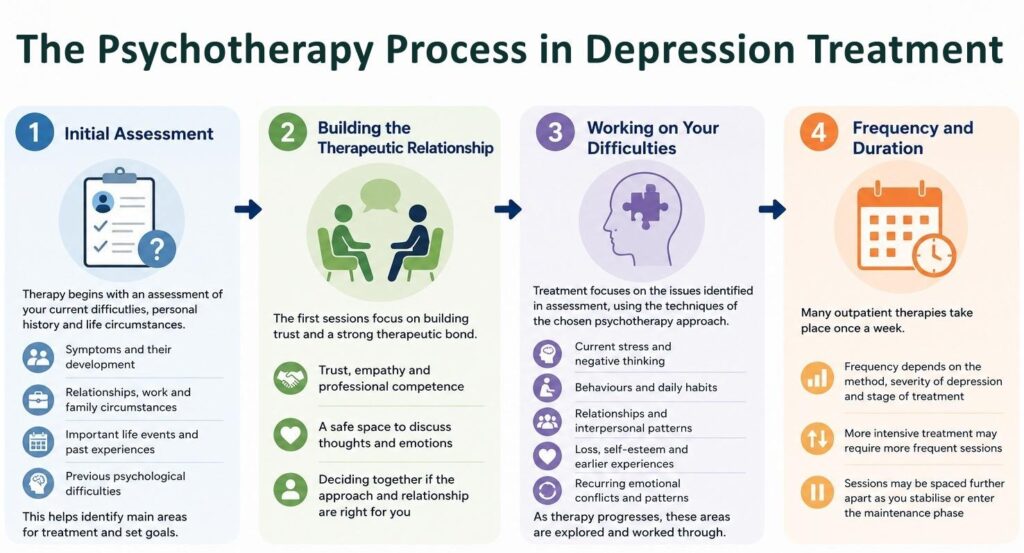
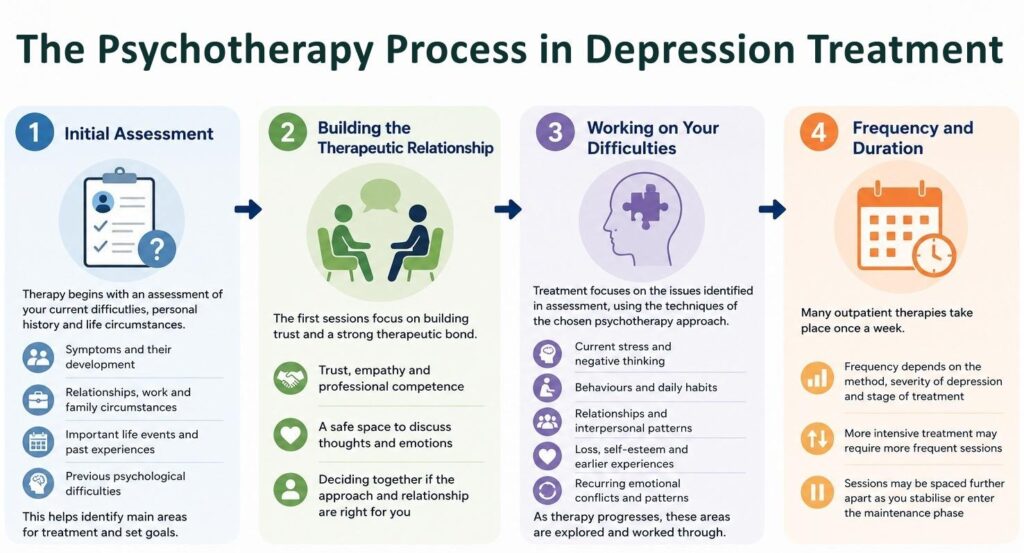
Psychotherapy usually begins with an assessment of the patient’s current difficulties, personal history and life circumstances. The therapist explores the depressive symptoms and their development as well as relevant relationships, work and family circumstances, important life events and previous psychological difficulties. This initial assessment helps identify the main areas of treatment and establish individual therapeutic goals.
The first sessions are also important for developing the therapeutic relationship. Trust, empathy and professional competence allow patients to discuss difficult thoughts and emotions openly. At the same time, the patient and therapist can determine whether the therapeutic approach is appropriate and whether a productive working relationship can be established.
The content of subsequent sessions depends on the psychotherapy method and the individual problems identified during the assessment. Treatment may focus on current stress, negative thinking, behaviour, relationships, loss, self-esteem, earlier experiences or recurring emotional conflicts. As therapy progresses, these issues are explored and worked through using the techniques of the chosen psychotherapy approach.
Many outpatient psychotherapies are conducted once a week, although the frequency depends on the therapeutic method, severity of depression and stage of treatment. More intensive treatment may require more frequent sessions, while the intervals between sessions may be increased as the patient stabilises or enters a maintenance phase.
Types of Psychotherapy for Depression
Several forms of psychotherapy are used in depression treatment. They differ in how they understand depressive symptoms and in the methods they use to produce change. Some approaches concentrate primarily on present thoughts and behaviours, while others examine interpersonal relationships or explore emotional conflicts and patterns that may have developed over many years.
Cognitive Behavioural Therapy (CBT) for Depression
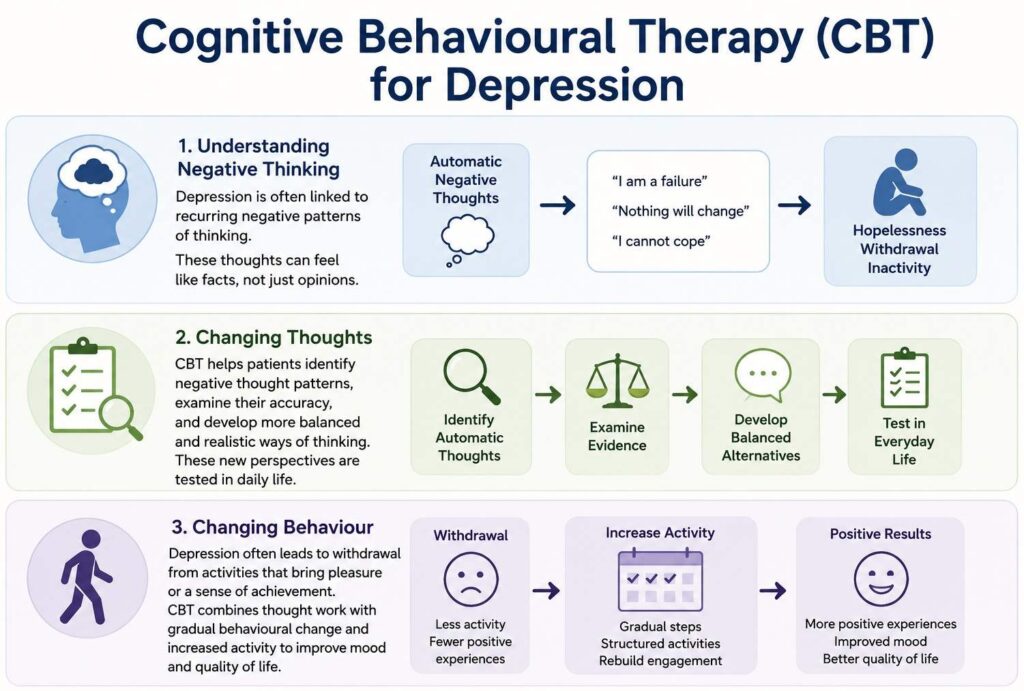
Cognitive behavioural therapy for depression is one of the most extensively studied psychotherapeutic approaches. CBT is based partly on the observation that depression is associated with recurring negative patterns of thinking. A person with depression may develop persistently negative views of themselves, their circumstances and the future. Thoughts such as “I am a failure”, “nothing will change” or “I cannot cope” may gradually begin to feel like objective facts rather than interpretations.
These automatic thoughts can reinforce hopelessness, withdrawal and inactivity. During CBT, the patient learns to identify such patterns, examine whether they are accurate or distorted and develop alternative ways of interpreting situations. These alternatives can then be tested in everyday life.
Behaviour is equally important. Depression frequently causes people to withdraw from activities and social relationships that previously provided pleasure, structure or a sense of achievement. This reduces opportunities for positive experiences and can deepen the depression. CBT therefore usually combines work on thoughts and beliefs with gradual behavioural change and increased activity.
Psychodynamic Psychotherapy for Depression
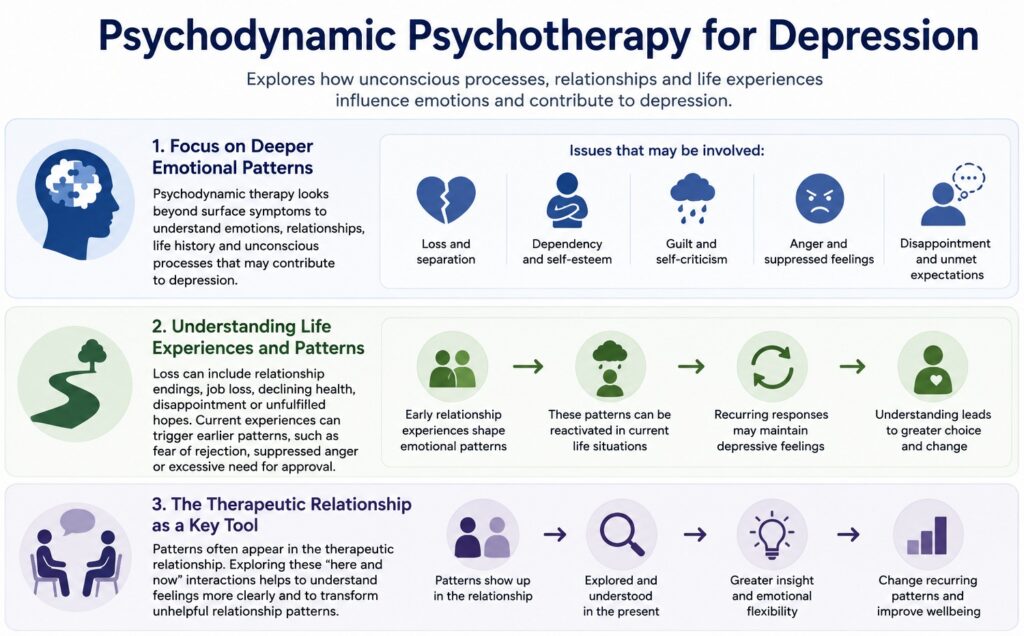
Psychodynamic psychotherapy for depression focuses more strongly on emotions, interpersonal relationships, life history and psychological processes that may not initially be fully conscious. From a psychodynamic perspective, depressive symptoms can sometimes be associated with difficulties involving loss, separation, dependency, self-esteem, guilt, anger and disappointment.
In this context, loss is not limited to bereavement. It may involve the end of a relationship, loss of professional status, declining health, disappointment in an important person or the failure of an important expectation. Current experiences can also reactivate emotional patterns established in earlier relationships. A person may repeatedly fear rejection, suppress anger because of a fear of losing another person, or become excessively dependent on approval from others.
Psychodynamic psychotherapy explores these patterns and the emotions associated with them. Relationship patterns may also become visible within the therapeutic relationship itself, allowing them to be understood in the present rather than discussed only as events from the past. The aim is to achieve greater understanding and emotional flexibility and to change recurring patterns that contribute to depressive experiences.
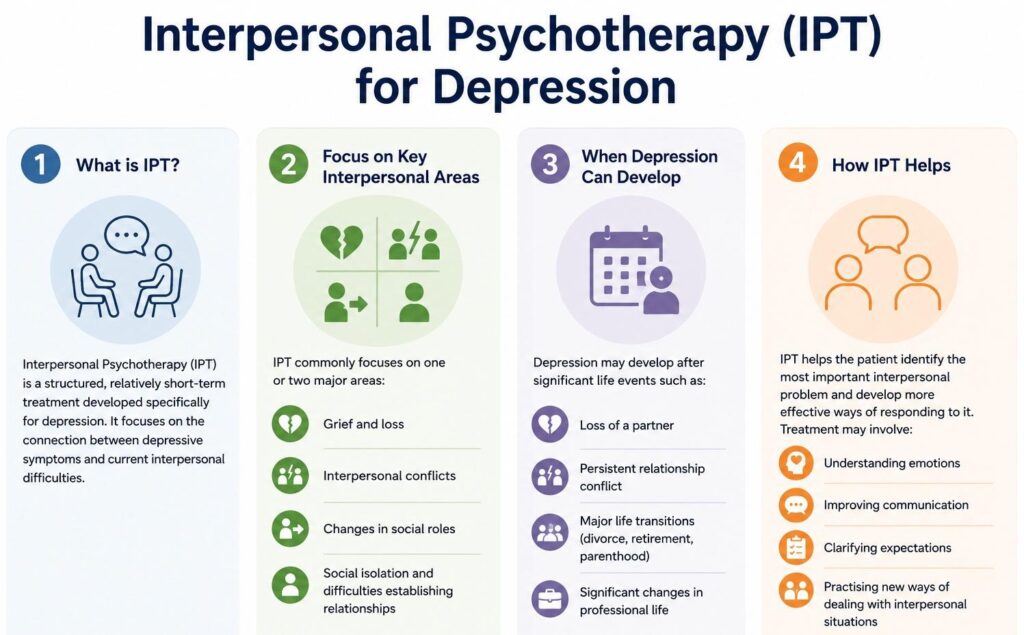
Interpersonal Psychotherapy (IPT) for Depression
Interpersonal psychotherapy is a structured, relatively short-term treatment developed specifically for depression. It concentrates on the relationship between depressive symptoms and current interpersonal difficulties.
Treatment commonly focuses on one or two major areas: grief and loss, interpersonal conflicts, changes in social roles, or social isolation and difficulties establishing relationships. Depression may, for example, develop after the loss of a partner, during persistent relationship conflict or following a major transition such as divorce, retirement, parenthood or a significant change in professional life.
IPT helps the patient identify the most important interpersonal problem and develop more effective ways of responding to it. Treatment may involve understanding emotions, improving communication, clarifying expectations and practising new ways of dealing with interpersonal situations.
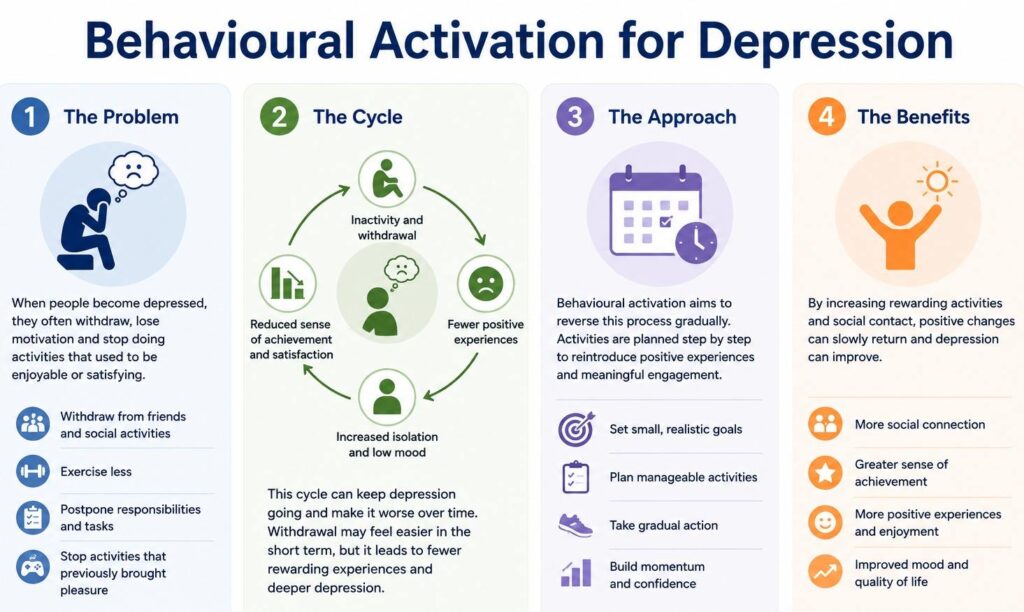
Behavioural Activation for Depression
Behavioural activation focuses on the relationship between depression, inactivity and loss of positive experiences. When people become depressed, they frequently withdraw from friends, exercise less, postpone responsibilities and stop activities that previously provided pleasure or satisfaction.
Although withdrawal may initially feel easier, it can gradually create a cycle in which the person experiences fewer rewarding events and becomes increasingly isolated. Behavioural activation attempts to reverse this process gradually. Manageable activities are planned step by step so that structure, social contact, a sense of achievement and positive experiences can slowly return.
Supportive Psychotherapy for Depression
Supportive psychotherapy can be particularly useful when patients are overwhelmed by depressive symptoms or difficult life circumstances. The therapist provides emotional support while helping the patient understand the illness, identify personal resources, establish realistic goals and cope with current problems.
Support does not mean avoiding difficult subjects. Effective supportive psychotherapy combines empathy with an active therapeutic approach and helps patients regain their own capacity to manage difficulties rather than becoming dependent on reassurance.
CBT vs Psychodynamic Therapy for Depression
Cognitive behavioural and psychodynamic psychotherapy approach depression from different perspectives. CBT focuses primarily on the relationship between thoughts, emotions and behaviour and aims to identify and change patterns that maintain depressive symptoms. Psychodynamic psychotherapy places greater emphasis on emotional conflicts, relationships, life experiences and recurring patterns that may not initially be fully conscious.
Neither approach is suitable for every patient. CBT has been particularly extensively researched, while psychodynamic psychotherapy also has evidence supporting its effectiveness. The choice depends on the clinical presentation, duration of depression, psychological difficulties, previous treatment, patient preference and the therapeutic relationship.
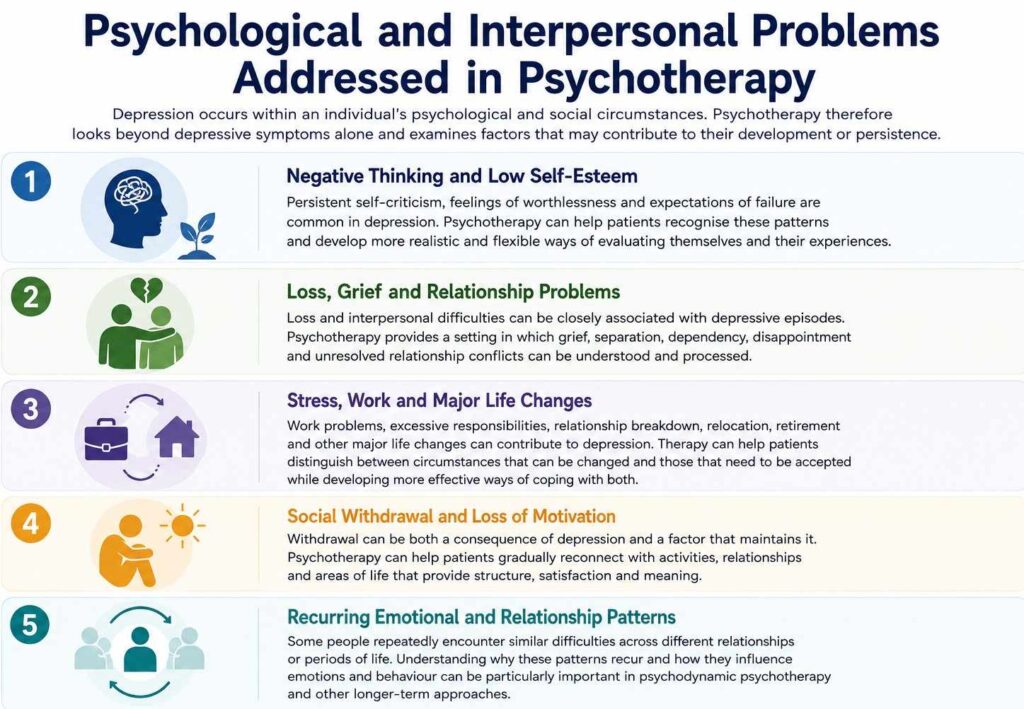
Psychotherapy for Psychological and Interpersonal Problems
Depression occurs within an individual’s psychological and social circumstances. Psychotherapy therefore looks beyond depressive symptoms alone and examines factors that may contribute to their development or persistence.
Negative Thinking and Low Self-Esteem
Persistent self-criticism, feelings of worthlessness and expectations of failure are common in depression. Psychotherapy can help patients recognise these patterns and develop more realistic and flexible ways of evaluating themselves and their experiences.
Loss, Grief and Relationship Problems
Loss and interpersonal difficulties can be closely associated with depressive episodes. Psychotherapy provides a setting in which grief, separation, dependency, disappointment and unresolved relationship conflicts can be understood and processed.
Stress, Work and Major Life Changes
Work problems, excessive responsibilities, relationship breakdown, relocation, retirement and other major life changes can contribute to depression. Therapy can help patients distinguish between circumstances that can be changed and those that need to be accepted while developing more effective ways of coping with both.
Social Withdrawal and Loss of Motivation
Withdrawal can be both a consequence of depression and a factor that maintains it. Psychotherapy can help patients gradually reconnect with activities, relationships and areas of life that provide structure, satisfaction and meaning.
Recurring Emotional and Relationship Patterns
Some people repeatedly encounter similar difficulties across different relationships or periods of life. Understanding why these patterns recur and how they influence emotions and behaviour can be particularly important in psychodynamic psychotherapy and other longer-term approaches.
Effectiveness of Psychotherapy for Depression
Psychotherapy is an established treatment for depressive disorders. It can reduce depressive symptoms and may also help maintain improvement after an acute depressive episode. Treatment response nevertheless varies considerably. Some patients improve after relatively brief psychotherapy, while others require substantially longer treatment.
The outcome is influenced by more than the psychotherapy method alone. Severity and duration of depression, personality, life history, current circumstances, co-existing psychiatric conditions, patient expectations and the quality of the therapeutic relationship can all influence treatment.
Psychotherapy may be used alone or combined with antidepressant medication depending on the severity and course of depression, previous treatment response, co-existing conditions and the individual needs of the patient.
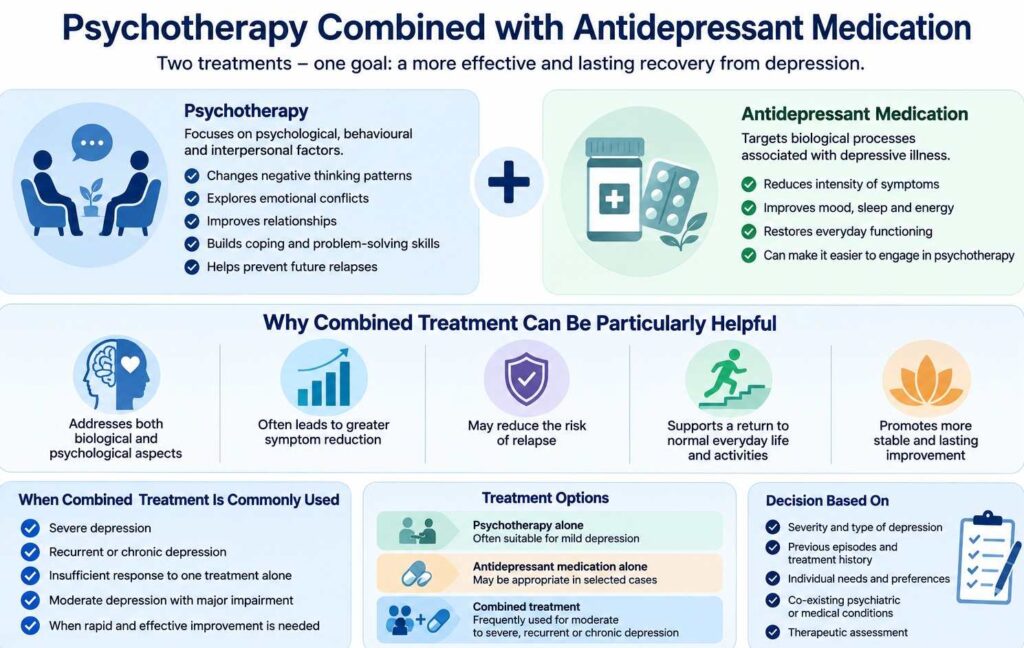
Psychotherapy Combined with Antidepressant Medication
Psychotherapy and antidepressant medication are frequently used together, particularly when depression is severe, recurrent or chronic. The two treatments approach depression from different perspectives. Medication primarily targets biological processes associated with depressive illness, while psychotherapy addresses psychological, behavioural and interpersonal factors.
Psychotherapy can address difficulties that medication alone cannot resolve. It can help patients recognise negative thinking patterns, understand emotional conflicts, change behaviour, improve relationships and develop strategies for dealing with future stress. Antidepressants, in contrast, can be particularly important when depressive symptoms are more severe or substantially impair everyday functioning. Reducing the intensity of symptoms may also enable some patients to participate more actively in psychotherapy.
Combined treatment can begin simultaneously, or psychotherapy may be added after medication has already been started. Medication may likewise be introduced when psychotherapy alone has not produced sufficient improvement. In severe acute depression, combining psychiatric and psychotherapeutic treatment may be particularly important. Depression accompanied by psychotic symptoms requires psychiatric treatment and should not be treated with psychotherapy alone.
The decision between psychotherapy, medication and combined treatment should therefore be based on the severity and type of depression, previous episodes, treatment history, individual preferences and the presence of additional psychiatric or medical conditions.
Duration of Psychotherapy for Depression
There is no fixed duration for psychotherapy for depression. Some structured treatments are deliberately brief, while other forms of psychotherapy continue for months or longer.
Short-term psychotherapy usually concentrates on clearly defined problems and treatment goals. Interpersonal psychotherapy, for example, is commonly delivered as a time-limited treatment, while short-term forms of CBT and psychodynamic psychotherapy can also be used for depression.
Longer psychotherapy may be appropriate when depression is longstanding or recurrent or when it is associated with deeply established emotional, interpersonal or personality-related patterns. The goal may then extend beyond improvement of the immediate depressive episode to changing psychological patterns that repeatedly contribute to emotional difficulties.
Progress should not be judged solely by whether a patient feels happier. Improvement may also become apparent through increased motivation and activity, better relationships, reduced self-criticism, greater emotional flexibility and an improved ability to cope with stressful situations. Psychotherapy is rarely a completely linear process, and periods of difficulty can occur even when treatment is ultimately effective.
Psychotherapy for Mild, Moderate and Severe Depression
The role of psychotherapy varies according to the severity of depression. In mild depression, psychotherapy can be an important treatment option, particularly when symptoms persist or psychological and interpersonal factors contribute to the condition. Treatment may focus on negative thinking, withdrawal, stressful life circumstances, relationship difficulties or other factors associated with the depressive episode.
In moderate depression, psychotherapy may be used alone in selected patients or combined with antidepressant medication depending on the clinical picture, previous treatment and individual needs.
Severe depression requires careful psychiatric assessment. Psychotherapy can remain an important part of treatment, but psychotherapy alone may not be sufficient, and combined psychiatric and psychotherapeutic treatment may be necessary.
Psychotherapy for Recurrent and Chronic Depression
The role of psychotherapy extends beyond the treatment of an acute depressive episode. In recurrent depression, therapy can help patients recognise psychological, interpersonal and behavioural patterns associated with previous episodes and become more aware of situations that may increase their vulnerability to another depression. Identifying early warning signs and developing strategies for responding to them can also contribute to maintaining recovery and reducing the risk of relapse.
Chronic depression presents different therapeutic challenges because depressive symptoms and associated patterns of thinking, behaviour and relationships may have persisted for many years. Treatment may therefore need to address not only current symptoms but also longstanding interpersonal difficulties, social withdrawal, feelings of helplessness and recurring expectations of rejection or disappointment.
Psychotherapy for Chronic Depression and CBASP
The Cognitive Behavioral Analysis System of Psychotherapy (CBASP) was specifically developed for chronic depression. It combines cognitive behavioural, interpersonal and psychodynamic elements, with particular emphasis on interpersonal functioning and on how patients perceive and respond to other people.
People with longstanding depression may have difficulty recognising how their behaviour influences interpersonal situations. Earlier experiences of rejection, criticism or emotional neglect may also shape expectations of current relationships. As a result, patients may withdraw from others or anticipate negative responses even when the present situation differs substantially from their previous experiences.
CBASP uses situational analysis to examine specific interpersonal situations, the patient’s behaviour and its consequences. Interpersonal discrimination exercises help patients distinguish earlier negative relationship experiences from what is actually occurring in present relationships, including the therapeutic relationship. Behavioural skills training can support the development of more effective communication, assertiveness and interpersonal behaviour.
The overall aim is to reduce social withdrawal, improve interpersonal functioning and help patients recognise the connection between their behaviour and its consequences. In chronic depression, psychotherapy may also be combined with antidepressant medication, particularly when symptoms are persistent or a single treatment approach has not produced sufficient improvement.
Psychotherapy for Treatment-Resistant Depression
When depression does not improve sufficiently despite treatment, the clinical situation should be reassessed rather than assuming that psychotherapy or medication cannot be effective. The diagnosis, previous treatment, medication adherence and dosage, co-existing psychiatric or medical conditions, and psychological and social factors that may contribute to persistent symptoms should all be reviewed.
Psychotherapy can remain part of the treatment strategy when antidepressant treatment has produced insufficient improvement. Depending on the individual situation, the psychotherapeutic approach may also need to be reconsidered or adapted. Treatment-resistant depression often requires a broader treatment plan in which psychiatric management and psychotherapy are coordinated according to the patient’s symptoms, previous treatment response and underlying psychological and interpersonal difficulties.
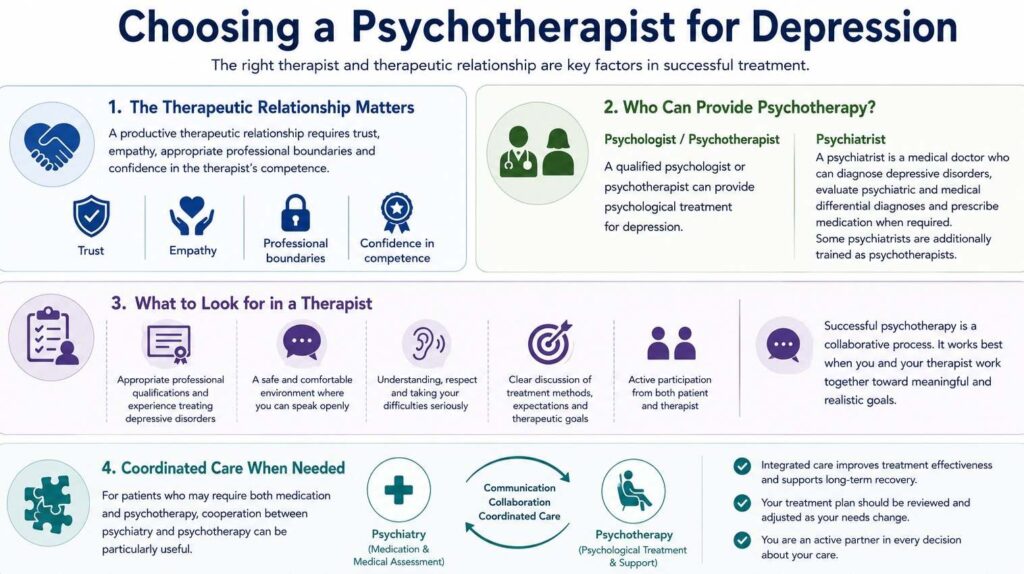
Choosing a Psychotherapist for Depression
The psychotherapy method is important, but so is the relationship with the person providing treatment. A productive therapeutic relationship requires trust, empathy, appropriate professional boundaries and confidence in the therapist’s competence.
A qualified psychologist or psychotherapist can provide psychological treatment for depression. A psychiatrist is a medical doctor who can diagnose depressive disorders, evaluate psychiatric and medical differential diagnoses and prescribe medication when required. Some psychiatrists are additionally trained as psychotherapists.
The therapist should have appropriate professional qualifications and experience treating depressive disorders. Patients should also feel that they can speak openly and that their difficulties are understood. Treatment methods, expectations and therapeutic goals should be discussed early because successful psychotherapy requires active participation from both patient and therapist.
For patients who may require both medication and psychotherapy, cooperation between psychiatry and psychotherapy can be particularly useful.
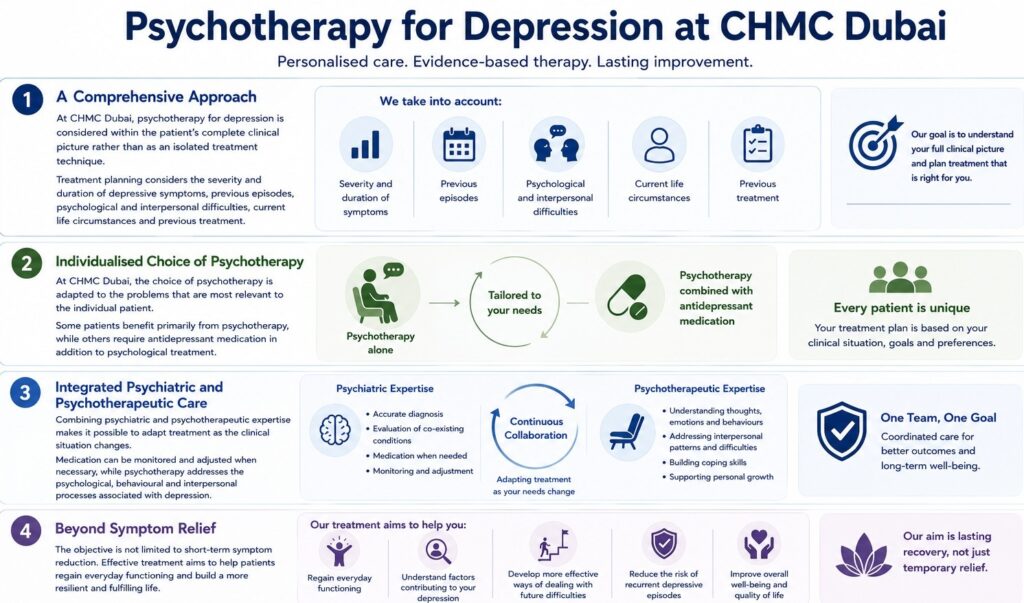
Psychotherapy for Depression at CHMC Dubai
At CHMC Dubai, psychotherapy for depression is considered within the patient’s complete clinical picture rather than as an isolated treatment technique. Treatment planning considers the severity and duration of depressive symptoms, previous episodes, psychological and interpersonal difficulties, current life circumstances and previous treatment.
At CHMC Dubai, the choice of psychotherapy is adapted to the problems that are most relevant to the individual patient. Some patients benefit primarily from psychotherapy, while others require antidepressant medication in addition to psychological treatment.
Combining psychiatric and psychotherapeutic expertise makes it possible to adapt treatment as the clinical situation changes. Medication can be monitored and adjusted when necessary, while psychotherapy addresses the psychological, behavioural and interpersonal processes associated with depression.
The objective is not limited to short-term symptom reduction. Effective treatment aims to help patients regain everyday functioning, understand factors contributing to their depression, develop more effective ways of dealing with future difficulties and reduce the risk of recurrent depressive episodes.
For Psychotherapy for Depression Contact CHMC:
Frequently Asked Questions About Psychotherapy for Depression
What is the best psychotherapy for depression?
There is no single best psychotherapy for everyone with depression. Cognitive behavioural therapy (CBT), psychodynamic psychotherapy and interpersonal psychotherapy (IPT) are established approaches. The most appropriate method depends on the type and severity of depression, psychological difficulties, previous treatment, patient preference and the therapeutic relationship.
Does psychotherapy really work for depression?
Yes. Psychotherapy is an established treatment for depression and can reduce depressive symptoms, improve everyday functioning and support longer-term recovery. Its effectiveness varies between individuals and is influenced by the severity and duration of depression, co-existing conditions, life circumstances and the quality of the therapeutic relationship.
Can depression be treated with psychotherapy alone?
Some patients can be treated with psychotherapy without antidepressant medication. Whether this is appropriate depends on the severity of symptoms, previous depressive episodes, functional impairment, suicide risk, co-existing psychiatric conditions and previous treatment response. More severe, recurrent or chronic depression may require a combination of psychotherapy and medication.
How many psychotherapy sessions are needed for depression?
There is no fixed number of sessions required for depression. Some structured approaches are relatively short, while recurrent or chronic depression and longstanding psychological or interpersonal difficulties may require longer treatment. The duration depends on the psychotherapy method, treatment goals and individual response, and should be reviewed as treatment progresses.
Is psychotherapy better than antidepressants?
Neither treatment is universally better. Psychotherapy addresses psychological, behavioural and interpersonal factors, while antidepressants target biological processes involved in depression. The appropriate choice depends on depression severity, previous treatment, co-existing conditions and patient preference. In more severe, recurrent or chronic depression, both treatments may be combined.
Can psychotherapy and antidepressants be used together?
Yes. Psychotherapy and antidepressants are frequently combined, particularly in severe, recurrent or chronic depression. Medication can help reduce depressive symptoms, while psychotherapy addresses psychological, behavioural and interpersonal factors. Both treatments may begin together, or one may be added when the initial treatment has not produced sufficient improvement.
Can psychotherapy prevent depression from returning?
Psychotherapy can contribute to relapse prevention by helping patients recognise negative thinking, behavioural changes, interpersonal difficulties and stressful situations associated with previous depressive episodes. It can also help patients identify early warning signs and develop strategies for responding before symptoms become more severe.
When should someone with depression see a psychiatrist?
Psychiatric assessment is particularly important when depression is severe, recurrent, substantially affects everyday functioning, or is accompanied by suicidal thoughts, psychotic symptoms or diagnostic uncertainty. A psychiatrist can establish the diagnosis, assess risk, identify co-existing conditions and determine whether medication or combined psychiatric and psychotherapeutic treatment is appropriate.
What if psychotherapy for depression is not working?
If psychotherapy does not produce sufficient improvement, the treatment should be reassessed. Possible factors include the severity of depression, an incomplete diagnosis, co-existing conditions, difficult life circumstances, the psychotherapy method or the therapeutic relationship. Treatment may need to be modified or combined with psychiatric assessment and medication.
Can psychotherapy help with chronic depression?
Yes. Psychotherapy can help patients with chronic depression, although longstanding symptoms may require longer and more comprehensive treatment. Therapy may address persistent negative thinking, social withdrawal and interpersonal difficulties. Specific approaches such as CBASP have been developed for chronic depression, and psychotherapy may also be combined with antidepressant medication.
Can online psychotherapy help with depression?
Online psychotherapy can be an appropriate treatment option for selected patients when video-based therapy is clinically suitable. It can improve access for people who travel or cannot regularly attend in person. However, severe depression, acute suicide risk or other significant clinical complications may require more intensive face-to-face psychiatric or psychological care.
Where can I find psychotherapy for depression in Dubai?
Psychotherapy for depression in Dubai is provided by qualified psychologists, psychotherapists and psychiatrists with psychotherapy training. At CHMC Dubai, treatment is individually planned according to the severity and course of depression, psychological and interpersonal factors, previous treatment and whether psychotherapy should be provided alone or combined with psychiatric care.