

At CHMC Dubai, Dr. Gregor Kowal provides psychiatric assessment and medical treatment for people experiencing depression. A psychiatrist for depression evaluates not only the depressive symptoms themselves but also their severity, possible causes, previous episodes, co-existing conditions and whether medication or other medical treatment is required.
Depression can affect mood, energy, sleep, concentration, motivation and everyday functioning. While some people can be treated with psychotherapy alone, others require psychiatric care, particularly when symptoms are moderate or severe, recurrent, diagnostically unclear or have not improved with previous treatment.
An important part of psychiatric assessment is determining whether medication or another form of medical treatment is required. This distinction can substantially influence the choice of treatment.
Contact Dr. Kowal for a psychiatric assessment of depression in Dubai.
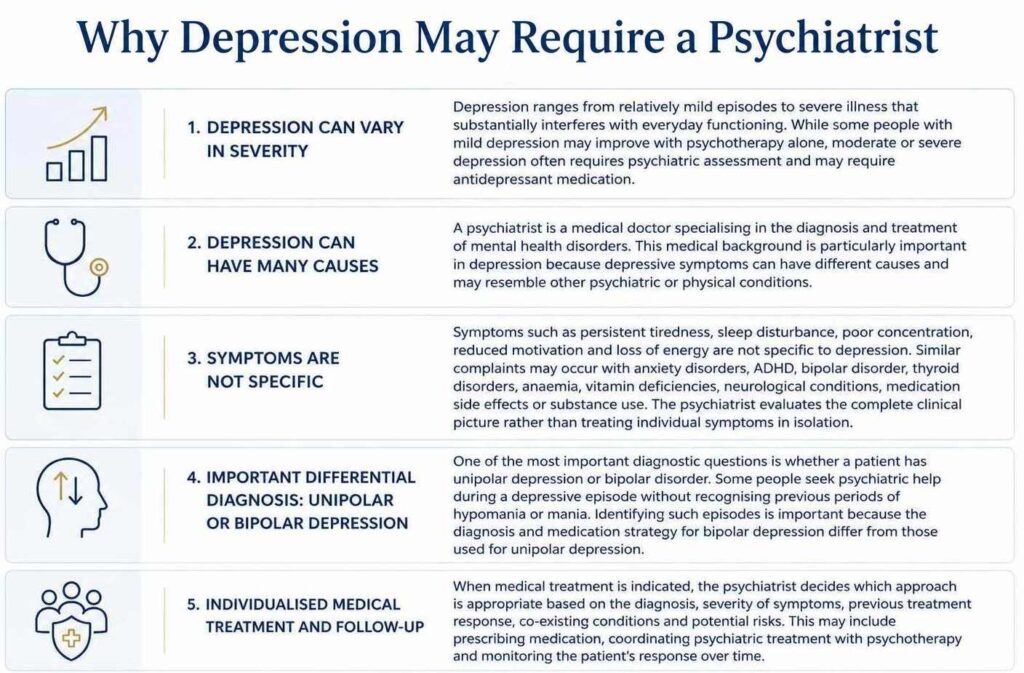
Why Depression May Require a Psychiatrist
Depression ranges from relatively mild episodes to severe illness that substantially interferes with everyday functioning. While some people with mild depression may improve with psychotherapy alone, moderate or severe depression often requires psychiatric assessment and may require antidepressant medication.
A psychiatrist is a medical doctor specialising in the diagnosis and treatment of mental health disorders. This medical background is particularly important in depression because depressive symptoms can have different causes and may resemble other psychiatric or physical conditions.
Symptoms such as persistent tiredness, sleep disturbance, poor concentration, reduced motivation and loss of energy are not specific to depression. Similar complaints may occur with anxiety disorders, ADHD, bipolar disorder, thyroid disorders, anaemia, vitamin deficiencies, neurological conditions, medication side effects or substance use. The psychiatrist therefore evaluates the complete clinical picture rather than treating individual symptoms in isolation.
One of the most important diagnostic questions is whether a patient has unipolar depression or bipolar disorder. Some people seek psychiatric help during a depressive episode without recognising previous periods of hypomania or mania. Identifying such episodes is important because the diagnosis and medication strategy for bipolar depression differ from those used for unipolar depression.
When medical treatment is indicated, the psychiatrist decides which approach is appropriate based on the diagnosis, severity of symptoms, previous treatment response, co-existing conditions and potential risks. This may include prescribing medication, coordinating psychiatric treatment with psychotherapy and monitoring the patient’s response over time.
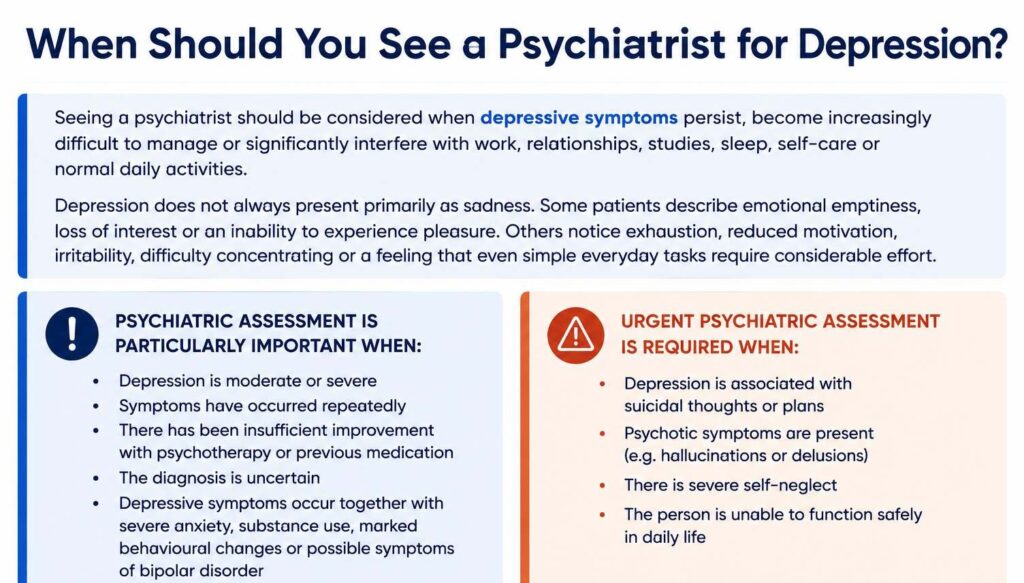
When Should You See a Psychiatrist for Depression?
Seeing a psychiatrist should be considered when depressive symptoms persist, become increasingly difficult to manage or significantly interfere with work, relationships, studies, sleep, self-care or normal daily activities. Depression does not always present primarily as sadness. Some patients describe emotional emptiness, loss of interest or an inability to experience pleasure. Others notice exhaustion, reduced motivation, irritability, difficulty concentrating or a feeling that even simple everyday tasks require considerable effort.
Psychiatric assessment is particularly important when depression is moderate or severe, has occurred repeatedly, has not improved sufficiently with psychotherapy or previous medication, or when the diagnosis is uncertain. A psychiatrist should also be involved when depressive symptoms occur together with severe anxiety, substance use, marked behavioural changes or possible symptoms of bipolar disorder. Urgent psychiatric assessment is required when depression is associated with suicidal thoughts or plans, psychotic symptoms, severe self-neglect or an inability to function safely.
Read more about Treatment for Depression
Read more about Medication for Depression
First Psychiatric Consultation for Depression at CHMC Dubai
The first psychiatric consultation at CHMC with Dr. Gregor Kowal lasts approximately 90 minutes. The purpose of this appointment is not simply to confirm the presence of depressive symptoms, but to understand the patient’s complete clinical situation and establish an accurate diagnosis.
The assessment begins with a detailed psychiatric interview. Current symptoms are evaluated together with their duration, severity and impact on everyday functioning. Previous depressive episodes, earlier psychiatric treatment, medication response, family psychiatric history, medical conditions and current life circumstances are also considered. Particular attention is given to previous periods of unusually elevated or irritable mood, increased activity, reduced need for sleep, impulsive behaviour or other symptoms that could indicate hypomania or mania. This helps distinguish unipolar depression from bipolar disorder.
The psychiatric evaluation also considers other conditions that may resemble or occur alongside depression, including anxiety disorders, ADHD, trauma-related disorders, obsessive-compulsive disorder and substance-related conditions. When clinically indicated, the assessment may include a physical and neurological examination and additional diagnostic investigations. Blood tests may be recommended to identify physical conditions that could contribute to depressive symptoms or to establish baseline values before medication is started. Depending on the patient’s medical history and planned treatment, further examinations such as an electrocardiogram (ECG), electroencephalography (EEG), MRI or CT may occasionally be indicated.
Based on the findings, Dr. Kowal discusses the diagnosis and develops an individual treatment plan. Depending on the severity and characteristics of the depression, treatment may include psychotherapy, antidepressant medication or a combination of both.
Read more about Depression Diagnosis in Dubai
What Is the Role of a Psychiatrist in Depression Treatment?
The role of a psychiatrist in depression treatment extends beyond prescribing antidepressants. The psychiatrist first establishes the diagnosis and assesses the severity of the depressive episode, its effect on everyday functioning and whether there are factors that may influence therapy. An important decision is whether psychiatric medication is required. Some patients with mild depression may be treated with psychotherapy alone, while moderate or severe depression more often requires medication, psychotherapy or a combination of both. The psychiatrist determines which approach is appropriate for the individual patient.
When medication is prescribed, the psychiatrist selects it according to the patient’s symptoms, previous treatment response, medical history, other medications and potential side effects. Response and tolerability are then assessed during follow-up consultations. The psychiatrist also evaluates whether psychotherapy should form part of the treatment plan. At CHMC Dubai, psychiatric care can be coordinated with psychotherapy provided by clinical psychologists, allowing both approaches to be adapted to the patient’s clinical needs.
If depression does not improve as expected, the psychiatrist reassesses the diagnosis and treatment strategy rather than simply continuing the same medication. Further treatment decisions depend on the reasons for the insufficient response and the patient’s overall clinical condition.
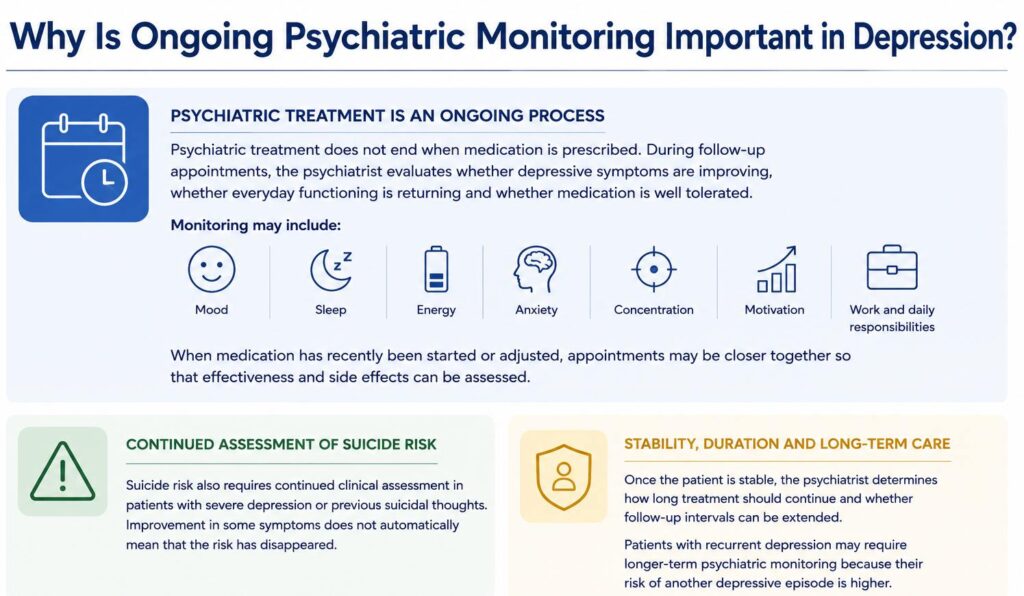
Why Is Ongoing Psychiatric Monitoring Important in Depression?
Psychiatric treatment does not end when medication is prescribed. During follow-up appointments, the psychiatrist evaluates whether depressive symptoms are improving, whether everyday functioning is returning and whether medication is well tolerated. Monitoring may include changes in mood, sleep, energy, anxiety, concentration, motivation and the ability to manage work and daily responsibilities. When medication has recently been started or adjusted, appointments may be closer together so that effectiveness and side effects can be assessed.
Suicide risk also requires continued clinical assessment in patients with severe depression or previous suicidal thoughts. Improvement in some symptoms does not automatically mean that the risk has disappeared. Once the patient is stable, the psychiatrist determines how long treatment should continue and whether follow-up intervals can be extended. Patients with recurrent depression may require longer-term psychiatric monitoring because their risk of another depressive episode is higher.
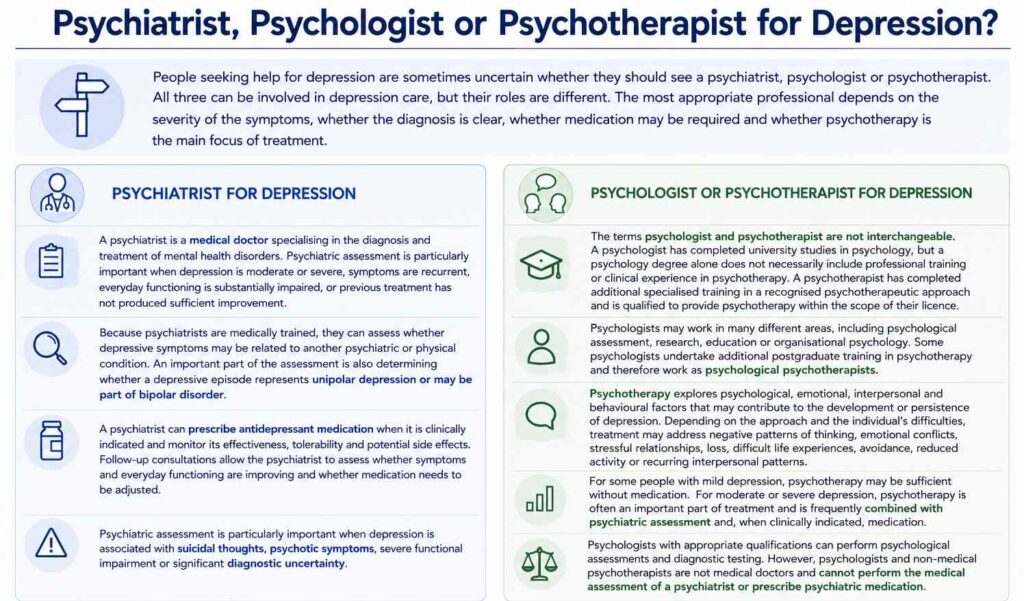
Psychiatrist, Psychologist or Psychotherapist for Depression?
People seeking help for depression are sometimes uncertain whether they should see a psychiatrist, psychologist or psychotherapist. All three can be involved in depression care, but their roles are different. The most appropriate professional depends on the severity of the symptoms, whether the diagnosis is clear, whether medication may be required and whether psychotherapy is the main focus of treatment.
Psychiatrist for Depression
A psychiatrist is a medical doctor specialising in the diagnosis and treatment of mental health disorders. Psychiatric assessment is particularly important when depression is moderate or severe, symptoms are recurrent, everyday functioning is substantially impaired, or previous treatment has not produced sufficient improvement.
Because psychiatrists are medically trained, they can assess whether depressive symptoms may be related to another psychiatric or physical condition. For example, difficulties with sleep, concentration, motivation and energy may occur not only in depression but also in anxiety disorders, ADHD, bipolar disorder and several medical conditions. An important part of the assessment is also determining whether a depressive episode represents unipolar depression or may be part of bipolar disorder.
A psychiatrist can prescribe antidepressant medication when it is clinically indicated and monitor its effectiveness, tolerability and potential side effects. Follow-up consultations allow the psychiatrist to assess whether symptoms and everyday functioning are improving and whether medication needs to be adjusted. Psychiatric assessment is particularly important when depression is associated with suicidal thoughts, psychotic symptoms, severe functional impairment or significant diagnostic uncertainty.
Psychologist or Psychotherapist for Depression
The terms psychologist and psychotherapist are not interchangeable. A psychologist has completed university studies in psychology, but a psychology degree alone does not necessarily include professional training or clinical experience in psychotherapy. A psychotherapist has completed additional specialised training in a recognised psychotherapeutic approach and is qualified to provide psychotherapy within the scope of their professional licence.
Psychologists may work in many different areas, including psychological assessment, research, education or organisational psychology. Some psychologists undertake additional postgraduate training in psychotherapy and therefore work as psychological psychotherapists. For the treatment of depression, it is therefore important to consider not only whether someone is a psychologist, but also whether the professional has appropriate psychotherapeutic training and clinical experience in treating depressive disorders.
Psychotherapy explores psychological, emotional, interpersonal and behavioural factors that may contribute to the development or persistence of depression. Depending on the therapeutic approach and the individual patient’s difficulties, treatment may address negative patterns of thinking, emotional conflicts, stressful relationships, loss, difficult life experiences, avoidance, reduced activity or recurring interpersonal patterns.
For some people with mild depression, psychotherapy may be sufficient without medication. Psychotherapy can also be an important part of treatment for moderate or severe depression, although in these situations it is frequently combined with psychiatric assessment and, when clinically indicated, medication.
Psychologists with appropriate qualifications can also perform psychological assessments and diagnostic testing. However, psychologists and non-medical psychotherapists are not medical doctors and cannot provide the medical assessment performed by a psychiatrist or prescribe psychiatric medication. When depression is moderate or severe, the diagnosis is uncertain, medication may be required, or there are concerns about suicide risk or another psychiatric or medical condition, assessment by a psychiatrist should be considered.
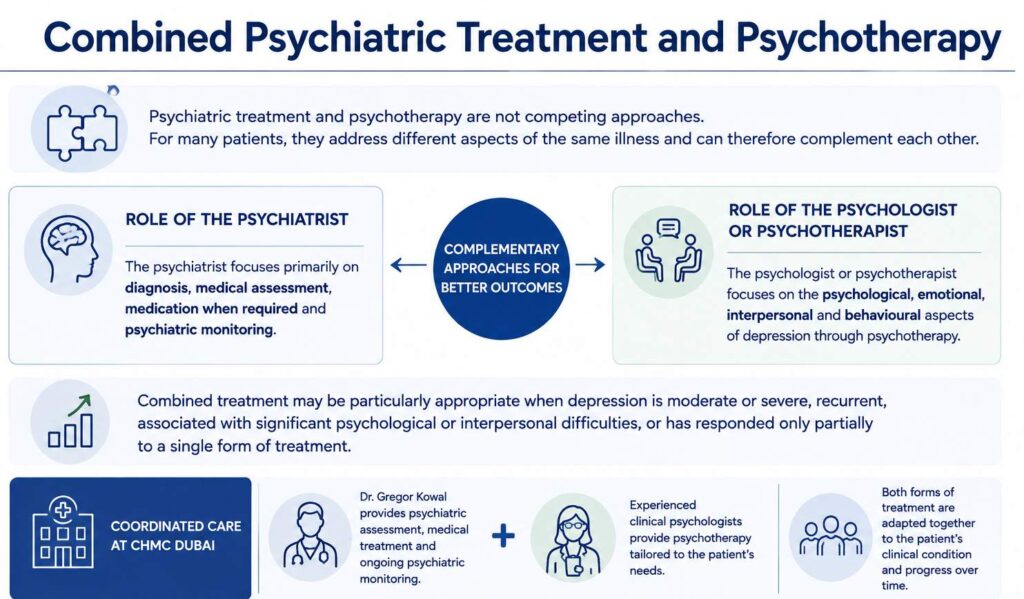
Combined Psychiatric Treatment and Psychotherapy
Psychiatric treatment and psychotherapy are not competing approaches. For many patients, they address different aspects of the same illness and can therefore complement each other.
The psychiatrist focuses primarily on diagnosis, medical assessment, medication when required and psychiatric monitoring. The psychologist or psychotherapist focuses on the psychological, emotional, interpersonal and behavioural aspects of depression through psychotherapy. Combined treatment may be particularly appropriate when depression is moderate or severe, recurrent, associated with significant psychological or interpersonal difficulties, or has responded only partially to a single form of treatment.
At CHMC Dubai, psychiatric care and psychotherapy can be coordinated within the same clinical setting. Dr. Gregor Kowal can provide psychiatric assessment, medical treatment and ongoing psychiatric monitoring, while psychotherapy can be provided by experienced clinical psychologists. This allows both forms of treatment to be adapted to the patient’s clinical condition and progress over time.
The decision to see a psychiatrist, psychologist or both should therefore not be based simply on professional titles. It should depend on the nature and severity of the depression and the individual patient’s treatment needs.
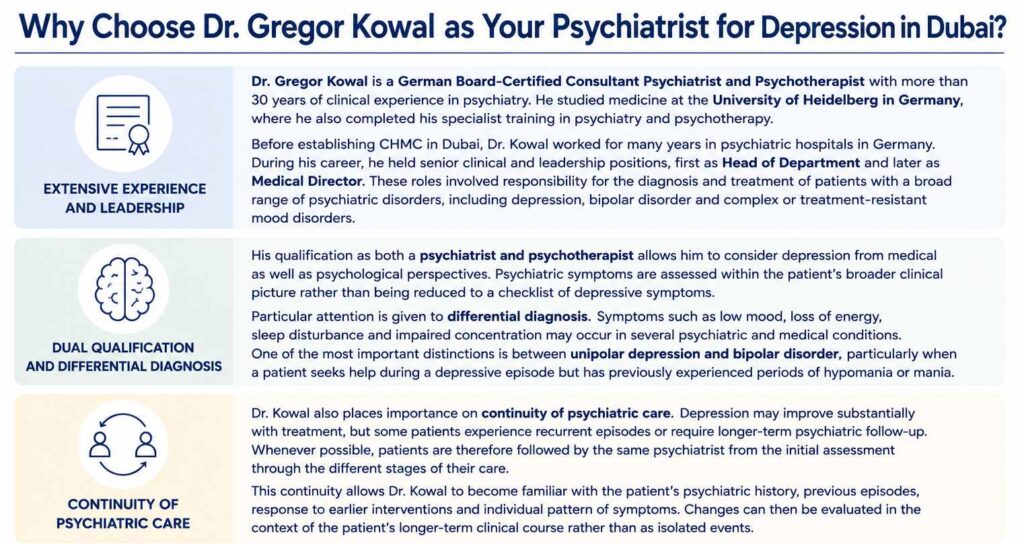
Why Choose Dr. Gregor Kowal as Your Psychiatrist for Depression in Dubai?
Dr. Gregor Kowal is a German Board-Certified Consultant Psychiatrist and Psychotherapist with more than 30 years of clinical experience in psychiatry. He studied medicine at the University of Heidelberg in Germany, where he also completed his specialist training in psychiatry and psychotherapy. Before establishing CHMC in Dubai, Dr. Kowal worked for many years in psychiatric hospitals in Germany. During his career, he held senior clinical and leadership positions, first as Head of Department and later as Medical Director. These roles involved responsibility for the diagnosis and treatment of patients with a broad range of psychiatric disorders, including depression, bipolar disorder and complex or treatment-resistant mood disorders.
His qualification as both a psychiatrist and psychotherapist allows him to consider depression from medical as well as psychological perspectives. Psychiatric symptoms are assessed within the patient’s broader clinical picture rather than being reduced to a checklist of depressive symptoms. Particular attention is given to differential diagnosis. Symptoms such as low mood, loss of energy, sleep disturbance and impaired concentration may occur in several psychiatric and medical conditions. One of the most important distinctions is between unipolar depression and bipolar disorder, particularly when a patient seeks help during a depressive episode but has previously experienced periods of hypomania or mania.
Dr. Kowal also places importance on continuity of psychiatric care. Depression may improve substantially with treatment, but some patients experience recurrent episodes or require longer-term psychiatric follow-up. Whenever possible, patients are therefore followed by the same psychiatrist from the initial assessment through the different stages of their care. This continuity allows Dr. Kowal to become familiar with the patient’s psychiatric history, previous episodes, response to earlier interventions and individual pattern of symptoms. Changes can then be evaluated in the context of the patient’s longer-term clinical course rather than as isolated events.
For patients looking for a psychiatrist for depression in Dubai, this combination of extensive clinical experience, medical and psychotherapeutic training, careful differential diagnosis and continuity of care provides the basis for an individual and comprehensive psychiatric assessment.
Frequently Asked Questions About Seeing a Psychiatrist for Depression
When should I see a psychiatrist for depression?
You should consider seeing a psychiatrist when depressive symptoms persist, become increasingly difficult to manage or significantly interfere with work, relationships, studies, sleep or everyday functioning. Psychiatric assessment is particularly important when depression is moderate or severe, has occurred repeatedly, has not improved with previous treatment or when the diagnosis is uncertain. Urgent assessment is required when depression is associated with suicidal thoughts, psychotic symptoms or severe deterioration in functioning.
Should I see a psychiatrist or psychologist for depression?
The choice depends on the severity and nature of the depression. A psychiatrist is a medical doctor who can diagnose depression, assess possible psychiatric or medical causes, prescribe medication and monitor treatment. A psychologist primarily provides psychological assessment and psychotherapy. Some people with mild depression may only require psychotherapy, while patients with moderate, severe or recurrent depression may benefit from psychiatric care. In many cases, a psychiatrist and psychologist can work together.
Can a psychiatrist diagnose depression?
Yes. Psychiatrists are medical doctors specialising in the diagnosis and treatment of mental health disorders. Diagnosis involves more than identifying depressive symptoms. The psychiatrist evaluates their severity and duration, their impact on everyday functioning, previous episodes, medical and psychiatric history and other conditions that could produce similar symptoms.
Can a psychiatrist diagnose depression during the first appointment?
In many cases, depression can be diagnosed during the first psychiatric consultation. However, diagnosis may occasionally require additional information, laboratory investigations or observation over time. This can be particularly important when symptoms could be related to bipolar disorder, another psychiatric condition, medication, substance use or a physical illness.
What happens during a psychiatric assessment for depression?
A psychiatric assessment usually begins with a detailed clinical interview covering current symptoms, their duration and severity, previous depressive episodes, psychiatric and medical history, medication, family history and current life circumstances. The psychiatrist also assesses the impact of symptoms on everyday functioning and considers alternative diagnoses. When clinically indicated, physical examination, blood tests or other medical investigations may be recommended.
Does seeing a psychiatrist mean I need medication?
No. Seeing a psychiatrist does not automatically mean that antidepressant medication will be prescribed. The psychiatrist first establishes the diagnosis and assesses the severity of the condition. Some patients, particularly those with mild depression, may be treated with psychotherapy without medication. Medication is more commonly considered when depression is moderate or severe, recurrent or significantly affects everyday functioning.
Can a psychiatrist prescribe antidepressants?
Yes. As a medical doctor, a psychiatrist can prescribe antidepressants when they are clinically indicated. The choice of medication depends on factors such as the patient’s symptoms, previous response to treatment, medical history, other medications and potential side effects. The psychiatrist also monitors the response and tolerability during follow-up appointments.
How often should I see a psychiatrist for depression?
The frequency of psychiatric appointments depends on the severity of depression, suicide risk, the stage of treatment and whether medication is being started or adjusted. Follow-up consultations are generally more frequent during the early stages of treatment. Once symptoms are stable and medication is well tolerated, appointments can usually become less frequent.
Can a psychiatrist distinguish depression from bipolar disorder?
Yes. Distinguishing unipolar depression from bipolar disorder is an important part of psychiatric assessment. Some patients with bipolar disorder initially seek help during a depressive episode and may not recognise previous periods of hypomania or mania. The psychiatrist therefore asks specifically about previous changes in mood, energy, activity, sleep and behaviour that could indicate bipolar disorder.
Can a psychiatrist help if previous depression treatment has not worked?
Yes. When previous treatment has produced insufficient improvement, the psychiatrist reassesses the diagnosis and the previous treatment strategy. This includes reviewing which treatments were used, their dose and duration, adherence, side effects and whether co-existing psychiatric or medical conditions may be influencing the response. Based on this assessment, the psychiatrist can determine appropriate next steps.
Do I need a referral to see a psychiatrist for depression in Dubai?
Patients can generally arrange a psychiatric consultation at CHMC Dubai directly without first obtaining a referral from another doctor. However, individual health insurance policies may have their own requirements regarding referrals or reimbursement. Patients who intend to claim the consultation through insurance should therefore check the conditions of their policy.
Can a psychiatrist and psychologist treat depression together?
Yes. Psychiatric treatment and psychotherapy can complement each other. The psychiatrist is responsible for medical assessment, diagnosis, medication when required and psychiatric monitoring, while the psychologist provides psychotherapy and psychological support. At CHMC Dubai, psychiatric care and psychotherapy can be coordinated when combined treatment is appropriate.
When does depression require urgent psychiatric assessment?
Urgent psychiatric assessment is necessary when depression is associated with suicidal thoughts or plans, psychotic symptoms, severe self-neglect or an inability to function safely. A sudden and substantial deterioration in mental state may also require urgent evaluation. In an immediate crisis or when there is a risk of harm, emergency medical services should be contacted rather than waiting for a routine psychiatric appointment.
What should I bring to my first psychiatric appointment?
It can be helpful to bring a list of current medications and information about previous psychiatric diagnoses, treatments and medications. Relevant medical reports, laboratory results or hospital records may also be useful, particularly when there is a significant medical or psychiatric history. Patients who have previously taken antidepressants should, if possible, know which medications they used, the doses, how long they took them and whether they were effective.
How long is the first psychiatric consultation at CHMC Dubai?
The first psychiatric consultation with Dr. Gregor Kowal at CHMC Dubai lasts approximately 90 minutes. This allows sufficient time for a detailed psychiatric and medical history, assessment of current symptoms, consideration of differential diagnoses and discussion of the initial clinical findings and appropriate next steps.