

Psychotherapy for panic disorder helps patients overcome recurrent panic attacks, reduce anticipatory anxiety and regain confidence in everyday life. Treatment focuses on changing the psychological processes that maintain panic, particularly the fear of bodily sensations, catastrophic interpretations and avoidance behaviours.
Cognitive behavioural therapy (CBT) is the most extensively researched psychotherapy for panic disorder. It combines cognitive techniques with gradual exposure to feared sensations and situations. Psychodynamic psychotherapy offers a different approach, exploring emotional conflicts, relationship patterns and psychological vulnerabilities that may contribute to anxiety.
The choice of psychotherapy depends on the patient’s symptoms, personal history, previous treatment experiences and individual therapeutic goals. In some cases, psychological treatment may be combined with medication.
For More Information About Psychotherapy for Panic Disorder Contact Our Specialists
What Does Psychotherapy for Panic Disorder Aim to Achieve?
The main goal of psychotherapy is not simply to reduce the number of panic attacks but to change the way patients experience and respond to anxiety. Successful treatment helps patients become less frightened by bodily sensations, regain confidence in their ability to manage anxiety and stop organising everyday life around the possibility of another attack.
Many patients gradually restrict their activities because they fear experiencing panic while driving, travelling, exercising or visiting crowded places. Although avoiding these situations may provide temporary relief, it can progressively limit independence and reinforce anxiety. Psychotherapy helps patients reverse this pattern and return to activities they previously avoided.
An equally important objective is maintaining improvement over time. Patients develop a better understanding of the mechanisms that sustain panic disorder and learn how to respond when anxiety or stressful situations reappear.
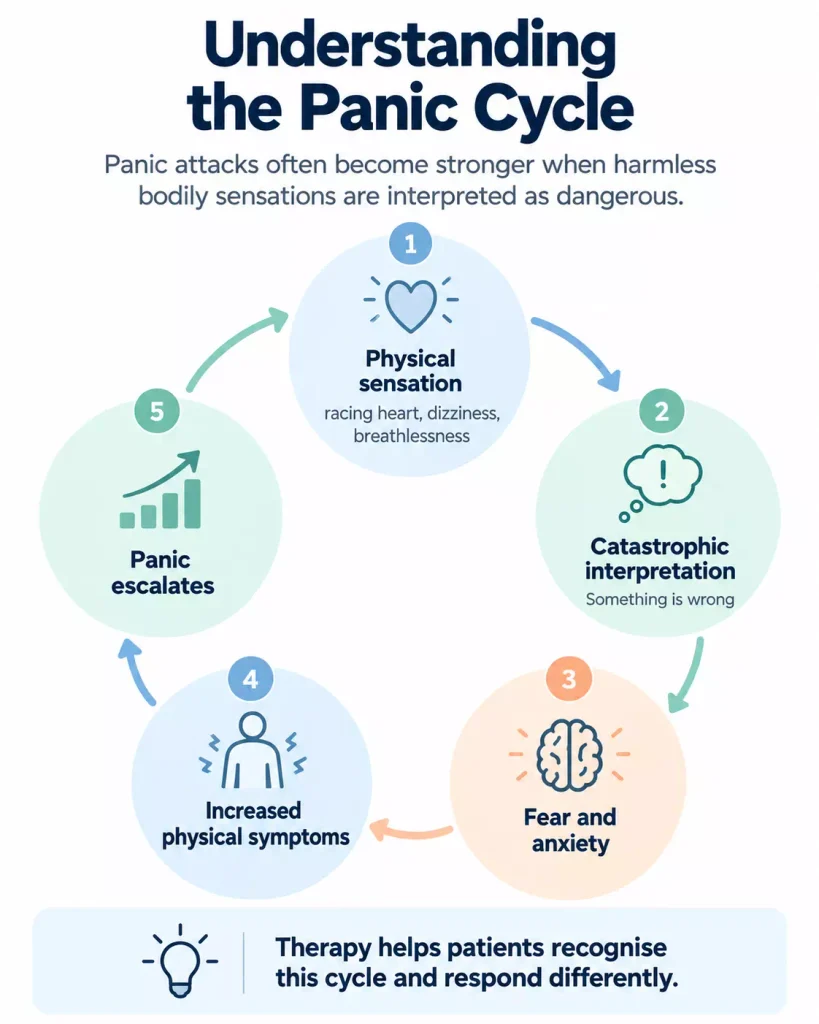
Understanding the Panic Cycle
Panic disorder is often maintained by a self-reinforcing cycle of bodily sensations, catastrophic interpretations and increasing fear. For example, a person may notice a faster heartbeat and interpret it as evidence of a serious cardiac problem. The resulting anxiety activates the body’s stress response, making the heartbeat even faster and apparently confirming the original fear.
Similar reactions can occur with dizziness, breathlessness, tingling or feelings of unreality. These sensations may be interpreted as signs of fainting, suffocation or losing control. The problem is not simply the sensation itself but the threatening meaning attached to it.
Understanding this process is an important part of psychotherapy. Through psychoeducation, patients learn how anxiety affects the body, why panic symptoms become frightening and how avoidance or repeated attempts to control anxiety may unintentionally maintain the disorder. This understanding provides the foundation for subsequent therapeutic work.
Cognitive Behavioural Therapy for Panic Disorder
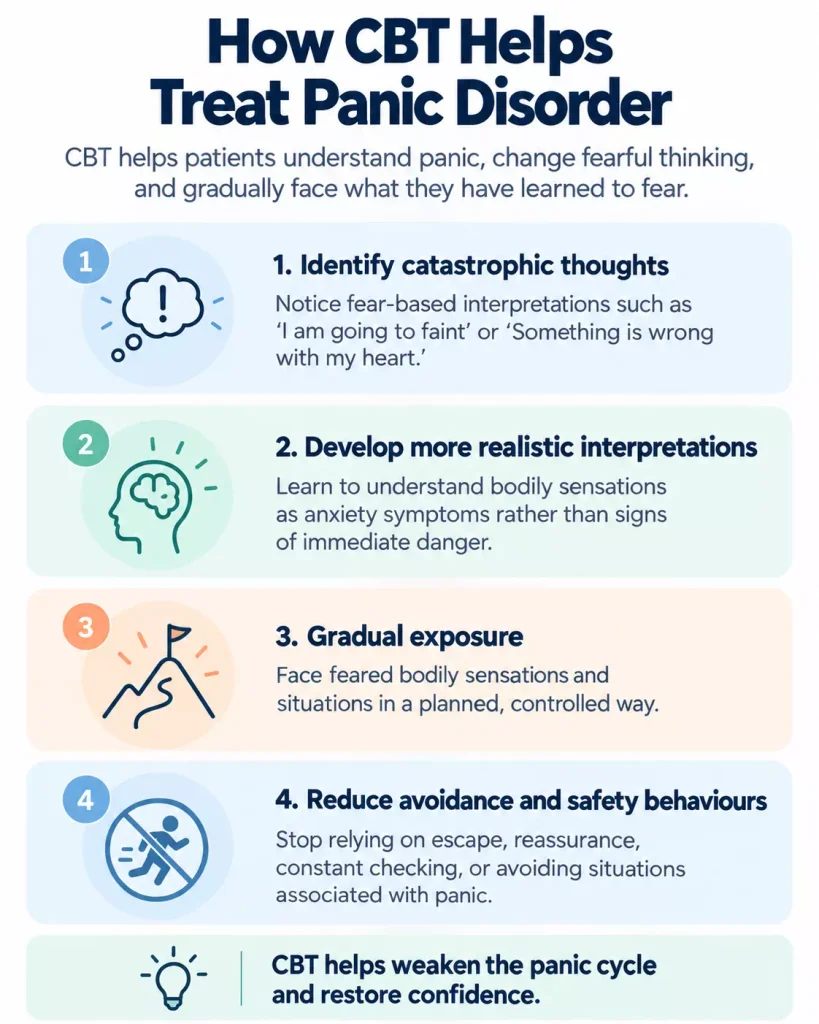
Cognitive behavioural therapy (CBT) is a first-line psychological treatment for panic disorder. It focuses on the interaction between thoughts, physical sensations, emotions and behaviour. Patients learn to recognise how their interpretation of bodily changes influences fear and how their reactions may contribute to further panic attacks.
CBT combines several therapeutic techniques. Cognitive restructuring helps patients reconsider catastrophic predictions, while exposure therapy provides new experiences that challenge their expectations of danger. Treatment also addresses avoidance and safety behaviours that prevent patients from developing confidence in their ability to cope with anxiety.
Rather than merely reassuring patients that their symptoms are harmless, CBT helps them develop a more realistic understanding of their physical reactions through discussion, observation and practical exercises. The aim is to reduce the fear of panic itself and gradually restore normal functioning.
Cognitive Restructuring: Changing Catastrophic Thoughts
Cognitive restructuring focuses on the thoughts that arise when patients experience anxiety or unexpected bodily sensations. Someone with panic disorder may interpret dizziness as evidence of imminent collapse, heart palpitations as a heart attack or breathlessness as a sign of suffocation.
During therapy, these predictions are examined in relation to the patient’s experiences and available evidence. The therapist helps the patient distinguish between an unpleasant physical sensation and the catastrophic outcome they fear.
The aim is not to suppress anxious thoughts or provide constant reassurance. Instead, patients learn to question automatic interpretations and develop a more balanced response to uncertainty. As bodily sensations become less threatening, the cycle of escalating fear can gradually weaken.
Behavioural Therapy and Exposure
Understanding the panic cycle intellectually is often not enough to overcome persistent anxiety. Patients also need practical experiences that challenge their learned expectations of danger.
Exposure therapy involves gradually approaching situations or sensations that have become associated with panic. Depending on the individual’s difficulties, treatment may involve travelling on public transport, entering crowded places, exercising or remaining in situations that previously triggered the urge to escape.
Exposure is planned collaboratively and adjusted to the patient’s clinical circumstances. Its purpose is not to force patients to endure overwhelming anxiety, but to help them discover that feared situations can be approached without the anticipated catastrophe. Over time, repeated learning experiences can reduce fear and avoidance.
Interoceptive Exposure: Overcoming Fear of Bodily Sensations
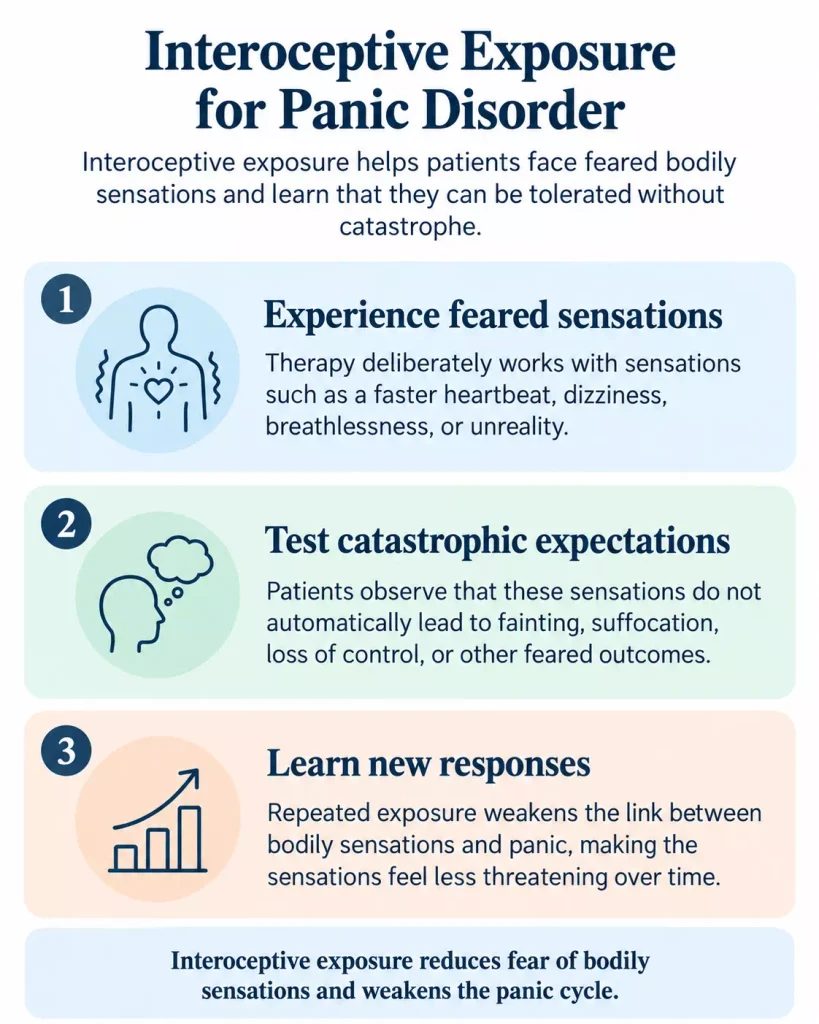
Interoceptive exposure is a particularly important component of CBT for panic disorder. It focuses on the physical sensations that patients have learned to associate with panic, rather than primarily on external situations.
Under appropriate therapeutic supervision, patients may deliberately experience sensations resembling those that previously triggered anxiety, such as a faster heartbeat or mild dizziness. By remaining with these sensations without immediately escaping or relying on protective rituals, they can learn that the sensations do not necessarily signal danger.
The therapeutic objective is to weaken the association between bodily changes and catastrophic expectations. As patients become more confident in tolerating these experiences, the fear of physical symptoms gradually diminishes.
Interoceptive exercises should be selected according to the patient’s medical condition and should not be undertaken without appropriate assessment when relevant physical health concerns exist.
Reducing Avoidance and Safety Behaviours
Avoidance is one of the main mechanisms that can maintain panic disorder. A patient who stops using the metro after experiencing panic may feel immediate relief but does not have the opportunity to discover whether travelling would actually lead to the feared outcome.
Safety behaviours can have a similar effect. Examples include repeatedly checking the pulse, always sitting near an exit, depending on another person for reassurance or carrying medication primarily to feel protected against a possible attack.
Although these strategies may temporarily reduce anxiety, they can reinforce the belief that ordinary situations are dangerous without special precautions. Psychotherapy helps patients recognise such patterns and gradually reduce unnecessary safety behaviours. This allows confidence to develop through direct experience rather than continued avoidance.
Psychodynamic Psychotherapy for Panic Disorder
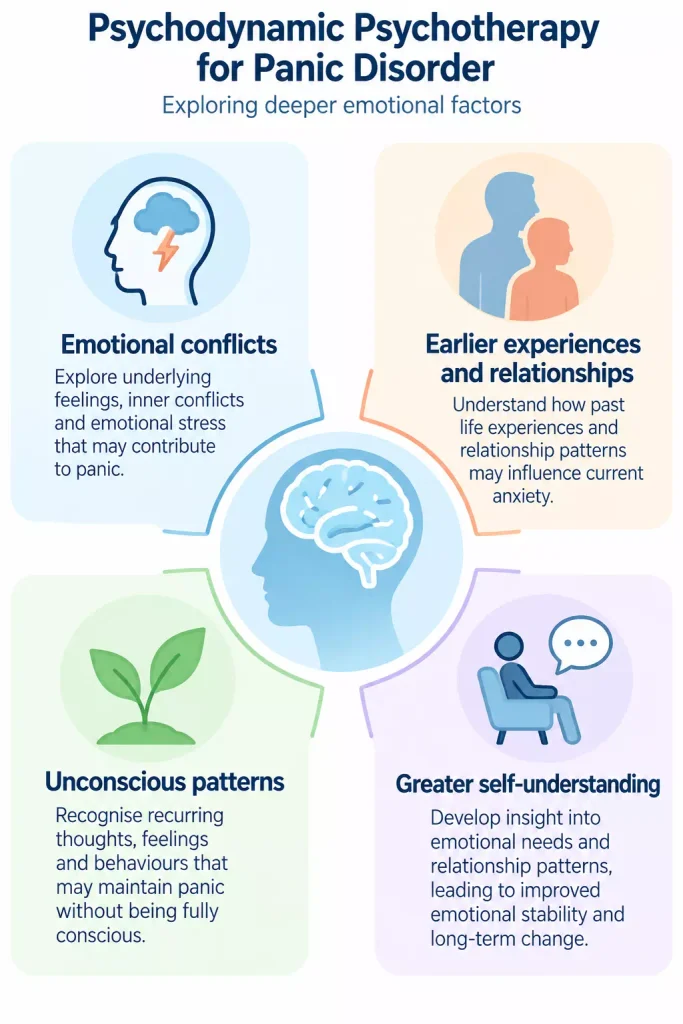
Psychodynamic psychotherapy explores the emotional and psychological factors that may contribute to the development or persistence of panic disorder. Unlike CBT, which primarily targets current patterns of thinking and behaviour, psychodynamic treatment places greater emphasis on the patient’s personal history, relationships, emotional conflicts and ways of managing difficult feelings.
Panic attacks sometimes occur during periods of significant life change, such as separation, bereavement, relationship difficulties, professional transitions or increasing responsibilities. These experiences may activate psychological vulnerabilities or emotional conflicts that are not immediately apparent to the patient.
Psychodynamic psychotherapy seeks to understand how anxiety relates to these experiences and to recurring emotional patterns. The goal is to develop greater self-awareness, improve emotional processing and address psychological difficulties that may extend beyond the immediate symptoms of panic disorder.
Understanding Unconscious Emotional Conflicts
From a psychodynamic perspective, anxiety may be connected with opposing emotional needs or wishes that are difficult to recognise or reconcile. For example, a patient may desire greater independence while simultaneously fearing separation or seek emotional closeness while experiencing anxiety about dependency and rejection.
Such conflicts are not always consciously recognised. Therapy provides an opportunity to explore how they may influence emotional reactions, relationships and the experience of anxiety.
This does not mean that every panic attack has a hidden psychological cause. Panic disorder involves multiple interacting factors, and psychodynamic psychotherapy examines the possible contribution of emotional experiences and unconscious processes within this broader clinical picture.
The Therapeutic Relationship
The relationship between patient and therapist is an essential part of psychodynamic psychotherapy. A reliable therapeutic environment allows patients to discuss anxiety, emotional difficulties and personal experiences without fear of judgement.
As treatment progresses, recurring patterns involving dependency, autonomy, rejection or the expression of emotions may become more apparent within the therapeutic relationship itself. Exploring these experiences can provide insight into difficulties that also arise outside therapy.
A stable therapeutic relationship supports the patient’s ability to understand difficult feelings, tolerate emotional uncertainty and develop more flexible ways of responding to stressful situations.
CBT or Psychodynamic Psychotherapy for Panic Disorder?
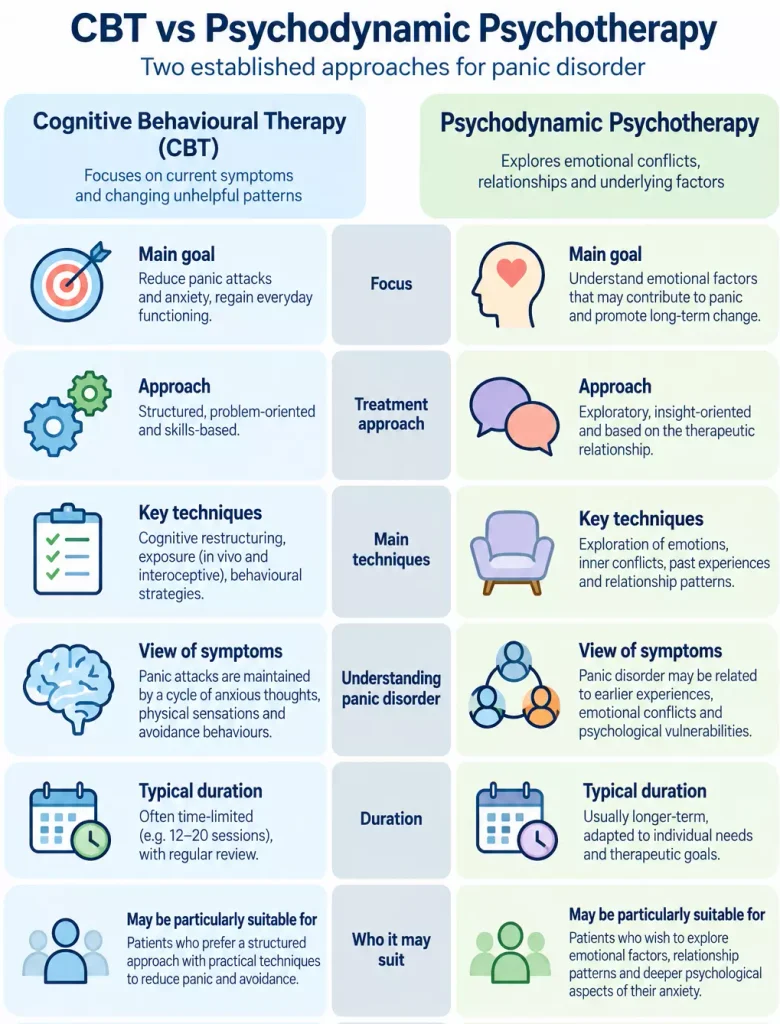
Patients frequently ask which form of psychotherapy is most effective for panic disorder. CBT has the strongest scientific evidence and is generally recommended as the first-line psychological treatment. It directly addresses catastrophic interpretations, avoidance and fear of bodily sensations through structured therapeutic techniques.
Psychodynamic psychotherapy approaches panic disorder from a broader emotional and relational perspective. It may be considered particularly when panic symptoms occur alongside longstanding interpersonal difficulties, recurring emotional conflicts or other psychological concerns. Panic-focused psychodynamic treatments have also been studied, although their evidence base is smaller than that of CBT.
The two approaches differ in emphasis and therapeutic methods. CBT generally focuses on changing current symptom-maintaining processes, while psychodynamic therapy gives greater attention to understanding emotional experiences and patterns that may have developed over time.
The most appropriate treatment depends on the patient’s clinical presentation, preferences, treatment history and goals. A comprehensive psychiatric and psychological assessment can help determine which approach is most suitable.
How Long Does Psychotherapy for Panic Disorder Take?
The duration of psychotherapy depends on the severity of panic disorder, the chosen therapeutic approach and the presence of additional psychological difficulties.
A structured course of CBT is often relatively time-limited. NICE guidance describes a typical course of approximately 7–14 hours of CBT for panic disorder, although treatment may require a different schedule depending on clinical needs.
Psychodynamic psychotherapy may continue for a longer period, particularly when treatment explores longstanding emotional conflicts, relationship patterns or broader psychological vulnerabilities. Patients with co-existing depression, trauma-related difficulties or complex psychiatric conditions may also require more extensive treatment.
The length of psychotherapy should therefore be determined individually and reviewed according to progress and therapeutic goals.
What Happens Between Psychotherapy Sessions?
Psychotherapy is an active process that extends beyond the consulting room. Patients gradually apply what they have learned during treatment to situations encountered in everyday life.
In CBT, this may involve observing panic-related interpretations, practising exposure exercises or reducing avoidance and safety behaviours. These experiences are subsequently discussed with the therapist to evaluate progress and identify remaining difficulties.
In psychodynamic psychotherapy, patients may become more attentive to emotional reactions, relationship patterns and situations that provoke anxiety. Observations made between sessions provide valuable material for understanding psychological conflicts and recurring emotional responses.
Applying therapeutic insights outside appointments helps patients develop lasting changes rather than depending exclusively on the sessions themselves.
Psychotherapy and Medication for Panic Disorder
Psychotherapy can be effective as a stand-alone treatment for panic disorder, particularly when patients can engage actively in the therapeutic process. In other cases, antidepressant medication may be considered according to symptom severity, co-existing conditions, patient preferences and previous treatment response.
Medication primarily aims to reduce recurrent panic attacks and persistent anxiety, while psychotherapy addresses the cognitive, behavioural and psychological processes that contribute to the disorder. The decision to combine treatments should be individualised rather than assuming that every patient requires both.
For more information about antidepressants and other pharmacological options, read Medication for Panic Disorder.
Relapse Prevention After Psychotherapy
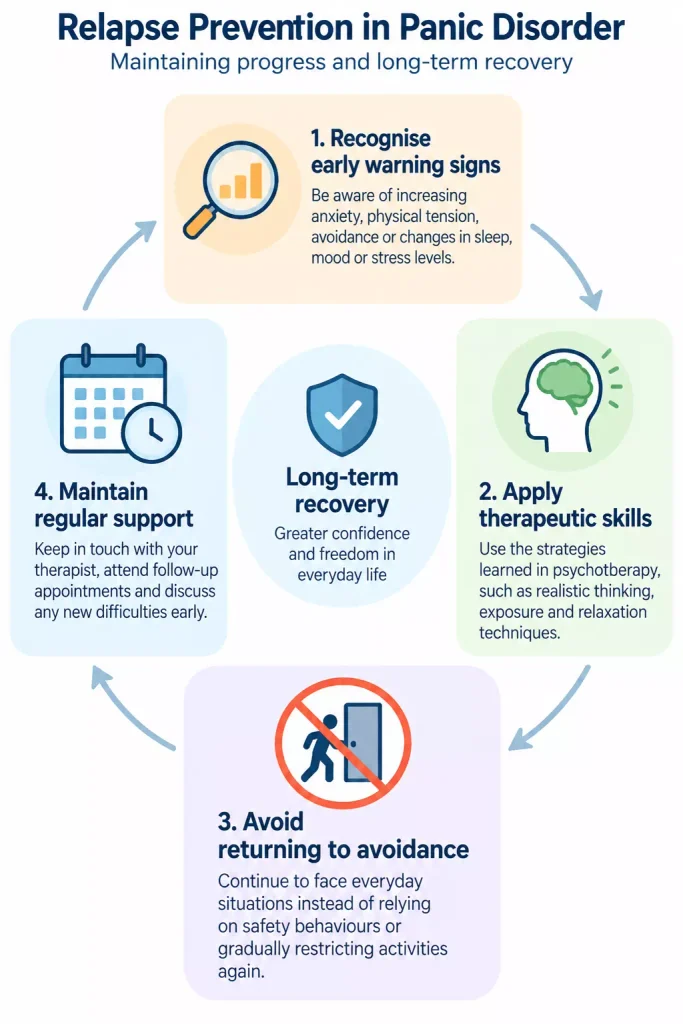
An important goal of psychotherapy is to help patients maintain improvement after active treatment has ended. Recovery does not mean that anxiety or uncomfortable physical sensations will never occur again. Instead, patients learn to experience occasional anxiety without automatically interpreting it as evidence of danger or a return of panic disorder.
Relapse prevention involves recognising early warning signs, applying therapeutic skills and avoiding a gradual return to restrictive behaviour. Patients who notice increasing anticipatory anxiety or renewed avoidance can respond before these patterns become firmly established.
Maintaining confidence in everyday activities, understanding the relationship between physical sensations and fear, and seeking further professional support when necessary can help sustain long-term recovery.
Psychotherapy for Panic Disorder at CHMC Dubai
At CHMC German Clinic for Psychiatry and Psychology in Dubai, psychotherapy for panic disorder is based on an individual psychiatric and psychological assessment. Treatment planning considers the patient’s symptoms, previous treatment experiences, personal history and psychological needs.
The therapeutic approach may include cognitive and behavioural interventions aimed at reducing fear of bodily sensations and avoidance. Where clinically appropriate, psychotherapy can also explore emotional conflicts, relationship patterns and developmental experiences associated with psychological vulnerability.
Dr. Gregor Kowal, German Board-Certified Consultant Psychiatrist and Psychotherapist, combines psychiatric expertise with psychotherapeutic treatment. When indicated, psychological treatment can be coordinated with pharmacotherapy and regular psychiatric follow-up.
The objective is to achieve sustained improvement, restore everyday functioning and help patients regain confidence in managing anxiety.
Patients seeking professional assessment or psychotherapy can arrange a consultation at CHMC Dubai.
For an overview of the complete therapeutic approach, visit Treatment for Panic Attacks in Dubai.

FAQs About Psychotherapy for Panic Disorder
Can psychotherapy stop panic attacks?
Psychotherapy can substantially reduce the frequency and severity of panic attacks, and many patients achieve sustained remission. Effective treatment also reduces anticipatory anxiety and avoidance, allowing patients to regain normal functioning.
Is CBT the best psychotherapy for panic disorder?
CBT has the strongest research evidence and is generally recommended as the first-line psychological treatment. Other approaches may be considered according to the patient’s needs, preferences and broader psychological difficulties.
What is the difference between interoceptive exposure and exposure to feared situations?
Interoceptive exposure focuses on feared internal bodily sensations, such as a faster heartbeat or dizziness. Situational exposure involves approaching external circumstances associated with panic, such as public transport or crowded places. Both aim to reduce fear through new learning experiences.
Can psychodynamic psychotherapy help panic disorder?
Psychodynamic psychotherapy may help some patients understand emotional conflicts, relationship difficulties and recurring psychological patterns associated with anxiety. However, the evidence base for psychodynamic approaches in panic disorder is less extensive than that for CBT.
Is psychotherapy possible without medication?
Yes. Many patients can be treated successfully with psychotherapy alone. Medication may be considered when symptoms are severe, when other psychiatric conditions are present or when previous treatment response suggests an additional benefit.
Can panic disorder return after psychotherapy?
Recurrence is possible, particularly during periods of increased stress. Psychotherapy therefore includes relapse-prevention strategies that help patients recognise early changes and respond without returning to avoidance or excessive safety behaviours.
Read More About Panic Disorder
- Treatment for Panic Attacks in Dubai
- Symptoms of Panic Attacks
- Diagnosis of Panic Disorder
- Causes of Panic Attacks
- Medication for Panic Disorder
- History of Panic Attacks
Clinical References
National Institute for Health and Care Excellence (NICE): Generalised anxiety disorder and panic disorder in adults: management (CG113).