

Medication for panic disorder can significantly reduce recurrent panic attacks and the persistent anxiety that often develops between episodes. Pharmacological treatment is particularly helpful when symptoms are severe, interfere with everyday functioning, or make it difficult to participate in psychotherapy.
The main medications used are antidepressants, particularly selective serotonin reuptake inhibitors (SSRIs) and serotonin-norepinephrine reuptake inhibitors (SNRIs). These medications are taken regularly to achieve sustained improvement. Treatment selection depends on the patient’s symptoms, medical history, previous treatment response and individual needs.
For More Information About Medication for Panic Disorder Contact Our Specialist
When Is Medication Used for Panic Disorder?
Not everyone who experiences a panic attack requires medication. An isolated panic attack does not necessarily indicate panic disorder or justify long-term pharmacological treatment. Medication is more likely to be considered when recurrent attacks, anticipatory anxiety or associated avoidance significantly interfere with work, relationships and everyday activities.
The decision also depends on the severity of associated difficulties. Co-existing depression, persistent anxiety or substantial sleep disturbance may increase the need for pharmacological treatment. A psychiatrist evaluates the overall clinical situation, previous treatment response and patient preferences before recommending medication.
Main Medication for Panic Disorder
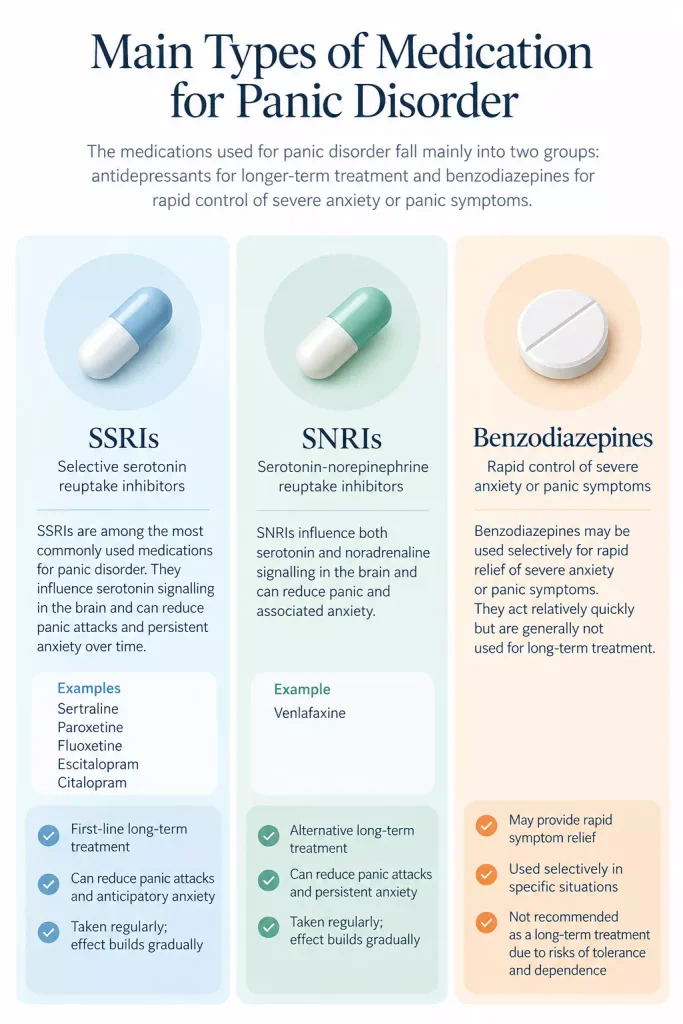
The main medications used for panic disorder are antidepressants (SSRIs and SNRIs) and, in selected clinical circumstances, benzodiazepines. Antidepressants are the preferred medications for sustained control of panic attacks and anticipatory anxiety. Their benefits develop gradually, whereas benzodiazepines act rapidly but carry important risks of tolerance and dependence.
Antidepressants for Panic Disorder
Although commonly associated with depression, antidepressants are also established medications for anxiety disorders, including panic disorder. Their purpose is to reduce recurrent panic attacks, persistent anxiety and the likelihood that ordinary physical sensations will trigger further episodes of panic.
Antidepressants are taken regularly rather than only when an attack occurs. The most commonly used medications belong to the SSRI and SNRI groups. Certain older antidepressants, particularly tricyclic antidepressants, may also be considered when standard treatment is unsuitable or ineffective.
SSRIs for Panic Disorder
Selective serotonin reuptake inhibitors (SSRIs) are generally the first-choice medications for panic disorder. Commonly used examples include sertraline, paroxetine, fluoxetine, escitalopram and citalopram, although approved indications differ between medications and countries.
SSRIs influence serotonin signalling in the brain and gradually reduce the frequency and severity of panic attacks. They can also improve anticipatory anxiety, allowing patients to regain confidence in situations previously associated with panic.
Individual responses vary. Some patients achieve substantial improvement with the first prescribed SSRI, while others require a change of medication because of insufficient effectiveness or adverse effects.
SNRIs for Panic Disorder
Serotonin-norepinephrine reuptake inhibitors (SNRIs) are another established group of antidepressants used for panic disorder. Venlafaxine is one of the best-studied medications in this group.
SNRIs influence both serotonin and noradrenaline signalling and can reduce recurrent panic attacks and persistent anxiety. They may be considered when an SSRI is unsuitable, insufficiently effective or poorly tolerated. The choice depends on previous treatment response, co-existing conditions, possible interactions and the patient’s individual clinical situation.
Other Antidepressants for Panic Disorder
Certain tricyclic antidepressants, particularly imipramine and clomipramine, have demonstrated effectiveness in panic disorder. However, they are generally considered after newer antidepressants because they may cause more troublesome adverse effects and require particular attention to cardiac safety, drug interactions and overdose risk.
The decision to use these medications should be made by a psychiatrist after reviewing the patient’s medical history and previous treatment response.
How Long Does Medication for Panic Disorder Take to Work?
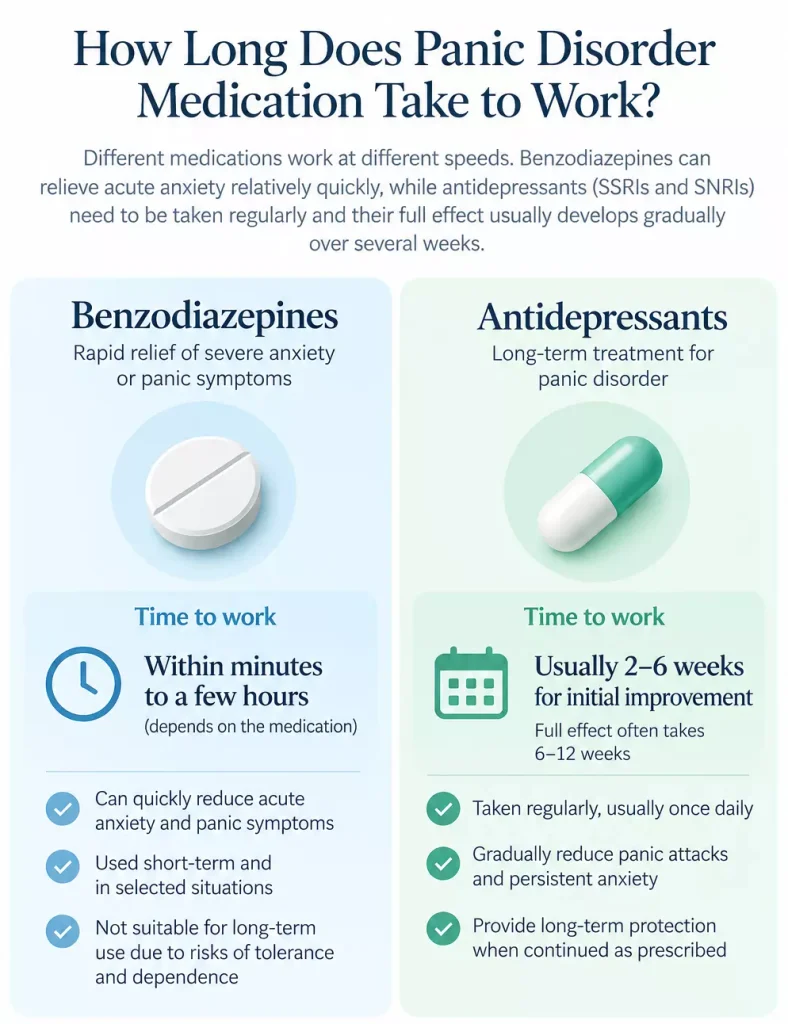
Antidepressants do not provide immediate relief from panic disorder. Some patients notice an initial reduction in anxiety or panic attacks during the first few weeks, but a more substantial therapeutic response often requires approximately four to ten weeks. In some cases, a longer trial is necessary before the effectiveness of treatment can be assessed reliably.
This gradual onset is important because patients experiencing recurrent panic attacks may become discouraged when improvement is not immediate. Medication should therefore be taken consistently and reviewed with the psychiatrist rather than stopped or changed prematurely.
Benzodiazepines for Panic Attacks
Benzodiazepines are medications that can reduce severe anxiety relatively quickly. Examples include lorazepam, alprazolam, clonazepam and diazepam. Their effects differ from those of antidepressants because they enhance the activity of GABA, an inhibitory neurotransmitter involved in regulating nervous system activity.
Although benzodiazepines may provide rapid symptom relief, they are not recommended as routine treatment for panic disorder. Clinical guidelines favour antidepressants for pharmacological treatment because benzodiazepines are associated with dependence and less favourable long-term outcomes. Their use, if considered in exceptional circumstances, requires careful individual assessment and psychiatric supervision.
Why Benzodiazepines Require Caution
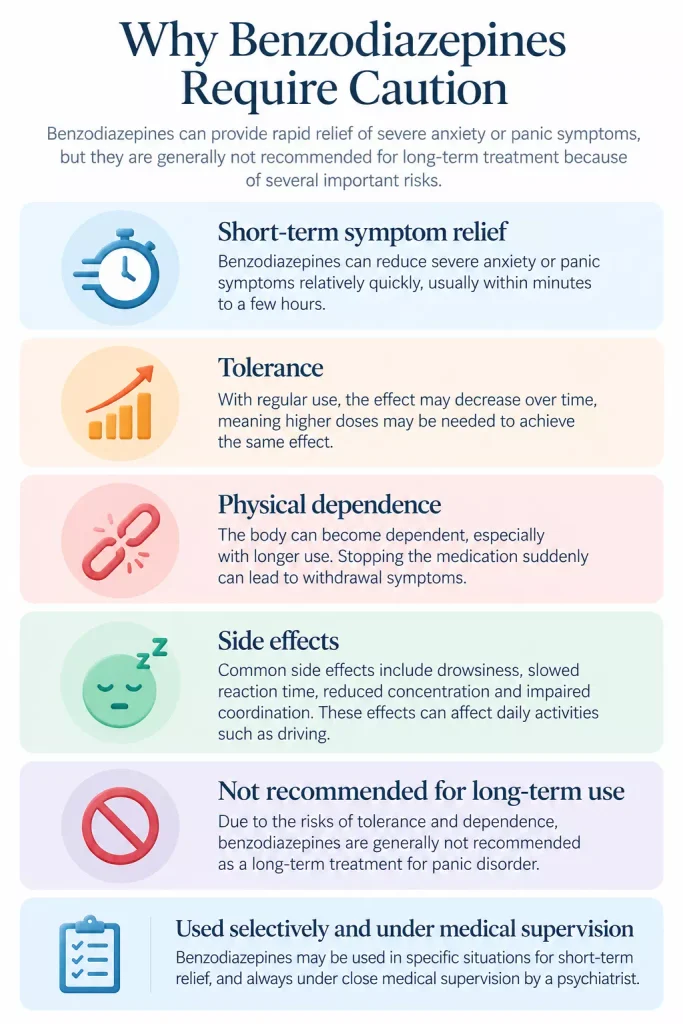
The rapid relief produced by benzodiazepines can become psychologically reinforcing. Patients who fear another panic attack may increasingly rely on carrying or taking medication whenever anxiety develops. This can undermine confidence in managing symptoms without immediate pharmacological relief.
Regular use may also lead to tolerance, meaning that the same dose becomes less effective, and physical dependence, which can develop even when medication is taken as prescribed. Benzodiazepines can cause sedation, impaired concentration, slowed reaction time and memory difficulties. Abrupt discontinuation after sustained use may produce withdrawal symptoms, including severe anxiety and, in some cases, seizures.
For these reasons, benzodiazepines should not be regarded as a long-term solution for panic disorder. When physical dependence has developed, discontinuation requires an individualised, medically supervised reduction.
What About Beta-Blockers?
Beta-blockers can reduce certain physical effects of adrenaline, particularly a rapid heartbeat and trembling. They are sometimes prescribed for specific situations involving performance anxiety, but their effectiveness in treating recurrent panic attacks is not well established.
Because beta-blockers do not adequately address the broader pattern of unexpected panic attacks and anticipatory anxiety, they are not recommended as first-line medication for panic disorder.
Which Medication Is Best for Panic Disorder?
There is no single medication that works equally well for every patient. SSRIs are generally preferred as the initial pharmacological treatment, while other antidepressants may be considered according to effectiveness, tolerability and the individual’s circumstances.
Selecting an appropriate medication requires consideration of previous treatment response, co-existing psychiatric or medical conditions, other prescribed drugs and potential interactions. The psychiatrist must also assess whether particular adverse effects might be especially problematic for the patient.
The most suitable medication is one that provides sustained improvement while remaining safe and well tolerated. Treatment may need adjustment if the initial medication does not achieve an adequate response.
Starting Medication for Panic Disorder: Dosage and Side Effects
Patients with panic disorder are often particularly sensitive to changes in bodily sensations. When an antidepressant is introduced, temporary physical effects may be interpreted as signs of danger and increase anxiety. For this reason, treatment is usually started at a relatively low dose and increased gradually, according to the patient’s response and tolerability.
SSRIs and SNRIs may initially cause nausea, gastrointestinal discomfort, headache, sleep disturbances, sweating, fatigue, sexual side effects or temporary restlessness. Some patients experience increased anxiety during the first days of treatment before the therapeutic effect begins to develop.
Many early adverse effects diminish as treatment continues, although persistent or troublesome symptoms may require dose adjustment or a change of medication. Patients should discuss these difficulties with their psychiatrist rather than independently modifying or stopping treatment.
How Long Should Medication for Panic Disorder Be Continued?
Antidepressant treatment should not normally be discontinued immediately after panic attacks improve. Continuing medication after a satisfactory response reduces the likelihood of recurrence and allows recovery to become more stable.
Clinical guidelines recommend continuing an effective antidepressant for at least six months after the optimal therapeutic dose has been reached. In clinical practice, treatment may continue for twelve months or longer, particularly when panic disorder has been recurrent, severe or associated with other psychiatric conditions.
When discontinuation becomes appropriate, the antidepressant dose should be reduced gradually under psychiatric supervision. Sudden withdrawal can produce dizziness, sleep disturbances, increased anxiety and other discontinuation symptoms that may be mistaken for a return of panic disorder.
Medication and Psychotherapy for Panic Disorder
Medication can reduce the frequency and intensity of panic attacks, whereas psychotherapy helps patients address the fear of future attacks and the behaviours that contribute to persistent anxiety.
Cognitive behavioural therapy (CBT), including exposure-based techniques, is an established treatment for panic disorder. Some patients respond well to psychotherapy alone, while others benefit from pharmacological treatment. The decision depends on symptom severity, treatment preferences and previous response.
For further information about psychological interventions, read Psychotherapy for Panic Disorder.
Monitoring Medication for Panic Disorder
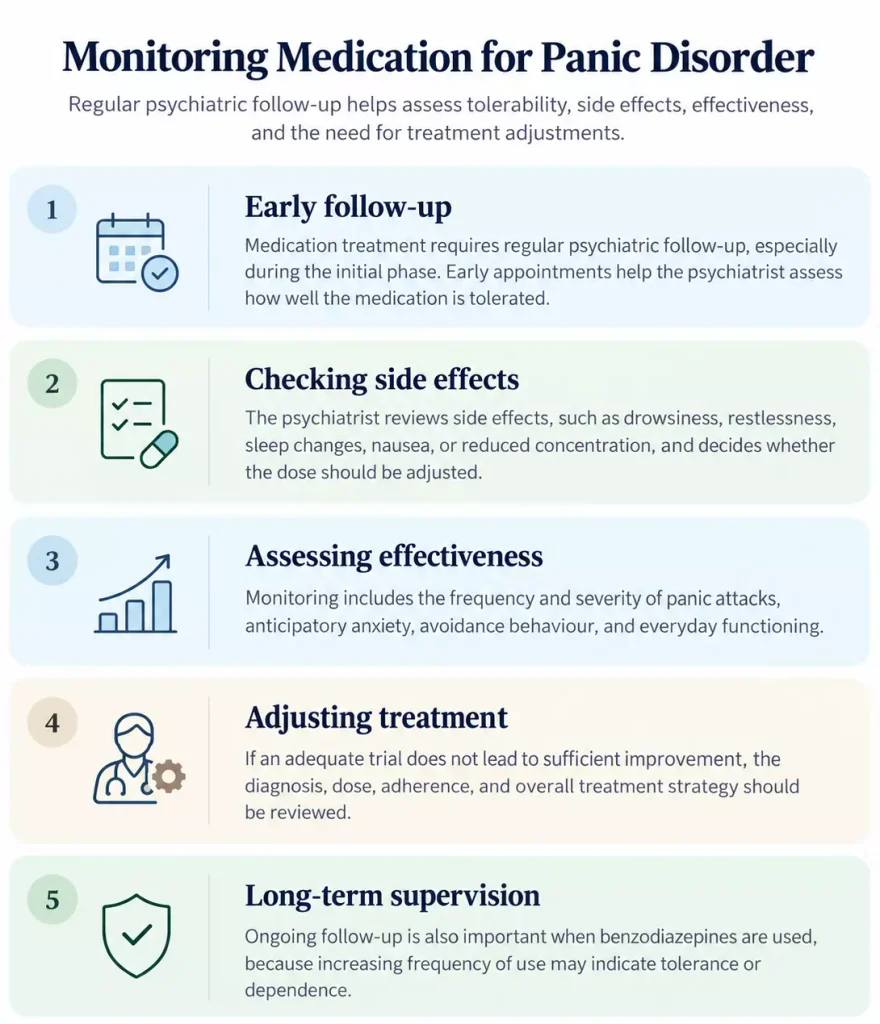
Regular psychiatric follow-up is essential for evaluating the effectiveness and tolerability of medication. During the initial treatment phase, the psychiatrist assesses emerging side effects, adherence and the need for dose adjustments. Follow-up becomes particularly important while the medication is being introduced or increased.
As treatment continues, improvement is assessed by reviewing the frequency and severity of panic attacks, anticipatory anxiety, avoidance behaviour and everyday functioning. If an adequate treatment trial does not produce sufficient improvement, the psychiatrist reassesses the diagnosis, prescribed dose, treatment adherence and possible alternative medications.
Once the patient achieves a stable response, follow-up appointments focus on maintaining improvement, identifying early signs of recurrence and determining the appropriate duration of treatment.
Medication for Panic Disorder at CHMC Dubai
At CHMC German Clinic for Psychiatry and Psychology in Dubai, medication for panic disorder is prescribed following a comprehensive psychiatric assessment. Dr. Gregor Kowal, German Board-Certified Consultant Psychiatrist and Psychotherapist, evaluates the patient’s clinical history, previous treatment response, co-existing conditions and relevant medical factors before recommending pharmacological treatment.
Medication is selected individually, with particular attention to effectiveness, tolerability and potential interactions. Regular follow-up appointments allow treatment to be adjusted when necessary and support long-term symptom control.
Patients seeking assessment and medication management can arrange a psychiatric consultation at CHMC Dubai.
For information about the clinic’s complete approach, including psychotherapy, visit Treatment for Panic Attacks in Dubai.
FAQs About Medication for Panic Disorder
What is the first-line medication for panic disorder?
SSRIs are generally the preferred first-line medications when pharmacological treatment is indicated. Other antidepressants may be considered depending on previous response, tolerability and individual clinical needs.
Can antidepressants treat panic disorder without depression?
Antidepressants are also established treatments for several anxiety disorders. A patient does not need to have depression to benefit from an SSRI or SNRI prescribed for panic disorder.
Can medication completely stop panic attacks?
Medication can substantially reduce or suppress recurrent panic attacks and anticipatory anxiety. However, treatment response varies, and some patients continue to experience symptoms despite appropriate pharmacological treatment.
What happens if the first medication does not work?
The psychiatrist reviews whether the medication has been taken at an appropriate dose for an adequate duration, assesses side effects and adherence, and considers alternative antidepressants or psychological treatment.
Can panic disorder return after medication is stopped?
Symptoms may recur after discontinuation, particularly in patients with recurrent or severe panic disorder. The decision to reduce medication should therefore be based on sustained clinical improvement and an individual assessment of relapse risk.
Read More About Panic Attacks
- Treatment for Panic Attacks
- Symptoms of Panic Attacks
- Diagnosis of Panic Disorder
- Psychotherapy for Panic Disorder
- Causes of Panic Attacks
- History of Panic Attacks
Clinical References
National Institute for Health and Care Excellence (NICE): Generalised anxiety disorder and panic disorder in adults: management (CG113)