

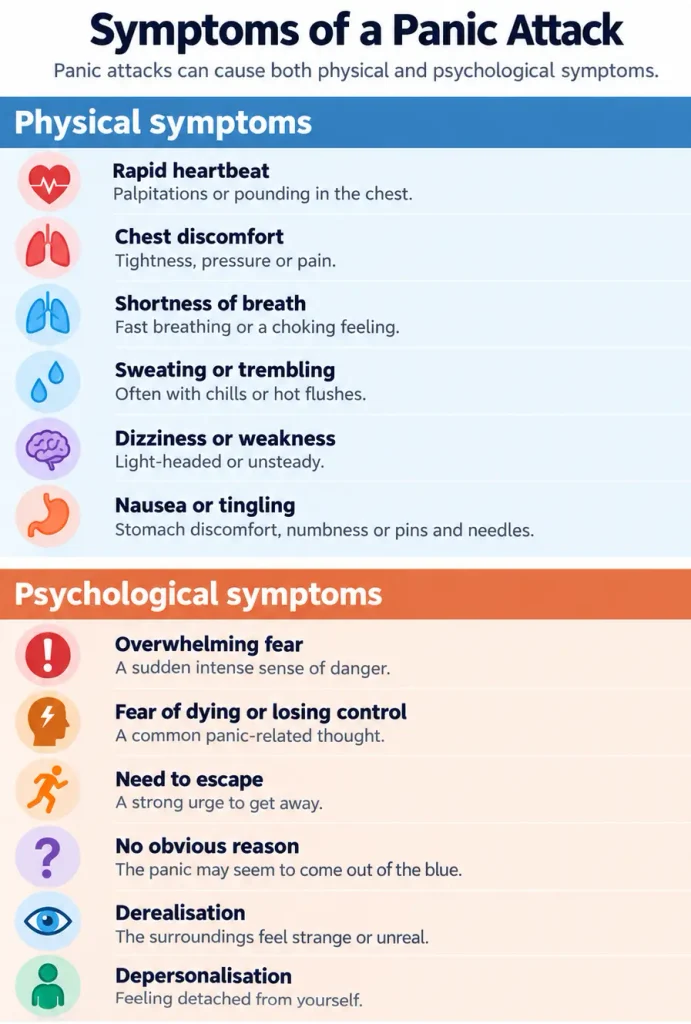
Panic attack symptoms include both physical and psychological reactions. Common physical symptoms include heart palpitations, chest discomfort, shortness of breath, dizziness, sweating, trembling, and tingling sensations. Psychological symptoms may include overwhelming fear, a sense of unreality, fear of losing control, or an urgent need to escape.
A single panic attack does not necessarily indicate panic disorder. The disorder involves recurrent, unexpected panic attacks followed by persistent concern about further attacks or their consequences, or significant changes in behaviour intended to prevent another episode.
A single panic attack does not necessarily mean that someone has panic disorder. Panic disorder develops when attacks recur and are followed by persistent concern about further attacks or behavioural changes such as avoiding situations associated with previous episodes.
Book a Panic Attack Assessment with Dr. Gregor Kowal at CHMC Dubai
What Does a Panic Attack Feel Like?
One of the characteristic features of a panic attack is its sudden onset. A person may feel relatively well and then experience an abrupt surge of fear accompanied by rapidly increasing physical sensations.
The combination can be frightening because the physical symptoms feel completely real. A racing heart may be interpreted as a heart problem, shortness of breath as suffocation, and dizziness as a sign of imminent collapse. Thoughts such as “I am having a heart attack,” “I cannot breathe,” “I am going to faint,” or “I am going to die” can intensify the fear and further increase the physical symptoms.
The episode usually reaches its greatest intensity within minutes. Although the acute surge of panic is generally relatively brief, some symptoms and anxiety may persist longer. Some people also experience panic attacks during sleep, waking suddenly with intense fear and physical symptoms.
Physical Symptoms of a Panic Attack
Panic attacks activate the body’s alarm system and can therefore produce symptoms involving several organ systems simultaneously. One of the most common experiences is a pounding or rapidly beating heart, sometimes accompanied by palpitations or the sensation that the heart is skipping beats. Pressure, tightness, or pain in the chest may occur and can make the episode particularly frightening.
Breathing can become difficult or unusually rapid. Some people experience shortness of breath, a sensation of choking, or a lump in the throat. Sweating, trembling, hot flushes, or chills are also common.
Other physical symptoms of panic attacks include dizziness, light-headedness, nausea, abdominal discomfort, dry mouth, and feelings of weakness or unsteadiness. Numbness or tingling may develop, particularly in the hands, feet, or face. Because several of these symptoms can occur at the same time, the person may become convinced that something dangerous is happening physically.
Psychological Symptoms of a Panic Attack
The psychological symptoms can be just as distressing as the physical sensations. The dominant experience is usually overwhelming fear accompanied by a feeling that something catastrophic is about to happen.
Many people fear that they are dying, losing control or “going crazy.” Others experience an urgent need to escape from wherever they happen to be. The inability to identify an obvious reason for the fear can make the experience even more disturbing.
Panic attacks can also cause derealisation, in which the surrounding environment suddenly seems strange, distant, or unreal. Some people experience depersonalisation, a feeling of being detached from themselves or observing themselves from the outside. These unfamiliar sensations can themselves be interpreted as evidence that something serious is happening, further intensifying the anxiety.
Why Does a Panic Attack Cause So Many Physical Symptoms?
During a panic attack, the body’s fight-or-flight response becomes strongly activated even though there may be no immediate external danger. Stress hormones such as adrenaline contribute to an increased heart rate, faster breathing, sweating, and muscle tension. These reactions are normally useful when the body needs to respond to danger, but during a panic attack they occur without a corresponding external threat.
Breathing may also become faster and deeper. Hyperventilation changes the balance of carbon dioxide in the blood and can contribute to dizziness, tingling, numbness, muscle tension, and feelings of light-headedness. These sensations may then be interpreted as dangerous, increasing fear and intensifying the panic further.
This interaction between physical sensations and fear helps explain why a panic attack can escalate so quickly. A racing heart causes fear, the fear increases physiological arousal, and the increased arousal makes the heart beat even faster. The person can therefore become caught in a rapidly escalating cycle of physical symptoms and catastrophic interpretations.
How Long Do Panic Attack Symptoms Last?
Panic attack symptoms usually develop rapidly and reach their peak within minutes. The most intense phase is generally relatively brief, although the overall experience may last longer. Residual anxiety, exhaustion, or physical discomfort can persist after the acute panic has subsided.
The duration and intensity vary considerably. Some people experience short attacks, while others describe prolonged periods of anxiety with repeated waves of panic-like symptoms. The frequency also differs considerably between individuals. Panic attacks may occur occasionally, several times per month, weekly or, in more severe cases, several times within a short period.
Nocturnal Panic Attacks
Panic attacks do not occur only during the day. Some people experience nocturnal panic attacks, waking suddenly from sleep with intense fear, a racing heart, sweating, chest discomfort, or difficulty breathing. Because the person wakes with severe physical symptoms and no obvious explanation for them, nocturnal attacks can be particularly frightening. Repeated episodes may subsequently lead to anxiety about going to sleep or concern that another attack will occur during the night.
Panic Attack or Heart Attack?
Panic attacks can produce chest pain, shortness of breath, palpitations, sweating, nausea and dizziness. These symptoms can also occur with cardiovascular and other medical conditions, which makes distinguishing a first panic attack from a medical problem difficult without professional assessment.
New, severe or unusual chest pain, significant breathing difficulties, fainting or other potentially serious symptoms require prompt medical assessment. Such symptoms should not automatically be attributed to anxiety or panic, even in someone who has previously experienced panic attacks.
Once recurrent episodes have been medically and psychiatrically evaluated and identified as panic attacks, recognising the familiar pattern can make subsequent episodes less frightening. However, symptoms that are new, unusually severe, or different from previous attacks should not simply be assumed to be psychological.
Other Conditions Can Cause Similar Symptoms
The symptoms of panic attacks are not specific to panic disorder. Palpitations, breathlessness, trembling, sweating, and dizziness can also occur in physical illnesses. Cardiac arrhythmias, thyroid dysfunction, abnormalities of blood glucose, asthma, and other respiratory disorders can produce symptoms that overlap with those of panic attacks and should therefore be considered in the differential diagnosis. Caffeine, nicotine, cannabis, and other substances may also provoke or intensify anxiety and panic-like symptoms.
This overlap is one reason why recurrent panic attacks require careful assessment. The diagnosis should not be based on one symptom alone but on the overall pattern and course of the episodes together with the patient’s medical history and other possible explanations.
Read about how to distinguish panic disorder from medical and psychiatric conditions in our article: Diagnosis of Panic Disorder
From a Single Panic Attack to Panic Disorder
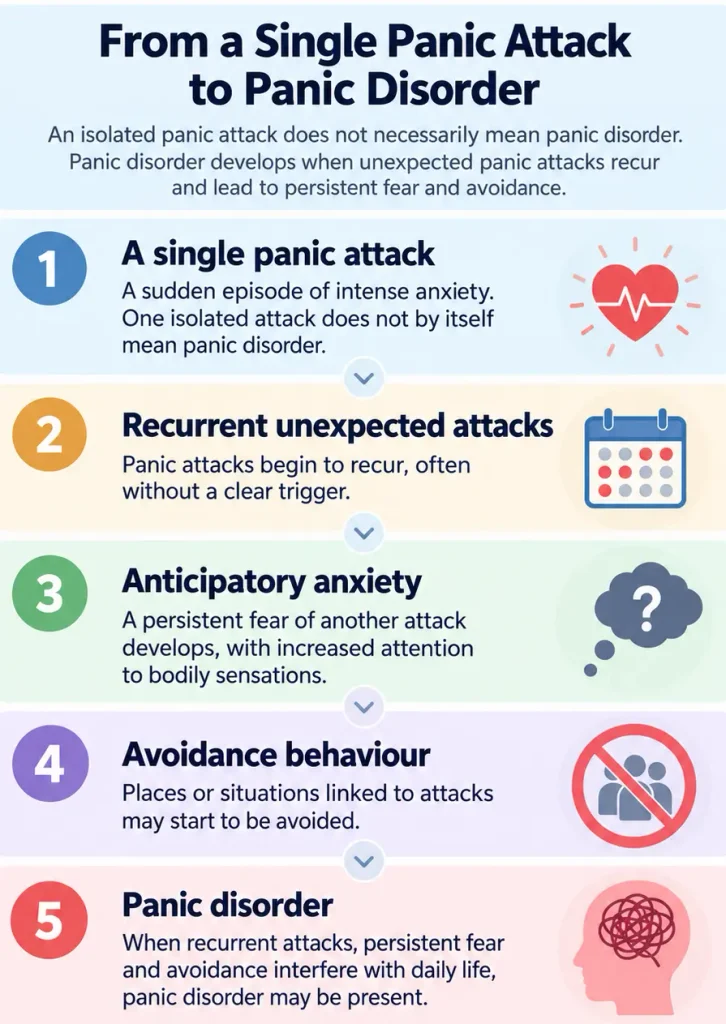
An isolated panic attack does not by itself indicate panic disorder. Panic disorder is characterised by recurrent, unexpected panic attacks followed by at least one month of persistent concern about further attacks or their consequences, or significant behavioural changes intended to prevent another episode. The diagnosis also requires consideration of other psychiatric or medical conditions, medications and substances that could explain the symptoms.
This persistent concern is often called anticipatory anxiety. People may begin monitoring their bodies for signs of another attack. A faster heartbeat, dizziness, or momentary breathlessness can become alarming because these sensations are associated with previous panic episodes.
Over time, avoidance behaviour may develop. A person may begin avoiding crowded places, public transport, driving, flying, elevators, or other situations associated with previous attacks or from which leaving quickly might be difficult. The fear of the next attack can therefore become almost as restrictive as the attacks themselves.
When Should You Seek Professional Help?
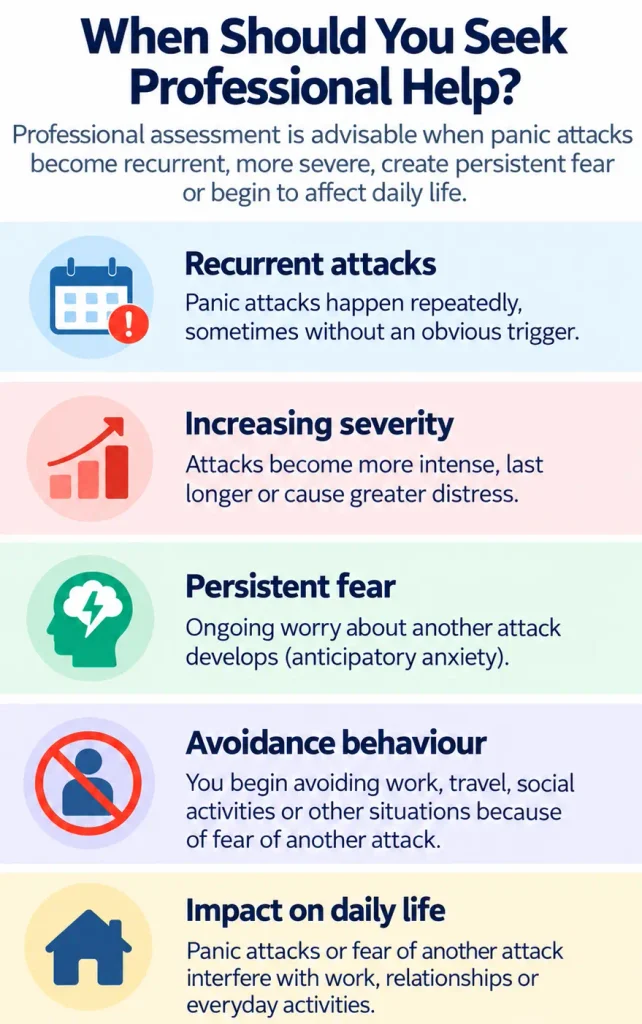
Professional assessment is advisable when panic attacks recur, become increasingly severe, create persistent fear of another attack, or begin to change everyday behaviour. Assessment is particularly important when someone starts avoiding work, travel, social activities, or other situations because of fear that another attack might occur.
New or unexplained physical symptoms should also be appropriately assessed because symptoms associated with panic can overlap with medical conditions. Once physical causes have been considered and panic disorder has been identified, appropriate treatment with medication and psychotherapy can substantially reduce symptoms and help restore normal functioning.
For information about medication, psychotherapy, and the overall therapeutic approach, read more about treatment for Panic Attacks.
Read More About Panic Attacks
- Treatment for Panic Attacks
- Diagnosis of Panic Disorder
- Medication for Panic Disorder
- Psychotherapy for Panic Disorder
- History of Panic Attacks
- Causes of Panic Attacks