

When people hear the term bipolar disorder, they often imagine dramatic mood swings between depression and mania. While this is broadly true, bipolar disorder is not a single condition. Instead, it represents a spectrum of mood disorders that vary in severity, symptoms, and long-term impact on a person’s life.
The two most common forms are Bipolar I disorder and Bipolar II disorder. At first glance, the distinction appears straightforward. Bipolar I involves episodes of full mania, whereas Bipolar II is characterized by hypomania, a milder form of elevated mood. Because hypomania is less disruptive than mania, many people assume that Bipolar II is simply a less severe illness.
Modern research, however, challenges this belief. Although Bipolar II lacks the dramatic manic episodes seen in Bipolar I, it is often associated with more persistent depression, a higher risk of suicide, and a similar degree of impairment in everyday life. These findings demonstrate that Bipolar II disorder should never be regarded as a “mild” form of bipolar illness.
Understanding the differences between these two conditions is important not only for psychiatrists but also for patients and their families. An accurate diagnosis helps guide treatment, reduces the risk of relapse, and improves long-term quality of life.
For more information and help, contact Dr Kowal at CHMC:
What Is Bipolar I Disorder?
Bipolar I disorder is defined by the occurrence of at least one manic episode. Mania represents an extreme elevation of mood that lasts for at least one week or requires hospitalization because of its severity. During mania, people often experience an unusually high level of energy and confidence. They may sleep only a few hours each night without feeling tired, speak rapidly, become unusually sociable, and begin numerous ambitious projects simultaneously. Thoughts race from one idea to another, making conversations difficult to follow. Judgment frequently becomes impaired, leading to impulsive spending, risky investments, reckless driving, or inappropriate sexual behaviour.
In more severe cases, the individual may lose contact with reality and develop psychotic symptoms such as delusions or hallucinations. Someone may become convinced they possess extraordinary talents, believe they have been chosen for a special mission, or think they have unlimited financial resources. These symptoms often require urgent psychiatric treatment and sometimes hospitalization.
Although mania is the defining feature of Bipolar I disorder, depression is equally important. Most patients experience major depressive episodes during the course of their illness, and these depressive periods frequently account for much of the long-term disability associated with the disorder.
What Is Bipolar II Disorder?
Bipolar II disorder consists of recurrent episodes of major depression together with periods of hypomania. Although BD II is a fully recognized diagnostic entity, it is less reliably diagnosed than Bipolar I. The main reason is that the symptoms are less obvious than those of Bipolar I Disorder. Hypomania resembles mania in many ways but is considerably less severe. During hypomania, people often feel energetic, optimistic, productive, and unusually motivated. They may become more creative, speak more quickly, socialize more frequently, or work for long hours without feeling tired.
Unlike mania, however, hypomania usually does not cause severe impairment in social or professional functioning. Patients generally remain aware of reality, do not develop psychotic symptoms, and rarely require hospitalization. Because hypomania often feels pleasant, many people do not recognize it as a symptom of illness. Friends and relatives may simply think the individual is exceptionally productive or in an unusually good mood. Consequently, these episodes are frequently overlooked during psychiatric assessments.
The depressive episodes tell a very different story. Depression in Bipolar II disorder tends to be recurrent, prolonged, and emotionally exhausting. It is these depressive phases—not hypomania—that usually determine how much the illness interferes with a person’s life.
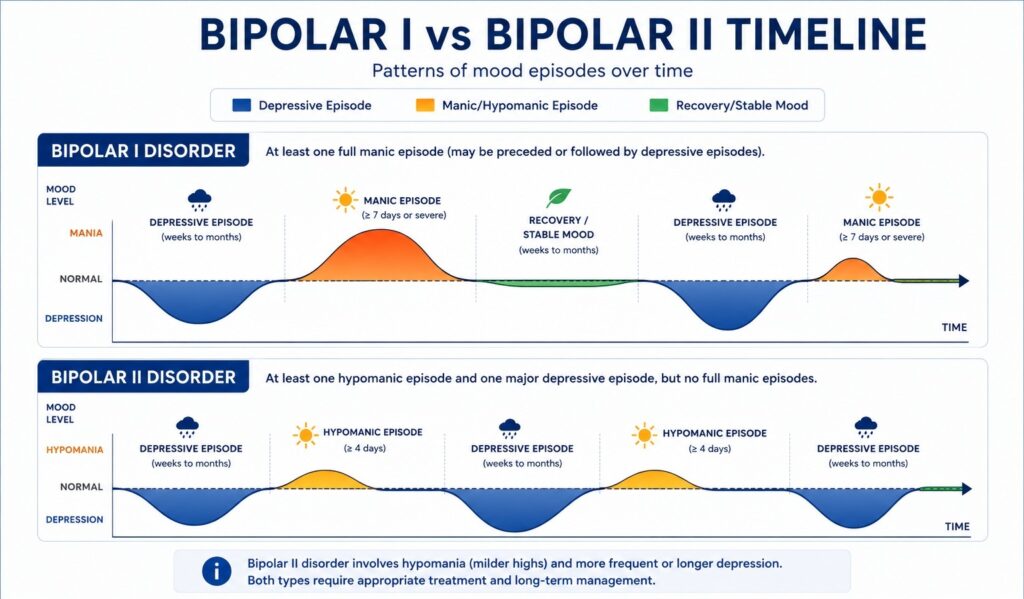
Mania is the defining feature of Bipolar I Disorder, followed by depression. Depression accounts for much of the long-term disability in BP I. Bipolar II Disorder consists of recurrent episodes of depression together with periods of hypomania. Hypomania resembles mania but is considerably less severe. Depression dominates the course of Bipolar II Disorder and tends to be recurrent, prolonged, and emotionally exhausting.
Bipolar Disorder Exists on a Spectrum
Psychiatric disorders rarely fit into rigid categories. Instead, symptoms usually exist on a continuum, with some individuals experiencing only mild mood fluctuations while others develop severe episodes requiring hospitalization.
Psychiatrists increasingly view bipolar disorders as part of a broad affective spectrum rather than two completely separate illnesses. There is no single laboratory test or brain scan that clearly separates Bipolar I from Bipolar II. Instead, the diagnosis is based on clinical observation, the patient’s history, and internationally accepted diagnostic criteria.
This explains why diagnosing Bipolar II disorder can be particularly challenging. Some researchers have suggested that if the current diagnostic criteria for hypomania were broadened, many more individuals currently diagnosed with recurrent depression would instead meet the criteria for Bipolar II disorder. Scientific studies indicate that these patients often resemble people with Bipolar II much more closely than those with unipolar depression.
For patients, this means that bipolar disorder is not always easy to recognize. Symptoms may develop gradually over many years, and different mood episodes may vary considerably in intensity.
How Is Bipolar Disorder Diagnosed?
Diagnosing bipolar disorder requires a detailed psychiatric assessment rather than a single laboratory test. Unlike diabetes or thyroid disease, there is currently no blood test, brain scan, or genetic test that can confirm the diagnosis. Instead, psychiatrists diagnose bipolar disorder by carefully evaluating the patient’s current symptoms together with their complete psychiatric history. Because many individuals seek help only during depression, identifying previous episodes of hypomania or mania is often the greatest diagnostic challenge.
During the consultation, the psychiatrist asks about changes in mood, energy, sleep, behaviour, and daily functioning. Questions may include whether the patient has ever experienced periods of unusually high energy, needed very little sleep without feeling tired, talked more rapidly than usual, became excessively productive, or made unusually impulsive decisions. A detailed family history is equally important because bipolar disorder frequently runs in families. Information provided by partners or close relatives may also help identify hypomanic episodes that the patient regarded simply as periods of feeling particularly well.
The diagnosis is based on internationally accepted criteria, such as those described in the Diagnostic and Statistical Manual of Mental Disorders (DSM-5) and the International Classification of Diseases (ICD-11). These classifications define the duration, severity, and combination of symptoms required for Bipolar I and Bipolar II disorder.
Although laboratory investigations cannot diagnose bipolar disorder, they remain an important part of the assessment. Blood tests may identify thyroid disorders, vitamin deficiencies, hormonal disturbances, or other medical conditions that can produce symptoms resembling depression or mania. Brain imaging, such as MRI or CT scans, is usually performed only when another neurological disorder is suspected.
Early diagnosis is essential because treatment strategies differ significantly between bipolar disorder and unipolar depression. The sooner appropriate therapy begins, the greater the chance of preventing future mood episodes and preserving long-term functioning.
How Psychiatrists Distinguish Bipolar I from Bipolar II Disorder
Making the correct diagnosis is one of the most important steps in successful treatment. Diagnosis depends on a detailed psychiatric assessment and a careful reconstruction of the patient’s mood history. During the consultation, a psychiatrist will usually explore not only the current symptoms but also episodes that occurred many years earlier. Patients are often asked about periods during which they slept much less than usual, felt unusually energetic, became excessively productive, talked more rapidly, or engaged in impulsive behaviour. Family history is equally important because bipolar disorder tends to occur more frequently among biological relatives.
Obtaining information from partners or close family members can sometimes be particularly valuable. Patients may remember depressive episodes clearly but overlook hypomanic periods because they were experienced as times of unusually good health rather than illness. This explains why Bipolar II disorder is frequently diagnosed several years after the first depressive episode. Until hypomania is identified, many individuals receive treatment for recurrent depression alone.
Why an Accurate Diagnosis Changes Treatment
Distinguishing Bipolar II disorder from recurrent major depression has important therapeutic consequences. In recurrent depression, antidepressant medication often forms the central part of treatment. In bipolar disorder, however, treatment aims to stabilize mood in both directions by preventing depression as well as hypomania or mania.
If Bipolar II disorder is mistaken for unipolar depression, treatment may focus exclusively on relieving depressive symptoms without addressing the underlying mood instability. Over time this can contribute to repeated relapses and a more chronic course of illness. Early recognition allows patients to receive treatment specifically designed for bipolar disorder and provides the best opportunity to reduce future mood episodes and preserve long-term functioning.
Why Bipolar II Is Often Misunderstood
One of the greatest misconceptions surrounding bipolar disorder is that Bipolar II is simply a “lighter” version of Bipolar I. This misunderstanding arises because hypomania is clearly less severe than mania. However, psychiatrists no longer evaluate bipolar disorders solely by the severity of elevated mood. Instead, they consider the overall burden of illness over many years.
Scientific studies following hundreds of patients have shown that people with Bipolar II spend a remarkably large proportion of their lives experiencing depressive symptoms. Although hypomanic episodes are shorter and less disruptive than mania, depressive episodes are often longer, more frequent, and increasingly chronic. These repeated periods of depression affect employment, relationships, education, and physical health, sometimes for decades. For many patients, the illness is therefore defined not by occasional periods of increased energy but by the repeated return of depression.
Depression Dominates Bipolar II Disorder
One of the most important findings of long-term research is that depression occupies far more time than elevated mood in both Bipolar I and Bipolar II disorder. In a large multinational study, researchers analysed daily mood ratings over an entire year. They found that patients with both disorders experienced abnormal mood during almost half of all days. In Bipolar I disorder, approximately 36 percent of all days were spent in depression. In Bipolar II disorder, this figure was slightly higher at 37 percent.
More importantly, the overall balance between depression and elevated mood differed considerably. In Bipolar I disorder, depressive days outnumbered elevated mood days by almost three to one. In Bipolar II disorder, depression occurred nearly four times as often as elevated mood. These numbers illustrate an important clinical reality. Although hypomania receives considerable attention because it distinguishes Bipolar II from recurrent depression, depression remains the dominant feature of the illness.
For many individuals, depressive episodes last weeks or months. During these periods, even simple daily activities may become overwhelming. Patients frequently report persistent sadness, exhaustion, reduced concentration, feelings of worthlessness, loss of motivation, and difficulty enjoying activities. Many withdraw from friends and family, struggle to perform at work, and gradually lose confidence in their ability to cope with everyday life.
Because depression dominates the course of Bipolar II disorder, many patients initially receive a diagnosis of recurrent major depressive disorder rather than bipolar disorder. It may take years before a careful psychiatric assessment identifies previous episodes of hypomania and establishes the correct diagnosis.
This distinction is extremely important because the treatment of bipolar depression differs significantly from the treatment of unipolar depression. An accurate diagnosis allows psychiatrists to select medications that stabilize mood over the long term rather than focusing exclusively on depressive symptoms.
Mood Instability Differs Between Bipolar I and Bipolar II
Although depression dominates Bipolar II disorder, Bipolar I disorder appears to be associated with greater emotional instability throughout the day. Patients with Bipolar I more frequently report rapid fluctuations in mood, sometimes changing from feeling energetic and optimistic to irritable or depressed within a short period.
Research also suggests that individuals with Bipolar I are more sensitive to external influences that affect mood. Certain medications, particularly antidepressants, as well as corticosteroids, recreational drugs, and other psychoactive substances, may trigger sudden mood changes or even manic episodes more readily than in Bipolar II disorder.
This difference has practical implications for treatment. Psychiatrists are generally particularly cautious when prescribing antidepressants to patients with bipolar disorder because these medications may occasionally destabilize mood if they are not combined with an appropriate mood stabilizer.
The Risk of Suicide Is Higher Than Many People Realize
The predominance of depression in Bipolar II disorder has one particularly serious consequence: an increased risk of suicidal behaviour. While both Bipolar I and Bipolar II disorder are associated with an elevated risk of suicide compared with the general population, several studies suggest that individuals with Bipolar II disorder may attempt suicide even more frequently than those with Bipolar I disorder or recurrent unipolar depression.
This finding may seem surprising because Bipolar II lacks the dramatic manic episodes that often attract immediate medical attention. However, it is the repeated and persistent depressive episodes that place many patients at risk. Living with recurring depression over many years can gradually erode hope, self-confidence, and resilience. Feelings of guilt, hopelessness, worthlessness, and emotional exhaustion may become overwhelming if appropriate treatment is delayed.
Fortunately, suicidal behaviour can often be prevented through early diagnosis, effective treatment, and continuous psychiatric care. Family members also play an important role. They are frequently the first to notice subtle changes in mood, behaviour, or daily routines that may signal a worsening depressive episode. Prompt professional intervention during these early stages can prevent a full relapse and may ultimately save lives.
Anxiety Disorders Often Accompany Bipolar Disorder
Bipolar disorder rarely occurs in isolation. Many patients also develop one or more anxiety disorders during their lifetime, adding another layer of complexity to diagnosis and treatment.
Generalized anxiety disorder, panic disorder, social anxiety disorder, and obsessive-compulsive disorder are all commonly seen in people living with bipolar illness. Large studies have shown that approximately half of patients with either Bipolar I or Bipolar II disorder experience an anxiety disorder at some point in their lives. Importantly, anxiety appears to affect both bipolar subtypes at similar rates.
The presence of anxiety is far from a minor problem. Patients who experience both bipolar disorder and anxiety often develop symptoms at a younger age and tend to suffer more frequent depressive episodes. They are also more likely to experience rapid cycling, meaning four or more mood episodes within a single year. As a result, anxiety disorders are considered an important predictor of a more complicated clinical course.
From a patient’s perspective, anxiety can be as disabling as depression itself. Persistent worry, physical tension, panic attacks, or fear of social situations may continue even when mood symptoms appear relatively stable. Comprehensive treatment therefore addresses both conditions simultaneously rather than focusing solely on mood episodes.
Alcohol and Substance Misuse Can Make Bipolar Disorder Worse
Many individuals with bipolar disorder turn to alcohol or recreational drugs in an attempt to manage emotional distress. Some hope that alcohol will reduce anxiety or help them sleep during depressive episodes, while others seek stimulants or other substances during periods of increased energy.
Unfortunately, these strategies almost always worsen the illness over time. Research shows that approximately 40 percent of individuals with Bipolar II disorder develop alcohol or substance misuse during their lifetime. Although substance abuse is generally more common in Bipolar I disorder, particularly regarding illicit drugs, it remains a major clinical concern in Bipolar II because it increases the frequency of depressive episodes, reduces the effectiveness of medication, and substantially raises the risk of relapse.
Interestingly, researchers have also observed regional differences. Studies from Europe report that alcohol misuse is considerably more common than illicit drug abuse among people with Bipolar II disorder, whereas studies from the United States show relatively higher rates of drug misuse. These differences may partly explain why the illness often begins at a younger age and follows a more severe course in some populations.
Successful treatment frequently requires addressing bipolar disorder and substance misuse together. Treating only one condition while ignoring the other often leads to repeated relapses.
Personality Disorders May Also Be Present
Another important aspect that is often overlooked is the presence of personality disorders. Research indicates that more than one-third of patients with Bipolar II disorder meet the criteria for a coexisting personality disorder. Among these, Borderline Personality Disorder appears most frequently.
This does not mean that the two conditions are the same. Bipolar disorder is characterized by distinct mood episodes that develop over days or weeks, whereas personality disorders involve long-standing patterns of emotional regulation, behaviour, and interpersonal relationships.
When both conditions occur together, diagnosis becomes more challenging. Emotional instability, impulsive behaviour, and interpersonal difficulties may overlap, making a careful psychiatric assessment essential. Fortunately, recognizing both disorders allows treatment to be tailored more effectively. Medication may stabilize mood episodes, while psychotherapy helps patients improve emotional regulation, relationships, and coping strategies.
Bipolar Disorder Rarely Affects Only Mood
One of the most important messages from modern research is that bipolar disorder is not simply an illness of alternating depression and mania. It affects almost every aspect of life, including emotional well-being, physical health, relationships, work performance, and long-term quality of life.
For this reason, successful treatment extends far beyond controlling individual mood episodes. It aims to help patients maintain stable relationships, remain professionally active, preserve cognitive function, and achieve lasting emotional stability over many years.
This broader understanding of bipolar disorder has fundamentally changed psychiatric care. Today, psychiatrists recognize that helping patients lead fulfilling and productive lives is just as important as reducing the number of mood episodes.
Cognitive Function Is Often Affected Even Between Mood Episodes
For many years, bipolar disorder was considered an episodic illness in which patients returned completely to normal once a depressive or manic episode had resolved. Modern research has shown that this assumption is not always correct. Even during periods of emotional stability, many individuals continue to experience subtle cognitive difficulties that influence their professional and personal lives.
These problems are not a sign of reduced intelligence. Rather, they reflect changes in how the brain processes information. Patients may notice that tasks requiring concentration take longer to complete, that multitasking becomes more difficult, or that they forget information they would previously have remembered without effort.
Studies comparing Bipolar I and Bipolar II disorder have found that both groups demonstrate a remarkably similar pattern of cognitive impairment. Performance is commonly reduced in areas such as attention, psychomotor speed, working memory, and executive functioning, which includes planning, organizing, solving problems, and making decisions. Importantly, these impairments are very similar in both bipolar subtypes.
How Cognitive Difficulties Affect Everyday Life
These cognitive changes may seem subtle during a psychiatric consultation, yet they often have a profound impact on daily living.
A manager who previously supervised several projects simultaneously may suddenly struggle to organize meetings or prioritize tasks. A university student may need considerably longer to prepare for examinations despite studying just as hard. Parents may find it increasingly difficult to keep track of appointments, school activities, or household responsibilities.
Many patients describe a feeling that their thinking has become “slower” or “less sharp.” Others report that they become mentally exhausted after activities that previously seemed effortless. Reading lengthy documents, following complicated conversations, or making important financial decisions may require much greater concentration than before.
These difficulties frequently persist even when depression or hypomania has improved. Consequently, some patients wonder whether they are becoming less capable professionally, when in reality they are experiencing one of the recognised consequences of bipolar disorder.
Understanding these cognitive symptoms often provides considerable reassurance. Patients realize that these problems are part of the illness rather than a personal failure.
Functional Recovery Is More Than Symptom Recovery
One of the most important lessons learned during the past two decades is that eliminating symptoms does not automatically restore quality of life. Psychiatrists increasingly distinguish between clinical recovery, meaning that mood symptoms have improved, and functional recovery, meaning that a person has returned to their previous level of work, relationships, independence, and social participation.
Research has demonstrated that people with Bipolar II disorder perform almost identically to those with Bipolar I disorder when overall daily functioning is measured. Difficulties occur across numerous areas of life, including independent living, occupational functioning, interpersonal relationships, financial management, and leisure activities. In other words, despite experiencing less severe manic symptoms, individuals with Bipolar II often face limitations that are every bit as significant as those experienced by patients with Bipolar I disorder.
This finding challenges one of the oldest misconceptions in psychiatry—that Bipolar II is simply a mild condition.
Living with Bipolar Disorder Involves More Than Managing Mood
Mood episodes represent only one aspect of bipolar disorder. Over time, repeated episodes influence nearly every area of a person’s life.
Many patients describe interruptions in education because depressive episodes prevented them from completing university degrees. Others experience repeated periods of sick leave, reduced productivity, or unemployment despite having excellent professional qualifications. Relationships may become strained as family members struggle to understand the unpredictable nature of the illness. Some individuals gradually withdraw from friends and social activities because maintaining conversations or making plans feels emotionally exhausting.
Financial difficulties may also arise. During manic episodes, patients with Bipolar I disorder sometimes spend excessive amounts of money or make unrealistic business decisions. In contrast, individuals with Bipolar II disorder may experience financial problems because prolonged depression reduces motivation, concentration, and the ability to maintain consistent employment.
These challenges demonstrate why successful treatment should focus not only on reducing symptoms but also on restoring long-term functioning and improving quality of life.
Bipolar I and Bipolar II Patients Often Need Different Types of Support
Although the two disorders share many similarities, research suggests that patients often require different forms of psychological and practical support.
People recovering from Bipolar I disorder frequently need assistance rebuilding everyday routines after severe manic episodes. They may require help returning to work, organizing finances, obtaining appropriate healthcare, or finding stable accommodation if previous episodes disrupted their lives.
Individuals with Bipolar II disorder generally remain more independent in practical aspects of daily living. However, they often report difficulties in less visible areas of life. Persistent psychological distress, strained interpersonal relationships, reduced social participation, sexual difficulties, and feelings of insecurity are reported more frequently by patients with Bipolar II disorder than by those with Bipolar I disorder.
These observations emphasize that effective treatment should always be individualized. Two patients may both carry the diagnosis of bipolar disorder while requiring completely different therapeutic approaches.
Modern Treatment Focuses on Long-Term Stability
The treatment of bipolar disorder has evolved considerably during recent decades. Today, psychiatrists recognize that simply responding to individual mood episodes is not enough. The primary goal is to maintain long-term emotional stability while preserving cognitive function, occupational performance, relationships, and overall quality of life.
Treatment usually combines medication with psychotherapy, psychoeducation, and lifestyle interventions. Each component addresses a different aspect of the illness, and together they offer the greatest chance of achieving lasting recovery.
Medication reduces the frequency and severity of future mood episodes. Psychotherapy helps patients understand their illness, manage stress, improve relationships, and develop healthy coping strategies. Psychoeducation teaches patients and their families to recognize early warning signs of relapse, while healthy daily routines support emotional stability over the long term.
Rather than viewing bipolar disorder as a condition that can be treated only during acute episodes, modern psychiatry increasingly approaches it as a chronic medical illness requiring continuous care, much like diabetes or hypertension.
Medication: The Foundation of Long-Term Stability
Medication plays a central role in the treatment of both Bipolar I and Bipolar II disorder. Unlike temporary treatments that address only an acute depressive or manic episode, bipolar medication is designed to stabilize mood over many years and reduce the likelihood of future relapses.
Mood stabilizers remain the cornerstone of treatment. Their primary purpose is to prevent both depressive and elevated mood episodes while helping patients maintain emotional balance over the long term. Depending on the individual’s symptoms, atypical antipsychotic medications may also be prescribed because several have proven effective in treating both acute episodes and preventing future relapses.
The role of antidepressants deserves special attention. Since depression is often the most disabling aspect of Bipolar II disorder, many patients understandably expect antidepressants to be the primary treatment. However, bipolar depression differs from unipolar depression. In some individuals, antidepressants may destabilize mood and contribute to hypomania, mania, or rapid cycling if they are prescribed without adequate mood stabilization. Research suggests that Bipolar I patients appear particularly vulnerable to medication-induced mood switching, although careful monitoring is essential in both bipolar subtypes.
For this reason, medication should always be supervised by a psychiatrist experienced in treating bipolar disorder. Treatment plans frequently require adjustment over time as symptoms, life circumstances, and treatment responses change.
Psychotherapy Is an Essential Part of Treatment
Although medication is fundamental, it is rarely sufficient on its own. Bipolar disorder affects much more than mood. It influences self-esteem, relationships, family life, work performance, and the ability to cope with stress. Psychotherapy addresses these areas and complements medical treatment.
One of the first goals of psychotherapy is helping patients understand their illness. Many individuals feel confused after receiving a diagnosis because they have interpreted years of depression, occasional periods of increased energy, and fluctuating motivation as unrelated problems. Learning how bipolar disorder develops often provides considerable relief and reduces self-blame.
Therapy also helps patients recognize the earliest warning signs of relapse. Every individual gradually learns to identify personal patterns that signal a developing mood episode. Some notice changes in sleep several days before mood begins to deteriorate. Others become unusually talkative, irritable, or restless before hypomania develops. Many patients recognize that withdrawing from social activities or losing interest in hobbies often marks the beginning of another depressive episode.
For individuals with Bipolar II disorder, psychotherapy is particularly valuable because interpersonal difficulties and persistent psychological distress frequently remain even when mood symptoms improve. Research indicates that these areas represent some of the greatest unmet needs reported by Bipolar II patients.
Family involvement is equally important. When relatives understand bipolar disorder, they are better able to provide support without becoming overly critical or unintentionally reinforcing unhealthy behaviours. Families often recognize subtle behavioural changes before patients themselves become aware of them, allowing treatment to begin before a full relapse develops.
Lifestyle Has a Greater Impact Than Many Patients Expect
Medication and psychotherapy are only part of successful long-term management. Everyday habits also influence mood stability.
Among all lifestyle factors, regular sleep appears to be one of the most important. Sleep deprivation can destabilize mood and, in susceptible individuals, may contribute to hypomania or mania. Maintaining consistent bedtimes and wake-up times therefore becomes an important therapeutic strategy rather than simply a matter of good sleep hygiene.
Stress management is equally important. Major life events, occupational pressure, relationship conflicts, and prolonged emotional strain may all increase the likelihood of relapse. Learning healthy coping strategies through psychotherapy enables patients to manage stressful situations before they trigger another mood episode.
Alcohol and recreational drugs deserve particular attention. Although they may temporarily relieve emotional distress, they almost invariably worsen bipolar disorder over time. Alcohol disrupts sleep, reduces the effectiveness of medication, and increases the likelihood of depressive episodes. Recreational drugs may provoke mood instability and significantly complicate treatment. Patients who avoid these substances generally achieve more stable long-term outcomes.
Regular physical activity also contributes to recovery. Exercise improves sleep quality, reduces anxiety, supports cognitive function, and enhances overall emotional well-being. It should not replace medical treatment but can significantly complement it.
Recognising Early Warning Signs of Relapse
One of the greatest achievements in modern bipolar treatment is teaching patients to recognize relapse before symptoms become severe. Early signs of depression often develop gradually. A person may begin sleeping longer than usual, lose motivation, withdraw from social contact, struggle to concentrate at work, or stop enjoying previously pleasurable activities. Appetite may change, and everyday tasks increasingly feel overwhelming. Identifying these changes early allows treatment to be adjusted before a major depressive episode develops.
The warning signs of hypomania or mania are often different. Many patients notice that they need less sleep while still feeling energetic. Others become unusually optimistic, speak more rapidly, start multiple projects simultaneously, or develop an increased desire to socialize. Some begin spending money impulsively or making unrealistic plans with extraordinary confidence.
Every patient develops a unique pattern over time. Learning these personal warning signs is one of the most effective ways to prevent severe relapses and maintain long-term stability.
Can People with Bipolar Disorder Live Normal Lives?
Receiving a diagnosis of bipolar disorder can initially feel overwhelming. Many patients fear they will never again be able to pursue a successful career, maintain stable relationships, or enjoy family life. Fortunately, this is far from the reality for most people. Today, many individuals with Bipolar I and Bipolar II disorder complete university degrees, build successful businesses, work as physicians, lawyers, engineers, teachers, artists, and entrepreneurs, and raise healthy families.
The diagnosis itself does not determine future success. Rather, long-term outcomes depend largely on early diagnosis, consistent treatment, good adherence to medication, healthy daily routines, and strong social support. Like many chronic medical conditions, bipolar disorder usually requires lifelong management. However, lifelong treatment does not mean lifelong disability. Many patients experience long periods of emotional stability and lead productive, fulfilling lives.
The Importance of Long-Term Follow-Up
Because bipolar disorder is generally a chronic condition, treatment should not end when symptoms improve. Regular follow-up appointments allow psychiatrists to monitor medication, identify subtle signs of relapse, assess cognitive functioning, and address new life challenges before they become overwhelming. These consultations also provide opportunities to discuss family planning, occupational stress, physical health, and any concerns regarding medication.
Patients sometimes discontinue medication once they begin feeling better. Unfortunately, this is one of the most common reasons for relapse. Continuing treatment during periods of stability is often the best protection against future mood episodes. Successful management therefore depends on an ongoing partnership between the patient, psychiatrist, psychotherapist, and family members.
What Causes Bipolar I and Bipolar II Disorder?
Although Bipolar I and Bipolar II disorder differ in the type of mood episodes they produce, researchers believe that both conditions develop through similar biological mechanisms. There is no single cause of bipolar disorder. Instead, the illness results from a complex interaction between genetic susceptibility, brain function, and environmental influences.
One of the strongest risk factors is family history. Individuals who have a parent, brother, sister, or another close relative with bipolar disorder are significantly more likely to develop the condition themselves. However, genetics alone do not determine whether someone will become ill. Many people with a family history never develop bipolar disorder, while others receive the diagnosis despite having no known affected relatives.
Researchers have also identified changes in several brain regions responsible for regulating emotions, motivation, attention, and decision-making. These include networks involving the prefrontal cortex, amygdala, and hippocampus. Rather than a structural abnormality visible on brain scans, bipolar disorder appears to involve changes in the way these regions communicate with one another.
Another important factor is the regulation of neurotransmitters such as dopamine, serotonin, glutamate, and noradrenaline. These chemical messengers help control mood, motivation, sleep, and emotional responses. During manic or hypomanic episodes, dopamine activity is thought to increase, whereas depressive episodes may involve reduced activity within several neurotransmitter systems.
Circadian rhythm disturbances also play an important role. The body’s internal biological clock regulates sleep, hormone production, body temperature, and numerous other physiological processes. Disruption of normal sleep patterns is one of the earliest signs of both mania and depression. Many patients notice that needing less sleep precedes hypomania, while prolonged sleep often accompanies depression.
Environmental factors do not cause bipolar disorder on their own but may trigger the first episode in genetically vulnerable individuals. Significant life stress, traumatic experiences, bereavement, relationship problems, major career changes, or prolonged sleep deprivation can all contribute to the onset of symptoms. In women, pregnancy and the postpartum period may also increase the risk of mood episodes.
For most patients, bipolar disorder first appears between the ages of 15 and 30, although diagnosis is often delayed because early symptoms are mistaken for depression, anxiety, or the normal emotional challenges associated with adolescence and early adulthood.
Understanding the biological basis of bipolar disorder helps reduce stigma. Bipolar disorder is not caused by weakness, poor parenting, or lack of willpower. It is a medical condition involving complex interactions between genetics, brain function, and environmental factors.
Conditions That Can Resemble Bipolar Disorder
Several psychiatric conditions share symptoms with bipolar disorder, making diagnosis challenging even for experienced clinicians. Distinguishing these disorders is essential because each requires a different treatment approach.
The condition most commonly confused with Bipolar II disorder is recurrent major depressive disorder. Patients with Bipolar II usually seek help during depression, while previous episodes of hypomania may have gone unnoticed. Unless the psychiatrist specifically asks about periods of increased energy, reduced need for sleep, or unusually elevated mood, the diagnosis may remain incomplete.
Attention-Deficit/Hyperactivity Disorder (ADHD) can also resemble bipolar disorder because both conditions may involve increased activity, impulsivity, distractibility, and difficulty concentrating. The difference lies in the pattern of symptoms. ADHD begins during childhood and remains relatively stable over time, whereas bipolar symptoms occur in distinct episodes separated by periods of relative stability.
Another condition that may resemble Bipolar II disorder is Borderline Personality Disorder. Both illnesses can involve emotional instability, impulsive behaviour, and relationship difficulties. However, the mood changes seen in borderline personality disorder usually occur within hours and are closely related to interpersonal events, while bipolar mood episodes typically develop over several days or weeks and last much longer.
Cyclothymic disorder represents a milder form of bipolar illness. Individuals experience repeated fluctuations between mild depression and hypomanic symptoms, but these mood changes never become severe enough to meet the full diagnostic criteria for Bipolar I or Bipolar II disorder. Despite their lower intensity, symptoms may still interfere significantly with daily functioning.
Anxiety disorders may also complicate diagnosis because anxiety frequently accompanies bipolar disorder. Generalized anxiety disorder, panic disorder, and social anxiety disorder can all coexist with bipolar illness, making the clinical picture more complex.
Other medical conditions, including thyroid disease, neurological disorders, sleep disorders, and substance misuse, may also produce symptoms that resemble bipolar disorder. This is why a thorough medical assessment forms an important part of the diagnostic process.
An accurate diagnosis allows treatment to be tailored to the individual’s needs and greatly improves the likelihood of long-term recovery.
What Is the Long-Term Outlook for People with Bipolar Disorder?
A diagnosis of bipolar disorder often raises understandable concerns about the future. Many patients worry that they will no longer be able to work, maintain relationships, or achieve their personal goals. Fortunately, modern treatment has dramatically improved the long-term outlook for people living with Bipolar I and Bipolar II disorder.
Today, bipolar disorder is regarded as a chronic but highly treatable medical condition. Although there is currently no permanent cure, most patients experience substantial improvement with appropriate treatment. Many remain free of major mood episodes for extended periods and lead productive, independent lives.
Several factors influence prognosis. Early diagnosis is one of the most important. Patients who receive appropriate treatment soon after the first mood episodes generally experience fewer relapses and better preservation of cognitive and social functioning. Consistent adherence to medication, regular psychotherapy, healthy sleep habits, and avoidance of alcohol and recreational drugs further improve long-term outcomes.
Family support also plays a crucial role. Relatives who understand bipolar disorder are often able to recognize the earliest signs of relapse and encourage timely medical intervention. Strong social relationships have repeatedly been associated with better recovery and improved quality of life.
Many people with bipolar disorder successfully complete higher education, pursue demanding careers, marry, and raise children. Numerous well-known artists, scientists, entrepreneurs, and public figures have openly discussed living with bipolar disorder while achieving exceptional professional success.
The illness should therefore not be viewed as a barrier to a fulfilling life. Rather, it is a condition that requires ongoing management, similar to hypertension or diabetes. With appropriate psychiatric care, realistic expectations, and active participation in treatment, most patients can maintain emotional stability and enjoy a high quality of life.
The most important message is one of hope. Bipolar disorder presents significant challenges, but it does not define a person’s future. Early recognition, individualized treatment, and long-term follow-up allow many individuals to live healthy, productive, and meaningful lives.
Women Are Diagnosed with Bipolar II Disorder More Frequently
Another interesting difference between the two disorders concerns gender.
Studies suggest that Bipolar II disorder is diagnosed approximately twice as often in women as in men, whereas Bipolar I disorder affects men and women at roughly similar rates. Researchers believe that the greater vulnerability of women to depressive disorders may partly explain this difference, since depression is the dominant feature of Bipolar II disorder.
This does not mean that men are protected from Bipolar II disorder. Instead, it highlights the importance of considering bipolar disorder whenever recurrent depression is present, regardless of gender. Both men and women may experience years of depressive episodes before hypomania is recognized.
Bipolar I versus Bipolar II Disorder. Conclusion
Although Bipolar I and Bipolar II disorder belong to the same spectrum of mood disorders, they are distinct clinical conditions that differ in important ways. Bipolar I disorder is characterized by episodes of full mania that may require hospitalization and can occasionally involve psychotic symptoms. Bipolar II disorder involves hypomania rather than mania, yet this does not make it a milder illness. Instead, recurrent depression dominates its course, often causing greater long-term disability than the elevated mood episodes themselves.
One reason why Bipolar Disorder II is frequently overlooked, is that hypomania often feels pleasant rather than pathological. Patients rarely seek medical attention during these periods and may not even mention them unless specifically asked. Consequently, many individuals receive treatment for recurrent depression for several years before Bipolar II disorder is finally recognized.
Modern treatment extends far beyond simply controlling mood episodes. It combines medication, psychotherapy, psychoeducation, healthy lifestyle habits, and regular psychiatric follow-up to help patients maintain emotional stability, preserve cognitive functioning, and enjoy fulfilling personal and professional lives.
The most important message is one of hope. With an accurate diagnosis, individualized treatment, and ongoing support, the vast majority of people living with bipolar disorder can build successful careers, maintain meaningful relationships, and achieve an excellent quality of life.
Frequently Asked Questions
Is Bipolar II disorder less serious than Bipolar I disorder?
No. Although hypomania is milder than mania, Bipolar II disorder is often associated with more frequent and longer-lasting depressive episodes. Research shows that the overall burden of illness can be just as great as in Bipolar I disorder.
Can Bipolar II disorder become Bipolar I disorder?
Yes. If a person who has previously experienced only hypomania later develops a full manic episode, the diagnosis changes from Bipolar II disorder to Bipolar I disorder.
Why is Bipolar II disorder often mistaken for depression?
Most patients seek medical attention during depressive episodes and may not recognize previous periods of hypomania as symptoms of illness. Without identifying these episodes, Bipolar II disorder can easily be mistaken for recurrent major depression.
Can bipolar disorder be cured?
Bipolar disorder is generally considered a lifelong condition. However, modern treatment can effectively control symptoms, reduce relapses, and allow most patients to lead productive and satisfying lives.
Is psychotherapy necessary if I take medication?
Yes. Medication stabilizes mood, while psychotherapy helps patients understand their illness, improve relationships, cope with stress, recognize early warning signs of relapse, and maintain long-term emotional stability.
Does bipolar disorder affect memory and concentration?
Yes. Research has shown that both Bipolar I and Bipolar II disorder may affect attention, working memory, processing speed, and executive functioning, even during periods of emotional stability.
Is bipolar disorder hereditary?
A family history of bipolar disorder increases the likelihood of developing the illness, although no single gene is responsible. Both genetic and environmental factors contribute to its development.
Can stress trigger bipolar episodes?
Stress does not cause bipolar disorder, but it can trigger depressive, hypomanic, or manic episodes in individuals who are genetically vulnerable.
Is alcohol safe for people with bipolar disorder?
Alcohol is generally discouraged because it interferes with medication, disrupts sleep, worsens mood stability, and increases the risk of relapse.
When should I see a psychiatrist?
You should seek professional assessment if you experience repeated episodes of depression, unusually elevated mood, reduced need for sleep, impulsive behaviour, rapid mood changes, or if close family members notice significant changes in your behaviour or emotional state. Early diagnosis greatly improves long-term outcomes.
Read More About Bipolar Disorder
- Treatment for Bipolar Disorder
- Symptoms of Bipolar Disorder
- Diagnosis of Bipolar Disorder
- Self-Test for Bipolar Disorder
- Psychiatrist for Bipolar Disorder
- Bipolar Disorder in Pregnancy
- Medication for Bipolar Disorder
- Psychotherapy for Bipolar Disorder
- Causes of Bipolar Disorder
- What is Rapid Cycling?
- Bipolar Disorder and Sleep
- Living with Bipolar Disorder
- Relationships, Family, Everyday Life with BD
- Long Term Recovery & Quality of Life with BD
- Family Support in Bipolar Disorder
- What is Mania and Hypomania?
- Cyclothymic Disorder
- History of Bipolar Disorder
- CANMAT Guidelines for Bipolar Disorder
- Mood Stabilizers for Bipolar Disorder
- Lithium for Bipolar Disorder
Medically reviewed by Dr. Gregor Kowal

DR. GREGOR KOWAL
Dr. Gregor Kowal is a German-certified consultant in Psychiatry and Psychotherapy. Since 2010, Dr. Kowal has been the Medical Director of CHMC, a psychiatric clinic located in Dubai. Dr. Kowal graduated from the prestigious University of Heidelberg. After completing his specialty training, he held leadership and teaching positions, serving as Head of Department and later as Medical Director at renowned psychiatric hospitals across Germany. In addition to his expertise in psychiatry, Dr. Kowal is trained as a psychotherapist with a foundation in psychoanalytical psychotherapy.