

At CHMC in Dubai, Dr. Gregor Kowal, a German consultant for psychiatry and psychotherapy, specializes in bipolar disorder. He uses a holistic approach to support patients through every phase of the illness—from crisis management to long-term stability and recovery.
Bipolar disorder, also known as manic-depressive illness, is a complex mental health condition that affects mood regulation. People living with this disorder experience alternating emotional states—ranging from extreme highs (mania or hypomania) to deep lows (depression).
In some cases, mixed states occur, where symptoms of mania and depression appear simultaneously, creating confusion and emotional turmoil. When left untreated, this condition can have a significant impact on personal relationships, career progress, and overall quality of life.
Contact Dr Kowal for a psychiatric assessment of bipolar disorder in Dubai:
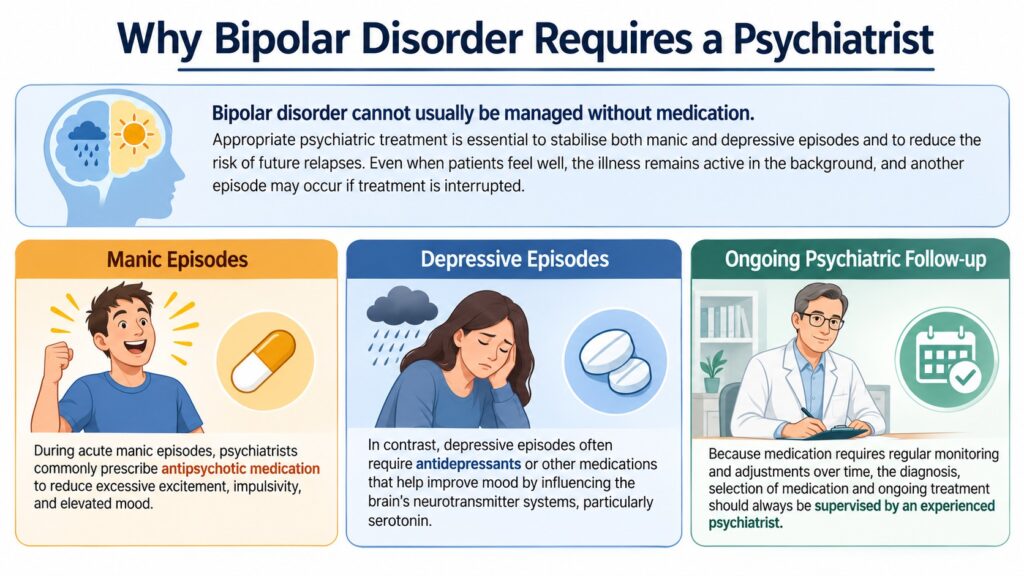
Why Bipolar Disorder Requires a Psychiatrist
Bipolar disorder cannot usually be managed without medication. Appropriate psychiatric treatment is essential to stabilise both manic and depressive episodes and to reduce the risk of future relapses. Even during periods when patients feel well, the illness remains active in the background, and another episode may occur if treatment is interrupted.
During acute manic episodes, psychiatrists commonly prescribe antipsychotic medication to reduce excessive excitement, impulsivity, and elevated mood. In contrast, depressive episodes often require antidepressants or other medications that help improve mood by influencing the brain’s neurotransmitter systems, particularly serotonin.
Because medication requires regular monitoring and adjustments over time, the diagnosis, selection of medication, and ongoing treatment should always be supervised by an experienced psychiatrist. Careful psychiatric follow-up helps maximise treatment effectiveness, minimise side effects, detect early warning signs of relapse, and enable most patients to achieve long-term mood stability and a significantly improved quality of life.
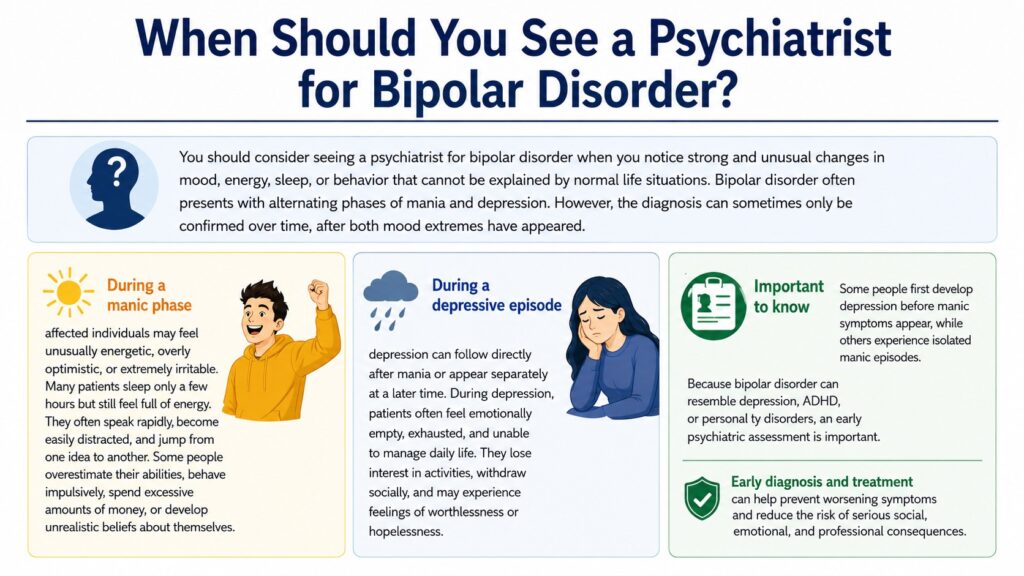
When Should You See a Psychiatrist for Bipolar Disorder?
You should consider seeing a psychiatrist for bipolar disorder when you notice strong and unusual changes in mood, energy, sleep, or behavior that cannot be explained by normal life situations. Bipolar disorder often presents with alternating phases of mania and depression. However, the diagnosis can sometimes only be confirmed over time, after both mood extremes have appeared.
During a manic phase, affected individuals may feel unusually energetic, overly optimistic, or extremely irritable. Many patients sleep only a few hours but still feel full of energy. They often speak rapidly, become easily distracted, and jump from one idea to another. Some people overestimate their abilities, behave impulsively, spend excessive amounts of money, or develop unrealistic beliefs about themselves.
Depressive episodes can follow directly after mania or appear separately at a later time. During depression, patients often feel emotionally empty, exhausted, and unable to manage daily life. They lose interest in activities, withdraw socially, and may experience feelings of worthlessness or hopelessness.
Some people first develop depression before manic symptoms appear, while others experience isolated manic episodes. Because bipolar disorder can resemble depression, ADHD, or personality disorders, an early psychiatric assessment is important. Early diagnosis and treatment can help prevent worsening symptoms and reduce the risk of serious social, emotional, and professional consequences.
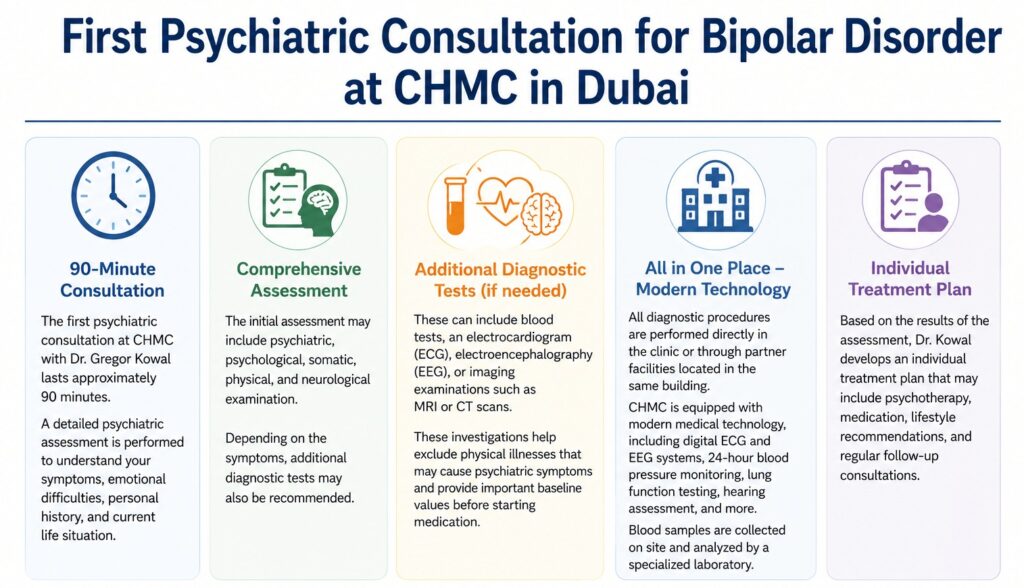
First Psychiatric Consultation for Bipolar Disorder at CHMC in Dubai
The first psychiatric consultation at CHMC with Dr. Gregor Kowal lasts approximately 90 minutes. During this appointment, a detailed psychiatric assessment is performed in order to understand the patient’s symptoms, emotional difficulties, personal history, and current life situation.
The initial assessment may include psychiatric, psychological, somatic, physical, and neurological examination. Depending on the symptoms, additional diagnostic tests may also be recommended. These can include blood tests, an electrocardiogram (ECG), electroencephalography (EEG), or imaging examinations such as MRI or CT scans. These investigations help exclude physical illnesses that may cause psychiatric symptoms and provide important baseline values before starting medication.
All diagnostic procedures are performed directly in the clinic or through partner facilities located in the same building. CHMC is equipped with modern medical technology, including digital ECG and EEG systems, 24-hour blood pressure monitoring, lung function testing, and hearing assessment. Blood samples are collected on site and analyzed by a specialized laboratory.
Based on the results of the assessment, Dr. Kowal develops an individual treatment plan that may include psychotherapy, medication, lifestyle recommendations, and regular follow-up consultations.
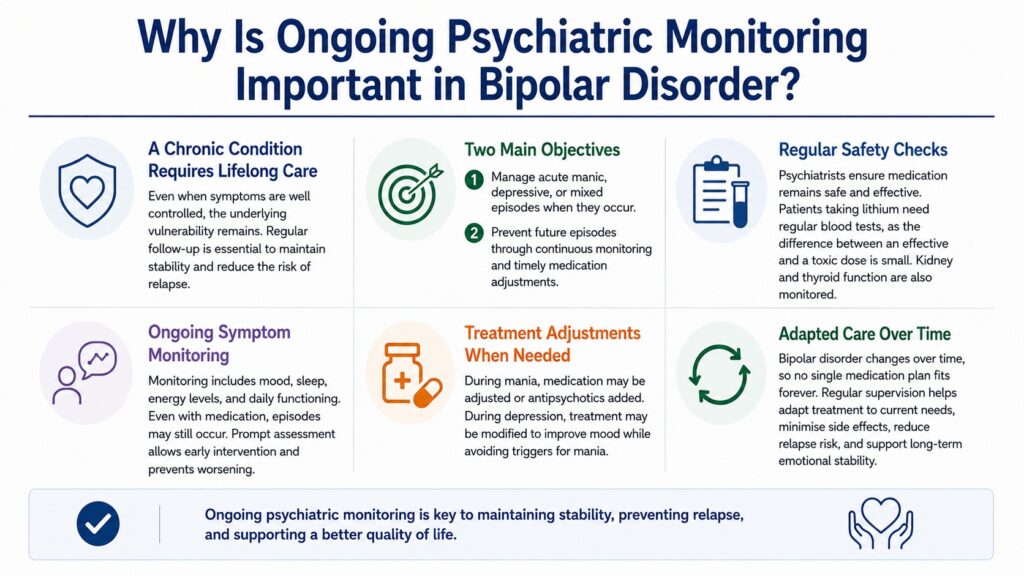
Why Is Ongoing Psychiatric Monitoring Important in Bipolar Disorder?
Bipolar disorder is a chronic illness that usually requires lifelong psychiatric care and long-term medication. Even when symptoms are well controlled and patients feel completely well, the underlying vulnerability to manic or depressive episodes remains. Regular follow-up with a psychiatrist is therefore essential to maintain stability and reduce the risk of relapse.
Long-term psychiatric care has two main objectives. The first is to manage acute manic, depressive, or mixed episodes when they occur. The second is to prevent future episodes through continuous monitoring and timely adjustments of medication before symptoms become severe.
Psychiatrists perform regular assessments to ensure that medication remains both safe and effective. For example, patients taking lithium require routine blood tests to measure lithium levels, as the difference between an effective dose and a toxic dose is relatively small. Kidney function and thyroid function must also be monitored regularly because long-term lithium use may affect these organs.
Monitoring also includes evaluating changes in mood, sleep, energy levels, and daily functioning. Despite appropriate medication, some patients may still experience manic, depressive, or mixed episodes. In these situations, prompt psychiatric assessment is essential.
During a manic episode, the psychiatrist may increase the dose of a mood stabiliser or prescribe an antipsychotic medication to reduce agitation, impulsivity, and elevated mood. During a depressive episode, medication may be modified to improve mood while carefully avoiding interventions that could trigger mania.
Because bipolar disorder changes over time, there is no single medication plan that remains appropriate for every patient throughout life. Regular psychiatric supervision allows medication to be adapted to the individual’s current clinical condition, helping to minimise side effects, reduce the risk of relapse, and support long-term emotional stability.
Why Choose Dr. Gregor Kowal?
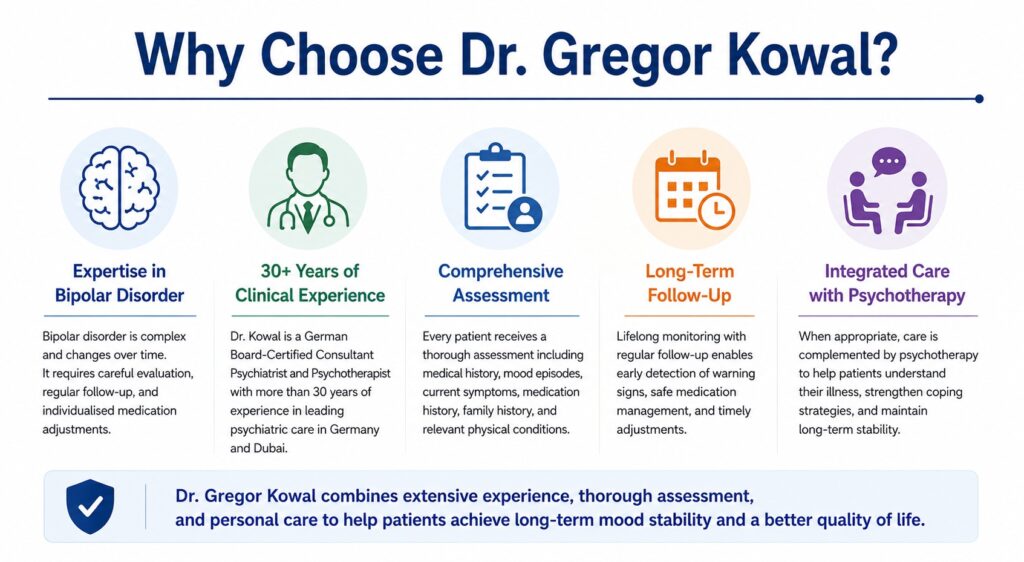
Bipolar disorder is one of the most complex psychiatric conditions to diagnose and manage. It changes over time, requiring careful evaluation, regular follow-up, and individualised medication adjustments.
Dr. Gregor Kowal is a German Board-Certified Consultant Psychiatrist and Psychotherapist with more than 30 years of clinical experience in diagnosing and managing bipolar disorder. Before founding CHMC in Dubai, he worked as a Medical Director and Head of Department in psychiatric hospitals in Germany, where he supervised the care of patients with a wide range of mood disorders, including complex and treatment-resistant bipolar disorder.
Every patient undergoes a comprehensive psychiatric assessment that includes a detailed medical history, evaluation of previous mood episodes, current symptoms, medication history, family history, and potential physical conditions that may influence mental health.
Because bipolar disorder requires lifelong monitoring, Dr. Kowal places particular emphasis on building a long-term therapeutic relationship with his patients. Regular follow-up appointments allow early recognition of warning signs, careful monitoring of medication effectiveness and side effects, and timely adjustments whenever life circumstances or symptoms change.
Whenever appropriate, psychiatric care is complemented by psychotherapy provided by experienced clinical psychologists at CHMC. This integrated approach helps patients better understand their illness, recognise early signs of relapse, strengthen coping strategies, and maintain long-term emotional stability.
Contact our consultant psychiatrist Dr. Kowal:
Frequently Asked Questions About Bipolar Disorder
What are the first signs of bipolar disorder?
The first signs often include unusual mood changes that go beyond normal ups and downs. Some people experience periods of unusually high energy, reduced need for sleep, increased confidence, or impulsive behavior. Others may develop episodes of depression with low mood, fatigue, and loss of interest in daily activities.
How is bipolar disorder diagnosed?
Bipolar disorder is diagnosed through a detailed psychiatric evaluation. The psychiatrist assesses mood changes, energy levels, sleep patterns, behavior, family history, and previous depressive or manic episodes. Physical examinations, blood tests, and sometimes additional investigations such as ECG, EEG, MRI, or CT scans may also be performed to exclude medical conditions that can cause similar symptoms.
When should I see a psychiatrist for bipolar disorder?
You should consult a psychiatrist if you experience recurring periods of depression, unusually elevated mood, severe irritability, impulsive behavior, or significant changes in sleep and energy levels. Early treatment can prevent complications and reduce the risk of future episodes.
What is the difference between mania and hypomania?
Mania is a severe state of elevated mood and increased activity that can seriously affect judgment and daily functioning. Hypomania is a milder form with similar symptoms but less impairment.
Can bipolar disorder be mistaken for depression?
Yes. Many patients first seek treatment during a depressive episode, which can make bipolar disorder initially appear like major depression.
Do I need medication for bipolar disorder?
In most cases, medication is an essential part of bipolar disorder treatment. Mood stabilizers, antipsychotic medications, and sometimes antidepressants help control mood swings and reduce the risk of relapse. Without treatment, manic and depressive episodes often return and may become more severe. Medication is usually combined with psychotherapy and lifestyle stabilization for the best long-term outcome.
Can bipolar disorder be healed?
Bipolar disorder can’t be “cured” in the proper sense. Bipolar disorder is a long-term mood disorder. The difference between bipolar I and II types is the range of severity of the mood swings. Each of the bipolar episodes is time-limited, which means people will typically return to their baseline of functioning. The treatment objective is to stabilize the patients on their baseline of functioning without switching to one of the extremes. Keeping the symptoms under control allows the individual a normal life. Without treatment, bipolar disorder tends to become chronic with more frequent and more severe episodes.
What medications are used for bipolar disorder?
Treatment commonly includes mood stabilizers such as lithium, anticonvulsants, and atypical antipsychotic medications. In some cases, antidepressants may be used carefully and usually together with a mood stabilizer to reduce the risk of triggering mania.
Can bipolar disorder affect work and relationships?
Untreated bipolar disorder can cause difficulties at work, in education, and in personal relationships. Mood episodes may affect concentration, decision-making, financial judgment, and social interactions. Appropriate treatment often helps people regain stability and improve their quality of life.
Can people with bipolar disorder work and live normally?
With proper treatment, many people with bipolar disorder maintain successful careers, relationships, and stable daily lives.
Read More about Bipolar Disorder
- Treatment for Bipolar Disorder
- Symptoms of Bipolar Disorder
- Self-Test for Bipolar Disorder
- Psychiatrist for Bipolar Disorder
- Bipolar Disorder in Pregnancy
- Medication for Bipolar Disorder
- Psychotherapy for Bipolar Disorder
- Causes of Bipolar Disorder
- Bipolar I vs Bipolar II Disorder
- What is Rapid Cycling?
- Bipolar Disorder and Sleep
- Living with Bipolar Disorder
- Relationships, Family, Everyday Life with BD
- Long Term Recovery & Quality of Life with BD
- Family Support in Bipolar Disorder
- What is Mania and Hypomania?
- Cyclothymic Disorder
- History of Bipolar Disorder
- CANMAT Guidelines for Bipolar Disorder
- Mood Stabilizers for Bipolar Disorder
- Lithium for Bipolar Disorder
Medically reviewed by Dr. Gregor Kowal

DR. GREGOR KOWAL
Dr. Gregor Kowal is a German-certified consultant in Psychiatry and Psychotherapy. Since 2010, Dr. Kowal has been the Medical Director of CHMC, a psychiatric clinic located in Dubai. Dr. Kowal graduated from the prestigious University of Heidelberg. After completing his specialty training, he held leadership and teaching positions, serving as Head of Department and later as Medical Director at renowned psychiatric hospitals across Germany. In addition to his expertise in psychiatry, Dr. Kowal is trained as a psychotherapist with a foundation in psychoanalytical psychotherapy.