

Sleep is one of the most important factors influencing bipolar disorder. While many people think of bipolar disorder as an illness characterised only by episodes of depression and mania, disturbances of the sleep-wake cycle are among its most consistent and earliest features. In many people, changes in sleep appear before noticeable changes in mood, making sleep an important early warning sign.
People living with bipolar disorder often notice that even one or two nights of poor sleep can affect their emotions, concentration, energy levels, and daily functioning. Likewise, restoring healthy sleep often improves mood stability and supports long-term recovery.
Modern research suggests that sleep problems are not simply a consequence of bipolar disorder—they are part of the illness itself. The body’s internal biological clock, its response to daylight and darkness, and regular daily routines all play an important role in maintaining emotional balance. When these rhythms become disrupted, the risk of developing manic or depressive episodes increases.
Understanding this relationship allows patients and families to recognise warning signs early and to adopt strategies that support both healthy sleep and stable mood.
For psychiatric support, contact our leading psychiatrist, Dr Kowal:
Why Is Sleep So Important in Bipolar Disorder?
Sleep is far more than a period of rest. During sleep, the brain regulates emotional processing, consolidates memories, restores energy reserves, and prepares the body for the following day. Healthy sleep also helps regulate hormones, metabolism, cardiovascular function, and the immune system.
In bipolar disorder these processes become vulnerable. Even during periods when mood appears completely normal, many people continue to experience difficulties falling asleep, staying asleep, or maintaining a regular sleep schedule. Persistent sleep problems may increase the likelihood of future mood episodes and reduce overall quality of life. The sources emphasise that sleep disturbance remains common even between episodes and is considered a core feature of the disorder.
Unlike occasional insomnia experienced by most people, sleep problems associated with bipolar disorder often reflect changes within the brain’s biological timing system.
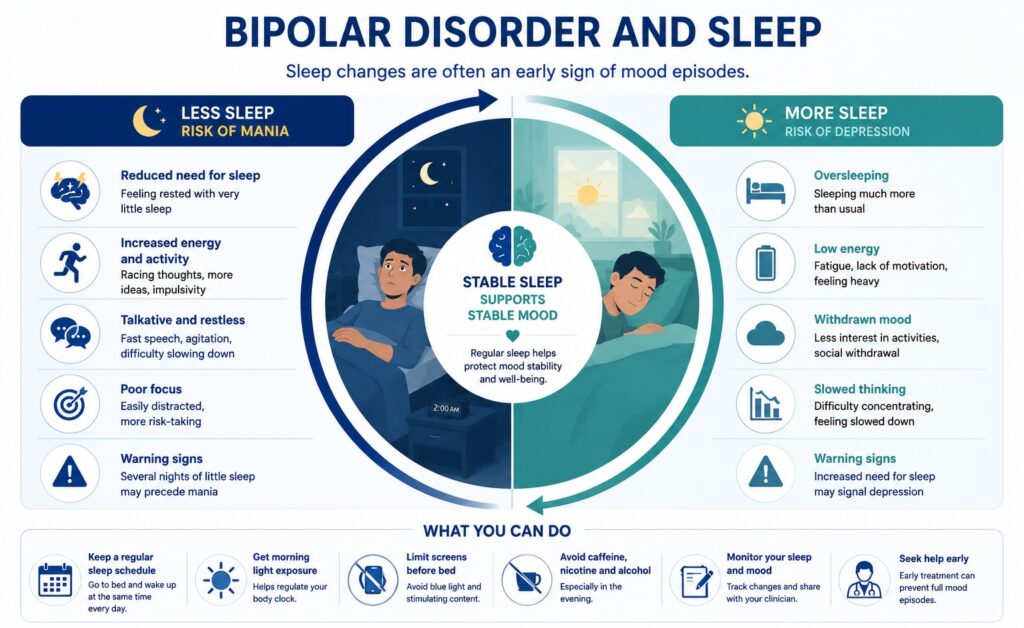
Sleep and bipolar disorder are closely connected. Disturbances of the sleep-wake cycle are not merely symptoms of the illness but form part of its underlying biology. Changes in sleep often appear before changes in mood, making them valuable early warning signs for both patients and clinicians.
The Body’s Internal Clock
Every person has an internal biological clock, also called the circadian rhythm. This system regulates when we become sleepy, when we wake up, when hormones are released, and when body temperature rises and falls throughout the day.
The master clock is located in a small region of the brain called the suprachiasmatic nucleus. It receives information about daylight through specialised retinal cells that are particularly sensitive to blue light. This information synchronises the body’s internal timing with the outside world. Melatonin, often called the “sleep hormone,” helps communicate these timing signals throughout the body. The source explains that light is the most powerful regulator of the internal clock and that melatonin helps synchronise the body’s cells.
In healthy individuals this system keeps sleep, hormone production, body temperature, and daytime alertness well coordinated. In bipolar disorder this delicate balance appears to be more vulnerable. Many researchers believe that people with bipolar disorder are unusually sensitive to disturbances in light exposure and circadian rhythms, making them more susceptible to mood instability.
Sleep Problems Are Present Throughout Bipolar Disorder
One of the most important findings from modern research is that sleep disturbance occurs throughout the illness.
Sleep problems are present:
- before mood episodes develop
- during manic episodes
- during depressive episodes
- during periods of recovery (euthymia or remission)
This means that sleep disturbances should never be ignored simply because a person is currently feeling emotionally well. Many patients report that changes in sleep are among the earliest warning signs that another episode may be approaching. For some people, sleeping less than usual precedes mania, whereas sleeping longer than usual may occur before depression develops. The uploaded material repeatedly describes sleep disturbance as one of the most common early symptoms of relapse.
Sleep During Mania
A reduced need for sleep is one of the defining characteristics of mania. Unlike ordinary insomnia, individuals experiencing mania often do not feel tired despite sleeping very little. Some may sleep only a few hours—or even remain awake for prolonged periods—while still feeling energetic.
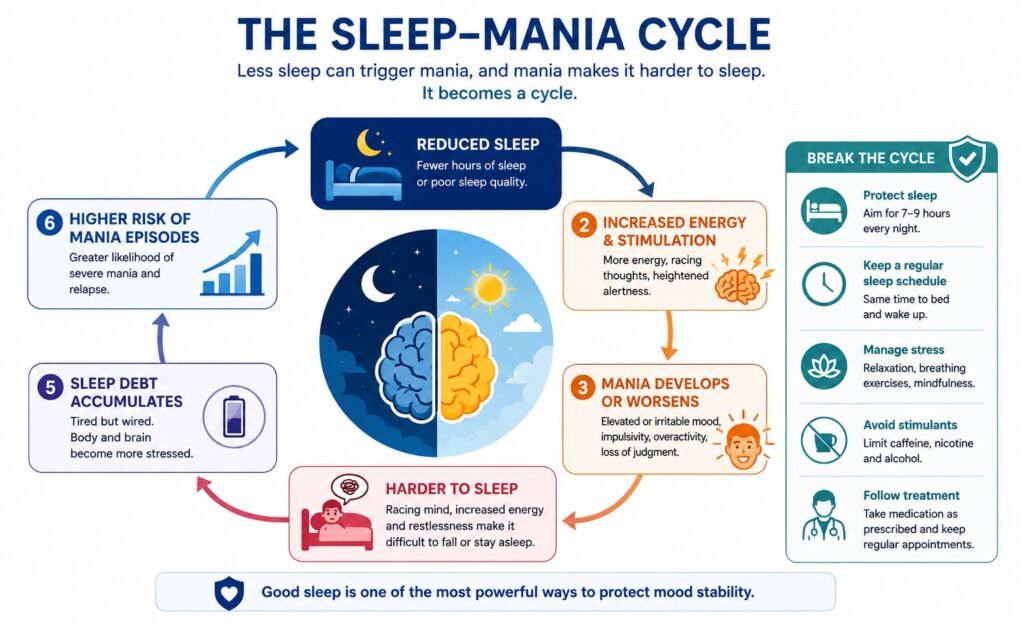
Initially this increased energy may seem productive, but prolonged sleep loss places enormous stress on the brain. As sleep deprivation continues, judgement becomes impaired, concentration deteriorates, impulsive decisions become more common, and psychotic symptoms such as delusions or hallucinations may develop.
Family members frequently notice that their loved one is sleeping less several days before obvious manic symptoms appear.
Although reduced sleep may appear to be a symptom of mania, research also suggests that insufficient sleep itself may contribute to triggering manic episodes in susceptible individuals. The sources describe sleep deprivation as both a symptom and a possible precipitating factor for mania.
Sleep During Bipolar Depression
Sleep disturbances during bipolar depression can look very different. Some people experience severe insomnia. They lie awake for hours, wake repeatedly during the night, or awaken very early in the morning and cannot return to sleep. Others experience hypersomnia, meaning they sleep for prolonged periods but still wake feeling exhausted and unrefreshed.
Both patterns interfere with recovery. Even after many hours in bed, fragmented sleep prevents the brain from obtaining restorative rest. Consequently, fatigue, poor concentration, low motivation, and depressed mood often worsen.
Both insomnia and excessive sleep are common features of bipolar depression and altering frequently REM sleep.
Sleep Problems Between Episodes
One common misconception is that sleep returns completely to normal once a mood episode ends.
In reality, many people continue to experience subtle but persistent sleep disturbances during remission.
These may include:
- taking longer to fall asleep
- frequent awakenings
- irregular sleep schedules
- feeling unrefreshed despite adequate sleep
- variable sleep duration from night to night
Such disturbances may seem minor but can gradually destabilise the biological clock. The poor sleep quality remains common even during remission and may also affect treatment adherence.
Sleep Fragmentation: Why Eight Hours of Sleep May Not Be Enough
Sleep is not only about the number of hours spent in bed. Its quality is equally important. One of the most characteristic sleep problems in bipolar disorder is sleep fragmentation. This means that sleep is repeatedly interrupted throughout the night, often without the person being fully aware of it. The brain repeatedly shifts into lighter stages of sleep, preventing deep, restorative sleep.
As a result, a person may spend eight or even nine hours in bed but still wake up feeling exhausted. Sleep fragmentation affects the brain’s ability to regulate emotions, consolidate memories, and restore mental energy. During the day, people often experience fatigue, irritability, poor concentration, and slower thinking.
Many patients mistakenly believe they simply need more sleep. In reality, improving the quality and continuity of sleep is often more important than increasing its duration. Research suggests that fragmented sleep is one of the most consistent sleep abnormalities observed in bipolar disorder and may even become a useful biological marker for identifying the illness.
Sleep Changes Often Appear Before Mood Episodes
One of the most valuable observations made by patients, families, and psychiatrists is that sleep often changes before mood changes become obvious.
For many people, reduced sleep is the first warning sign of an approaching manic episode. Others notice increasing sleep duration before depression develops. These changes may occur several days before other symptoms become apparent, making sleep one of the earliest indicators that treatment may need adjustment.
Patients are therefore encouraged to monitor their sleep patterns just as carefully as they monitor their mood. Keeping a simple sleep diary or using a sleep-tracking device can help identify subtle changes early enough to prevent a full episode. Family members also play an important role because they often recognise changes in sleeping habits before the patient does.
The uploaded material consistently identifies sleep disturbance as one of the most common prodromal—or early warning—symptoms of bipolar episodes.
Can Poor Sleep Trigger Mania?
Research increasingly suggests that insufficient sleep is not merely a symptom of mania—it may also contribute to causing it. Sleep deprivation places the brain under considerable biological stress. In individuals who are genetically vulnerable to bipolar disorder, even one or several nights of poor sleep may disturb the brain systems responsible for emotional regulation.
Many patients can recall that their manic episode began after a period of reduced sleep caused by shift work, long-distance travel, caring for a newborn baby, prolonged stress, recreational drug use, or staying awake for work or social events. Although these situations differ greatly, they all have one thing in common: they disrupt the body’s natural sleep-wake rhythm.
Although not every night of poor sleep leads to mania, maintaining regular sleep remains one of the most effective ways to reduce the risk of relapse. The source material describes sleep deprivation as both a symptom and a possible precipitating factor for mania.
Why Sleep Affects Emotions
Healthy sleep allows the brain to process emotional experiences from the previous day. When sleep becomes disrupted, the brain reacts more strongly to stress and has greater difficulty regulating emotions.
Brain imaging studies suggest that sleep deprivation reduces communication between the prefrontal cortex, which helps control emotions and decision-making, and the amygdala, the brain’s emotional alarm system. As a result, emotional reactions become stronger while rational control becomes weaker.
This helps explain why people who sleep poorly often become more irritable, emotionally unstable, anxious, impulsive, and sensitive to everyday stress. For people with bipolar disorder, whose emotional regulation is already vulnerable, these effects may be even more pronounced.
The uploaded scientific review explains that sleep plays a critical role in affect regulation and that sleep loss can markedly impair emotional control.
Sleep and Thinking Ability
People often notice that after one poor night’s sleep they have difficulty concentrating. In bipolar disorder this effect may be even more pronounced.
Insufficient or fragmented sleep affects several important cognitive functions, including attention, concentration, memory, planning, problem-solving, decision-making, and reaction time. These difficulties may continue even when mood symptoms appear relatively mild.
Patients sometimes believe that worsening concentration means another depressive episode is developing. In reality, poor sleep alone can significantly impair cognitive performance. Improving sleep quality frequently leads to clearer thinking, better work performance, and improved daily functioning.
Research reviewed in the uploaded material demonstrates that sleep deprivation substantially reduces memory formation and cognitive performance.
Why Sleep Is Important for Physical Health
The effects of chronic sleep disturbance extend far beyond the brain. Persistent sleep problems influence many body systems and may contribute to poorer overall health. They affect appetite regulation, blood sugar metabolism, blood pressure, cardiovascular health, immune function, and body weight.
People with bipolar disorder already have an increased risk of metabolic syndrome, obesity, diabetes, and cardiovascular disease. Poor sleep may further increase these risks.
Sleep deprivation also alters hormones that regulate hunger, making people more likely to crave sugary or high-calorie foods. At the same time, daytime fatigue often reduces motivation to exercise. Together, these changes can create a vicious cycle in which poor sleep contributes to poorer physical health, while declining health further disrupts sleep.
The uploaded review discusses how sleep disturbance may contribute to obesity, unhealthy eating habits, reduced physical activity, and adverse medical outcomes in bipolar disorder.
Sleep, Alcohol and Other Substances
Some people attempt to improve sleep by drinking alcohol or using recreational drugs. Unfortunately, this usually makes sleep quality worse. Alcohol may initially make falling asleep easier, but it disrupts the deeper stages of sleep later in the night. As a result, people wake more frequently and feel less refreshed the following morning.
Nicotine, cannabis, stimulants, and other substances can also interfere with normal sleep architecture and further destabilise mood.
People with bipolar disorder have higher rates of substance use disorders than the general population, and sleep disturbance may partly contribute to this relationship. Some individuals begin using alcohol or sedative substances in an attempt to manage chronic insomnia, while others rely on stimulants to overcome daytime fatigue caused by poor sleep.
Rather than improving sleep, these strategies usually worsen both sleep quality and mood stability over time.
Sleep Loss, Impulsivity and Risky Behaviour
Sleep deprivation does not only increase fatigue—it also affects judgement. After poor sleep, people are generally more likely to take risks, make impulsive decisions, and underestimate potential consequences.
For individuals with bipolar disorder, who may already become impulsive during hypomanic or manic episodes, sleep deprivation can further amplify these tendencies. This may contribute to behaviours such as excessive spending, reckless driving, unsafe sexual behaviour, substance misuse, or other decisions that later cause significant personal, financial, or professional problems.
Maintaining a stable sleep routine therefore protects not only mood but also decision-making and personal safety. There is a relationship between sleep deprivation, impulsivity, risk-taking behaviour, and suicidal behaviour in bipolar disorder.
Why Regular Daily Routines Matter
Sleep does not exist in isolation. The body’s biological clock also responds to many daily routines, including consistent wake-up times, regular meals, physical activity, social interactions, exposure to natural daylight, and darkness in the evening.
When these daily routines become irregular, the internal clock receives conflicting signals, making it more difficult to maintain stable sleep and mood.
For this reason, psychiatrists often encourage patients with bipolar disorder to maintain consistent daily schedules, even during weekends and holidays. Regular routines help keep the biological clock synchronised and may significantly reduce the likelihood of future mood episodes.
The German source material describes therapies that stabilise social and biological rhythms as promising additions to standard bipolar treatment, particularly for preventing relapse.
How Sleep Problems Are Treated in Bipolar Disorder
Sleep disturbances should never be viewed as a separate problem in people with bipolar disorder. Instead, they should be considered an integral part of the illness. Improving sleep is not simply about helping patients feel more rested—it is an important part of stabilising mood, preventing relapse, and improving long-term functioning.
For this reason, psychiatrists routinely ask about sleep during every consultation. Changes in sleeping patterns often provide valuable information about the current stage of the illness and may indicate that treatment needs adjustment before a full manic or depressive episode develops.
Treatment usually combines medication with lifestyle modifications, psychological interventions, and strategies that help restore the body’s natural circadian rhythm.
Maintaining a Regular Sleep-Wake Rhythm
One of the most effective non-medication treatments for bipolar disorder is establishing a consistent daily routine.The brain’s biological clock functions best when it receives regular signals every day. Going to bed and waking up at approximately the same time, including weekends, helps keep this internal clock synchronised.
Patients are also encouraged to eat meals at regular times, remain physically active during the day, and avoid staying awake late into the night. Even small variations in sleep schedules may increase biological instability in susceptible individuals.
Many people with bipolar disorder notice that their mood is considerably more stable when they maintain a predictable daily routine. This is one reason why frequent jet lag, rotating shift work, or irregular working hours can be particularly challenging.
Research suggests that therapies focusing on regular social and daily rhythms may reduce relapse rates and improve long-term mood stability.
The Importance of Light Exposure
Light is the body’s most powerful signal for regulating the circadian rhythm. Exposure to natural daylight in the morning helps synchronise the biological clock, promotes alertness during the day, and supports healthy melatonin release in the evening. Conversely, bright light late at night can delay the body’s preparation for sleep.
For people with bipolar disorder, maintaining a regular pattern of light exposure may be particularly important because research suggests they may be more sensitive to changes in environmental light.
Simple measures such as spending time outdoors shortly after waking, opening curtains in the morning, and reducing exposure to bright screens before bedtime can support a healthier sleep-wake rhythm.
The uploaded material explains that light directly influences the brain’s internal clock and plays a central role in regulating circadian rhythms.
Can Light Therapy Help?
Bright light therapy is an established treatment for seasonal affective disorder and has also been investigated in bipolar depression.
When carefully supervised by an experienced psychiatrist, light therapy may help improve depressive symptoms in selected patients. However, timing is critical. Inappropriate use of bright light, particularly in individuals prone to mania, may increase the risk of mood elevation.
For this reason, patients with bipolar disorder should never begin light therapy without medical advice. The available evidence suggests that bright light therapy can be a useful addition to standard treatment for bipolar depression, although treatment plans should always be individualised.
Why Darkness Matters
Just as exposure to daylight helps regulate the biological clock, adequate darkness is essential for healthy sleep. Artificial lighting, televisions, smartphones, tablets, and computers emit light that suppresses melatonin production and delays sleep onset. For people with bipolar disorder, reducing evening light exposure may therefore be particularly beneficial.
Some specialised treatment programmes use carefully controlled periods of prolonged darkness during acute manic episodes. Although these approaches require close medical supervision and are not suitable for routine home treatment, they illustrate how strongly the brain’s circadian system influences mood. Current evidence suggests that dark therapy may help reduce manic symptoms when used as an additional treatment under specialist supervision.
Cognitive Behavioural Therapy for Insomnia
Medication is not the only way to improve sleep. Many patients benefit from Cognitive Behavioural Therapy for Insomnia (CBT-I), a structured psychological treatment that helps people develop healthier sleeping habits and reduce behaviours that interfere with sleep.
The therapy may include techniques to improve sleep routines, reduce anxiety about sleep, manage racing thoughts before bedtime, and strengthen the association between bed and sleep.
For individuals with bipolar disorder, CBT-I is often modified to ensure that sleep restriction techniques are used cautiously, as excessive sleep deprivation may increase the risk of mania.
Research suggests that adapted cognitive behavioural therapy can improve sleep quality and may help delay future manic episodes.
The Role of Medication
Medication remains the foundation of bipolar disorder treatment.Mood stabilisers such as lithium, valproate, and lamotrigine, as well as certain atypical antipsychotics, not only reduce mood symptoms but frequently improve sleep by stabilising the underlying illness.
In some situations, psychiatrists may prescribe additional medication specifically to improve sleep. The choice depends on the individual’s symptoms, current mood phase, previous treatment response, and overall health.
Although melatonin and medications acting on the melatonin system have been investigated, current evidence suggests that their effects in bipolar disorder are modest and not always consistent. They may improve sleep in some patients but should not replace established mood-stabilising treatment.
Practical Sleep Hygiene for Bipolar Disorder
Good sleep hygiene cannot cure bipolar disorder, but it can significantly improve treatment outcomes when combined with appropriate psychiatric care. Patients are encouraged to maintain regular bedtimes and wake-up times, avoid daytime naps whenever possible, limit caffeine during the afternoon and evening, reduce alcohol consumption, and create a quiet, dark, and comfortable sleeping environment.
Physical exercise during the day is generally beneficial, although vigorous exercise immediately before bedtime may delay sleep.
Equally important is limiting the use of smartphones, tablets, and computers during the hour before going to bed. The blue light emitted by these devices suppresses melatonin production and can delay the onset of sleep.
These simple measures help reinforce the body’s natural circadian rhythm and support more restorative sleep.
How Families Can Help
Family members often notice changes in sleeping habits before the patient recognises them.
A person who suddenly begins sleeping only a few hours each night while remaining unusually energetic may be developing hypomania or mania. Conversely, someone who spends much of the day sleeping, withdraws from daily activities, and struggles to get out of bed may be entering a depressive episode.
Recognising these changes early allows treatment to be adjusted before symptoms become more severe.
Families can also help by encouraging regular daily routines, supporting healthy sleep habits, reducing unnecessary evening stimulation, and reminding loved ones to continue taking prescribed medication. Open communication about changes in sleep often becomes an important part of long-term relapse prevention.
When Should You Seek Professional Help?
Occasional sleep problems affect almost everyone and do not necessarily indicate bipolar disorder. However, people who already have bipolar disorder should contact their psychiatrist if they notice persistent changes in their sleeping pattern, particularly if these are accompanied by changes in mood, energy, or behaviour.
Warning signs include a markedly reduced need for sleep without feeling tired, persistent insomnia, excessive sleeping, rapidly changing sleep schedules, or sleep disturbances that continue despite good sleep hygiene. Early assessment often allows treatment to be adjusted before a full mood episode develops.
Bipolar Disorder and Sleep. Conclusion
Sleep and bipolar disorder are closely connected. Disturbances of the sleep-wake cycle are not merely symptoms of the illness but form part of its underlying biology. Changes in sleep often appear before changes in mood, making them valuable early warning signs for both patients and clinicians.
Fortunately, many sleep problems can be improved. Combining appropriate medication with regular daily routines, healthy sleep habits, psychological interventions, and careful management of circadian rhythms helps many people achieve greater mood stability and a better quality of life.
At CHMC – German Clinic for Psychiatry and Psychology in Dubai, we recognise that successful bipolar disorder treatment extends beyond controlling mood episodes. By addressing sleep disturbances alongside medication and psychotherapy, we aim to reduce relapse, improve daily functioning, and help our patients maintain long-term emotional wellbeing.
Frequently Asked Questions
Can lack of sleep trigger bipolar disorder?
Sleep deprivation does not cause bipolar disorder by itself. However, in people who already have bipolar disorder or who are genetically vulnerable, insufficient sleep can trigger manic or depressive episodes.
Why do people with bipolar disorder sleep so little during mania?
During mania, the brain’s biological systems become overactive. Many people experience a reduced need for sleep and may feel energetic despite sleeping only a few hours, although prolonged sleep loss often worsens manic symptoms.
Is sleeping too much a sign of bipolar depression?
Yes. Some people with bipolar depression experience hypersomnia, meaning they sleep much longer than usual but still wake feeling tired and lacking energy.
Can improving sleep reduce bipolar relapses?
Yes. Maintaining a regular sleep schedule is one of the most effective lifestyle strategies for reducing the risk of future mood episodes and supporting long-term treatment.
Should people with bipolar disorder take sleeping tablets?
Some patients benefit from sleep medication, but treatment should always be supervised by a psychiatrist. The choice of medication depends on the current mood state, existing medication, and the individual’s overall treatment plan.
Is light therapy safe for bipolar disorder?
Light therapy may help selected patients with bipolar depression when supervised by a psychiatrist. Because it may occasionally trigger hypomania or mania, it should not be started without professional guidance.
Read More About Bipolar Disorder
- Treatment for Bipolar Disorder
- Symptoms of Bipolar Disorder
- Diagnosis of Bipolar Disorder
- Self-Test for Bipolar Disorder
- Psychiatrist for Bipolar Disorder
- Bipolar Disorder in Pregnancy
- Medication for Bipolar Disorder
- Psychotherapy for Bipolar Disorder
- Causes of Bipolar Disorder
- Bipolar I vs Bipolar II Disorder
- What is Rapid Cycling?
- Living with Bipolar Disorder
- Relationships, Family, Everyday Life with BD
- Long Term Recovery & Quality of Life with BD
- Family Support in Bipolar Disorder
- What is Mania and Hypomania?
- Cyclothymic Disorder
- History of Bipolar Disorder
- CANMAT Guidelines for Bipolar Disorder
- Mood Stabilizers for Bipolar Disorder
- Lithium for Bipolar Disorder
Medically reviewed by Dr. Gregor Kowal

DR. GREGOR KOWAL
Dr. Gregor Kowal is a German-certified consultant in Psychiatry and Psychotherapy. Since 2010, Dr. Kowal has been the Medical Director of CHMC, a psychiatric clinic located in Dubai. Dr. Kowal graduated from the prestigious University of Heidelberg. After completing his specialty training, he held leadership and teaching positions, serving as Head of Department and later as Medical Director at renowned psychiatric hospitals across Germany. In addition to his expertise in psychiatry, Dr. Kowal is trained as a psychotherapist with a foundation in psychoanalytical psychotherapy.