

Bipolar disorder, earlier called “manic-depressive illness”, is a severe and usually persistent mental disorder. Symptoms of bipolar disorder are characterized by mood fluctuation between two opposite extremes: depression and mania.
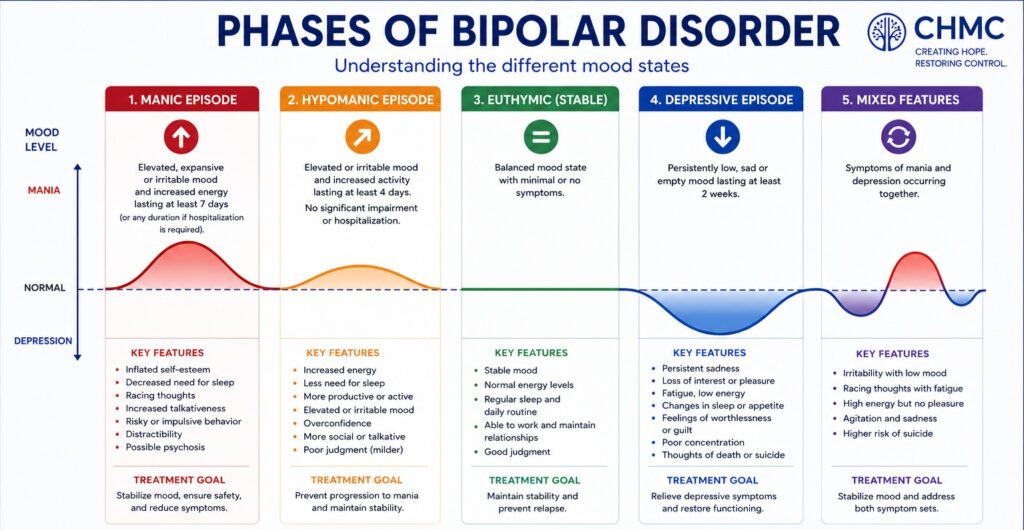
There are four possible types of mood episodes in bipolar disorder: mania, hypomania, depression, and mixed episodes.
Manic phases with elevated mood, drive, and restlessness alternate with severe depressive episodes with sadness, lethargy, and loss of self-esteem. The episodes can appear a few times per year, rarely once in a few years.
In mixed episodes, patients experience elevated energy levels with irritability or dysphoria coexisting with depression.
For more information about bipolar disorder, contact our German Consultant in Psychiatry, Dr. Kowal
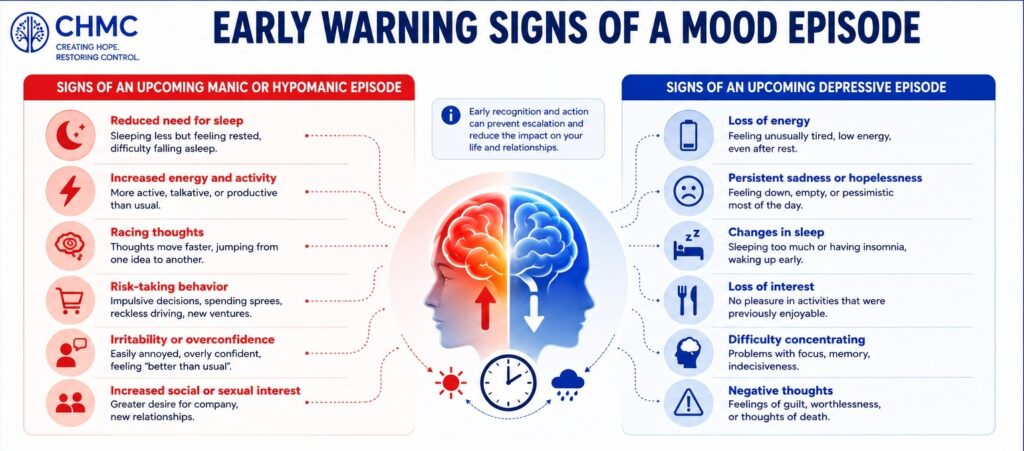
Early Symptoms of Bipolar Disorder
Some signs suggest a bipolar disorder: In bipolar depression, patients more often experience energy loss, an increased need for sleep, and increased appetite compared to unipolar depression. Furthermore, those with bipolar disorder are, on average, younger (around 16 to 18 years old) when they first experience depression. About one-fifth of patients diagnosed with “unipolar depression” will go through a manic episode in the following years, meeting the criteria for bipolar disorder.
Self-Test for Bipolar Disorder
Phases of Bipolar Disorder
Bipolar disorder does not look the same all the time. Instead, it usually progresses through different phases, each requiring a different treatment approach.
During a manic or hypomanic episode, the main goal is to reduce overactivity, impulsive behaviour, and poor judgement.
During a depressive episode, treatment focuses on relieving low mood, restoring energy, and improving daily functioning.
Some people experience a mixed episode, in which symptoms of mania and depression occur at the same time. A person may feel restless, agitated, and full of energy while also feeling hopeless, anxious, or deeply sad.
Between episodes, many people enter a stable phase called the ‘euthymic state‘, when symptoms are absent. This period is ideal for maintenance treatment, which helps prevent future episodes and supports long-term emotional stability.
Recognising the current phase is essential for choosing the right treatment.
Mania in Bipolar Disorder
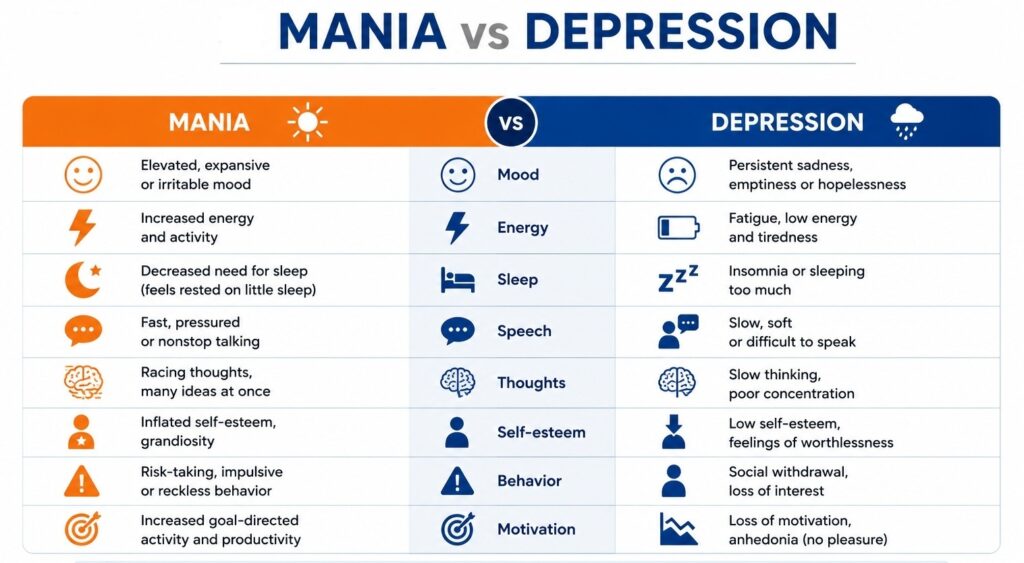
A manic episode, also called mania, is a phase of extremely elevated mood and increased energy. People experiencing mania often feel unusually happy, powerful, creative, and full of ideas. They may believe they can achieve anything and usually need very little sleep. Many patients see sleep as unnecessary and continue being active for long periods without rest.
During a manic episode, thoughts and speech become very fast. Patients may jump from one topic to another so quickly that others cannot follow the conversation. Many activities are started at the same time, but often not completed. People with mania may also become impulsive and lose their normal inhibitions. Excessive spending, risky sexual behavior, or unrealistic business plans can occur, often far beyond the person’s financial or personal limits.
Although the mood may appear cheerful at first, it can quickly change into irritability, especially when others disagree with them. In severe cases, people may lose contact with reality, hear voices, or see things that are not real. Many patients do not recognize that they are ill and may require psychiatric treatment during the acute phase.
Hypomania in BD
Hypomania is a milder form of mania seen in bipolar disorder. During a hypomanic episode, people experience an unusually elevated or irritable mood together with increased energy and activity. This state lasts for at least four days and is noticeable most of the day. Patients may feel more productive, confident, talkative, or creative than usual. They often sleep less and become more active socially or professionally.
The change in mood and behavior is clearly different from the person’s normal functioning and can usually be noticed by family members or colleagues. However, unlike full mania, hypomania does not cause severe impairment in daily life and usually does not require hospitalization. People generally remain in contact with reality and do not experience psychotic symptoms. The symptoms are also not caused by drugs, medication, or other medical conditions.
Mixed Episode in BD
A mixed episode of bipolar disorder is characterized by the coexistence of manic and depressive symptoms. The patient experiencing a mixed episode might be hyperactive, being unable to sleep or concentrate, and feeling at the same time anxious and depressed. This combination of high energy and low mood can be particularly distressing and carry a higher risk of impulsive behaviour and suicide. Patients experiencing a mixed episode require prompt psychiatric assessment and careful treatment.
Mixed bipolar episodes can resemble ADHD. Although BD II is a fully recognized diagnostic entity, it is less reliably diagnosed than Bipolar I. The main reason is that the symptoms are less obvious than those of Bipolar I Disorder.
Depression in Bipolar Disorder
Depression in bipolar disorder is characterized by a persistent low mood and deep sadness. People often feel emotionally numb, hopeless, anxious, and pessimistic about the future. Thinking, speaking, and daily activities become slower, while even small tasks may feel exhausting. Many patients withdraw from family and friends and lose interest in activities they previously enjoyed.
A lack of motivation, reduced energy, physical exhaustion, and loss of sexual interest are also common. Concentration and attention are often impaired, making work or studying difficult. Sleep problems frequently occur, including early morning waking, unrefreshing sleep, or an increased need for sleep. Many patients experience strong self-doubt, feelings of guilt, and worthlessness. In severe depressive episodes, thoughts about death or suicide may appear and require urgent psychiatric support.
Also, those with bipolar disorder are, on average, younger (around 16 to 18 years old) when they first experience depression. About one-fifth of patients diagnosed with “unipolar depression” will go through a manic episode in the following years, meeting the criteria for bipolar disorder.
Read More About Bipolar Disorder
- Treatment for Bipolar Disorder
- Diagnosis of Bipolar Disorder
- Self-Test for Bipolar Disorder
- Psychiatrist for Bipolar Disorder
- Bipolar Disorder in Pregnancy
- Medication for Bipolar Disorder
- Psychotherapy for Bipolar Disorder
- Causes of Bipolar Disorder
- Bipolar I vs Bipolar II Disorder
- What is Rapid Cycling?
- Bipolar Disorder and Sleep
- Living with Bipolar Disorder
- Relationships, Family, Everyday Life with BD
- Long Term Recovery & Quality of Life with BD
- Family Support in Bipolar Disorder
- What is Mania and Hypomania?
- Cyclothymic Disorder
- History of Bipolar Disorder
- CANMAT Guidelines for Bipolar Disorder
- Mood Stabilizers for Bipolar Disorder
- Lithium for Bipolar Disorder
Medically reviewed by Dr. Gregor Kowal

DR. GREGOR KOWAL
Dr. Gregor Kowal is a German-certified consultant in Psychiatry and Psychotherapy. Since 2010, Dr. Kowal has been the Medical Director of CHMC, a psychiatric clinic located in Dubai. Dr. Kowal graduated from the prestigious University of Heidelberg. After completing his specialty training, he held leadership and teaching positions, serving as Head of Department and later as Medical Director at renowned psychiatric hospitals across Germany. In addition to his expertise in psychiatry, Dr. Kowal is trained as a psychotherapist with a foundation in psychoanalytical psychotherapy.