

Receiving the correct diagnosis is the most important step in the successful treatment of bipolar disorder. Unfortunately, many people initially receive a diagnosis of depression, anxiety disorder, or ADHD before bipolar disorder is recognised. A comprehensive psychiatric assessment by an experienced psychiatrist helps establish the correct diagnosis and ensures that treatment begins as early as possible.
Untreated bipolar disorder can last for months. Once the disorder is activated, it typically persists, and untreated first episodes rarely remain dormant. For the psychiatrist, it’s important to know not only the current symptoms but also past mood swings and the family history. Early diagnosis is crucial for a positive therapy outcome.
The fewer episodes a patient has had before starting treatment, the better they usually respond. Early treatment can also prevent the disorder from becoming chronic, avoiding serious health and social consequences.
For diagnosis of bipolar disorder contact our consultant psychiatrist, Dr. Kowal
Diagnostic Procedures of Bipolar Disorder
Bipolar disorder should be assessed by an experienced psychiatrist. Diagnosing bipolar disorder can be difficult, especially when the illness begins with a depressive episode. At first, it may appear to be a unipolar depression. However, some signs can suggest bipolar disorder. Patients with bipolar depression often experience stronger loss of energy, increased need for sleep, and increased appetite. The first depressive episode also frequently occurs at a younger age, often during adolescence or early adulthood.
On the other hand, the patient and his family may overlook hypomania symptoms. If depression appears first in the course of the illness, it’s unclear whether it is unipolar (“one-sided”) or bipolar depression. On the other side, symptoms of hypomania can also be overlooked by the patient and his family.
An in-depth investigation is also important because bipolar disorder can resemble other serious psychiatric conditions. Diagnoses such as schizophrenia, schizoaffective disorder, ADHD, or depression can be misdiagnosed as bipolar disorder.
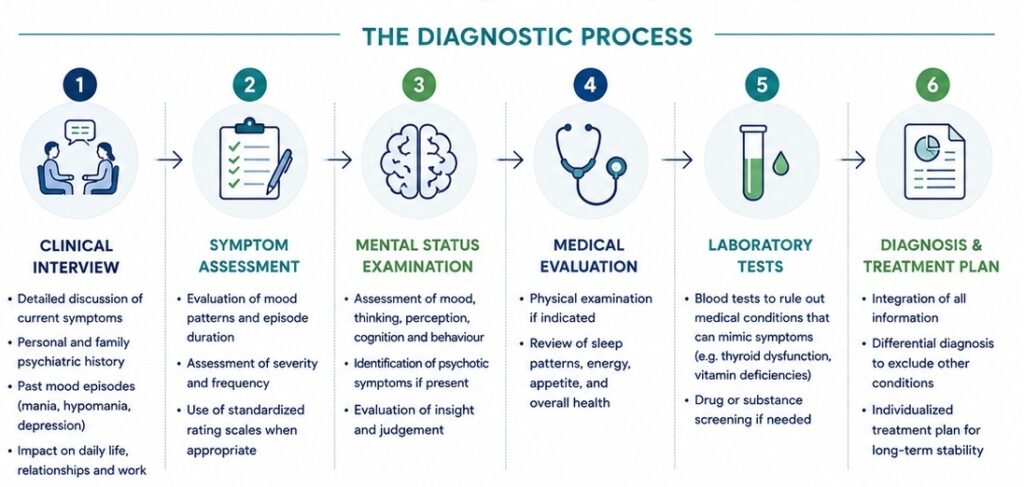
Clinical interview
The diagnosis of bipolar disorder requires a detailed psychiatric and medical assessment starting with an extensive interview with the patient and, if possible, with family members. This is important because many patients do not fully recognize past hypomanic episodes or changes in mood and behavior.
Physical Examination
In bipolar disorder, a physical examination is not used to directly diagnose the illness. Bipolar disorder is mainly diagnosed through psychiatric assessment and the patient’s symptoms. However, a medical check-up is very important to rule out physical illnesses that can cause mood changes and to make sure that psychiatric medication can be used safely.
The examination helps doctors exclude medical conditions that may look similar to bipolar disorder, such as thyroid problems or neurological diseases. It also provides important baseline values before starting treatment.
Blood Pressure, Pulse, and Weight
Doctors usually begin with a general health check. Blood pressure and pulse are measured because some psychiatric medications can affect the heart and circulation.
Weight and body mass index (BMI) are also recorded. Certain mood stabilizers and antipsychotic medications may increase appetite and lead to weight gain.
Neurological Examination
Doctors may test reflexes, coordination, walking, and muscle control. This helps rule out neurological illnesses that can sometimes cause psychiatric symptoms.
Conditions such as Parkinson’s disease, multiple sclerosis, epilepsy, or early dementia may sometimes imitate mood disorders.
Blood and Urine Tests
Thyroid Hormones
Blood tests for thyroid hormones, including TSH, fT3, and fT4, are very important. Thyroid imbalance can cause mood swings that resemble bipolar disorder.
Liver and Kidney Function
Liver and kidney tests are necessary before starting medications such as lithium, valproate, or carbamazepine. These medications are processed through the liver or kidneys and require regular monitoring.
Additional Diagnostic Tests
Those tests can help rule out other contributing factors, especially heart problems and physical illnesses such as epilepsy, brain tumors, thyroid disorders, migraines, dementia, or Parkinson’s disease.
ECG (Electrocardiogram)
An ECG checks the heart rhythm. Some psychiatric medications can affect electrical activity in the heart, so doctors may perform this test before starting treatment.
Brain Imaging (MRI or CT Scan)
MRI or CT scans of the brain are usually only needed in special situations, such as a first episode later in life or unusual symptoms. These scans help exclude strokes, tumors, or other structural brain diseases.
EEG (Electroencephalogram)
An EEG records brain activity and may be used to rule out epilepsy, especially temporal lobe epilepsy, which can sometimes cause strong mood changes.
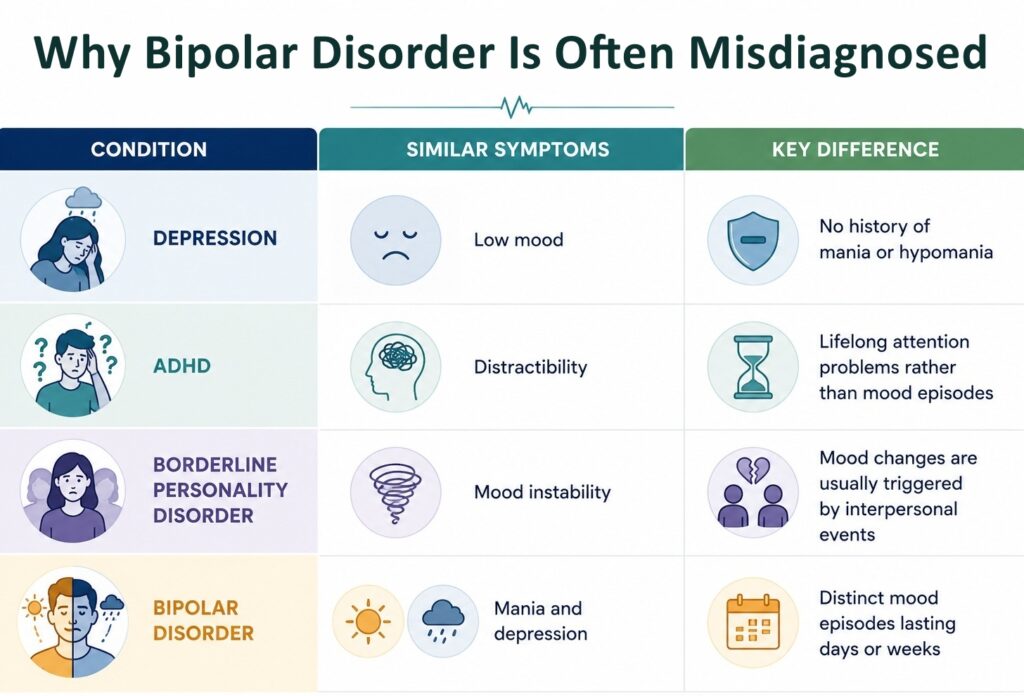
Why Bipolar Disorder Is Often Misdiagnosed
Bipolar disorder is one of the most frequently misdiagnosed psychiatric conditions. Many people first seek professional help during a depressive episode, when symptoms such as sadness, loss of interest, fatigue, and hopelessness are most prominent. If previous episodes of mania or hypomania are not recognised or discussed, bipolar disorder may be mistaken for recurrent depression. As a result, patients may receive treatment that improves depressive symptoms but does not address the underlying mood disorder.
Bipolar disorder can also resemble ADHD. During manic or hypomanic episodes, patients often experience distractibility, racing thoughts, increased activity, and difficulty concentrating. Unlike ADHD, however, these symptoms occur in distinct mood episodes and are separated by periods of normal functioning. ADHD usually begins in childhood and causes persistent attention problems rather than episodic mood changes.
Another condition that may be confused with bipolar disorder is borderline personality disorder. Both disorders can involve mood instability, impulsive behaviour, and relationship difficulties. However, mood changes in borderline personality disorder are usually triggered by interpersonal conflicts and often last for hours. In bipolar disorder, manic and depressive episodes typically develop independently of external events and continue for days or weeks.
Anxiety disorders are also common in people with bipolar disorder and may even be the main reason they seek treatment. Symptoms such as restlessness, sleep disturbances, excessive worrying, and poor concentration can overlap with bipolar disorder. In many patients, anxiety exists alongside bipolar disorder rather than replacing the diagnosis.
Because several psychiatric disorders share similar symptoms, an accurate diagnosis requires a comprehensive psychiatric assessment. A detailed evaluation of previous mood episodes, family history, medical conditions, and symptom patterns allows the psychiatrist to distinguish bipolar disorder from other conditions and develop the most appropriate treatment plan.
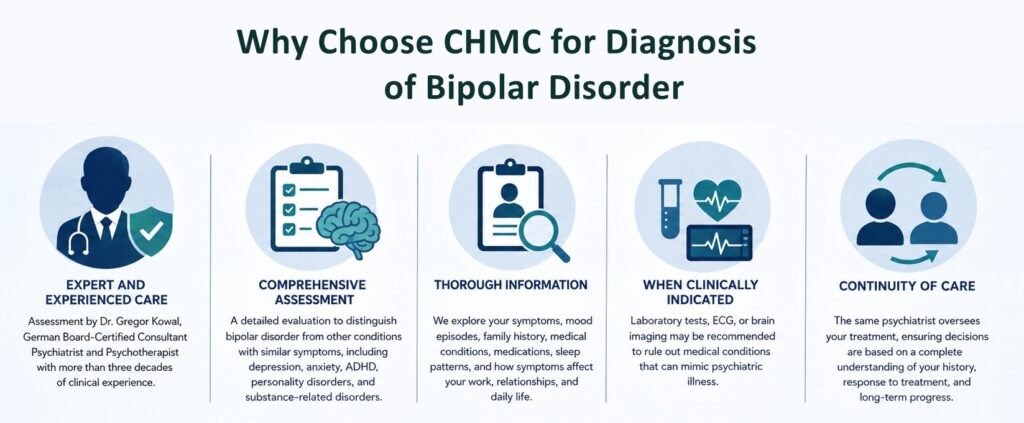
Why Choose CHMC for Diagnosis of Bipolar Disorder
Making the correct diagnosis is the most important step in the successful treatment of bipolar disorder. At CHMC German Clinic for Psychiatry and Psychology in Dubai, every assessment is performed by Dr. Gregor Kowal, a German Board-Certified Consultant Psychiatrist and Psychotherapist with more than three decades of clinical experience. Rather than relying on brief questionnaires or symptom checklists alone, he conducts a comprehensive psychiatric evaluation to distinguish bipolar disorder from conditions with similar symptoms, including depression, anxiety disorders, ADHD, personality disorders, and substance-related disorders.
The assessment explores your current symptoms, previous mood episodes, family history, medical conditions, medications, sleep patterns, and the impact of symptoms on your work, relationships, and daily life. When clinically indicated, laboratory investigations, an electrocardiogram (ECG), or brain imaging may be recommended to exclude medical conditions that can mimic psychiatric illness.
At CHMC, continuity of care is another important advantage. The same psychiatrist who establishes your diagnosis will continue to oversee your treatment, allowing therapeutic decisions to be based on a detailed understanding of your medical history, treatment response, and long-term progress.
If you experience recurrent depression, periods of unusually elevated mood, reduced need for sleep, impulsive behaviour, or marked mood swings, seeking an assessment early can make a significant difference. An accurate diagnosis enables appropriate treatment, reduces the risk of future mood episodes, and helps patients achieve long-term emotional stability and a better quality of life.
Contact our consultant psychiatrist Dr. Kowal
FAQs About the Diagnosis of Bipolar Disorder
How long does the assessment take?
A comprehensive assessment for bipolar disorder usually takes 60 to 90 minutes, depending on the complexity of your symptoms and medical history. During the consultation, your psychiatrist will discuss your current symptoms, previous mood episodes, family history, medical conditions, medications, sleep patterns, and how your symptoms affect your daily life. If additional information is needed, a follow-up appointment may be recommended before confirming the diagnosis.
Is there a blood test for bipolar disorder?
No. There is no blood test, brain scan, or laboratory investigation that can directly diagnose bipolar disorder. The diagnosis is based on a detailed psychiatric assessment and recognised diagnostic criteria. However, blood tests, an electrocardiogram (ECG), or brain imaging may be recommended to exclude medical conditions such as thyroid disorders, neurological illnesses, or medication-related problems that can cause symptoms similar to bipolar disorder.
Can bipolar disorder be diagnosed in one visit?
In many cases, yes. An experienced psychiatrist can often establish the diagnosis during the initial consultation if there is a clear history of manic, hypomanic, or depressive episodes. However, when symptoms are complex or previous episodes are difficult to reconstruct, additional consultations or information from family members may be helpful to ensure the diagnosis is accurate.
Can bipolar disorder be mistaken for ADHD?
Yes. Bipolar disorder and ADHD share several symptoms, including impulsivity, distractibility, increased activity, and difficulty concentrating. The key difference is that ADHD symptoms are generally present from childhood and remain relatively stable over time, whereas bipolar symptoms occur in distinct mood episodes. A comprehensive psychiatric assessment is essential to distinguish between these conditions, as they require different treatment approaches.
Can bipolar disorder be mistaken for depression?
Yes. Many people with bipolar disorder first seek help during a depressive episode because depression is often more distressing than mania or hypomania. If previous periods of elevated mood, increased energy, reduced need for sleep, or impulsive behaviour are not recognised, bipolar disorder may initially be diagnosed as major depressive disorder. Identifying these previous mood episodes is one of the most important parts of a bipolar assessment because treatment differs significantly.
What happens after the diagnosis?
Once the diagnosis of bipolar disorder has been confirmed, your psychiatrist will explain the condition in detail and develop an individualised treatment plan. Depending on your symptoms, this may include mood-stabilising medication, psychotherapy, lifestyle recommendations, and regular follow-up appointments. The goal is not only to treat the current mood episode but also to prevent future relapses, improve daily functioning, and help you achieve long-term emotional stability.
Can bipolar disorder be diagnosed with brain scans?
No. Brain scans such as CT or MRI cannot confirm bipolar disorder. These investigations may be recommended if a neurological condition is suspected, but the diagnosis is based primarily on a comprehensive psychiatric assessment.
Can bipolar disorder appear later in life?
Yes. Although bipolar disorder most commonly begins during adolescence or early adulthood, it can also develop later in life. New mood symptoms appearing in older adults require careful psychiatric and medical evaluation to exclude other medical or neurological conditions.
How is bipolar disorder diagnosed?
Bipolar disorder is diagnosed through a detailed psychiatric assessment. The psychiatrist evaluates mood symptoms, previous episodes of mania, hypomania and depression, family history, medical conditions, and the overall pattern of the illness. There is no single laboratory test that confirms the diagnosis.
Why is an accurate diagnosis so important?
An accurate diagnosis is essential because bipolar disorder requires different treatment from depression, anxiety disorders, or ADHD. Correct diagnosis allows the psychiatrist to develop an effective treatment plan and reduces the risk of future mood episodes.
Can family members help with the diagnosis?
Yes. Family members can often provide valuable information about changes in mood, behaviour, sleep, and daily functioning. This is particularly helpful if the patient has limited insight during manic or hypomanic episodes.
What should I do if I think I have bipolar disorder?
If you experience recurrent depression, unusually elevated mood, decreased need for sleep, impulsive behaviour, or significant mood swings, you should arrange a comprehensive psychiatric assessment. Early diagnosis and treatment can prevent more severe episodes and improve long-term quality of life.
Read More About Bipolar Disorder
- Treatment for Bipolar Disorder
- Symptoms of Bipolar Disorder
- Diagnosis of Bipolar Disorder
- Self-Test for Bipolar Disorder
- Psychiatrist for Bipolar Disorder
- Bipolar Disorder in Pregnancy
- Medication for Bipolar Disorder
- Psychotherapy for Bipolar Disorder
- Causes of Bipolar Disorder
- Bipolar I vs Bipolar II Disorder
- What is Rapid Cycling?
- Bipolar Disorder and Sleep
- Living with Bipolar Disorder
- Relationships, Family, Everyday Life with BD
- Long Term Recovery & Quality of Life with BD
- Family Support in Bipolar Disorder
- What is Mania and Hypomania?
- Cyclothymic Disorder
- History of Bipolar Disorder
- CANMAT Guidelines for Bipolar Disorder
- Mood Stabilizers for Bipolar Disorder
- Lithium for Bipolar Disorder
Medically reviewed by Dr. Gregor Kowal

DR. GREGOR KOWAL
Dr. Gregor Kowal is a German-certified consultant in Psychiatry and Psychotherapy. Since 2010, Dr. Kowal has been the Medical Director of CHMC, a psychiatric clinic located in Dubai. Dr. Kowal graduated from the prestigious University of Heidelberg. After completing his specialty training, he held leadership and teaching positions, serving as Head of Department and later as Medical Director at renowned psychiatric hospitals across Germany. In addition to his expertise in psychiatry, Dr. Kowal is trained as a psychotherapist with a foundation in psychoanalytical psychotherapy.