

Living with bipolar disorder can be overwhelming, both for the person affected and for their family. If you are looking for treatment for bipolar disorder in Dubai, early assessment by an experienced psychiatrist can make a significant difference.
With an accurate diagnosis, appropriate medication, psychotherapy, and long-term follow-up, most people with bipolar disorder can achieve lasting mood stability and lead productive, fulfilling lives.
At CHMC German Clinic for Psychiatry and Psychology in Dubai, we provide comprehensive assessment and treatment for bipolar disorder.
Our clinic is located in Dubai Healthcare City, where patients receive specialised outpatient psychiatric care from Dr.Gregor Kowal, German Board Certified Consultant Psychiatrist with more than three decades of clinical experience in Germany and the UAE. Every treatment plan is individualised and based on current international standards and evidence-based guidelines
We treat Bipolar I Disorder, Bipolar II Disorder, cyclothymic disorder, rapid cycling bipolar disorder, and complex mood disorders that may initially resemble depression, anxiety, ADHD, or personality disorders. We also support family members who are often affected by the challenges of the illness and play an important role in long-term recovery.
Schedule an appointment with our leading psychiatrist, Dr. Kowal
What Is Bipolar Disorder?
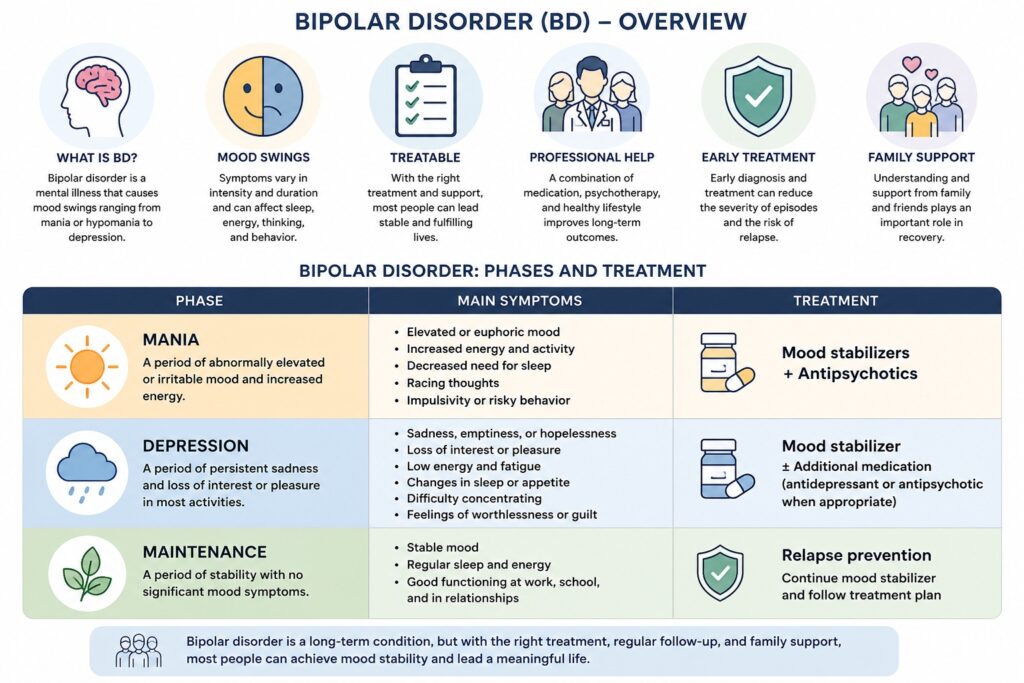
Bipolar disorder, earlier called “manic-depressive illness”, is a severe and usually persistent mental disorder characterized by mood fluctuation between two opposite extremes: depression and mania. There are four possible types of mood episodes in bipolar disorder: mania, hypomania, depression, and mixed episodes.
Manic phases with elevated mood, drive, and restlessness alternate with severe depressive episodes with sadness, lethargy, and loss of self-esteem. The episodes can appear a few times per year, rarely once in a few years. In mixed episodes, patients experience elevated energy levels with irritability or dysphoria coexisting with depression.
Bipolar disorder often requires lifelong psychiatric treatment with medication and complementary treatment with psychotherapy and sociotherapy.
Treatment for Bipolar Disorder at CHMC Dubai
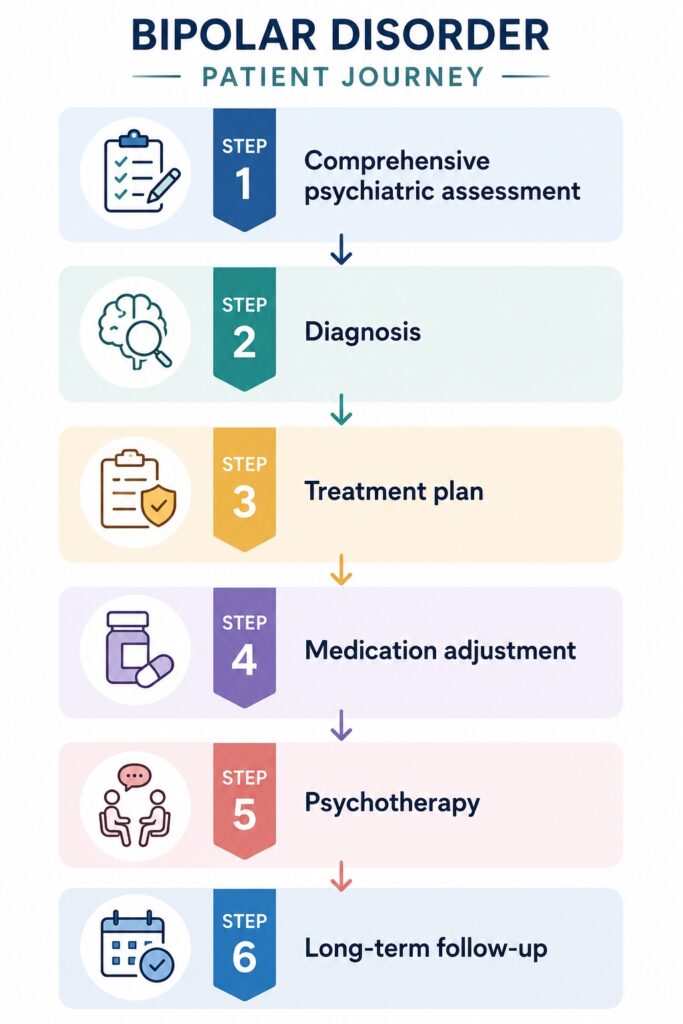
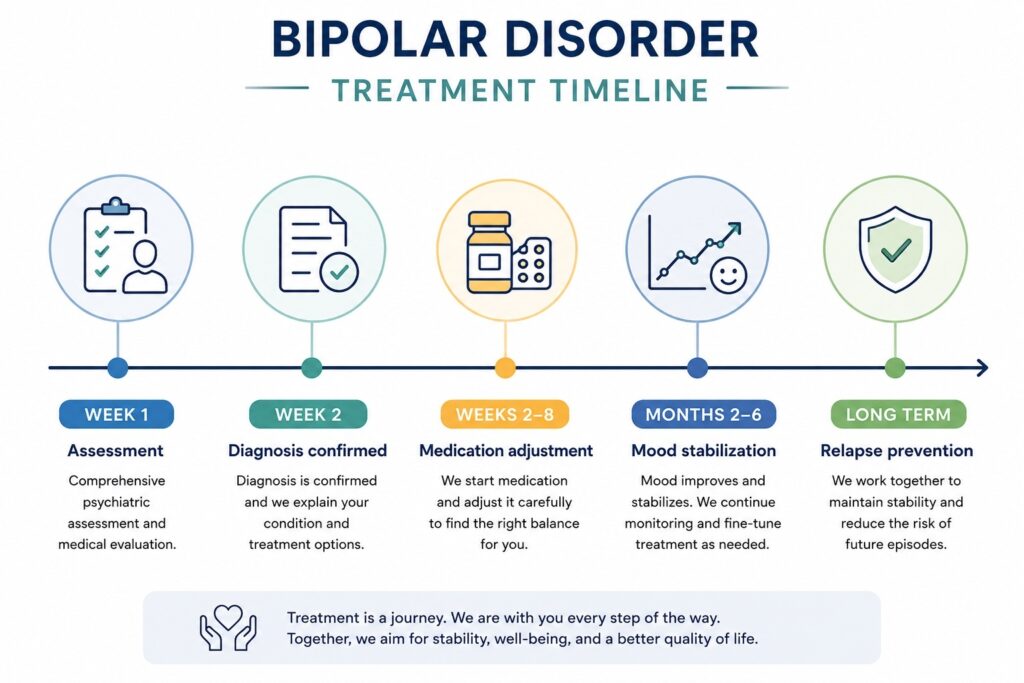
Effective treatment for bipolar disorder at CHMC Dubai involves much more than prescribing medication. It begins with a comprehensive psychiatric assessment and an accurate diagnosis. Bipolar disorder can easily be mistaken for depression, anxiety disorders, ADHD, borderline personality disorder, thyroid disease, or substance-induced mood changes. Identifying the correct condition is the foundation of successful treatment.
At our psychiatric clinic in Dubai, every patient receives an individual treatment plan based on their symptoms, medical history, and the stage of the illness. Treatment may include medication, psychotherapy, psychoeducation, lifestyle modifications, and regular psychiatric follow-up. During follow-up appointments, treatment is reviewed and adjusted to ensure the best possible long-term outcome.
Early diagnosis plays a key role in the long-term prognosis of bipolar disorder. Many people are treated for depression for years before bipolar disorder is correctly recognised. This delay may result in repeated mood episodes, difficulties at work or in relationships, financial problems, and hospitalisation. An early diagnosis allows appropriate treatment to begin sooner, helping to stabilise mood, prevent relapses, and improve quality of life.
Why Choose CHMC for Bipolar Disorder Treatment?
At CHMC German Clinic for Psychiatry and Psychology, patients are treated by Dr. Gregor Kowal, a German Board Certified Consultant Psychiatrist and Psychotherapist with more than 30 years of clinical experience in Germany and the UAE. Dr.Kowal is supported by a team of experienced psychologists.
Our approach follows current international treatment guidelines and is based on evidence-based psychiatry. We develop an individual treatment plan that is regularly reviewed and adjusted according to the patient’s symptoms, response to medication, and stage of the illness.
Bipolar disorder usually requires long-term, and often lifelong, therapy. A strong therapeutic relationship and continuity of care are essential for successful treatment. For this reason, CHMC does not rely on visiting psychiatrists or psychologists. Our clinicians are permanently based in Dubai, allowing patients to continue treatment with the same therapist over many years without unnecessary changes in their care.
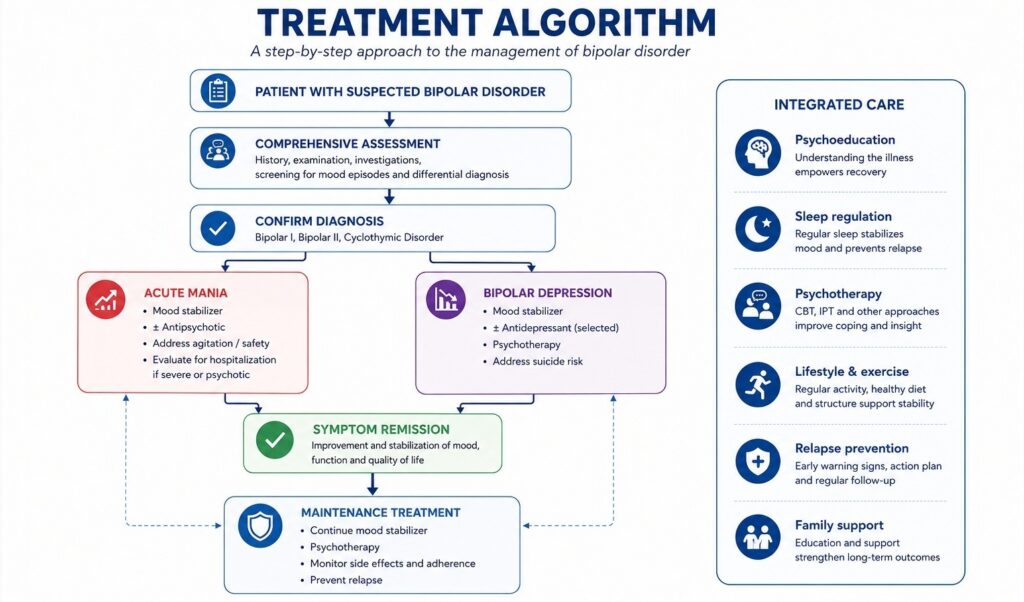
The most effective treatment for bipolar disorder combines accurate diagnosis, mood-stabilising medication, regular psychiatric follow-up, and psychotherapy. Medication is considered the cornerstone of bipolar disorder treatment. Psychotherapy alone is usually not sufficient, particularly during manic episodes when judgement and insight are impaired. Treatment may include mood stabilisers such as lithium or lamotrigine, atypical antipsychotic medications, and, in selected cases, antidepressants under careful psychiatric supervision.
Treatment With Medication for Bipolar Disorder
Treatment with medication for bipolar disorder is one of the biggest challenges in the field of psychiatry. The patient with bipolar disorder can be compared with someone balancing on a tightrope between two extremes: mania and depression. Adding too much weight on one side can lead to a collapse.
Medication used for the treatment of bipolar disorder belongs to three main categories: mood stabilizers, antipsychotics, and antidepressants.
Read More About Medication for Bipolar disorder
Treatment with Psychotherapy for Bipolar Disorder
The treatment for bipolar disorder, once primarily managed with medication, evolved to a more complex, comprehensive approach involving a combination of medication and psychotherapeutic and psychosocial interventions.
However, psychotherapy alone can’t cure bipolar disorder. For instance, manic patients need medication since they lack insight and act irrationally. The same counts for severe depressive phases. Even during stable periods, relapses are highly probable. The essential part of the treatment with psychotherapy is the relapse prevention therapy during the stable phases of BD.
Read More About Psychotherapy for Bipolar Disorder
Acute treatment begins as soon as an active episode of mania or bipolar depression occurs. It continues until the acute symptoms have significantly improved. Depending on the severity and nature of the symptoms, various medications and non-pharmacological treatment approaches may be used.
Treatment for Mania
The goal of treatment during mania is to calm the symptoms quickly, restore normal sleep, and prevent risky behaviour. Depending on the severity, treatment may be provided on an outpatient basis or in hospital.
The term “mania” describes a state of extreme euphoria, unjustified optimism, and hyperactivity. Both mania and hypomania are combined with increased speed of thinking and talking as well as increased motor activities. The patient may stay awake for several nights without feeling tired. His sexual drive can be increased and the inhibition (conscious control of his actions) decreased. His judgement will always be impaired.
Some of the patients will develop delusions and sometimes even hallucinations. Delusions are irrational thoughts; in mania, this is usually the delusion of grandeur. The existence of delusional (psychotic) symptoms can be confusing and lead to misdiagnosis of schizophrenia.
Treatment of mania requires hospitalization. In Dubai, Al Amal Hospital and the Psychiatric Department of Rashid Hospital can accommodate patients in acute manic states. The hospitalization is needed due to the patient’s irrational, sometimes aggressive behaviour. In the hospital, the medication can be adjusted instantly depending on the symptoms.
Treatment for Hypomania
A hypomanic episode is different from full mania. Its symptoms are less severe. The person can experience such a state as being very productive, being optimistic, and feeling happy. The hypomania doesn’t include psychotic symptoms (i.e., delusions), and the patient is able to keep some level of control.
Under the condition of the close support of the patient’s family, our CHMC Clinic in Dubai can treat hypomanic patients in an outpatient setting. The patients can stay at home under the supervision of their families, visiting our clinic more frequently until their full stabilization.
Treatment for Bipolar Depression
In the past, bipolar depression was not differentiated from regular depression. The results of research suggest that there are significant differences between the two. For example, certain symptoms are more common in bipolar depression than in regular depression. Bipolar depression is more likely to involve irritability, unpredictable mood swings, and feelings of restlessness.
The patients suffering from bipolar depression are more likely to develop psychotic symptoms with delusional thoughts and/or delusions. The depressive phase of bipolar disorder can also be more severe, including the risk of suicide. In fact, people suffering from bipolar disorder are more likely to attempt suicide than those suffering from regular depression. Furthermore, their suicide attempts tend to be more lethal.
In cases of severe depression with suicidal tendencies, the patient should be admitted to the psychiatric hospital in Dubai (Al Amal or Rashid Hospital). In less severe cases, we can treat the patient in an outpatient setting at CHMC in Dubai.
Maintenance Treatment for Bipolar Disorder
Maintenance therapy is the long-term phase of bipolar disorder treatment. Its main goal is to prevent future episodes of mania, hypomania, and depression while helping patients maintain a stable mood and a good quality of life. Even when symptoms have completely resolved, the underlying vulnerability to bipolar disorder usually remains. For this reason, stopping treatment too early significantly increases the risk of relapse.
Maintenance therapy typically includes mood-stabilising medication, regular psychiatric follow-up, and, when appropriate, psychotherapy. During follow-up appointments, the psychiatrist monitors symptoms, evaluates medication effectiveness, manages side effects, and adjusts treatment if necessary. Patients are also encouraged to maintain a regular sleep schedule, reduce stress, avoid alcohol and recreational drugs, and recognise early warning signs of relapse.
With consistent treatment and good adherence to the treatment plan, many people with bipolar disorder remain emotionally stable for years, continue working, maintain healthy relationships, and lead active, fulfilling lives.
Learn more about how to live with bipolar disorder
Hospital Treatment for Bipolar Disorder
Hospital treatment for bipolar disorder may become necessary during severe manic, depressive, or mixed episodes. The main goal of the hospital stay is to prevent a risk of self-harm, suicidal thoughts, extreme exhaustion, or dangerous behavior during a manic episode.
Learn more in our guide on the following:
When Is Hospital Treatment Necessary for Bipolar Disorder?
Prognosis of Bipolar Disorder
One of the first questions many patients ask after receiving a bipolar disorder diagnosis is: “Will I recover?” Although bipolar disorder is usually a lifelong condition, the outlook is generally very good when it is diagnosed early and treated consistently. Modern medication, psychotherapy, and regular psychiatric follow-up allow most people to achieve long periods of mood stability and enjoy a fulfilling life.
Many patients are also concerned about their professional future. Can I continue working? In most cases, the answer is yes. Once the illness is well controlled, many people return to work, complete their education, or continue successful careers. Some may need temporary adjustments during recovery, but long-term employment is achievable for many individuals with bipolar disorder.
Another common concern is family life. Can I have children? Yes. Most people with bipolar disorder can have healthy relationships and become parents. Pregnancy and parenthood require careful planning because some medications may need to be adjusted before conception or during pregnancy. Close cooperation with a psychiatrist helps ensure the safest treatment for both parent and baby.
Patients often ask whether they will be able to drive. Most people can drive safely when their mood is stable. However, driving should be avoided during severe manic or depressive episodes, or if medication temporarily affects concentration or alertness. Your psychiatrist can advise you on when it is safe to drive.
Perhaps the most important question is: “Can I live a normal life?” The answer is encouraging. With the right treatment, regular sleep, healthy lifestyle habits, and good adherence to medication, many people with bipolar disorder maintain successful careers, enjoy meaningful relationships, raise families, and participate fully in everyday life. Early diagnosis and ongoing treatment are the keys to achieving long-term stability and an excellent quality of life.
Treatment for Bipolar Disorder. Summary
Bipolar disorder is a lifelong condition, but with early diagnosis, appropriate medication, psychotherapy, and regular psychiatric follow-up, most people can achieve long-term mood stability and lead fulfilling lives. If you or a family member are experiencing symptoms of bipolar disorder, seeking professional help early can significantly improve the long-term outcome. We provide confidential assessment, diagnosis, and long-term treatment tailored to your individual needs.
Schedule a Bipolar Disorder Assessment
If you or a family member may be experiencing bipolar disorder, early diagnosis can prevent future episodes and improve long-term outcomes. Contact CHMC German Clinic for Psychiatry and Psychology in Dubai to arrange a comprehensive psychiatric assessment with Dr. Gregor Kowal.
FAQs About Treatment for Bipolar Disorder
What is the most effective treatment for bipolar disorder?
The most effective treatment combines an accurate diagnosis, mood-stabilising medication, regular psychiatric follow-up, and psychotherapy. Because bipolar disorder is usually a lifelong condition, treatment focuses on preventing new mood episodes, maintaining emotional stability, and helping patients lead productive and fulfilling lives.
Can bipolar disorder be treated without medication?
In most cases, no. Medication is the foundation of bipolar disorder treatment. Psychotherapy alone is usually not sufficient, especially during manic episodes when judgement and insight are impaired. The best results are achieved by combining medication with psychotherapy and regular psychiatric care.
Which medications are used to treat bipolar disorder?
Treatment depends on the phase of the illness. Common medications include mood stabilisers such as lithium and lamotrigine, atypical antipsychotics, and, in selected cases, antidepressants prescribed under close psychiatric supervision. Your psychiatrist will choose the most appropriate medication based on your symptoms and medical history.
How long does treatment for bipolar disorder last?
Bipolar disorder is usually a chronic condition. Most patients benefit from long-term, and often lifelong, treatment to reduce the risk of relapse and maintain mood stability.
Can psychotherapy help bipolar disorder?
Yes. Psychotherapy helps patients understand their illness, recognise early warning signs, manage stress, improve relationships, and develop healthy coping strategies. However, psychotherapy complements medication rather than replacing it.
When is hospital treatment necessary for bipolar disorder?
Hospital treatment may be required during severe manic or depressive episodes, particularly if psychosis, suicidal thoughts, dangerous behaviour, or an inability to care for oneself is present. Once the condition has stabilised, treatment usually continues on an outpatient basis.
Can bipolar disorder be cured?
There is currently no permanent cure for bipolar disorder. However, with appropriate treatment and regular follow-up, most patients can achieve long periods of stability and enjoy a good quality of life.
How often should I see a psychiatrist?
Appointments are usually more frequent at the beginning of treatment or after medication changes. Once symptoms are stable, follow-up visits are scheduled according to each patient’s individual needs, often every few weeks or months.
What happens during the first consultation?
The first appointment includes a comprehensive psychiatric assessment. Your psychiatrist will discuss your current symptoms, previous mood episodes, medical history, family history, and any previous treatments. If necessary, laboratory tests or other medical investigations may be recommended before starting medication.
Can people with bipolar disorder work and live normal lives?
Yes. Many people with bipolar disorder have successful careers, maintain healthy relationships, and enjoy family life. Early diagnosis, appropriate treatment, and regular psychiatric follow-up greatly improve the long-term outlook.
What lifestyle changes support bipolar disorder treatment?
Healthy daily habits play an important role in treatment. Regular sleep, a consistent routine, stress management, regular physical activity, avoiding alcohol and recreational drugs, and taking medication as prescribed all help reduce the risk of relapse.
How important is family support?
Family support is an important part of successful treatment. Relatives who understand bipolar disorder can recognise early warning signs, encourage treatment adherence, reduce unnecessary conflicts, and help patients seek professional care when symptoms worsen.
Can bipolar disorder relapse despite treatment?
Yes. Although treatment greatly reduces the risk of relapse, new mood episodes may still occur. Common triggers include stopping medication without medical advice, sleep deprivation, severe stress, alcohol or drug use, and irregular follow-up.
Is bipolar disorder treatment safe during pregnancy?
Treatment during pregnancy requires careful planning because some medications may affect the developing baby. Women who are pregnant or planning pregnancy should consult their psychiatrist before making any changes to their medication. Treatment should never be stopped without medical advice.
When should I seek treatment for bipolar disorder in Dubai?
You should seek a psychiatric assessment if you experience repeated episodes of depression, unusually elevated mood, reduced need for sleep, excessive energy, impulsive behaviour, or mood swings that interfere with work, relationships, or daily life. Early diagnosis and treatment can prevent more severe episodes and improve long-term outcomes.
Read More About Bipolar Disorder
- Symptoms of Bipolar Disorder
- Diagnosis of Bipolar Disorder
- Self-Test for Bipolar Disorder
- Psychiatrist for Bipolar Disorder
- When is Hospital Admission Necessery for BD
- Bipolar Disorder in Pregnancy
- Medication for Bipolar Disorder
- Psychotherapy for Bipolar Disorder
- Causes of Bipolar Disorder
- Bipolar I vs Bipolar II Disorder
- What is Rapid Cycling?
- Bipolar Disorder and Sleep
- Living with Bipolar Disorder
- Relationships, Family, Everyday Life with BD
- Long Term Recovery & Quality of Life with BD
- Family Support in Bipolar Disorder
- What is Mania and Hypomania?
- Cyclothymic Disorder
- History of Bipolar Disorder
- CANMAT Guidelines for Bipolar Disorder
- Mood Stabilizers for Bipolar Disorder
- Lithium for Bipolar Disorder
Medically reviewed by Dr. Gregor Kowal

DR. GREGOR KOWAL
Dr. Gregor Kowal is a German-certified consultant in Psychiatry and Psychotherapy. Since 2010, Dr. Kowal has been the Medical Director of CHMC, a psychiatric clinic located in Dubai. Dr. Kowal graduated from the prestigious University of Heidelberg. After completing his specialty training, he held leadership and teaching positions, serving as Head of Department and later as Medical Director at renowned psychiatric hospitals across Germany. In addition to his expertise in psychiatry, Dr. Kowal is trained as a psychotherapist with a foundation in psychoanalytical psychotherapy.