

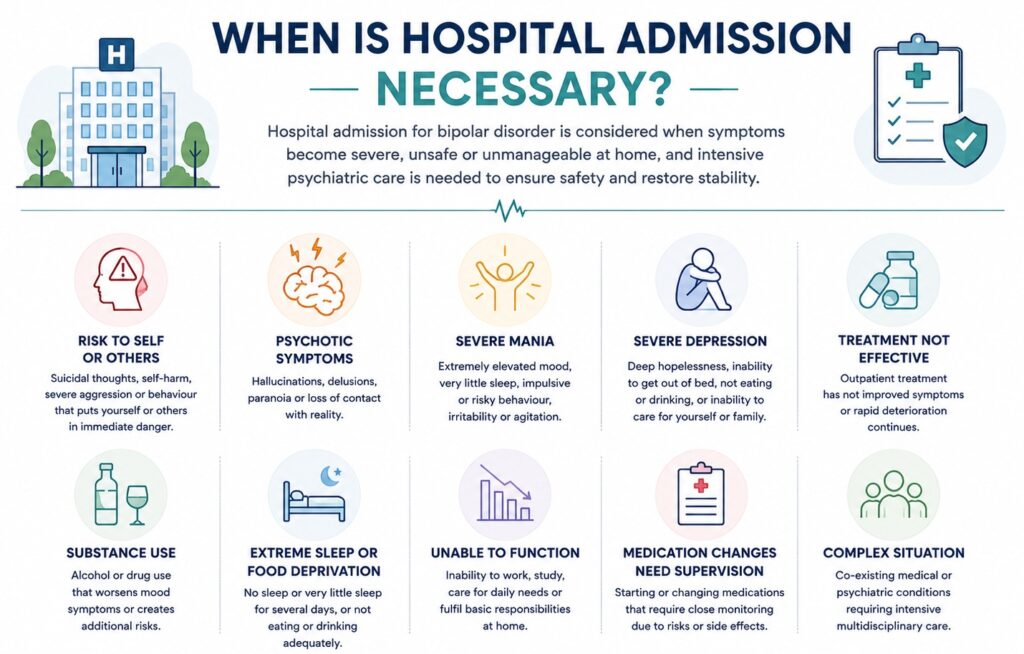
Hospital admission may be necessary when the symptoms of bipolar disorder become too severe to manage safely at home. This is particularly important during a severe manic episode, when a patient develops psychotic symptoms, has suicidal thoughts, or behaves in a way that may place themselves or others at risk.
Inpatient care may also be recommended when a person is no longer able to look after themselves or their family. A lack of sleep or food for several days, severe agitation, substance misuse, or a rapid worsening of symptoms should always be taken seriously.
Hospital treatment can also be helpful when outpatient care has not provided enough improvement. In some cases, major medication changes require close medical supervision.
Early admission may prevent further deterioration and shorten the duration of the episode.
For help and support for bipolar disorder, contact Dr. Kowal, our leading psychiatrist
Hospital Treatment During Mania
A severe manic episode is one of the most common reasons for hospital admission. During mania, patients may have excessive energy, speak very quickly, experience racing thoughts, and need very little sleep. They may feel unusually confident and become convinced that they have exceptional abilities or important plans.
Their judgement may become impaired. This can lead to uncontrolled spending, risky sexual behaviour, reckless driving, aggression, or serious conflicts at home and at work. Some patients stop eating, neglect their physical health, or become completely exhausted.
In severe cases, mania may be accompanied by delusions or hallucinations. The patient may lose contact with reality and may not understand that they are unwell. Hospital treatment then provides a calm and protected environment where sleep can be restored, medication can be adjusted, and the patient can be monitored closely.
Hospital Treatment During Bipolar Depression
A severe depressive episode may also require inpatient treatment. Bipolar depression can leave a person feeling empty, hopeless, exhausted, and unable to manage even simple daily tasks.
Hospital admission should be considered when a patient has thoughts of suicide or self-harm, has already attempted suicide, or is no longer able to care for themselves. Some patients remain in bed for days, stop eating or drinking properly, withdraw completely from others, or become unable to work or care for their children.
Depression may occasionally include psychotic symptoms, such as strong feelings of guilt, paranoid beliefs, or voices encouraging self-harm. In such situations, hospital treatment offers continuous support, medical monitoring, and protection until the immediate crisis has passed.
When Outpatient Treatment Is No Longer Sufficient
Many people with bipolar disorder can be treated successfully through regular outpatient appointments. However, hospital care may become necessary if symptoms continue to worsen despite appropriate medication, psychotherapy, and family support.
Admission may be considered when relapses happen repeatedly, treatment side effects become difficult to manage, or the patient is unable to follow the treatment plan because of poor insight. Severe sleep deprivation, substance misuse, or additional physical and psychiatric conditions may also make outpatient treatment unsafe or ineffective.
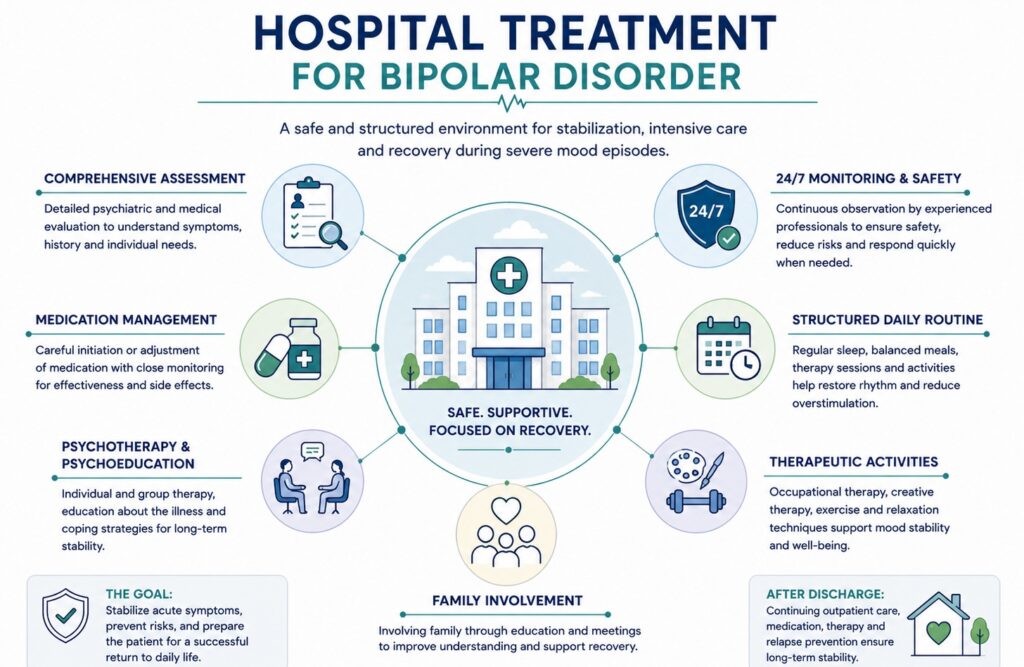
Hospital care allows the psychiatric team to observe the patient throughout the day and night. This makes it easier to assess symptoms, adjust medication quickly, and respond to any complications.
What Happens During Hospital Treatment?
Hospital treatment usually begins with a detailed psychiatric and medical assessment. The treating team reviews the current symptoms, previous mood episodes, medical history, family history, medication, substance use, and possible triggers. Blood tests and other medical examinations may also be needed.
The treatment plan is adapted to the individual patient. Medication may be started, changed, or carefully adjusted. The patient has regular consultations with psychiatrists and may also receive psychological support, psychoeducation, occupational therapy, exercise therapy, or other structured activities.
A calm daily routine is an important part of recovery. Regular sleep, meals, medication times, and therapeutic sessions help reduce overstimulation and restore stability. Family meetings may also be arranged when this is helpful and the patient agrees.
Before discharge, the hospital team prepares a follow-up plan. This normally includes outpatient psychiatric appointments, ongoing medication, psychotherapy, and guidance on recognising early warning signs of relapse.
Returning Home After Hospitalisation
Discharge from hospital does not mean that treatment is complete. Bipolar disorder usually requires long-term care, even when the acute symptoms have resolved.
After returning home, patients should continue taking their medication as prescribed and attend regular psychiatric follow-up appointments. Psychotherapy and psychoeducation can help them better understand the illness, manage stress, and recognise early signs of mania or depression.
A stable sleep schedule, regular daily routine, physical activity, and avoidance of alcohol and recreational drugs can also reduce the risk of relapse. Family members may support recovery by noticing changes in sleep, energy, behaviour, or mood and encouraging the patient to seek help early.
A well-planned transition from hospital to outpatient care greatly reduces the risk of another crisis and helps the patient gradually return to work, relationships, and everyday responsibilities.
How CHMC Supports Patients Who Need Hospital Treatment
At CHMC German Clinic for Psychiatry and Psychology, most patients with bipolar disorder are treated on an outpatient basis. However, if symptoms become severe and hospital admission is necessary, we discuss the situation carefully with the patient and their family.
We coordinate referral to an appropriate psychiatric hospital and provide the treating team with relevant clinical information. After discharge, we continue the patient’s long-term outpatient treatment at CHMC.
This may include medication management, psychiatric follow-up, psychotherapy, psychoeducation, and relapse prevention. Maintaining continuity of care after hospitalisation is essential for long-term mood stability and recovery.
Read More About Bipolar Disorder
- Treatment for Bipolar Disorder
- Symptoms of Bipolar Disorder
- Diagnosis of Bipolar Disorder
- Self-Test for Bipolar Disorder
- Psychiatrist for Bipolar Disorder
- Bipolar Disorder in Pregnancy
- Medication for Bipolar Disorder
- Psychotherapy for Bipolar Disorder
- Causes of Bipolar Disorder
- Bipolar I vs Bipolar II Disorder
- What is Rapid Cycling?
- Bipolar Disorder and Sleep
- Living with Bipolar Disorder
- Relationships, Family, Everyday Life with BD
- Long Term Recovery & Quality of Life with BD
- Family Support in Bipolar Disorder
- What is Mania and Hypomania?
- Cyclothymic Disorder
- History of Bipolar Disorder
- CANMAT Guidelines for Bipolar Disorder
- Mood Stabilizers for Bipolar Disorder
- Lithium for Bipolar Disorder
Medically reviewed by Dr. Gregor Kowal

DR. GREGOR KOWAL
Dr. Gregor Kowal is a German-certified consultant in Psychiatry and Psychotherapy. Since 2010, Dr. Kowal has been the Medical Director of CHMC, a psychiatric clinic located in Dubai. Dr. Kowal graduated from the prestigious University of Heidelberg. After completing his specialty training, he held leadership and teaching positions, serving as Head of Department and later as Medical Director at renowned psychiatric hospitals across Germany. In addition to his expertise in psychiatry, Dr. Kowal is trained as a psychotherapist with a foundation in psychoanalytical psychotherapy.