

At CHMC, we provide comprehensive ADHD treatment in Dubai for adolescents and adults under the care of Dr. Gregor Kowal, German Board-Certified Consultant Psychiatrist and Psychotherapist.
Attention Deficit Hyperactivity Disorder (ADHD) is a neurodevelopmental disorder affecting attention, organisation, impulse control and emotional regulation. Although it begins in childhood, symptoms often persist into adulthood and may interfere with work, education, relationships and everyday responsibilities.
Effective adult ADHD treatment in Dubai begins with an accurate diagnosis and assessment of how symptoms affect daily functioning. Depending on individual needs, treatment may combine medication, psychotherapy, psychoeducation and practical strategies.
At CHMC, adults with ADHD receive specialist medical care from our psychiatrist for ADHD in Dubai, Dr. Gregor Kowal, who provides psychiatric assessment, medication management and ongoing follow-up.
Book an Adult ADHD Assessment with Dr. Kowal
ADHD Explained
Attention Deficit Hyperactivity Disorder is a developmental disorder of brain function. It affects the ability to regulate attention, control impulses and organise behaviour. Although many people associate ADHD with hyperactive children, the condition is considerably more complex.
Some patients are predominantly inattentive. Others struggle mainly with impulsivity or hyperactivity. Many experience a combination of all three. In addition, adults with ADHD frequently report chronic procrastination, poor time management, emotional instability, difficulty organising their work and persistent inner restlessness. These problems often interfere with education, employment, relationships and everyday responsibilities.
One important aspect of ADHD is that symptoms change with age. Hyperactivity often becomes less obvious during adulthood, while difficulties with organisation, concentration and emotional regulation become more prominent. As a result, many adults do not realise they have ADHD until increasing professional or family responsibilities expose the underlying difficulties.
Contrary to popular belief, ADHD is not a sign of low intelligence or poor motivation. Many individuals with ADHD are highly intelligent, creative and capable of exceptional performance when working on subjects that genuinely interest them. The difficulty lies not in ability but in regulating attention consistently across different situations.
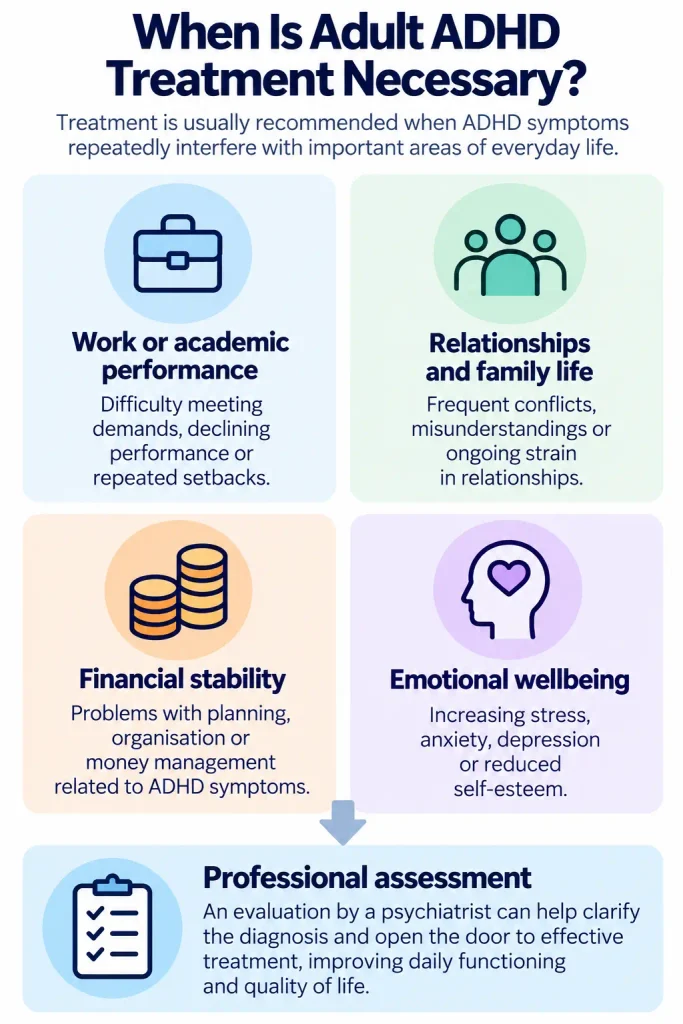
When Is Adult ADHD Treatment Necessary?
Not everyone diagnosed with ADHD requires the same level of treatment. The decision depends on the severity of symptoms and the extent to which they interfere with everyday life. Treatment is usually recommended when ADHD repeatedly affects work performance, academic achievement, relationships, family life or emotional wellbeing.
Many adults seek professional help only after years of trying to compensate for their symptoms through longer working hours, detailed reminder systems or constant self-discipline. Although these strategies may provide temporary support, they often become increasingly difficult to maintain. Untreated ADHD in adults may lead to repeated academic failure, unstable employment, financial difficulties, relationship conflicts and reduced self-esteem.
Adults with ADHD may also experience anxiety, depression or chronic stress, particularly when persistent difficulties with attention, organisation and impulse control affect their everyday lives. These conditions may occur independently or develop alongside the challenges associated with ADHD. Appropriate treatment can improve functioning and reduce ADHD-related distress, while co-existing psychiatric disorders should be assessed and treated when necessary.
The purpose of treatment is not to change the patient’s personality. Instead, it aims to reduce symptoms that interfere with everyday functioning while allowing each individual to make better use of their strengths and abilities.
The Main Goals of Adult ADHD Treatment
Successful adult ADHD treatment focuses on improving everyday functioning rather than simply reducing symptoms. For many patients, better concentration is only one objective. Equally important are improving organisation, completing tasks on time, regulating emotions, strengthening relationships and increasing self-confidence. Many adults wish to become more productive at work, while parents often hope to improve family life and reduce everyday stress.
Treatment goals therefore differ from one patient to another. A university student may need support with concentration and time management during examinations. A business executive may require help managing impulsive decisions and maintaining attention during meetings. Parents often seek better emotional regulation and improved family relationships. This individual approach is one of the reasons why treatment should always begin with a comprehensive psychiatric assessment rather than a standardised treatment protocol.
Individualised Adult ADHD Treatment
An individualised ADHD treatment plan begins with a comprehensive assessment of the patient’s symptoms, functional difficulties, psychiatric and medical history, previous treatment and personal circumstances. The psychiatrist identifies which problems require the greatest attention and discusses the available treatment approaches with the patient.
Depending on the clinical situation, treatment may involve medication, psychotherapy, psychoeducation and lifestyle strategies. These interventions can be combined according to symptom severity, treatment goals, co-existing conditions and individual preferences.
The treatment plan is reviewed during follow-up appointments to evaluate effectiveness, tolerability and progress towards agreed goals. Adjustments are made when necessary to support sustained improvement in everyday functioning.
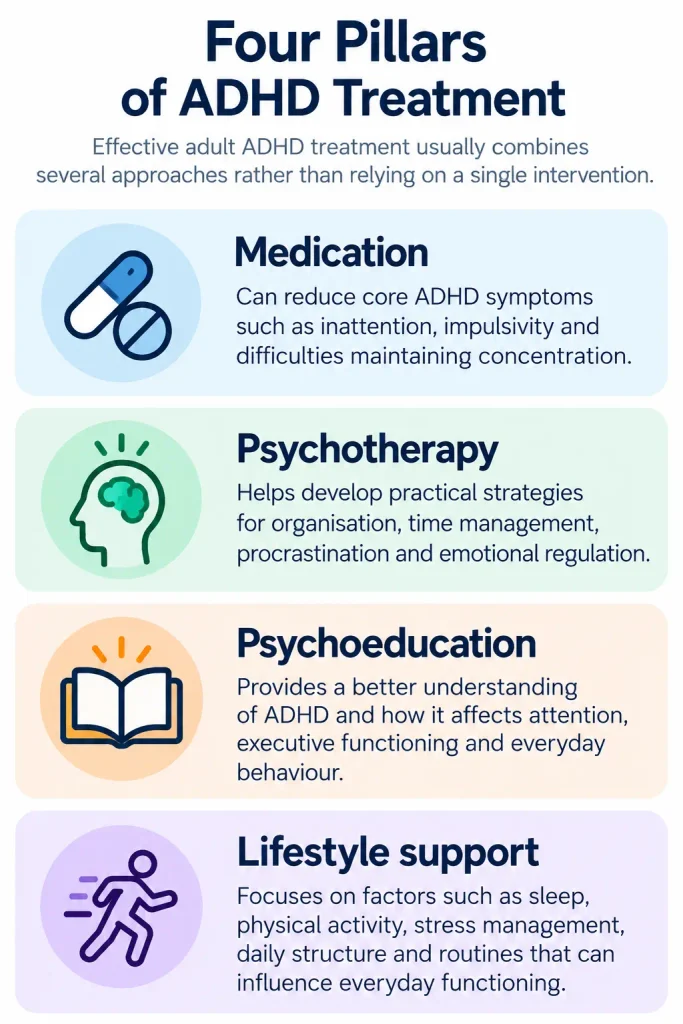
Four Pillars of ADHD Treatment
Effective adult ADHD treatment usually combines several approaches rather than relying on a single intervention. The relative importance of each component depends on the patient’s symptoms, level of impairment and individual treatment goals.
The four main components are:
Medication can reduce core ADHD symptoms such as inattention, impulsivity and difficulties maintaining concentration.
Psychotherapy helps patients develop practical strategies for organisation, time management, procrastination and emotional regulation.
Psychoeducation provides a better understanding of ADHD and how it affects attention, executive functioning and everyday behaviour.
Lifestyle support focuses on factors such as sleep, physical activity, stress management, daily structure and routines that can influence everyday functioning.
These components can be combined and adjusted over time according to the patient’s response and changing needs. The following sections explain each part of adult ADHD treatment in more detail.
Medication for Adult ADHD
Medication is one of the most effective components of modern adult ADHD treatment in Dubai. When clinically indicated, it can improve attention, reduce impulsivity and help patients function more effectively at work, in education and in everyday life. The decision to use medication depends on the severity of symptoms, functional impairment, physical health, psychiatric comorbidities and the patient’s individual circumstances.
Before prescribing medication, Dr. Gregor Kowal conducts a comprehensive psychiatric and medical assessment. Treatment is individualised, and the response, possible side effects and overall functioning are monitored during regular follow-up appointments. Finding the appropriate medication and dose may require gradual adjustment.
In the UAE, stimulant medications are strictly regulated and can only be prescribed by authorized physicians in accordance with local requirements.
Read more about ADHD medication in Dubai, including available medications, how they work, prescribing requirements, dose adjustment and monitoring.
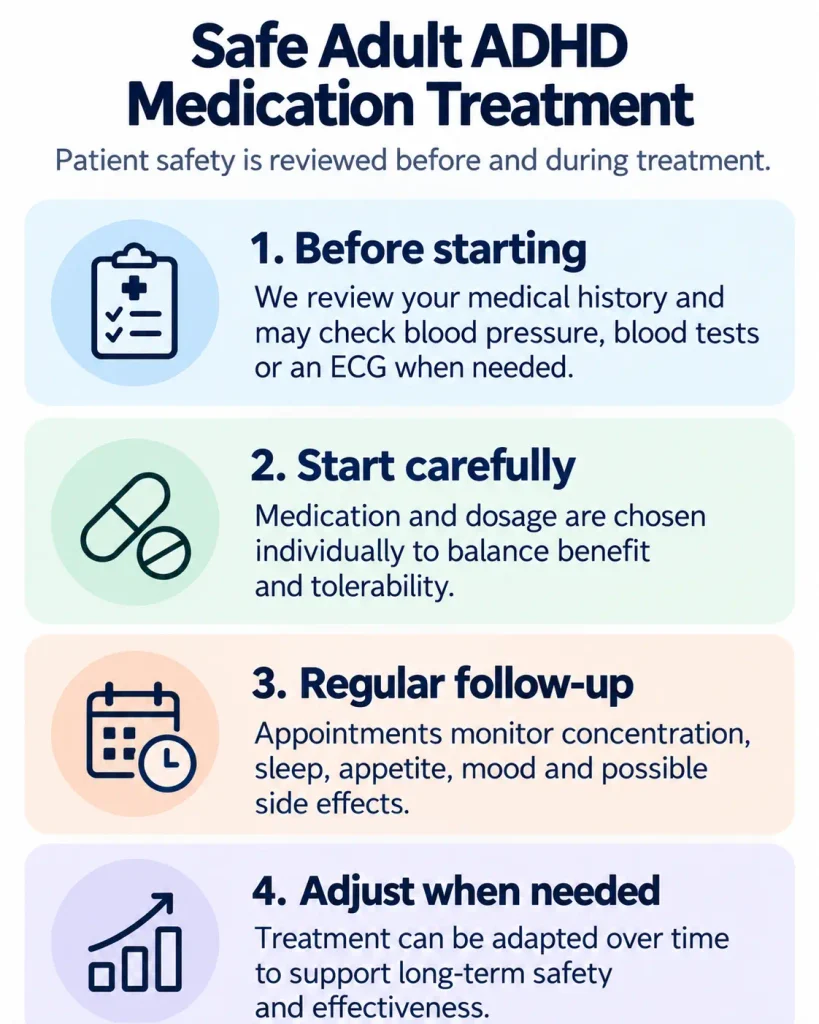
Safe Adult ADHD Medication Treatment
Before starting ADHD medication, the psychiatrist reviews the patient’s medical history, current medications, cardiovascular risk factors and relevant physical health conditions. Baseline measurements generally include blood pressure, pulse and weight. Additional investigations, such as laboratory tests or an electrocardiogram (ECG), may be recommended when clinically indicated rather than being necessary for every patient. During treatment, regular monitoring helps identify side effects, evaluate effectiveness and determine whether medication or dosage adjustments are needed.
For patients taking medication, follow-up includes assessment of treatment response, side effects, sleep, appetite, blood pressure, pulse, weight and overall wellbeing. Medication or psychological support can be adjusted when necessary.
Psychotherapy for Adult ADHD
Medication can reduce core ADHD symptoms, but it does not necessarily address difficulties with organisation, procrastination, emotional regulation or negative patterns developed over many years. Psychotherapy complements medication by helping patients translate improved attention and impulse control into better everyday functioning.
ADHD-focused cognitive behavioural therapy (CBT) is an established psychological intervention for adults with ADHD. It helps patients develop practical strategies for planning, prioritising tasks, managing distractions, reducing procrastination and maintaining consistent daily routines. Therapy can also address emotional difficulties and negative patterns of thinking associated with repeated setbacks.
When appropriate, therapy also addresses the emotional consequences of longstanding ADHD difficulties, including low self-esteem, frustration and problems in relationships. This can help patients develop healthier responses to setbacks and improve communication in everyday life.
At CHMC, psychotherapy is integrated into adult ADHD treatment according to each patient’s individual needs.
Read more about Psychotherapy for Adult ADHD
Psychoeducation for Adult ADHD
One of the most valuable parts of ADHD treatment is understanding the disorder itself. Many patients spend years blaming themselves for difficulties that are actually caused by ADHD. They may believe they are disorganised, lazy or lacking motivation when, in reality, they have been struggling with a neurodevelopmental disorder throughout their lives.
Psychoeducation helps patients understand how ADHD affects attention, executive functioning and emotional regulation. Once they recognise these patterns, many begin to view themselves differently. Instead of repeatedly asking, “Why can’t I do what everyone else seems to manage?”, they start understanding why certain situations have always been particularly challenging. This new perspective often reduces guilt and frustration. It also helps family members understand that ADHD is not a lack of effort or discipline but a recognised medical condition requiring appropriate care.
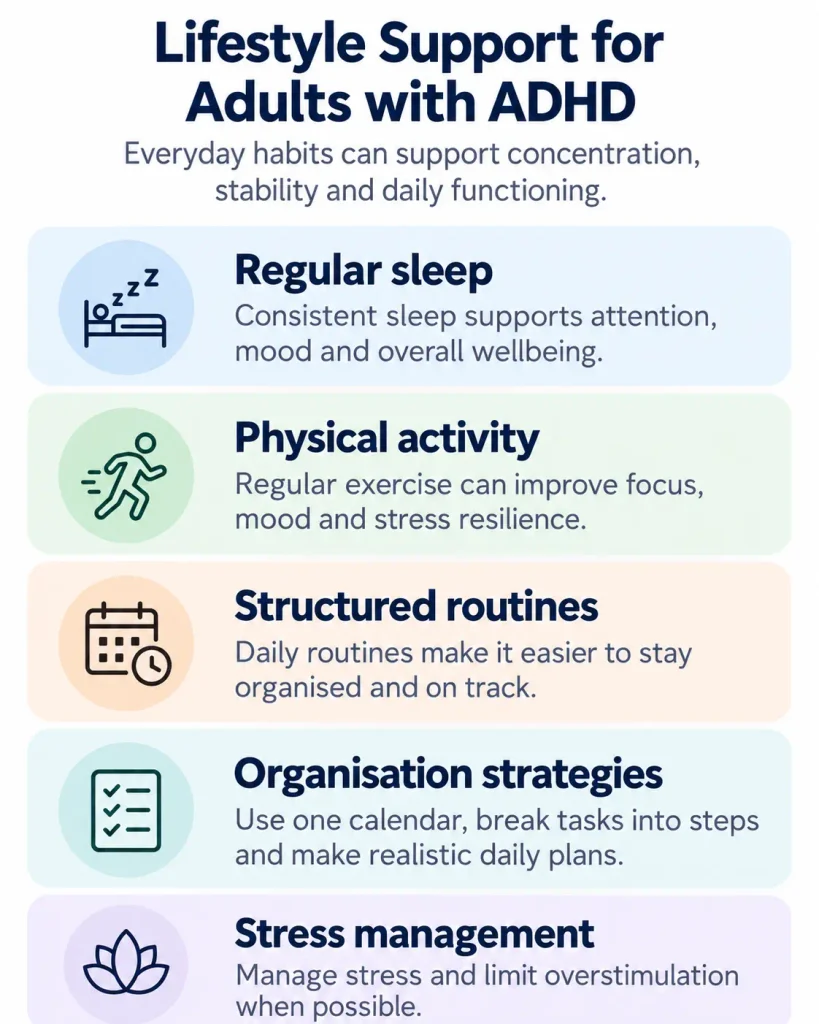
Lifestyle Support for Adults with ADHD
Medication and psychotherapy are the foundations of ADHD treatment, but everyday habits also play an important role.
Regular sleep, physical activity and structured daily routines help improve concentration and emotional stability. Many patients notice that their symptoms become worse during periods of sleep deprivation, chronic stress or excessive screen time.
Simple organisational strategies can also make a significant difference. Keeping appointments in one calendar, breaking large tasks into smaller steps, creating realistic daily schedules and establishing consistent routines often reduce stress and improve productivity.
These changes do not replace medication or psychotherapy when these are needed. However, they help patients make the most of their treatment and maintain improvements over the long term.
Long-Term Follow-up in Adult ADHD Treatment
ADHD is usually a lifelong condition, and treatment needs may change with education, work, relationships and family responsibilities. Regular follow-up allows the psychiatrist to monitor progress and adapt treatment as these needs evolve.
For patients taking medication, follow-up includes assessment of treatment response, side effects, sleep, appetite, blood pressure and overall wellbeing. Medication or psychological support can be adjusted when necessary.
Regular consultations also provide an opportunity to address new challenges and adapt practical strategies as the patient’s circumstances change.
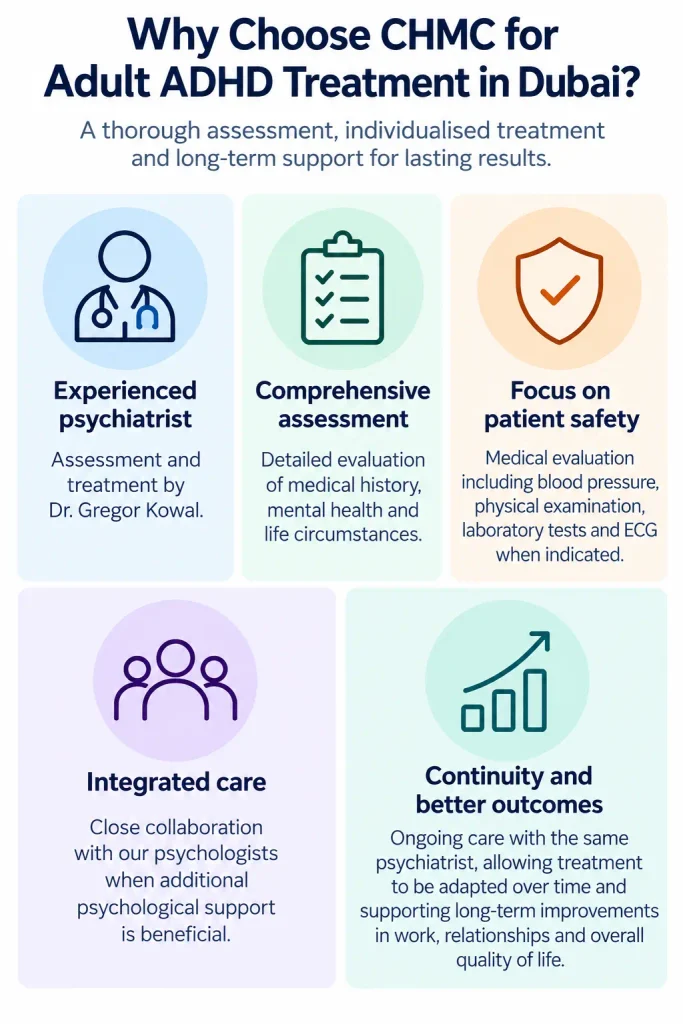
Why Choose CHMC for Adult ADHD Treatment in Dubai?
At CHMC Dubai, adult ADHD treatment is provided within an integrated psychiatric and psychotherapeutic setting. Dr. Gregor Kowal, German Board-Certified Consultant Psychiatrist and Psychotherapist, combines psychiatric assessment, pharmacological treatment and psychotherapeutic expertise within an individual treatment approach.
Assessment goes beyond symptom questionnaires. ADHD symptoms are evaluated in the context of the patient’s developmental history, physical and mental health, work or academic functioning, relationships and everyday responsibilities. Treatment is then tailored to the individual clinical situation and personal goals.
Continuity of Care
Patients remain under the care of the same psychiatrist throughout treatment. This continuity allows decisions to take account of previous assessments, medication response, side effects and individual progress rather than being based on isolated consultations.
When psychological treatment is indicated, psychiatric care can be coordinated with psychotherapy provided by the clinic’s psychologists. Treatment can therefore be adapted over time as symptoms, circumstances and therapeutic needs change.
The aim is not only to reduce ADHD symptoms but to achieve sustainable improvements in everyday functioning, relationships, emotional wellbeing and quality of life.
For ADHD Treatment Contact Our Consultant Psychiatrist, Dr. Kowal
Frequently Asked Questions About ADHD Treatment in Dubai
Can Adult ADHD Be Treated Successfully, and What Is the Most Effective Treatment?
Yes. Adult ADHD can be treated effectively, although it is usually a lifelong condition rather than one that can be permanently cured. With appropriate treatment, many adults experience substantial improvements in concentration, impulse control, organisation, emotional regulation and everyday functioning.
The most effective treatment depends on the individual’s symptoms, severity and personal circumstances. Medication is often highly effective in reducing core ADHD symptoms, while ADHD-focused cognitive behavioural therapy (CBT) helps patients develop practical strategies for managing time, reducing procrastination and improving organisation. Psychoeducation and lifestyle measures provide additional support.
Does every adult with ADHD need medication?
Not every adult with ADHD requires medication. The decision depends on symptom severity, functional impairment, individual circumstances and treatment goals. Some patients benefit from psychotherapy and behavioural strategies, while others require medication as part of their treatment plan.
Which medications are available for adult ADHD in Dubai?
Several evidence-based medications for adult ADHD are available in Dubai, including methylphenidate, lisdexamfetamine and atomoxetine. The most appropriate medication depends on each patient’s individual symptoms, medical history and treatment goals.
Are ADHD medications safe?
When prescribed by an experienced psychiatrist and monitored regularly, ADHD medications are generally safe and well tolerated. Before treatment begins, Dr. Kowal evaluates each patient’s medical history and, when appropriate, performs additional investigations such as laboratory tests or an ECG.
How long does adult ADHD treatment last?
ADHD is usually a lifelong condition. Some patients require long-term medication, while others mainly benefit from psychological support and practical coping strategies. Treatment is reviewed regularly and adjusted according to changing needs.
Can adults start ADHD treatment for the first time?
Yes. Many adults are diagnosed only after years of difficulties with concentration, organisation or impulsivity. Adults with persistent symptoms and functional impairment can undergo assessment and, when indicated, begin appropriate treatment.
Does psychotherapy help adults with ADHD?
Yes. Psychotherapy teaches practical skills that medication alone cannot provide. It helps adults with ADHD improve organisation, manage procrastination, regulate emotions and build healthier thinking patterns.
Can ADHD occur together with anxiety or depression?
Yes. ADHD frequently occurs alongside anxiety disorders or depression. These conditions may exist independently or interact with ADHD symptoms, making concentration, emotional regulation and everyday functioning more difficult.
A comprehensive psychiatric assessment helps determine whether ADHD, another psychiatric condition or both are contributing to the patient’s difficulties. Treatment is then planned according to the complete clinical picture.
How often will I need follow-up appointments?
The frequency depends on your treatment plan. Patients starting medication usually require more frequent reviews during dose adjustment. Once symptoms are stable, appointments become less frequent while still ensuring ongoing monitoring.
Can adolescents and adults both receive ADHD treatment at CHMC?
Yes. CHMC German Clinic in Dubai provides ADHD assessment and treatment for adolescents aged 16 and older and adults. Treatment is tailored to the patient’s developmental stage, symptoms, medical history and individual needs. CHMC does not provide treatment for children younger than 16.

If you’re concerned about your mental health condition, feel free to contact us on WhatsApp
Read more about ADHD
- Symptoms of ADHD
- Diagnosis of ADHD
- Psychiatrist for ADHD
- Medication for ADHD
- Psychotherapy for ADHD
- ADHD Types
- Causes of ADHD
- ADHD Self-Assessment Test
- ADHD in Children
- ADHD and Motivation
- ADHD vs Borderline Personality Disorder
- Does ADHD Change With Age?
- Emotional Dysregulation in ADHD
- Living with ADHD