

Attention Deficit Hyperactivity Disorder (ADHD) affects more than attention and concentration. Many adults with ADHD experience persistent difficulties with organisation, time management, procrastination, emotional regulation, and relationships. These challenges can interfere with professional performance, personal responsibilities, and overall quality of life, sometimes even when the core symptoms of ADHD are successfully treated with medication.
Psychotherapy for ADHD helps patients develop effective coping strategies, improve emotional wellbeing, and manage the practical and psychological consequences of the disorder. Rather than attempting to eliminate the underlying neurodevelopmental condition, psychotherapy focuses on changing unhelpful patterns of thinking and behaviour, strengthening self-management skills, and improving everyday functioning.
Cognitive Behavioural Therapy (CBT) is among the most extensively studied psychological treatments for adults with ADHD. Other psychotherapeutic approaches may also be beneficial, particularly when ADHD is accompanied by anxiety, depression, low self-esteem, or relationship difficulties.
At CHMC German Clinic for Psychiatry and Psychology in Dubai, psychotherapy is integrated into an individualised treatment approach that combines psychiatric expertise with psychological care. Depending on the patient’s clinical needs, psychotherapy may be provided independently or alongside ADHD medication.
For ADHD Psychotherapy Contact Our Specialists at CHMC
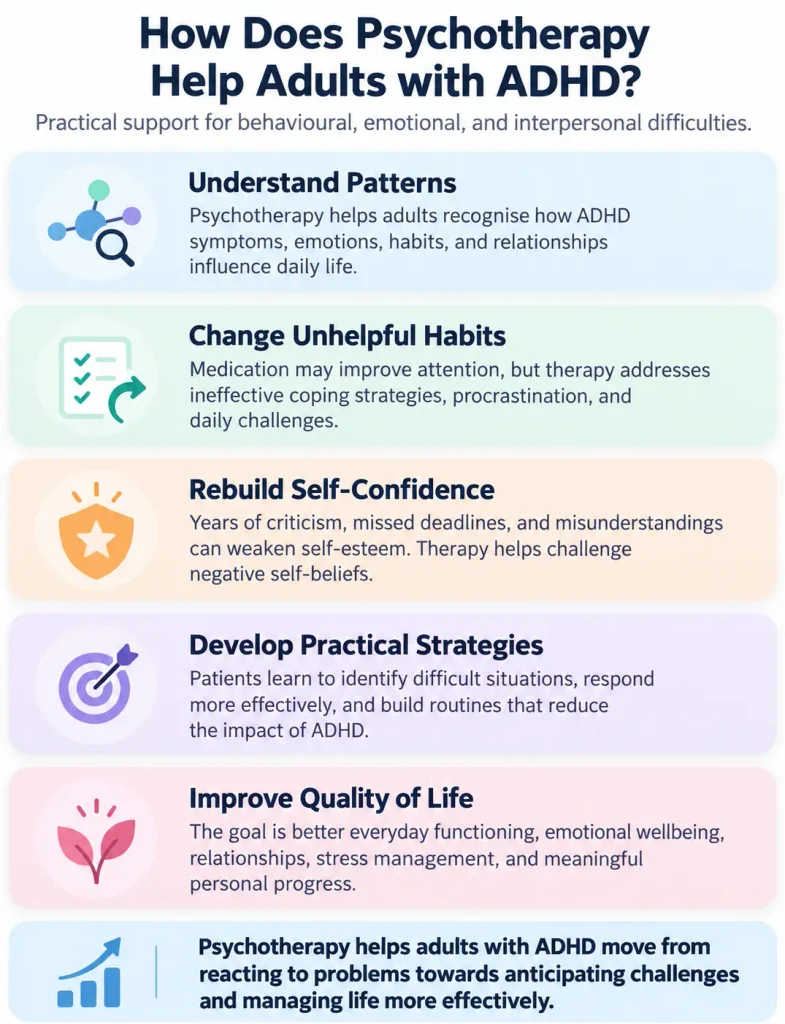
How Does Psychotherapy Help Adults with ADHD?
Psychotherapy addresses the behavioural, emotional, and interpersonal difficulties that frequently accompany ADHD. Although medication can improve attention and impulse control, longstanding habits, ineffective coping mechanisms, and negative self-perceptions may persist. Psychological treatment helps patients understand these patterns and develop more effective ways of managing everyday challenges.
Many adults with ADHD have experienced years of difficulties at school, university, work, or in personal relationships. Repeated criticism, missed deadlines, unfinished projects, and misunderstandings can gradually undermine self-confidence. Some individuals develop the belief that they are unreliable, lazy, or incapable, despite making considerable efforts to meet expectations. These negative beliefs may continue even after the underlying ADHD has been recognised and treated.
Psychotherapy helps patients understand the relationship between ADHD symptoms, emotional reactions, and behavioural patterns. By identifying situations in which difficulties repeatedly occur, patients can develop realistic strategies for responding more effectively. Treatment encourages a gradual shift from reacting to problems after they arise towards anticipating challenges and establishing routines that reduce their impact.
By combining greater self-awareness with practical behavioural changes, psychotherapy helps patients respond more effectively to everyday challenges. Progress is reflected in improved independence, emotional wellbeing, relationships, and the ability to achieve personally meaningful goals.
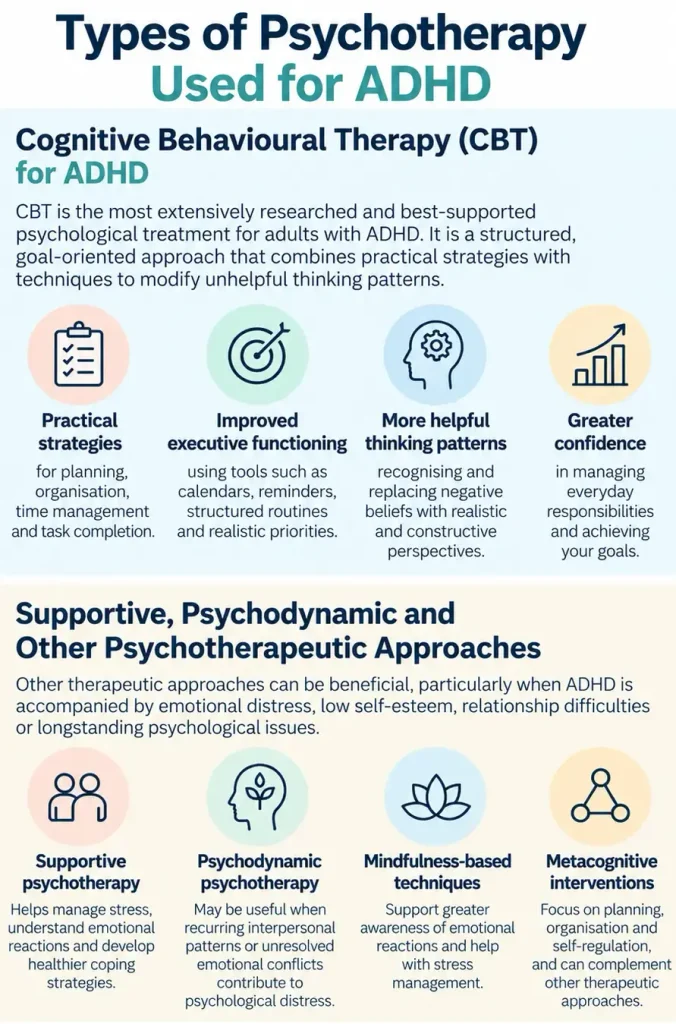
Types of Psychotherapy Used for ADHD
Several psychotherapeutic approaches can be used in the treatment of adults with ADHD, although their scientific evidence and therapeutic objectives differ. The choice depends on the patient’s specific difficulties, associated psychological problems, and treatment goals.
Cognitive Behavioural Therapy (CBT) for ADHD
Cognitive Behavioural Therapy is one of the best-supported psychological interventions for adults with ADHD. It is a structured, goal-oriented treatment that combines practical behavioural strategies with techniques for recognising and modifying unhelpful thinking patterns.
CBT focuses on difficulties that interfere with daily functioning, including procrastination, poor organisation, ineffective time management, impulsive reactions, and problems completing tasks. Many adults with ADHD understand what needs to be done but struggle to translate their intentions into consistent action. Therapy helps bridge this gap by developing practical approaches to planning, prioritising, and managing responsibilities.
A central objective of CBT is to help patients translate intentions into consistent action. Therapy combines structured problem-solving, behavioural techniques, and cognitive strategies to address executive functioning difficulties. These methods are adapted to each patient’s circumstances and practised between sessions to encourage sustainable changes in everyday behaviour.
CBT also addresses negative thinking patterns that may have developed through repeated experiences of failure or criticism. Patients learn to recognise self-defeating beliefs, evaluate them more realistically, and replace them with constructive ways of approaching difficulties. By combining cognitive and behavioural interventions, CBT can improve ADHD-related functioning, reduce psychological distress, and strengthen confidence in managing everyday responsibilities.
Supportive, Psychodynamic, and Other Psychotherapeutic Approaches
Not every adult with ADHD requires the same therapeutic approach. Some patients primarily struggle with organisation and executive functioning, whereas others experience significant emotional distress, low self-esteem, relationship conflicts, or longstanding psychological difficulties.
Supportive psychotherapy can help patients manage stress, understand emotional reactions, and develop healthier coping mechanisms. Psychodynamic or psychoanalytic psychotherapy may be appropriate when recurring interpersonal patterns, unresolved emotional conflicts, or personality-related difficulties contribute significantly to psychological distress.
Although these approaches may be valuable for associated psychological problems, they should not be considered established stand-alone treatments for the core symptoms of ADHD. When improving attention-related functioning, organisation, and task completion is the primary objective, structured ADHD-focused interventions are generally more appropriate.
Mindfulness-based techniques and metacognitive interventions may also be incorporated into treatment. Mindfulness can support awareness of emotional reactions and stress management, while metacognitive approaches focus on planning, organisation, and self-regulation. These methods may complement psychotherapy when selected according to the patient’s individual needs.
What Happens During Psychotherapy for ADHD?
Psychotherapy for adult ADHD is a collaborative process that focuses on identifying specific difficulties and developing practical strategies to manage them more effectively. Although treatment is individualised, sessions generally follow a structured approach that connects therapeutic discussions with everyday experiences.
Treatment begins with an evaluation of how ADHD affects the patient’s professional responsibilities, relationships, organisational habits, and emotional wellbeing. The therapist also considers personal strengths, existing coping strategies, and psychological problems that may require additional attention. Based on this assessment, the patient and therapist establish realistic treatment goals that reflect the individual’s priorities.
During subsequent sessions, specific situations are examined to understand why difficulties arise and how they can be managed differently. A patient who repeatedly postpones important assignments, for example, may learn to divide complex projects into smaller steps, establish realistic starting times, reduce distractions, and introduce external reminders. Someone who frequently becomes overwhelmed by competing responsibilities may benefit from techniques for prioritising tasks and creating predictable daily routines.
An important part of ADHD-focused psychotherapy involves practising these strategies between sessions. Patients are encouraged to apply newly learned skills in their everyday lives and review the results with their therapist. This collaborative process helps identify which approaches are effective, which require modification, and how improvements can be maintained over time.
Therapy is not limited to teaching organisational techniques. Depending on individual needs, sessions may also address emotional reactions, self-esteem, communication difficulties, and the psychological consequences of living with ADHD. The overall objective is to develop sustainable changes that improve functioning beyond the therapy setting.
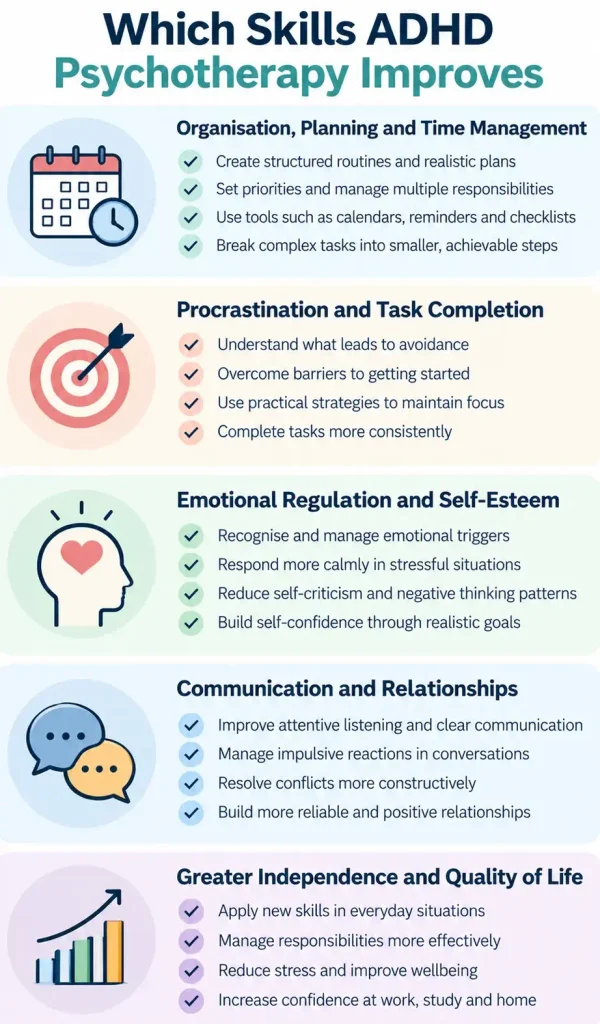
Which Skills ADHD Psychotherapy Improves
Psychotherapy for ADHD focuses on several interconnected areas of everyday functioning. Although the emphasis varies between patients, treatment commonly addresses organisation, procrastination, emotional regulation, self-esteem, and interpersonal relationships.
Organisation, Planning, and Time Management
Difficulties with executive functioning can make it challenging to organise responsibilities, establish priorities, estimate how long activities will take, and complete projects consistently. These problems may affect professional performance, household management, financial responsibilities, and personal commitments.
Psychotherapy helps patients develop practical organisational systems that reduce the demands placed on working memory and attention. Structured schedules, written plans, digital reminders, checklists, and predictable routines can make everyday tasks easier to manage. Patients also learn to recognise unrealistic planning, divide complex activities into achievable stages, and establish priorities that reflect their available time and resources.
The objective is not to create rigid routines but to develop flexible and sustainable habits that support independence and reduce avoidable stress.
Procrastination and Task Completion
Procrastination is a common difficulty among adults with ADHD and is not necessarily caused by a lack of motivation. Problems initiating tasks, sustaining effort, and managing competing demands can make even important responsibilities difficult to complete.
Psychotherapy helps patients identify the circumstances that contribute to avoidance and develop strategies for overcoming these barriers. Treatment may involve establishing clearly defined starting points, reducing distractions, structuring work into manageable periods, and developing routines that support consistent progress.
Instead of depending exclusively on willpower, patients learn to modify their environment and working habits in ways that make task initiation and completion more achievable.
Emotional Regulation and Self-Esteem
Many adults with ADHD experience frustration, irritability, emotional sensitivity, or difficulties recovering from stressful situations. Repeated experiences of criticism and underachievement may also contribute to low self-esteem and negative beliefs about personal competence.
Psychotherapy addresses these emotional consequences by helping patients recognise triggering situations, understand their reactions, and develop more balanced responses. Cognitive techniques can reduce excessive self-criticism, while behavioural strategies help patients manage frustration and respond more effectively during challenging situations.
A particularly important objective is distinguishing ADHD-related difficulties from negative judgments about personal character. Patients gradually learn to evaluate their abilities more realistically and strengthen self-confidence through achievable goals and successful behavioural change.
Communication and Relationships
ADHD may influence interpersonal relationships through forgetfulness, impulsive communication, difficulties listening attentively, and emotional reactions during disagreements. These behaviours can create misunderstandings, particularly when partners or family members interpret them as carelessness or lack of interest.
Psychotherapy helps patients recognise recurring communication patterns and develop strategies for improving relationships. Treatment may focus on attentive listening, expressing needs clearly, managing disagreements, and establishing more reliable ways of sharing responsibilities.
When appropriate, involving partners or family members can improve mutual understanding and support the practical changes developed during individual therapy.
Psychoeducation: Understanding ADHD and Its Impact
Psychoeducation is an important component of psychological treatment because patients need an accurate understanding of ADHD to recognise their difficulties and develop effective coping strategies.
Adults who receive an ADHD diagnosis later in life often reinterpret earlier experiences in light of their condition. Difficulties previously attributed to poor discipline, insufficient motivation, or personal weakness may become more understandable when viewed in the context of a neurodevelopmental disorder.
Psychoeducation explains how ADHD influences attention, executive functioning, behavioural regulation, and everyday performance. It also helps patients understand why symptoms can become more pronounced during periods of increased responsibility, psychological stress, or changing environmental demands.
An equally important aspect is recognising individual strengths and existing coping resources. Therapy encourages patients to build on effective strategies while developing additional skills in areas of impairment. This balanced approach helps patients avoid defining themselves exclusively through their diagnosis.
When appropriate, partners or family members may also participate in psychoeducation. A shared understanding of ADHD can reduce misunderstandings, encourage realistic expectations, and improve communication.
For more information about how ADHD is identified and distinguished from other psychiatric conditions, see our article on ADHD diagnosis in Dubai.
Can Psychotherapy Treat ADHD Without Medication?
Psychotherapy can be an appropriate treatment option for some adults with ADHD without medication, particularly when patients prefer a non-pharmacological approach, cannot tolerate medication, or have medical reasons to avoid it. However, psychotherapy and pharmacological treatment address different aspects of the disorder and should not be viewed as interchangeable.
Medication generally produces stronger direct improvements in core ADHD symptoms, such as inattention and impulsivity. Psychotherapy, by contrast, focuses on the practical and psychological consequences of these symptoms, including ineffective organisational habits, procrastination, emotional difficulties, and problems in relationships.
For adults whose ADHD causes significant functional impairment, medication is often recommended after appropriate psychiatric assessment. Psychological treatment may be offered alongside medication when difficulties persist despite improvement in attention and impulse control. For example, a patient may experience better concentration after starting medication but continue to struggle with longstanding avoidance patterns, unrealistic planning, or negative self-perceptions. Psychotherapy can address these remaining difficulties and help translate symptomatic improvements into more effective everyday functioning.
Other patients may benefit from psychotherapy without pharmacological treatment, particularly when their level of impairment and personal preferences support this approach. The decision should be based on an individual evaluation of symptoms, functional limitations, medical circumstances, and treatment goals.
Combining psychotherapy and medication can be particularly useful when ADHD symptoms coexist with persistent behavioural or emotional difficulties. However, treatment should remain individualised rather than assuming that every patient requires both interventions.
A detailed explanation of pharmacological treatment is available in our article on medication for ADHD.
Psychotherapy for ADHD with Anxiety or Depression
ADHD frequently occurs alongside other psychiatric conditions, particularly anxiety disorders and depression. These conditions may contribute substantially to psychological distress and can complicate the management of ADHD-related difficulties.
For example, difficulties beginning or completing tasks may result from both executive functioning problems and reduced motivation associated with depression. Similarly, anxiety may increase avoidance, perfectionistic behaviour, or excessive concern about performance, making organisational difficulties more pronounced.
Psychotherapy helps clarify how these different psychological processes interact and addresses the factors that contribute to the patient’s impairment. CBT may be adapted to manage both ADHD-related problems and symptoms of anxiety or depression, while other therapeutic approaches may be appropriate when longstanding emotional or interpersonal difficulties require more extensive exploration.
The sequence and intensity of treatment depend on the clinical situation. Severe depression, bipolar disorder, substance use disorders, or other significant psychiatric conditions may require specific interventions before or alongside ADHD-focused psychotherapy. For this reason, accurate psychiatric assessment and coordination between psychological and medical treatment are particularly important when several conditions coexist.
Psychotherapy for ADHD in Adolescents
Psychotherapy for adolescents with ADHD requires an approach adapted to their developmental stage, increasing independence, and educational responsibilities. Difficulties with planning school assignments, managing deadlines, regulating emotions, and maintaining relationships may become more prominent as academic and social expectations increase.
Structured psychological interventions can help adolescents strengthen organisational skills, develop effective study habits, improve emotional regulation, and take greater responsibility for everyday activities. Treatment may also address self-esteem, family conflicts, and difficulties adjusting to increasing demands.
Family involvement can be beneficial, particularly when parents need support in establishing predictable routines, communicating expectations clearly, and encouraging independence without creating unnecessary conflict. For younger children, parent training and behavioural interventions in the family and educational environment are especially important.
The recommended approach varies according to age, developmental level, and symptom severity. More detailed information about childhood presentations is provided in our separate article on ADHD in children.
How Long Does Psychotherapy for ADHD Take?
The duration of ADHD psychotherapy depends on the patient’s individual difficulties, treatment goals, and response to psychological interventions. Structured ADHD-focused CBT programmes often involve approximately 10–20 sessions, although the number varies considerably between treatment models.
Patients whose primary difficulties concern organisation, procrastination, or time management may benefit from a relatively brief, structured intervention. Others require longer treatment because ADHD is accompanied by significant emotional distress, longstanding negative self-perceptions, relationship problems, or additional psychiatric conditions.
Progress is reviewed throughout therapy, allowing treatment goals and strategies to be adjusted according to the patient’s development. As patients become more confident in applying newly learned skills independently, the frequency of sessions may be reduced.
The objective is not to maintain psychotherapy indefinitely but to establish effective and sustainable coping mechanisms that continue to support everyday functioning after structured treatment has ended.
Can Psychotherapy Cure ADHD?
ADHD is a neurodevelopmental condition, and psychotherapy does not eliminate its underlying causes. Nevertheless, psychological treatment can substantially reduce the functional and emotional impact of the disorder.
Through therapy, patients learn to recognise their individual difficulties, develop practical strategies, regulate emotional reactions, and manage responsibilities more effectively. Improvements may become particularly meaningful when psychological treatment is combined with appropriate environmental adjustments and medication when indicated.
The aim is not to remove every ADHD-related characteristic but to help patients achieve greater independence, emotional stability, and satisfaction in their everyday lives. Successful treatment therefore focuses on sustainable improvements in functioning rather than promising a cure.
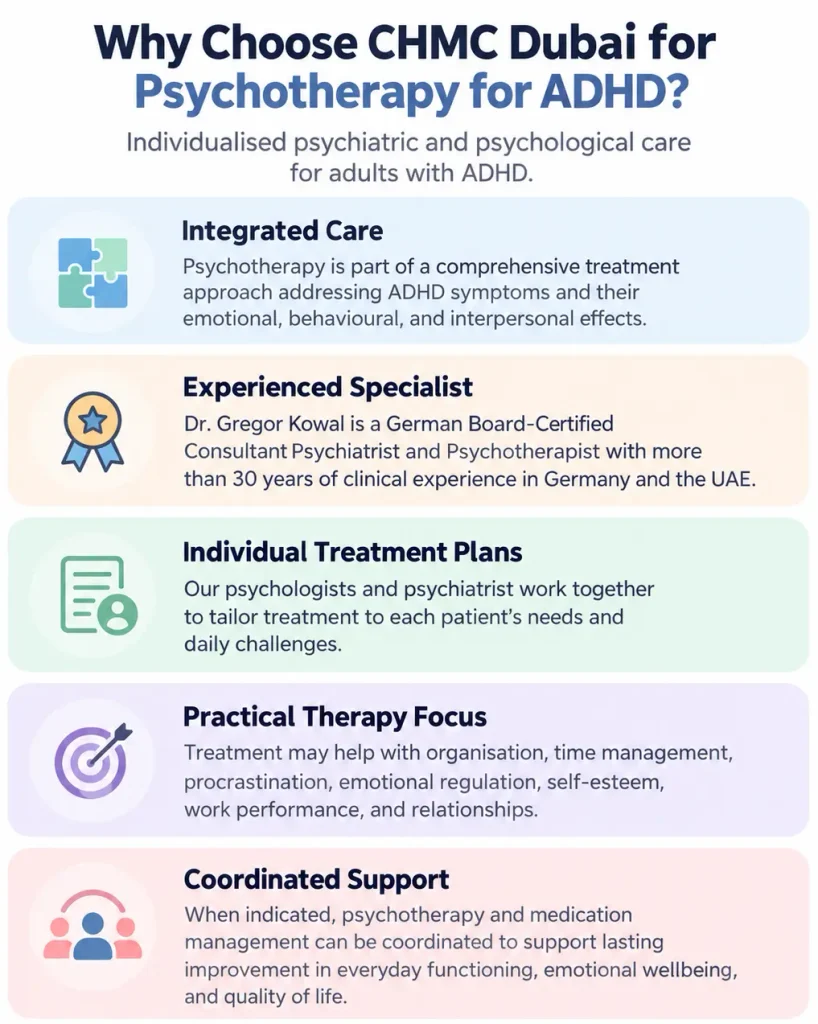
Why Choose CHMC Dubai for Psychotherapy for ADHD?
At CHMC German Clinic for Psychiatry and Psychology in Dubai, psychotherapy for ADHD forms part of an integrated psychiatric and psychological treatment approach. The objective is to provide individualised care that addresses not only the symptoms of ADHD but also the emotional, behavioural, and interpersonal difficulties that may affect everyday functioning.
Dr. Gregor Kowal, German Board-Certified Consultant Psychiatrist and Psychotherapist, has more than 30 years of clinical experience in Germany and the UAE. His psychiatric and psychotherapeutic background supports a comprehensive understanding of ADHD and the psychological difficulties that may accompany the disorder.
Our psychologists and psychiatrist work together to develop treatment plans adapted to each patient’s individual circumstances. Depending on clinical needs, psychotherapy may focus on improving organisation, time management, procrastination, emotional regulation, self-esteem, workplace functioning, or interpersonal relationships. When medication is indicated, psychological and pharmacological treatment can be coordinated to address different aspects of the condition.
The aim of ADHD psychotherapy at CHMC Dubai is to help patients achieve lasting improvements in everyday functioning, emotional wellbeing, and quality of life. Treatment focuses on developing practical coping strategies while addressing the psychological difficulties that may have accumulated through years of living with ADHD.
If ADHD is affecting your professional performance, relationships, or daily responsibilities, contact CHMC Dubai to arrange a specialist consultation and discuss appropriate treatment options.
Book an Appointment for ADHD Psychotherapy
Frequently Asked Questions About Psychotherapy for ADHD
Is psychotherapy effective for adult ADHD?
Yes. Structured psychological interventions, particularly Cognitive Behavioural Therapy, can improve ADHD-related functioning and help patients manage organisational problems, procrastination, emotional difficulties, and negative thinking patterns. The extent of improvement varies between individuals, and psychotherapy may be used alone or alongside medication depending on clinical needs.
Which psychotherapy works best for ADHD?
CBT is among the most extensively researched psychological treatments for adult ADHD. Its structured approach combines practical strategies for everyday functioning with techniques for modifying unhelpful thinking patterns. Supportive or psychodynamic psychotherapy may also be beneficial when associated emotional or interpersonal difficulties require attention.
Can ADHD be treated with psychotherapy alone?
Some adults benefit from psychotherapy without medication, particularly when their symptoms and level of impairment permit a non-pharmacological approach. However, medication generally produces stronger direct effects on core ADHD symptoms. Patients with significant functional impairment may require medication, with psychotherapy added when appropriate.
How many psychotherapy sessions are needed for ADHD?
The duration varies according to individual needs and treatment objectives. Some structured CBT programmes involve approximately 10–20 sessions, while patients with more complex psychological difficulties may benefit from longer-term therapy. Treatment progress is reviewed regularly.
Is psychotherapy useful when ADHD medication is already effective?
Yes. Medication may improve attention and impulse control without fully resolving longstanding organisational habits, emotional difficulties, or relationship problems. Psychotherapy can address these remaining challenges and help patients apply improvements in attention to everyday responsibilities.
Can psychotherapy treat ADHD together with anxiety or depression?
Yes. Psychological treatment can address ADHD-related difficulties alongside symptoms of anxiety or depression. The therapeutic approach should be adapted to the nature and severity of each condition, and additional psychiatric interventions may be necessary.

Read More About ADHD
- ADHD Treatment
- Symptoms of ADHD
- Diagnosis of ADHD
- Psychiatrist for ADHD
- Medication for ADHD
- ADHD Types
- Causes of ADHD
- ADHD Self-Assessment Test
- ADHD in Children
- ADHD and Motivation
- ADHD vs Borderline Personality Disorder
- Does ADHD Change With Age?
- Emotional Dysregulation in ADHD
- Living with ADHD
External References:
NICE Recommendations: ADHD: Diagnosis and Management