

People searching for a psychiatrist for ADHD in Dubai usually have one important question: Do I really have ADHD, or could something else be causing my difficulties?
This is exactly where an experienced psychiatrist can help.
Many medical and psychiatric conditions can produce symptoms similar to ADHD. Anxiety, depression, bipolar disorder, personality disorders, thyroid disease and certain neurological conditions may all affect concentration and emotional regulation. Before ADHD can be diagnosed, these possibilities must be carefully considered. A thorough psychiatric assessment is therefore far more reliable than an online questionnaire or self-assessment.
At CHMC in Dubai, every assessment begins with understanding the individual rather than simply confirming a diagnosis. We consider your symptoms, childhood development, medical history, physical health and everyday functioning before recommending the most appropriate care plan. This comprehensive approach helps determine not only whether ADHD is present by excluding other conditions, but also how it affects your daily life.
For ADHD Assessment Contact Our Consultant Psychiatrist, Dr. Kowal
When Should You See a Psychiatrist for ADHD?
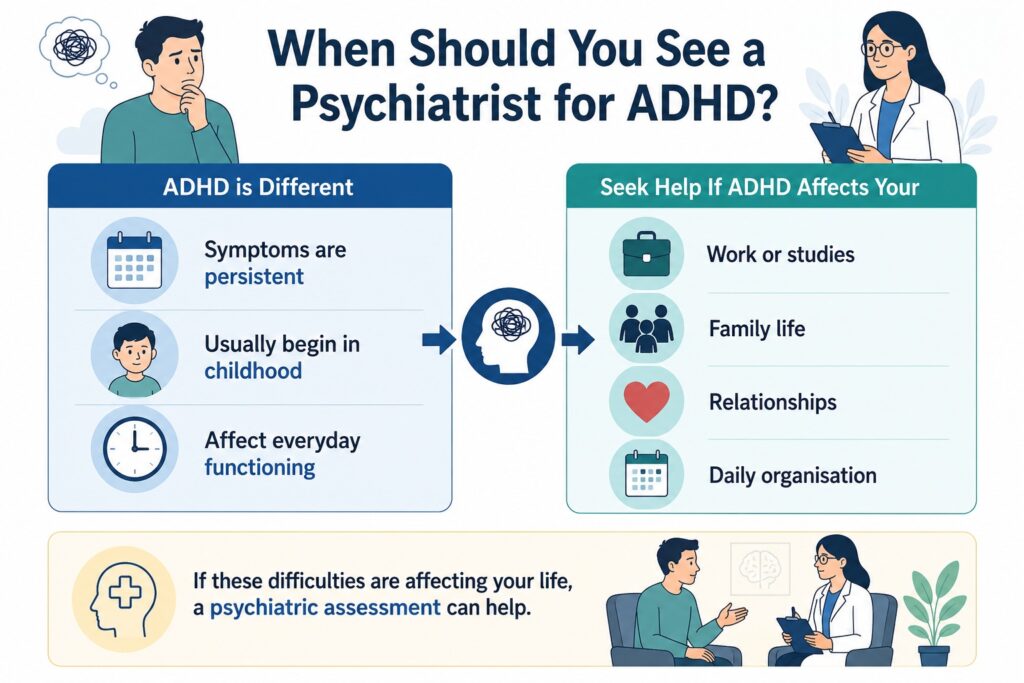
Everyone occasionally loses concentration, forgets appointments or struggles to stay organised during stressful periods. ADHD is different because the symptoms are persistent, usually begin in childhood and interfere with everyday functioning.
You should consider seeing a psychiatrist if difficulties with attention, organisation, impulsivity or emotional regulation repeatedly affect your work, studies, family life or relationships. Many adults seek help only after years of trying to compensate for these difficulties on their own.
ADHD involves much more than poor concentration. Many people struggle with procrastination, difficulty starting or completing tasks, poor time management, chronic disorganisation or persistent inner restlessness. Children may show excessive activity, forgetfulness, difficulty following instructions or fluctuating school performance despite normal or above-average intelligence. Many are able to concentrate well on subjects that interest them but struggle to maintain attention when the material is less engaging.
These symptoms are not unique to ADHD. Anxiety disorders, depression, burnout, sleep disorders and several medical conditions can cause similar difficulties. A comprehensive psychiatric assessment is therefore essential to establish the correct diagnosis and determine the most appropriate care.
Why Choose a Psychiatrist for ADHD?
A psychiatrist is the medical specialist responsible for diagnosing ADHD, excluding other psychiatric and medical conditions, prescribing medication when appropriate and supervising long-term medical care.
This distinction is important because ADHD rarely exists in isolation. Many adults who believe they have ADHD are actually experiencing the effects of anxiety, depression, bipolar disorder, or personality disorder. Others have ADHD together with one or more of these conditions. Since the management of each disorder differs considerably, establishing the correct diagnosis is essential before any decisions regarding medication are made.
Our consultant psychiatrist Dr Kowal completed training in psychiatry and psychotherapy, followed by years of practical experience. His medical background enables him to recognise physical illnesses that may mimic ADHD and to determine which investigations would be necessary before medication is prescribed.
Dr. Kowal and our psychologists live and work in Dubai, providing continuity of care. ADHD requires regular follow-up over many years. Medication may need adjustment, symptoms may change as life circumstances evolve, and additional difficulties may develop over time. Working with the same psychiatrist allows decisions to be based on a detailed understanding of your previous progress rather than on a single consultation.
Your First Appointment with Our ADHD Psychiatrist at CHMC in Dubai
Many people delay seeing a psychiatrist because they are unsure what to expect during the first appointment. The consultation is designed to understand you as a person rather than simply confirm or rule out ADHD.
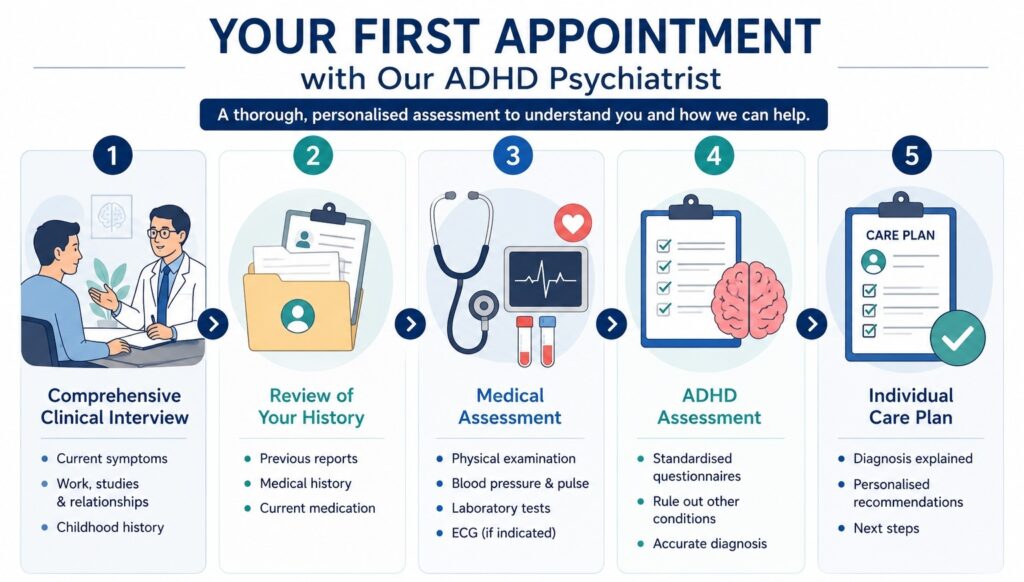
Our psychiatrist, Dr Kowal, will discuss your current symptoms, how they affect your work, studies, family life, and relationships, and when these difficulties first began. Previous medical reports, psychological assessments, or school records can provide valuable information and should be brought with you whenever available.
The consultation also includes a review of your medical history, current medication, and physical health. Depending on your individual circumstances, standardised questionnaires, a physical examination, laboratory investigations, or an electrocardiogram (ECG) may be recommended to support the assessment and ensure safe prescribing of medication.
Not every patient receives a final diagnosis during the first visit. Sometimes additional information or a second appointment is needed to reach an accurate diagnosis. Before the consultation ends, your psychiatrist will explain the findings, discuss the next steps, and develop an individual care plan tailored to your needs.
ADHD Is More Than Poor Concentration
One of the biggest misconceptions about ADHD is that it simply causes distractibility. In reality, the disorder affects many of the brain functions responsible for organising everyday life.
People with ADHD often struggle with planning, prioritising, time management, impulse control and emotional regulation. They may know exactly what they need to do but still find it extremely difficult to begin or complete a task. This disconnect between intention and action is one of the reasons many adults become frustrated with themselves long before they seek professional help.
Another frequently overlooked aspect of ADHD is emotional regulation. Many patients describe becoming irritated more quickly than other people, reacting impulsively during disagreements or feeling overwhelmed by situations that others appear to manage with ease. These reactions are not signs of weak character. They are often closely linked to the underlying ADHD.
Over many years, repeated experiences of missed deadlines, forgotten commitments and criticism from teachers, employers or family members can gradually undermine self-confidence, creating frustration and trigger anxiety or depression. Some adults begin believing they are lazy or unreliable despite working considerably harder than those around them. Others avoid new opportunities because they fear disappointing themselves or others.
For many patients, understanding how ADHD affects the brain brings an enormous sense of relief. Instead of viewing lifelong difficulties as personal failures, they begin to recognise a pattern that has been present since childhood and that can be understood, managed and improved with appropriate psychiatric care.
How Does a Psychiatrist Diagnose ADHD?
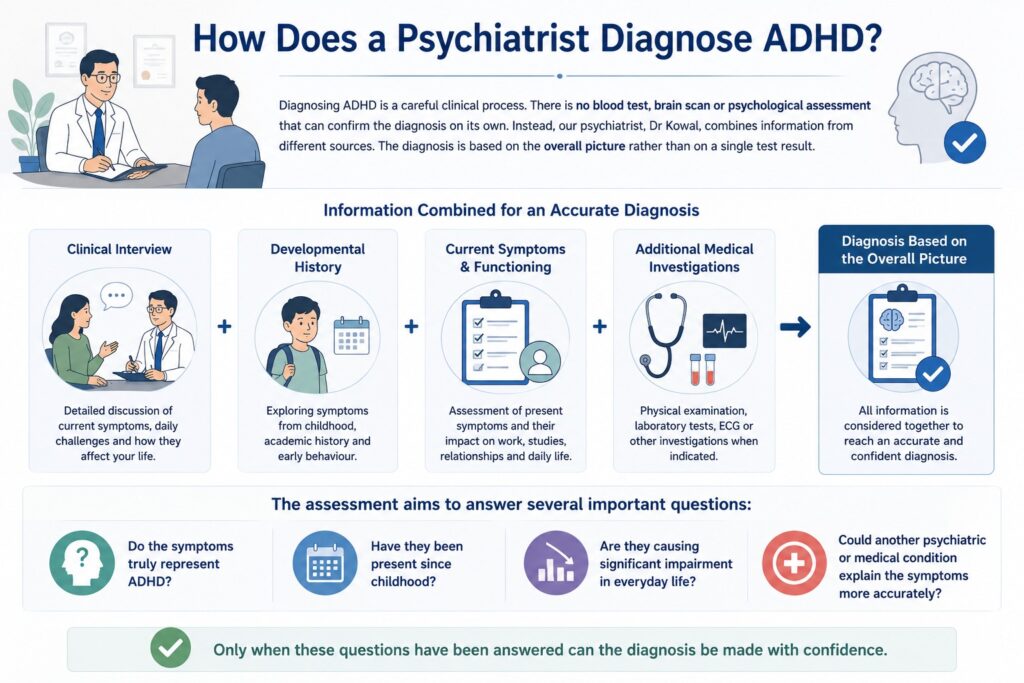
Diagnosing ADHD is a careful clinical process. There is no blood test, brain scan or psychological assessment that can confirm the diagnosis on its own. Instead, our psychiatrist, Dr Kowal, combines information from the clinical interview, your developmental history, your current symptoms and additional medical investigations. The diagnosis is based on the overall picture rather than on a single test result.
The assessment aims to answer several important questions:
- Do the symptoms truly represent ADHD?
- Have they been present since childhood?
- Are they causing significant impairment in everyday life?
- Could another psychiatric or medical condition explain the symptoms more accurately?
Only when these questions have been answered can the diagnosis be made with confidence.
Read More About Diagnosis of ADHD
ADHD Begins in Childhood
One of the defining characteristics of ADHD is that its symptoms begin early in life. Although many people are diagnosed as adults, the disorder itself does not suddenly appear during adulthood. In many cases, the symptoms were present throughout childhood but were never recognised.
For this reason, a psychiatrist will explore your early development in considerable detail. You may be asked about your behaviour at school, your ability to concentrate during lessons, your academic performance, relationships with teachers and classmates, and whether you frequently forgot homework or lost personal belongings. Childhood reports, school records or information provided by parents or siblings are also helpful to reconstruct this history and strengthen the diagnostic assessment.
Many adults are surprised when these questions are asked because they performed well academically. However, good grades do not exclude ADHD. Highly intelligent individuals often compensate for their symptoms for many years. Only later, when professional responsibilities become more demanding, do they realise that maintaining organisation and concentration requires much greater effort than it does for other people.
Read More About ADHD in Childhood
Looking Beyond Attention Problems
Although ADHD is often described as an attention disorder, a psychiatrist evaluates a much broader range of symptoms.
Difficulties with planning, organisation, time management, emotional regulation and impulse control are frequently just as important as problems with concentration. Some patients constantly interrupt conversations or make impulsive decisions. Others underestimate how long a task will take, miss deadlines despite working hard, or struggle to organise even simple daily activities. These difficulties often have a greater impact on quality of life than distractibility itself.
Emotional symptoms also receive careful attention. Adults with ADHD commonly describe becoming frustrated quickly, reacting impulsively during disagreements or finding it difficult to cope with stressful situations. Because these symptoms are less widely recognised than hyperactivity, many patients have never connected them with ADHD before attending their assessment.
The psychiatrist therefore evaluates not only which symptoms are present but also how they affect work, education, relationships and everyday responsibilities. This functional impairment is an essential part of the diagnostic process.
Conditions That Can Mimic ADHD
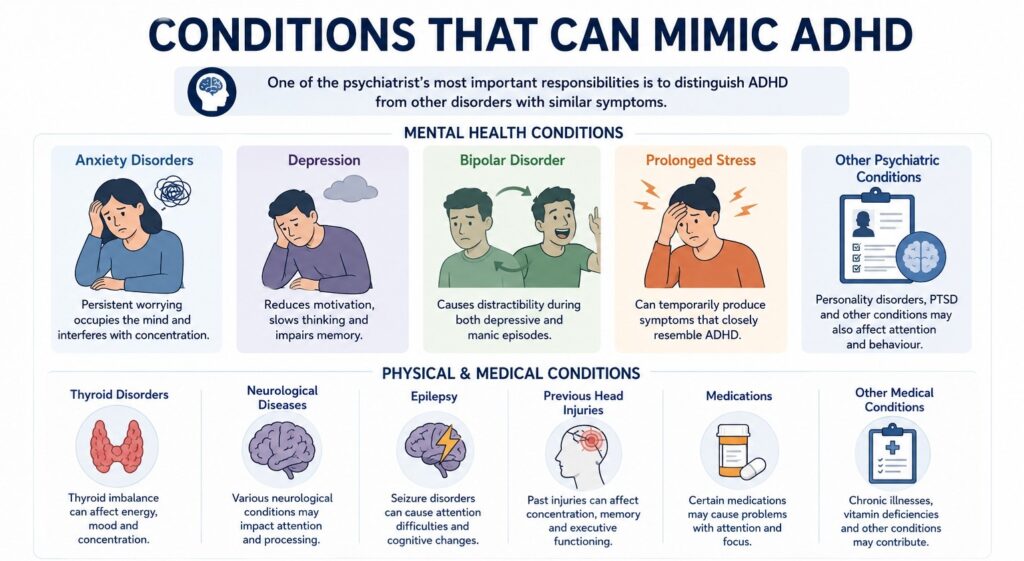
One of the psychiatrist’s most important responsibilities is to distinguish ADHD from other disorders with similar symptoms.
Anxiety disorders often interfere with concentration because persistent worrying occupies the mind. Depression can reduce motivation, slow thinking and impair memory. Bipolar disorder causes distractibility during the depressive as well as manic episodes. Even prolonged stress can temporarily produce symptoms that closely resemble ADHD.
Physical illnesses must also be considered. Thyroid disorders, neurological diseases, epilepsy, previous head injuries and certain medications may all affect attention and executive functioning. Before confirming the diagnosis, Dr Kowal carefully considers these alternative explanations and, whenever necessary, arranges further investigations.
The Role of Questionnaires
Questionnaires are commonly used during an ADHD assessment, but they should never be confused with a diagnostic test.
Standardised questionnaires help the psychiatrist assess symptoms in a structured way and compare them with recognised diagnostic criteria. However, questionnaires have important limitations. A high score does not automatically confirm ADHD, and a lower score does not necessarily exclude it. The results must always be interpreted within the context of the patient’s developmental history, clinical symptoms and overall functioning.
Why There Is No Single ADHD Test
Many people search online for an “ADHD test” hoping to find a simple way of confirming the diagnosis. Unfortunately, no single test can determine whether someone has ADHD.
Although psychological assessments can provide valuable information about attention, memory and other cognitive abilities, they cannot diagnose ADHD on their own. Similarly, brain scans, electroencephalograms (EEGs) and laboratory investigations cannot confirm or exclude the disorder. They may support the assessment in selected cases, but they never replace a comprehensive psychiatric evaluation.
This is why a thorough ADHD assessment often takes longer than patients expect. Dr. Kowal, as an experienced psychiatrist combines information from the clinical interview, developmental history, current symptoms and physical health before reaching a conclusion. The diagnosis is based on clinical judgement rather than on a single number or questionnaire score.
Taking time to reach the correct diagnosis is in the patient’s best interest. A careful assessment reduces the risk of overlooking another condition that may require a completely different approach.
Physical Examination and Medical Assessment
Because ADHD is a medical condition, physical health should always be considered as part of the assessment.
Many patients are surprised to learn that the evaluation extends beyond psychiatric symptoms. However, concentration and attention can be influenced by numerous physical disorders, making a medical assessment an important part of the diagnostic process.
At CHMC, we review blood pressure, heart rate, body weight and general physical health. Laboratory investigations are necessary to identify medical conditions and to create a bench mark for future controls excluding any adverse effects of the ADHD medication.
An electrocardiogram (ECG) is performed before stimulant medication is prescribed, excluding cardiovascular risk. Although serious cardiac complications, especially in young patients are uncommon, careful assessment improves patient safety and provides reassurance before medication is started. Later, a control of ECG will exclude potential adverse effects of the stimulating medication on the heart.
Occasionally, additional neurological investigations such as an EEG or brain imaging may be recommended. These examinations are not performed to diagnose ADHD itself. Instead, they help exclude neurological disorders when symptoms or medical history suggest that further evaluation is appropriate.
Developing an Individual Care Plan
The assessment does not end with the diagnosis. The next step is to develop an individual care plan based on the patient’s symptoms, physical health, daily routine and personal goals.
ADHD affects each person differently. Some patients mainly struggle with concentration, while others experience greater difficulties with impulsivity, emotional regulation or organisation. For this reason, care should always be tailored to the individual.
Depending on the patient’s needs, the care plan may include medication, psychotherapy, practical coping strategies or support for accompanying psychiatric disorders. Most patients benefit from a combination of these approaches.
Although ADHD is usually a lifelong condition, appropriate care can significantly improve concentration, emotional stability, productivity and overall quality of life. The psychiatrist’s role is not only to establish the diagnosis but also to help patients understand the disorder and develop practical strategies for long-term success.

Medication Management by a Psychiatrist
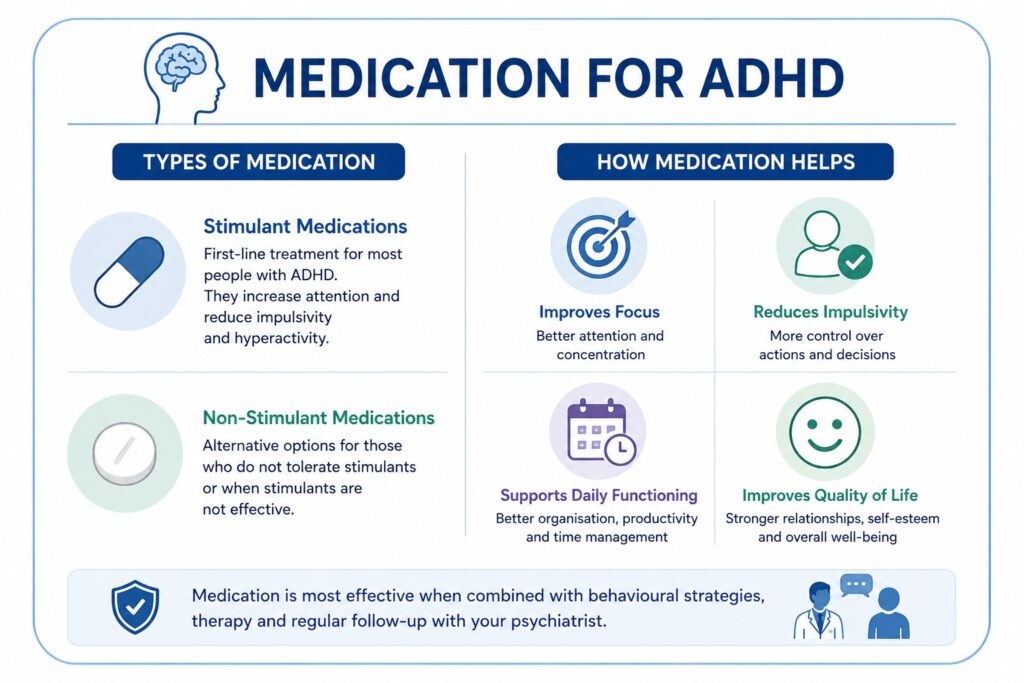
Medication is one of the most effective ways of reducing the core symptoms of ADHD in appropriately selected patients. However, prescribing medication is never the starting point of the consultation. Before any medicine is recommended, our psychiatrist, Dr. Kowal, must first establish that the diagnosis is correct, review the patient’s physical health, evaluate current medication and discuss the expected benefits as well as possible adverse effects. Only then can an informed decision be made together with the patient.
One of the most common misconceptions is that every person diagnosed with ADHD requires medication. This is not the case. Some individuals have relatively mild symptoms and manage well with psychoeducation, psychotherapy and changes to their daily routine. Others experience considerable impairment despite making every effort to stay organised and focused. For these patients, medication can significantly improve attention, impulse control and day-to-day functioning.
Choosing the right Medication
The choice of the right medication is a highly individual process. There is no single medicine that works equally well for everyone. The psychiatrist considers the patient’s age, symptom profile, work schedule, sleep pattern, appetite, cardiovascular health, previous psychiatric diagnoses and current medication before recommending the most appropriate option.
Finding the most suitable medication rarely happens during a single appointment. The first prescription marks the beginning of a period of careful dose adjustment. Some patients achieve good symptom control with relatively low doses, while others require gradual changes before reaching the desired effect. Regular follow-up appointments allow the psychiatrist to assess progress and make adjustments whenever necessary.
Medication Used for ADHD
For many adults, stimulant medication containing methylphenidate or lisdexamfetamine represents the first choice because these medicines have been extensively studied and are supported by international clinical guidelines.
Some patients respond better to one medication than another, while others benefit from non-stimulant medication such as atomoxetine. In selected situations, additional medicines may also be considered, particularly when other psychiatric conditions are present.
Patient Safety During Medication
Safe prescribing is one of the psychiatrist’s most important responsibilities.
ADHD medications are controlled medicines and therefore require careful documentation, appropriate prescribing and regular monitoring. They should only be prescribed after a comprehensive assessment has confirmed that ADHD is the correct diagnosis.
Monitoring continues throughout treatment. Follow-up appointments assess not only improvements in concentration but also blood pressure, heart rate, appetite, sleep quality and emotional wellbeing. This ongoing supervision allows medication to be adjusted whenever necessary and helps identify potential side effects at an early stage.
Medication Is Only One Part of ADHD Care
Although medication can significantly reduce the core symptoms of ADHD, it is not a complete solution on its own. Many adults have spent years developing habits that interfere with their daily lives. Chronic procrastination, poor organisation, low self-esteem and ineffective time management often persist even after concentration improves. This is why comprehensive ADHD care extends beyond medication alone.
One of the first steps after diagnosis is psychoeducation. This means learning how ADHD affects the brain and understanding why certain situations have always been particularly challenging. Many patients describe this stage as a turning point. They begin to realise that many of the behaviours they previously regarded as personal failures are typical features of ADHD. This new understanding often reduces feelings of guilt and frustration while increasing motivation to develop healthier routines and more effective coping strategies.
Psychoeducation about ADHD also helps family members better understand the condition. Partners and relatives often interpret forgetfulness, poor organisation or impulsive behaviour as a lack of interest or responsibility. Once they understand how ADHD affects attention and executive functioning, communication frequently improves and conflicts become easier to resolve.
Read More About Medication for ADHD
The Role of Psychotherapy for ADHD
Psychotherapy is an important part of ADHD care. While medication may improve concentration and reduce impulsivity, psychotherapy helps patients develop practical skills for managing everyday life.
Many adults with ADHD also experience anxiety, depression, chronic stress, low self-esteem or relationship difficulties. These problems often persist even after attention has improved and therefore require specific support.
Cognitive behavioural therapy (CBT) is one of the most effective psychological approaches for adults with ADHD. It helps patients improve organisation, prioritise tasks, reduce procrastination, manage distractions and regulate emotions. CBT also addresses negative beliefs that may have developed after years of struggling with undiagnosed ADHD, helping to improve confidence and emotional wellbeing.
Some patients also benefit from mindfulness techniques, which can enhance self-awareness, improve impulse control and support emotional regulation.
Read More About Psychotherapy for ADHD
Building Healthy Daily Habits
Daily routines have a major influence on how well people with ADHD function.
Many adults notice a considerable improvement once they establish a more predictable structure for their day. Regular sleeping hours, realistic schedules, planned breaks and clear priorities reduce mental overload and make it easier to remain focused throughout the day. Instead of relying entirely on memory, many patients benefit from using calendars, reminders and written task lists. These simple strategies reduce stress and make everyday responsibilities more manageable.
Lifestyle factors are equally important. Poor sleep, chronic stress, lack of physical activity and excessive use of digital devices can all worsen concentration, even in people without ADHD. For individuals who already have ADHD, these factors often intensify existing symptoms. Improving sleep quality, exercising regularly, maintaining a balanced diet and limiting unnecessary digital distractions can therefore make a meaningful difference to everyday functioning.
ADHD Often Occurs Together with Other Mental Health Conditions
ADHD rarely exists in isolation.
Many adults who seek psychiatric assessment also experience anxiety disorders, depression, obsessive-compulsive disorder, bipolar disorder, personality disorder or substance misuse. In some patients these conditions develop independently. In others, they arise after years of living with untreated ADHD and the constant frustration that accompanies it.
This is one of the reasons why a comprehensive psychiatric assessment is so important. Treating ADHD while overlooking another psychiatric disorder may lead to disappointing results. Likewise, treating anxiety or depression without recognising underlying ADHD may leave important symptoms unresolved.
At CHMC, every assessment therefore considers the possibility of coexisting psychiatric disorders. When additional diagnoses are identified, they become part of the overall care plan. Addressing all relevant conditions usually leads to better long-term outcomes than focusing on ADHD alone.
Long-Term Follow-up with the Same Psychiatrist
ADHD is usually a lifelong condition. Although symptoms often improve with appropriate care, they rarely disappear completely. As work, family responsibilities and personal circumstances change, patients may face new challenges that require adjustments to their management plan.
Regular follow-up appointments allow our psychiatrist, Dr. Kowal, to monitor progress, review the effectiveness of medication, assess physical health and discuss any new concerns. Continuity of care is particularly valuable. Therefore, our psychiatrist and psychologists are based in Dubai. Seeing the same psychiatrist over time means that treatment decisions are based on a detailed understanding of your previous assessments, medication responses and personal goals. Instead of explaining your history repeatedly to different doctors, you build a long-term therapeutic relationship with a specialist who understands your individual needs.
Living Well with ADHD
Receiving an ADHD diagnosis often marks the beginning of a new understanding rather than the end of a long search.
Many adults finally realise that their lifelong difficulties with organisation, concentration and emotional regulation were not caused by laziness, lack of intelligence or poor motivation. Understanding the condition allows them to replace self-criticism with practical strategies that help them function more effectively.
Many people with ADHD are creative, curious, energetic and able to think in ways that others cannot. The objective is to reduce the symptoms that interfere with daily life while allowing these strengths to flourish.
With an accurate diagnosis, appropriate medical care and regular follow-up, many people experience substantial improvements in concentration, emotional stability, productivity and overall quality of life. ADHD may remain part of who you are, but it does not have to define your future.
Read More About Living With ADHD
Why Choose CHMC for ADHD Assessment and Care?
Choosing the right psychiatrist is one of the most important decisions when seeking help for ADHD. An accurate diagnosis requires time, experience and a thorough understanding of both mental and physical health.
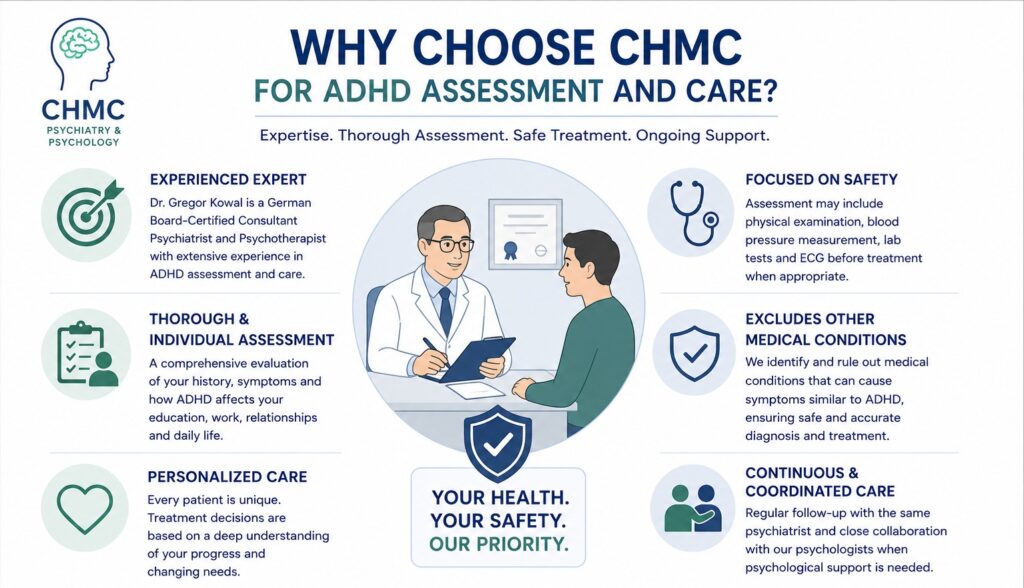
At CHMC, Dr. Gregor Kowal, German Board-Certified Consultant Psychiatrist and Psychotherapist, performs a comprehensive assessment that goes far beyond completing a questionnaire. Every patient has a unique history, and understanding how ADHD affects education, work, relationships and daily life is essential before making a diagnosis or recommending medication.
When medication is appropriate, patient safety always comes first. Depending on the individual situation, the assessment may include a physical examination, blood pressure measurement, laboratory investigations and an electrocardiogram (ECG) before treatment begins. These measures help ensure safe prescribing and exclude medical conditions that may cause symptoms similar to ADHD.
ADHD is usually a long-term condition, and many patients benefit from regular follow-up with the same psychiatrist. Seeing the same specialist allows treatment decisions to be based on a detailed understanding of your progress and changing needs. When psychological support is indicated, Dr Kowal works closely with the clinic’s psychologists to provide coordinated care.
Book an ADHD Assessment with Dr Gregor Kowal
If you or someone close to you struggles with persistent problems with attention, organisation, impulsivity or emotional regulation, a comprehensive psychiatric assessment can provide clarity. Whether you are seeking an initial diagnosis, a second opinion or advice about your current medication, Dr Gregor Kowal will work with you to establish an accurate diagnosis and develop an individual care plan. The goal is not only to diagnose ADHD but also to help you understand your strengths, reduce the impact of symptoms and improve your quality of life.