

Receiving an accurate ADHD diagnosis in Dubai is the first step towards effective treatment. For adults, ADHD diagnosis requires a careful assessment because poor concentration, forgetfulness, impulsive behaviour and restlessness can also occur in other psychiatric or medical conditions.
At CHMC Dubai, we provide comprehensive adult ADHD assessment and diagnosis based on DSM-5-TR diagnostic criteria. The evaluation is performed by an experienced psychiatrist and combines a detailed clinical interview, standardised ADHD questionnaires, psychometric testing when indicated, and careful exclusion of other medical and psychiatric conditions.
This thorough approach ensures an accurate diagnosis and an individualised ADHD treatment plan.
For ADHD assessment and diagnosis contact our consultant psychiatrist Dr. Kowal
Why Is an Accurate Adult ADHD Diagnosis Important?
Diagnosing adult ADHD can be challenging because many adults have developed coping strategies that mask their ADHD symptoms. Others have been treated for anxiety or depression for years without recognising that ADHD is the underlying condition.
An accurate ADHD diagnosis in Dubai helps distinguish adult ADHD from disorders with overlapping symptoms, preventing unnecessary treatments and allowing patients to receive the appropriate care. A correct diagnosis also provides a better understanding of lifelong difficulties with attention, organisation, emotional regulation, and impulsivity.
DSM-5-TR Criteria for Adult ADHD Diagnosis
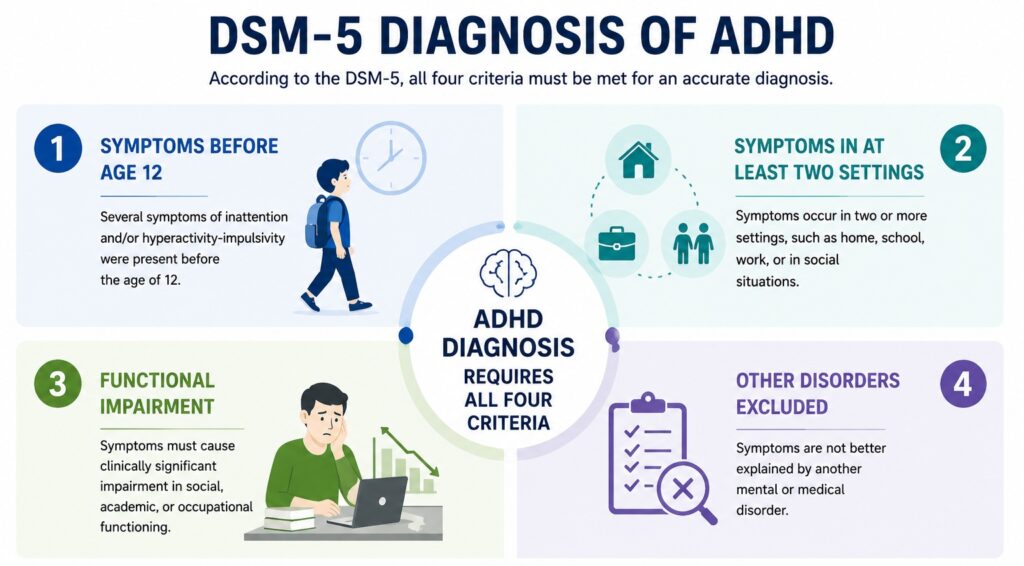
At CHMC Dubai, adult ADHD is diagnosed according to the Diagnostic and Statistical Manual of Mental Disorders (DSM-5-TR).
For adults, the diagnosis requires five or more symptoms of inattention and/or hyperactivity-impulsivity that have persisted for at least six months.
In addition, the following diagnostic criteria must be fulfilled:
- Several symptoms must have been present before the age of 12.
- Symptoms must occur in at least two different settings, such as at home, work, university, or in social situations.
- The symptoms must significantly interfere with occupational, academic, or social functioning.
- The difficulties cannot be better explained by another psychiatric or medical disorder.
In summary, adult ADHD is diagnosed when symptoms begin in childhood, continue into adulthood, occur across different environments, and cause clinically significant impairment.
How Is Adult ADHD Diagnosed at CHMC Dubai?
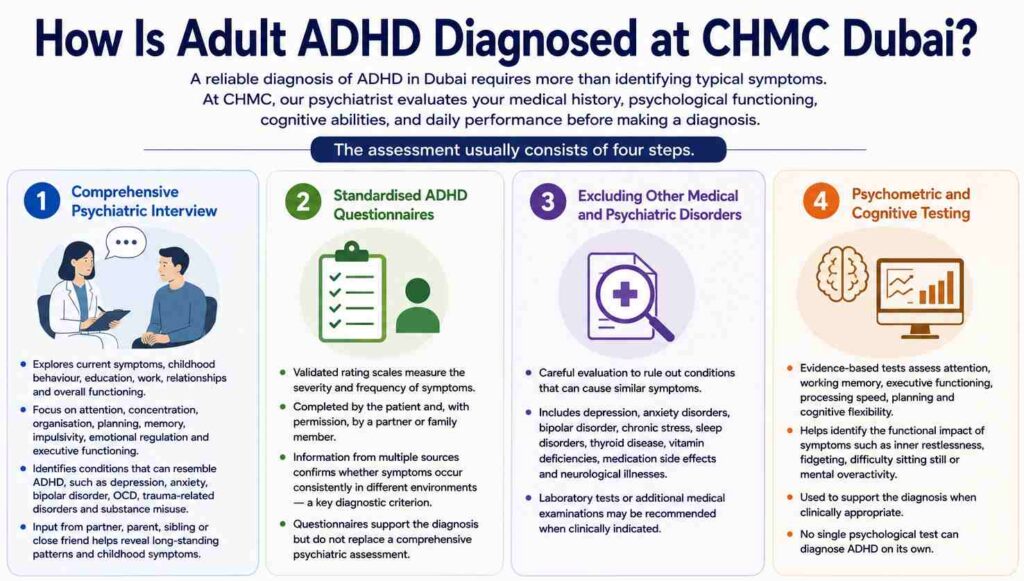
A reliable diagnosis of ADHD in Dubai requires more than identifying typical symptoms. At CHMC, our psychiatrist evaluates your medical history, psychological functioning, cognitive abilities, and daily performance before making a diagnosis.
The assessment consists of four steps.
Step 1: Comprehensive Psychiatric Interview
The clinical interview is the most important part of the diagnostic process. During this consultation, our psychiatrist explores your current symptoms, childhood behaviour, educational history, work performance, relationships, and overall psychological functioning.
Particular attention is paid to difficulties with concentration, attention, organisation, planning, memory, impulsivity, emotional regulation, and executive functioning.
The interview also helps identify conditions that commonly resemble ADHD, including depression, anxiety disorders, bipolar disorder, obsessive-compulsive disorder, trauma-related disorders, and substance misuse.
Whenever appropriate, we encourage a partner, parent, sibling, or close friend to contribute additional observations. Their perspective often provides valuable information about long-standing behavioural patterns and childhood symptoms.
Step 2: Standardised ADHD Questionnaires
Following the interview, validated ADHD rating scales help measure the severity and frequency of symptoms.
These questionnaires may be completed by the patient and, with permission, by a partner or family member. Comparing information from different people helps determine whether symptoms occur consistently in different environments, which is one of the essential diagnostic criteria for ADHD.
Questionnaires support the diagnosis but never replace a comprehensive psychiatric assessment.
Step 3: Excluding Other Medical and Psychiatric Disorders
One of the most important aspects of an accurate ADHD diagnosis is excluding conditions that produce similar symptoms.
Our psychiatrist carefully evaluates whether concentration difficulties may be caused by depression, anxiety disorders, bipolar disorder, chronic stress, sleep disorders, thyroid disease, vitamin deficiencies, medication side effects, or neurological illnesses.
When clinically indicated, laboratory investigations or additional medical examinations may be recommended to rule out physical causes.
Step 4: Psychometric and Cognitive Testing
Some patients benefit from additional psychometric testing.
These evidence-based assessments measure attention, working memory, executive functioning, processing speed, planning, and cognitive flexibility. The results provide valuable additional information that complements the psychiatric interview.
Adults with ADHD often show less obvious hyperactivity than children. Instead, they may experience constant inner restlessness, frequent fidgeting, tapping their fingers, difficulty sitting still, or a persistent feeling of mental overactivity. Cognitive testing can help identify the functional impact of these symptoms.
At CHMC Dubai, psychometric testing is used to support the diagnosis whenever clinically appropriate, but no single psychological test can diagnose ADHD on its own.
Can ADHD Be Diagnosed During One Visit?
Many patients ask whether ADHD can be diagnosed in a single appointment.
In straightforward cases with a clear childhood history and typical symptoms, the diagnosis may be established after the initial assessment. However, many adults require a more detailed evaluation, particularly when anxiety, depression, bipolar disorder, or other psychiatric conditions are also present.
Our priority is diagnostic accuracy rather than making a rapid diagnosis.
What Happens After an ADHD Diagnosis?
Once the diagnosis has been confirmed, we develop an individualised treatment plan based on your symptoms, daily functioning, and personal goals.
Treatment may include ADHD medication, psychotherapy, psychoeducation, behavioural strategies, workplace or academic recommendations, and practical lifestyle modifications. Regular follow-up appointments allow us to monitor progress and adjust treatment when necessary.
With appropriate treatment, most adults experience significant improvements in attention, organisation, productivity, emotional regulation, and overall quality of life.
Assessing the Severity of Adult ADHD
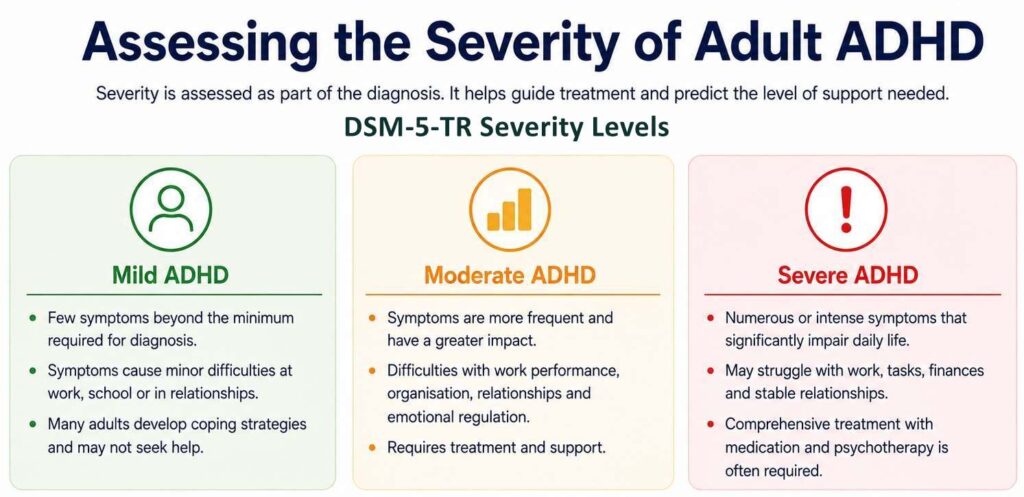
As part of an adult ADHD diagnosis in Dubai, our psychiatrist not only determines whether the diagnostic criteria are met but also assesses the severity of ADHD. Severity helps guide treatment recommendations and the level of support a patient may require.
According to the DSM-5-TR, ADHD is classified into three levels of severity:
Mild ADHD
People with mild ADHD have only a few symptoms beyond the minimum required for diagnosis. Although the symptoms are noticeable, they cause only minor difficulties at work, in education, or in social relationships. Many adults develop effective coping strategies and may not seek professional help until life becomes more demanding.
Moderate ADHD
Moderate ADHD falls between the mild and severe forms of the disorder. Symptoms are more frequent and have a greater impact on daily functioning, often affecting work performance, organisation, relationships, and emotional regulation.
Severe ADHD
Severe ADHD is characterised by numerous symptoms or particularly intense symptoms that significantly impair everyday functioning. Individuals may struggle to maintain employment, complete tasks, manage finances, or sustain stable relationships. A comprehensive treatment plan combining medication and psychotherapy is often required.
Why Diagnosing ADHD in Adults Can Be Challenging
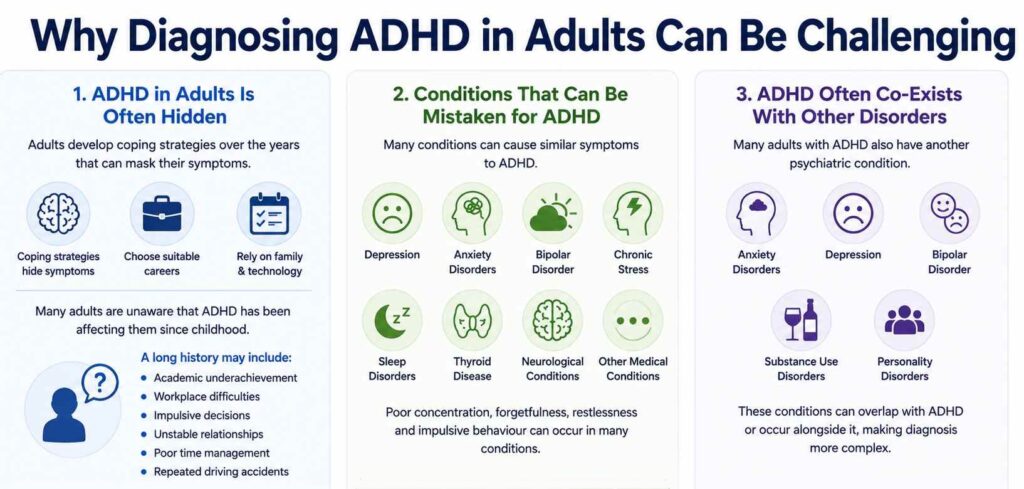
Diagnosing ADHD in adults is often more complex than diagnosing the disorder in children. Over many years, adults frequently develop coping strategies that help mask their symptoms. They may choose careers that suit their strengths, avoid demanding situations, or rely heavily on family members and technology to stay organised.
As a result, many adults are unaware that ADHD has been affecting them since childhood. A detailed psychiatric interview often reveals a long history of academic underachievement, workplace difficulties, impulsive decisions, unstable relationships, poor time management, or repeated driving accidents that had never previously been linked to ADHD.
ADHD and Co-Existing Mental Health Disorders
Another diagnostic problem is that many adults with ADHD also have another psychiatric condition. These conditions often exist alongside ADHD or produce similar symptoms, making the diagnostic process more complex.
The most common co-existing disorders include anxiety disorders, depression, bipolar disorder, substance use disorders, and certain personality disorders. During the ADHD assessment at CHMC Dubai, we carefully evaluate whether the symptoms are caused by ADHD alone or by another condition, or whether both disorders are present simultaneously.
Conditions That Can Be Mistaken for Adult ADHD
Several psychiatric and medical conditions can produce symptoms that resemble adult ADHD. Depression, anxiety disorders, bipolar disorder, chronic stress, sleep disorders, thyroid disease and certain neurological conditions may all affect concentration, memory, restlessness or impulse control.
Differential diagnosis is therefore an essential part of adult ADHD diagnosis. At CHMC Dubai, psychiatric assessment and, when indicated, medical investigations help determine whether symptoms are caused by ADHD, another condition, or a combination of both.
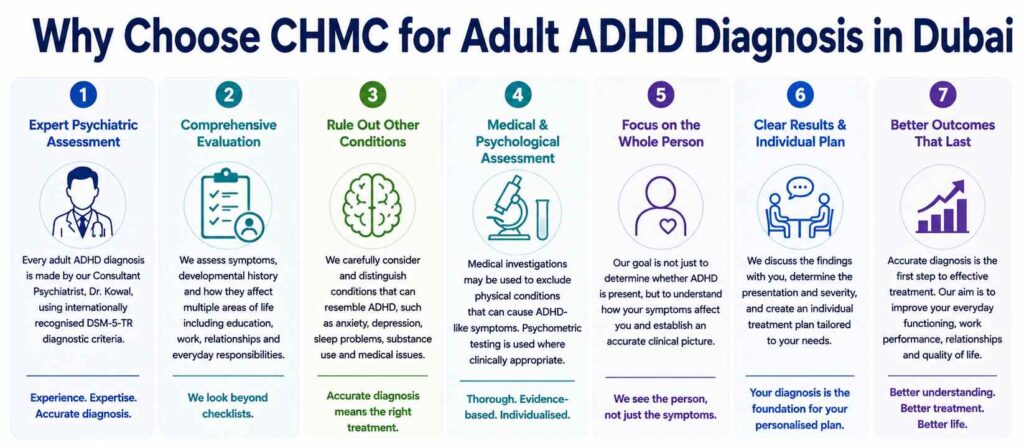
Why Choose CHMC for Adult ADHD Diagnosis in Dubai?
At CHMC Dubai, every adult ADHD diagnosis is made by our Consultant Psychiatrist, Dr. Kowal, using internationally recognised DSM-5-TR diagnostic criteria. The diagnosis is based on a comprehensive psychiatric assessment rather than questionnaires or computer-based tests alone.
Particular attention is given to differential diagnosis, as anxiety, depression, sleep problems and other psychiatric or medical conditions can resemble or coexist with ADHD. When clinically indicated, medical investigations and psychometric testing complement the psychiatric assessment.
Our goal is not simply to confirm ADHD, but to understand how it affects the individual patient and identify other factors contributing to their difficulties. When ADHD is confirmed, its presentation and severity are considered when developing an individual treatment plan.
At CHMC, an accurate ADHD diagnosis in Dubai provides the foundation for appropriate treatment, with the aim of improving everyday functioning, work performance, relationships and quality of life.