

The causes of ADHD involve a complex interaction between genetic, neurodevelopmental and environmental influences. Attention-Deficit/Hyperactivity Disorder (ADHD) is a neurodevelopmental condition with a strong hereditary component. Research indicates that genetic susceptibility and differences in the development and functioning of brain networks contribute substantially to ADHD, while certain prenatal, perinatal and environmental factors may increase the likelihood of developing the disorder.
However, no single gene, brain abnormality or environmental exposure explains every case. Understanding ADHD requires distinguishing between underlying biological predisposition, associated risk factors and circumstances that worsen existing symptoms. This distinction is important because factors such as chronic stress, sleep deprivation and increasing everyday demands can aggravate attention difficulties without causing the underlying neurodevelopmental condition.
For ADHD Assessment Contact Our Specialists
What Causes ADHD?
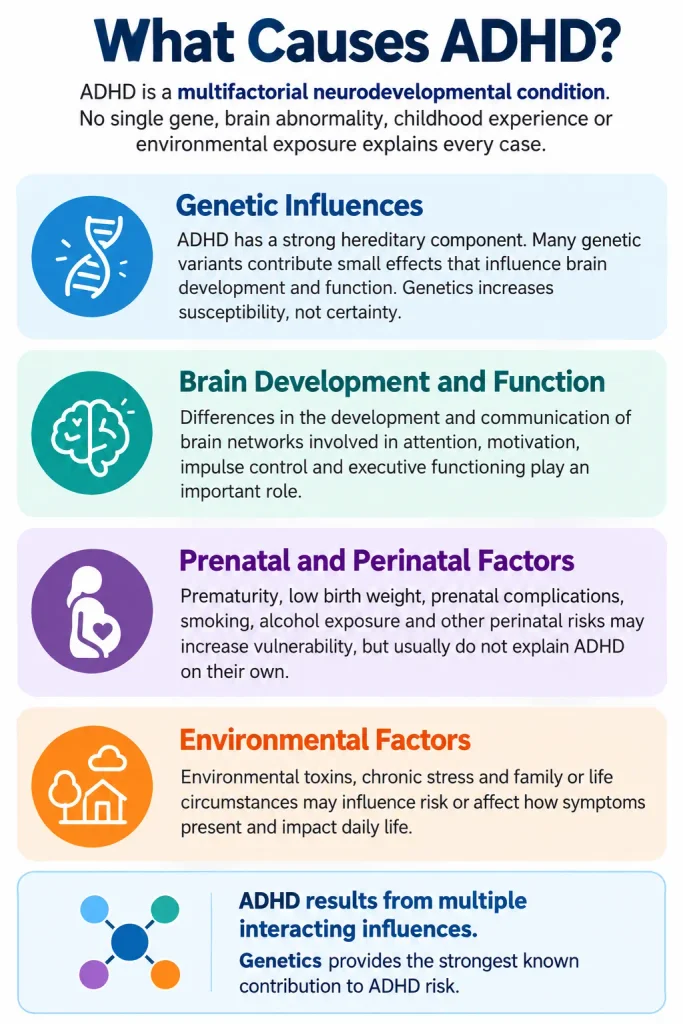
ADHD is best understood as a multifactorial neurodevelopmental disorder rather than caused by one identifiable factor. The condition develops through complex interactions between inherited genetic susceptibility and processes involved in brain development.
Research consistently identifies genetics as one of the strongest contributors to ADHD risk, while neurobiological studies have demonstrated differences in brain networks involved in attention, behavioural regulation and motivation. Certain environmental influences may also contribute, particularly during pregnancy and early development, although many associated factors have not been established as direct causes.
This multifactorial model explains why ADHD can occur in people with very different childhood experiences. Some individuals have a strong family history of ADHD, while others have no previously diagnosed relatives. Many affected people were born following uncomplicated pregnancies and grew up in stable, supportive environments. Conversely, having several recognised risk factors does not mean that someone will necessarily develop ADHD.
Genetic susceptibility, environmental influences and developmental processes may interact, but their relative contribution cannot usually be determined for an individual person. The disorder therefore reflects a complex developmental vulnerability rather than the direct consequence of one specific experience or exposure.
Is ADHD Genetic or Hereditary?
ADHD has a strong genetic component and frequently runs in families. Parents, siblings and children of individuals with ADHD have a higher probability of developing the disorder than people without a family history. Evidence from family, twin and adoption studies consistently supports this hereditary influence, with heritability estimates commonly ranging between 70% and 80%.
However, heritability does not mean that 70–80% of an individual’s ADHD is caused by genes. It describes the proportion of differences in ADHD-related characteristics that can be attributed to genetic variation within a studied population. Although having a family member with ADHD increases susceptibility, inheritance is neither simple nor inevitable. A parent with ADHD will not necessarily have an affected child, and the disorder may also occur in families without a previously recognised history of ADHD.
ADHD Is a Polygenic Disorder
ADHD is a polygenic disorder, meaning that many genetic variants contribute to an individual’s susceptibility rather than one specific gene determining whether the condition develops. Most common genetic variants have relatively small individual effects, but their combined influence contributes substantially to ADHD risk. Large genome-wide association studies have identified numerous genetic regions associated with the disorder, including variants involved in brain development, neuronal communication and other neurobiological processes.
These findings demonstrate that the genetic basis of ADHD is considerably more complex than earlier theories focusing on a small number of dopamine-related genes. Different combinations of genetic influences may contribute to individual differences in susceptibility and clinical presentation. Nevertheless, genetic findings cannot currently predict whether a particular person will develop ADHD, which symptoms will predominate or how severe the disorder will become.
There is currently no genetic test that can reliably confirm or exclude ADHD. Although genetic research provides important insights into the biological origins of the disorder, the diagnosis remains clinical and requires an evaluation of developmental history, persistent symptoms and their impact on everyday functioning.
How Does ADHD Affect Brain Development and Function?
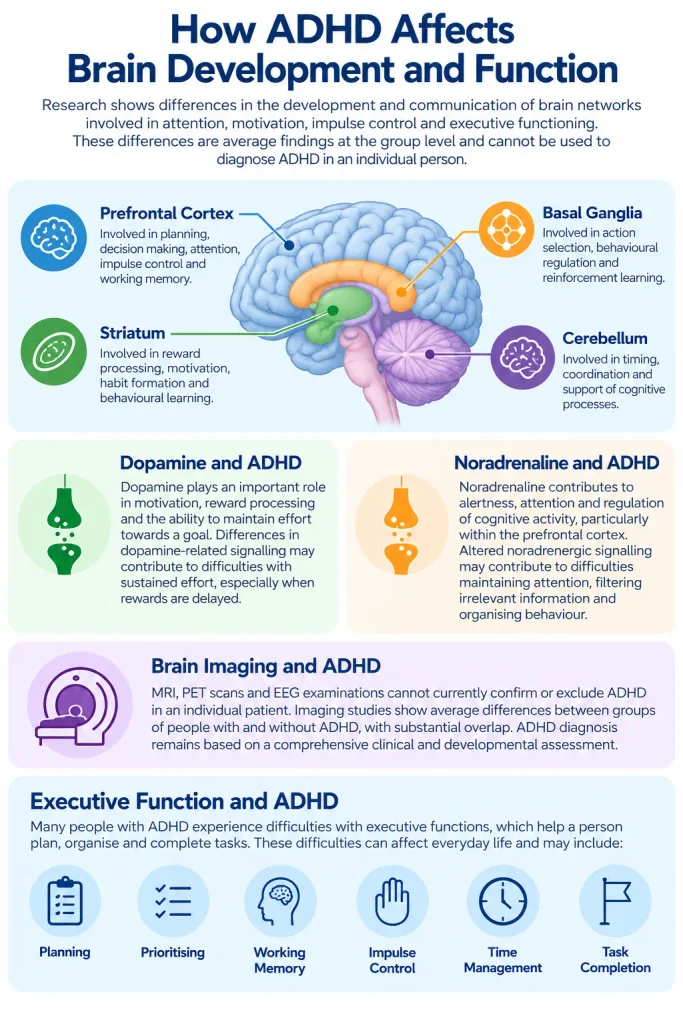
Neurobiological research has identified differences in the development and functioning of brain networks involved in attention, motivation, working memory, impulse control and behavioural regulation. Structural and functional imaging studies have reported average differences between groups of people with ADHD and those without the disorder, involving regions and networks that include the prefrontal cortex, striatum, basal ganglia and cerebellum. These structures contribute to coordinating cognitive processes and regulating behaviour towards longer-term goals.
However, the differences identified in neuroimaging research are statistical observations at the group level rather than abnormalities consistently present in every affected individual. There is considerable overlap between people with and without ADHD, and no single pattern of brain structure or activity reliably distinguishes the disorder in clinical practice. MRI, PET scans and EEG examinations therefore cannot currently confirm or exclude ADHD in an individual patient. Such investigations may be appropriate when another neurological condition is suspected, but they are not routine diagnostic tests for ADHD.
Dopamine and Noradrenaline in ADHD
Dopamine and noradrenaline are neurotransmitters involved in communication between nerve cells and the regulation of attention, motivation and behaviour. Their activity within interconnected neural networks contributes to cognitive control, reward processing and the ability to organise behaviour towards a goal.
Dopamine plays an important role in motivation, reinforcement and reward-related learning. Differences in dopamine-related signalling may contribute to difficulties maintaining effort during repetitive or insufficiently stimulating activities, particularly when rewards are delayed.
Noradrenaline is involved in alertness, selective attention and cognitive regulation, especially through its influence on prefrontal brain networks. Together, these neurotransmitter systems contribute to maintaining concentration, resisting distractions and regulating goal-directed behaviour.
Nevertheless, ADHD should not be described simply as a dopamine deficiency or a chemical imbalance involving one neurotransmitter. Brain function depends on complex interactions between multiple neurotransmitters, neural circuits and developmental processes. Although several medications used in ADHD treatment influence dopamine and noradrenaline signalling, their clinical effectiveness does not establish that ADHD results from a single neurotransmitter abnormality.
Executive Function and ADHD
Many people with ADHD experience difficulties with executive functioning, including planning, prioritising, working memory, task initiation and behavioural self-regulation. These processes depend on coordinated activity across several brain networks rather than one isolated anatomical region. Difficulties in executive functioning can help explain why an individual may understand what needs to be done but struggle to organise the necessary steps, resist distractions or maintain effort until a task is completed.
However, executive dysfunction is not unique to ADHD and may also occur in depression, anxiety disorders, sleep disturbances and other psychiatric or neurological conditions. Executive-function difficulties are therefore relevant to understanding the neurobiology of ADHD but do not independently establish the diagnosis.
For more information about how these difficulties appear in everyday life, see our article on ADHD symptoms.
Environmental Risk Factors for ADHD
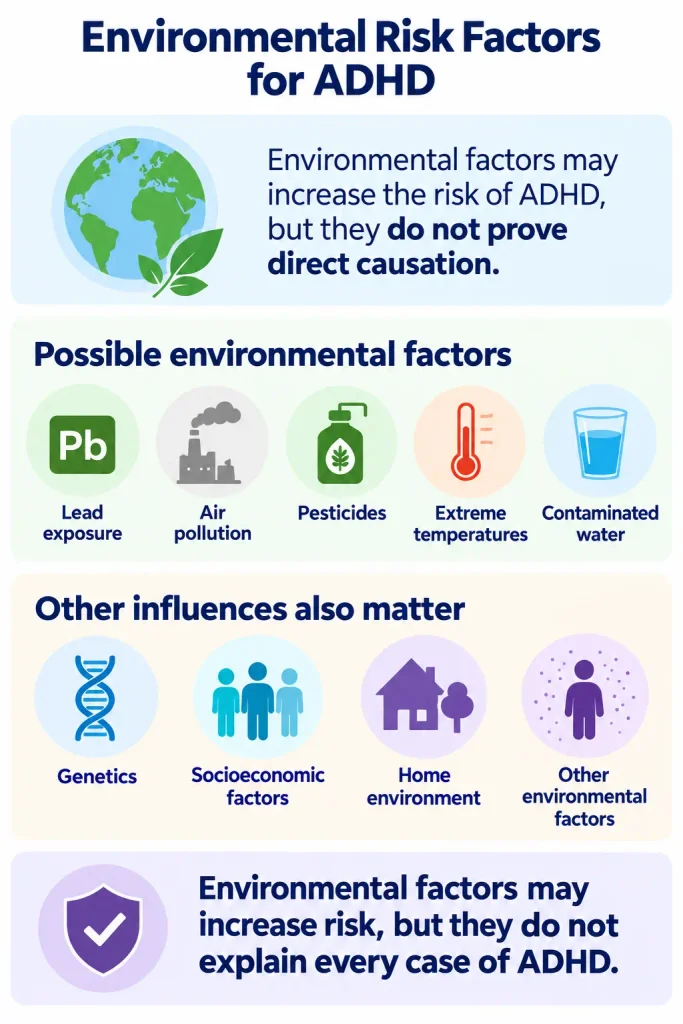
Environmental influences have been investigated extensively as possible contributors to ADHD, particularly when exposure occurs during pregnancy or early brain development. Certain environmental toxins and prenatal exposures have been associated with an increased probability of developing ADHD. However, these associations do not necessarily establish direct causation, because genetic susceptibility, socioeconomic circumstances and other developmental factors may influence the observed relationships.
Environmental risk factors must be distinguished from circumstances that aggravate existing ADHD symptoms. For example, lead exposure during early development has been associated with an increased risk of attention and behavioural difficulties, whereas chronic stress, family conflict and sleep deprivation may worsen concentration, emotional regulation and everyday functioning without being established causes of ADHD.
This distinction is important because ADHD is a multifactorial neurodevelopmental condition. Environmental exposures may contribute to developmental vulnerability in some individuals, but no single environmental factor explains every case. Similarly, stressful life circumstances may intensify existing difficulties without being responsible for the underlying disorder.
Environmental Toxins and Lead Exposure
Exposure to lead, particularly during early childhood, has been associated with attention problems, behavioural difficulties and an increased risk of ADHD-related symptoms. Lead is a recognised neurotoxic substance capable of interfering with normal brain development, making exposure prevention important for children’s neurological health.
Research has also examined air pollution, pesticides and other environmental contaminants. Although some studies report associations with ADHD, the strength of the findings and their interpretation vary considerably. Genetic, socioeconomic and additional environmental factors may contribute to these relationships, making it difficult to establish direct causation.
Environmental exposures should therefore be regarded as potential risk factors rather than assumed explanations for ADHD in an individual patient.
Pregnancy and Birth-Related Risk Factors
Several prenatal and perinatal circumstances have been associated with an increased likelihood of ADHD, including premature birth, low birth weight and certain pregnancy-related exposures or complications. Because the brain undergoes rapid development before and around birth, disturbances during these periods may influence later neurodevelopment. However, most individuals with ADHD do not have an identifiable pregnancy or birth-related cause.
Premature Birth and Low Birth Weight
Children born very prematurely or with very low birth weight have an increased statistical risk of later attention difficulties, executive-function problems and ADHD. Prematurity may affect brain maturation during a particularly vulnerable developmental period, although the relationship is complex and may involve multiple biological and environmental influences.
Nevertheless, premature birth does not inevitably lead to ADHD. Many prematurely born children develop without clinically significant attention problems, while many people with ADHD were born at term without complications. Prematurity and low birth weight should therefore be understood as associated risk factors rather than sufficient causes of the disorder.
Smoking and Alcohol During Pregnancy
Maternal smoking during pregnancy has repeatedly been associated with ADHD in observational studies. However, interpreting this association is complicated because genetic susceptibility, family characteristics and socioeconomic circumstances may influence both maternal smoking and ADHD risk. The association should therefore not automatically be considered proof of direct causation.
Prenatal alcohol exposure can interfere with brain development and, in more severe cases, result in fetal alcohol spectrum disorders. These conditions may involve attention problems, impulsivity and executive-function difficulties that overlap with ADHD, making a careful developmental and prenatal history relevant when significant exposure is known.
Overall, pregnancy and birth-related factors contribute to our understanding of neurodevelopmental vulnerability but cannot explain most individual cases of ADHD.
Does Childhood Trauma Cause ADHD?
Childhood trauma is not regarded as an established primary cause of ADHD. However, severe or persistent adverse experiences can affect attention, emotional regulation, sleep, arousal and behaviour, sometimes producing difficulties that resemble those associated with ADHD.
Children exposed to abuse, neglect or chronic insecurity may develop concentration problems, restlessness, impulsive behaviour or emotional instability. Trauma-related disorders can also involve hypervigilance, intrusive memories, avoidance and persistent feelings of threat, all of which may interfere with attention and everyday functioning.
The clinical picture can become more complex because ADHD and trauma-related conditions may coexist. Some individuals have longstanding ADHD and subsequently experience traumatic events, while others develop concentration and behavioural difficulties primarily in response to adverse experiences. Although their symptoms may overlap, their developmental course and underlying mechanisms can differ.
The relevant clinical distinction is whether the difficulties reflect a persistent neurodevelopmental pattern, responses to traumatic experiences or a combination of both. Identifying similar symptoms is not sufficient to determine their underlying cause.
Do Parenting, Screen Time or Sugar Cause ADHD?
Parenting style, digital media use and dietary habits are frequently discussed as possible explanations for ADHD. Although these factors may influence behaviour, attention and everyday functioning, current evidence does not support treating them as simple, independent causes of the disorder.
Does Poor Parenting Cause ADHD?
Poor parenting does not cause ADHD. The disorder occurs in children raised in stable and supportive families as well as in those growing up under difficult circumstances. However, family routines and parenting practices can influence how ADHD symptoms are expressed and managed. Inconsistent structure, chronic conflict and significant family stress may increase difficulties with organisation, emotional regulation and behaviour.
The relationship can also operate in the opposite direction, since pronounced ADHD symptoms may increase stress within the family and contribute to conflicts surrounding schoolwork, daily responsibilities and impulsive behaviour. Parenting therefore influences the environment in which ADHD is managed, but it should not be regarded as the underlying cause of the condition.
Does Excessive Screen Time Cause ADHD?
Research has identified associations between heavy digital media use and attention problems, but current evidence does not establish screen exposure as an independent cause of ADHD. Excessive use of smartphones, gaming platforms or social media may interfere with sleep, physical activity, academic responsibilities and everyday routines, thereby worsening concentration and self-regulation.
The relationship may also work in both directions. Individuals who already have ADHD may be especially attracted to activities that provide novelty, rapid feedback and immediate rewards. Heavy screen use may therefore contribute to functional difficulties without being responsible for the development of the underlying neurodevelopmental disorder.
Do Sugar and Diet Cause ADHD?
There is no convincing evidence that sugar consumption itself causes ADHD. Although nutrition can influence general wellbeing, energy levels and behaviour, ADHD cannot be explained simply by an unhealthy diet or excessive sugar intake.
Research into food additives and specific dietary patterns has produced mixed findings. Some individuals may experience behavioural changes associated with particular substances, but these effects do not establish a general dietary cause of ADHD.
Balanced nutrition remains important for physical and mental health, but dietary changes should not be presented as a cure or substitute for appropriate clinical care when significant ADHD is present.
ADHD Causes, Risk Factors and Symptom Triggers
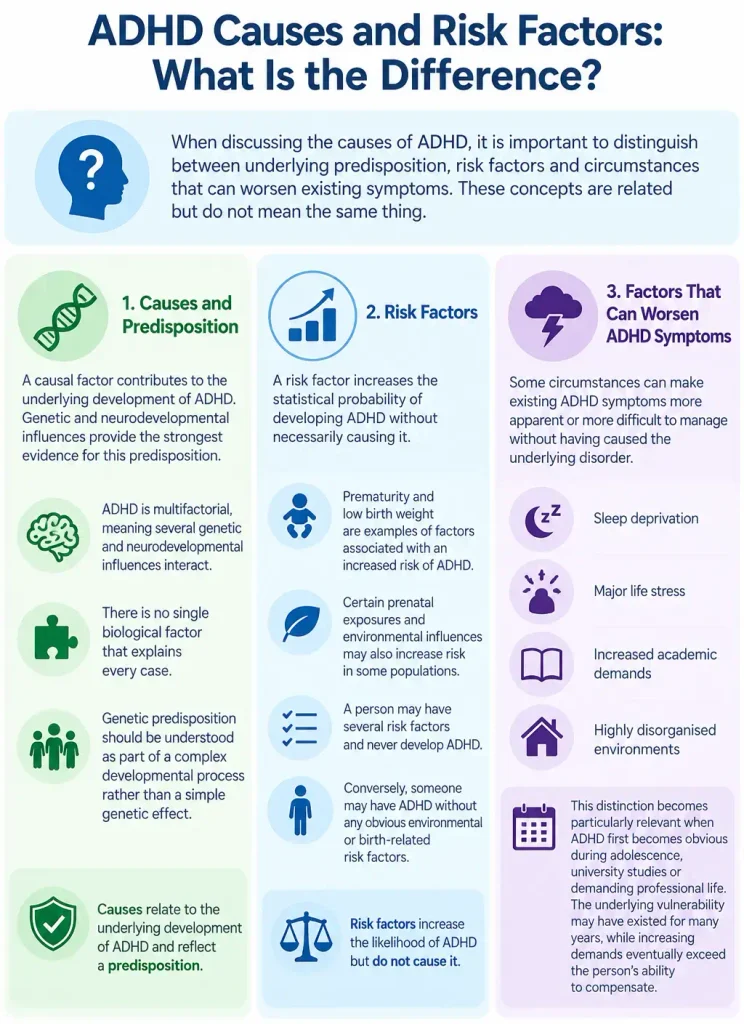
Understanding the origins of ADHD requires distinguishing between underlying biological predisposition, associated developmental risk factors and circumstances that aggravate existing symptoms. Although these influences may interact, they represent different processes and should not be regarded as interchangeable explanations for ADHD.
Biological predisposition refers primarily to genetic and neurodevelopmental influences that contribute to an individual’s susceptibility to ADHD. Genetics provides the strongest established contribution, although no single gene or biological abnormality explains the disorder. Developmental and environmental risk factors, such as prematurity, low birth weight and certain environmental exposures, are associated with an increased statistical probability of ADHD without necessarily being direct causes in an individual person.
By contrast, symptom-aggravating factors influence the severity or visibility of attention difficulties without necessarily contributing to the original development of ADHD. Chronic stress, family conflict, sleep deprivation, excessive workload and highly disorganised environments may impair concentration, emotional regulation and executive functioning. These circumstances can intensify existing ADHD symptoms but can also cause similar difficulties in people who do not have ADHD.
This distinction becomes particularly relevant when attention problems first become noticeable during adolescence or adulthood. Increasing academic, professional or family responsibilities may expose longstanding ADHD difficulties that were previously compensated for. However, similar problems can also arise from stress, inadequate sleep or other psychiatric and medical conditions. The emergence or worsening of concentration difficulties during stressful circumstances does not, by itself, establish ADHD or demonstrate that stress caused the disorder.
Why Can ADHD Become More Noticeable in Adulthood?
Although ADHD begins during development, some individuals are not diagnosed until adulthood because their earlier difficulties were relatively subtle or successfully compensated for. During childhood, parental supervision, structured school environments, high intellectual ability or limited organisational responsibilities may reduce the visible impact of symptoms even when the underlying neurodevelopmental vulnerability is present.
As individuals become more independent, university studies, professional responsibilities, financial management and family life place increasing demands on planning, working memory and self-organisation. Coping strategies that were effective in a highly structured environment may no longer be sufficient, making longstanding difficulties with attention, organisation and task completion more noticeable.
This does not necessarily mean that ADHD first developed in adulthood. Rather, increasing environmental demands may reveal a condition that was previously less impairing. At the same time, concentration problems that genuinely appear for the first time later in life require consideration of other explanations, including sleep disorders, anxiety, depression, chronic stress and medical conditions.
A developmental history is therefore important for distinguishing longstanding ADHD from acquired or temporary attention problems.
For more information about these clinical distinctions, see our article on ADHD diagnosis in Dubai.
Can ADHD Be Prevented?
There is currently no established method that can reliably prevent ADHD. Because the disorder involves substantial genetic and neurodevelopmental influences, no single change in lifestyle, parenting or environmental exposure can guarantee that it will not develop.
Reducing avoidable prenatal risks, supporting healthy pregnancies and protecting children from harmful environmental exposures are important measures for promoting neurological development. Similarly, adequate sleep, regular physical activity, balanced nutrition and supportive family routines can improve attention, emotional wellbeing and everyday functioning. However, these measures do not eliminate an underlying genetic or neurodevelopmental susceptibility.
Although ADHD itself cannot reliably be prevented, early recognition and appropriate support may reduce some of its functional and psychological consequences. Persistent difficulties with attention, organisation and impulse control can interfere with education, employment, relationships and self-esteem, particularly when individuals repeatedly interpret these problems as evidence of laziness, insufficient motivation or personal failure.
Recognising ADHD can help individuals and families understand these difficulties more accurately and determine whether appropriate treatment or other forms of support are needed. Early identification is therefore not a means of preventing ADHD itself but may reduce some of the consequences associated with persistent, unrecognised symptoms.
What Remains Unknown About the Causes of ADHD?
Despite substantial progress in genetic and neurobiological research, important questions about the causes of ADHD remain unanswered. Scientists cannot yet explain precisely why some individuals with a strong genetic susceptibility develop clinically significant ADHD while others do not, nor can current findings reliably predict which symptoms will predominate or how severely an individual will be affected.
Large genetic studies continue to identify variants associated with ADHD, while neuroimaging research investigates the development and communication of brain networks involved in attention, motivation and behavioural regulation. These findings support the understanding of ADHD as a complex neurodevelopmental condition, but they have not produced a single biological marker that can reliably establish the diagnosis in clinical practice.
Genetic testing and neuroimaging therefore remain insufficient for confirming ADHD in an individual patient or predicting the most appropriate treatment. Research into the causes of ADHD continues to improve our understanding of its biological mechanisms, but individual clinical assessment remains essential.
Understanding ADHD Risk Factors at CHMC Dubai
At CHMC German Clinic for Psychiatry and Psychology in Dubai, Dr. Gregor Kowal, German Board-Certified Consultant Psychiatrist and Psychotherapist, provides specialist psychiatric assessment and treatment for adults with ADHD. With more than 30 years of clinical experience in Germany and the UAE, he combines psychiatric expertise with an understanding of the developmental and psychological aspects of the disorder.
Understanding the genetic, neurodevelopmental and environmental influences associated with ADHD provides valuable clinical context, but these factors cannot independently establish a diagnosis. At CHMC Dubai, a comprehensive psychiatric assessment considers developmental history, current symptoms, functional impairment and possible co-existing conditions to determine the most appropriate individual treatment approach.
If persistent difficulties with attention, organisation, restlessness or impulsivity are affecting your everyday life, contact CHMC Dubai to arrange a specialist psychiatric consultation.
Learn more about ADHD diagnosis and Treatment in Dubai
Contact CHMC Dubai to book an appointment.
Frequently Asked Questions About the Causes of ADHD
What is the main cause of ADHD?
There is no single cause of ADHD. Research supports a strong genetic contribution combined with differences in neurodevelopment and possible environmental influences. ADHD is therefore considered a multifactorial neurodevelopmental condition rather than a disorder resulting from one identifiable factor.
Is ADHD inherited from parents?
ADHD has a substantial hereditary component and frequently runs in families. However, inheritance is complex and involves many genetic variants rather than one gene. Having a parent with ADHD increases susceptibility but does not mean that a child will necessarily develop the disorder.
Is ADHD caused by a dopamine deficiency?
ADHD cannot be explained simply as a dopamine deficiency. Dopamine and noradrenaline contribute to brain networks involved in attention, motivation and behavioural regulation, but ADHD results from more complex neurodevelopmental processes involving multiple neurotransmitters and neural systems.
Can childhood trauma cause ADHD?
Childhood trauma is not an established primary cause of ADHD. However, traumatic experiences may produce concentration difficulties, restlessness and emotional symptoms that resemble ADHD. Trauma-related conditions and ADHD can also coexist, making developmental history and clinical assessment important.
Can ADHD develop for the first time in adulthood?
ADHD is classified as a neurodevelopmental disorder with symptoms beginning during childhood. Some individuals are diagnosed only in adulthood because earlier difficulties were overlooked or compensated for. Attention problems that first appear later in life may have other psychiatric, medical or environmental explanations.
Is ADHD caused by poor parenting or excessive screen time?
Poor parenting does not cause ADHD, and current evidence does not establish excessive screen time as an independent cause. Family stress and heavy digital media use may nevertheless influence attention, behaviour and everyday functioning, particularly in individuals who already experience ADHD-related difficulties.
Can ADHD be prevented?
There is currently no proven method for reliably preventing ADHD. Supporting healthy development and avoiding harmful exposures are important for general neurological health, but they cannot guarantee prevention of a condition with substantial genetic and neurodevelopmental influences.

Read More About ADHD
- ADHD Treatment
- Symptoms of ADHD
- Diagnosis of ADHD
- Psychiatrist for ADHD
- Medication for ADHD
- Psychotherapy for ADHD
- ADHD Types
- ADHD Self-Assessment Test
- ADHD in Children
- ADHD and Motivation
- ADHD vs Borderline Personality Disorder
- Does ADHD Change With Age?
- Emotional Dysregulation in ADHD
- Living with ADHD
External References
- Demontis D, et al. Genome-wide analyses of ADHD identify 27 risk loci, refine the genetic architecture and implicate several cognitive domains. Nature Genetics. 2023;55:198–208. https://doi.org/10.1038/s41588-022-01285-8
- Centers for Disease Control and Prevention. Attention-Deficit/Hyperactivity Disorder (ADHD): Causes and Risk Factors. https://www.cdc.gov/adhd/about/
- National Institutes of Health. Attention-Deficit/Hyperactivity Disorder (ADHD). https://health.nih.gov/health-topics-a-z/adhd
- National Institute for Health and Care Excellence. Attention Deficit Hyperactivity Disorder: Diagnosis and Management (NG87). https://www.nice.org.uk/guidance/ng87