

Medication for ADHD is one of the most effective treatments for reducing the core symptoms of attention-deficit/hyperactivity disorder. There are few medications for ADHD available in Dubai that we will describe in this article.
When prescribed after a comprehensive psychiatric assessment and monitored regularly, ADHD medication can significantly improve attention, impulse control, organisation, and daily functioning in both adults and children.
At CHMC Dubai, medication is always prescribed as part of a comprehensive treatment plan. Before starting treatment, our psychiatrist confirms the diagnosis according to the DSM-5 criteria and evaluates possible co-existing psychiatric or medical conditions.
The choice of medication depends on the individual’s symptoms, lifestyle, medical history, and personal preferences.
Stimulant medications remain the first-line treatment for ADHD because they have been extensively studied and consistently demonstrate the greatest improvement in attention, executive functioning, and impulse control.
Non-stimulant medications provide an effective alternative for patients who cannot tolerate stimulants or have specific medical contraindications.
The aim of ADHD medication is not to change a person’s personality. Instead, it improves the brain’s ability to regulate attention, planning, and self-control, allowing patients to perform closer to their true intellectual and professional potential. Medication is usually combined with psychoeducation, behavioural strategies, and psychotherapy to achieve the best long-term results.
For more information contact our consultant psychiatrist Dr. Kowal
Who Benefits from ADHD Medication?
ADHD medication is generally recommended when symptoms significantly affect school, university, work, relationships, or daily functioning. Medication is not prescribed simply because ADHD is diagnosed. Instead, the psychiatrist considers symptom severity, functional impairment, medical history, and the patient’s personal preferences before recommending treatment.
Medications Available in Dubai for ADHD
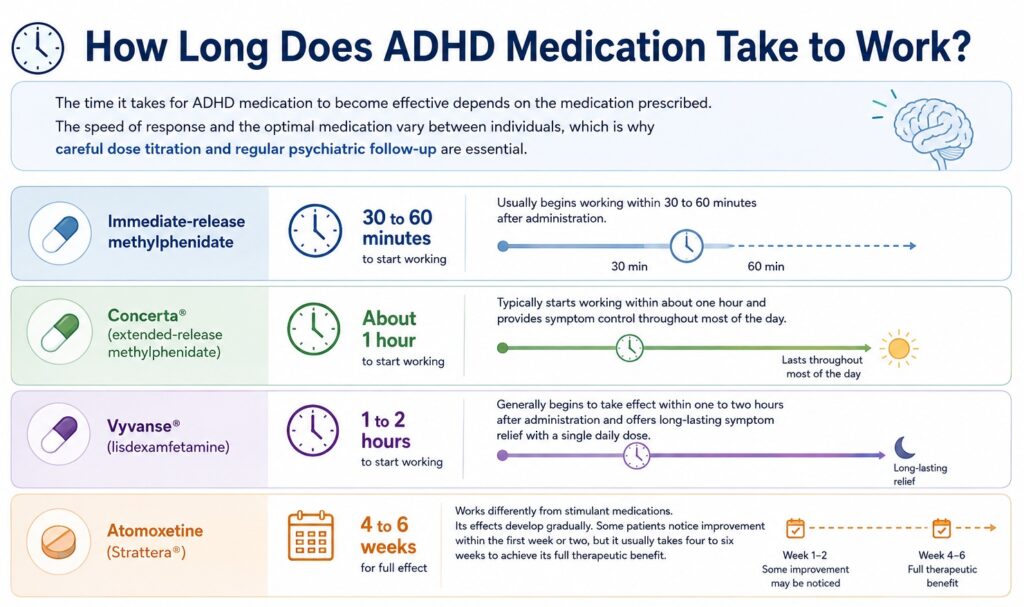
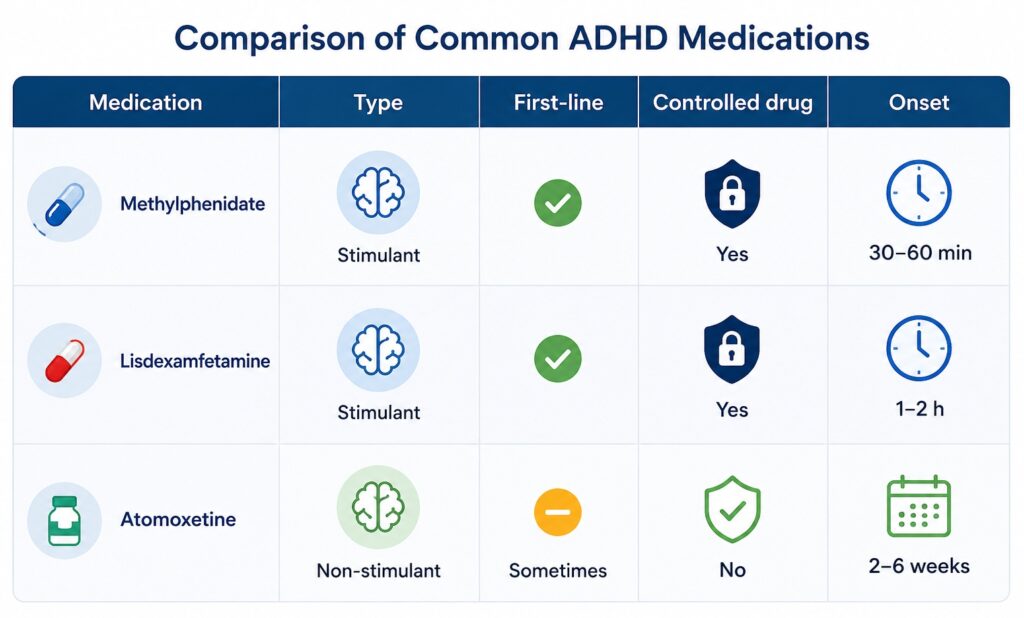
Medication use for ADHD belongs to different groups. Stimulants such as methylphenidate (MPH) and lisdexamfetamine are considered first-line treatment.
Atomoxetine (ATX), a noradrenaline reuptake inhibitor, also plays an important role and is not classified as a stimulant.
Bupropion: a dopaminergic antidepressant, such as bupropion, may also be used when other treatments are not suitable.
The main active substances used today for ADHD in Dubai include methylphenidate, lisdexamfetamine and, less often, lisdexamphetamine.
Treatment usually begins with a low dose, which is gradually increased until symptoms improve.
The below charts shows the ADHD medications available in Dubai for ADHD
How ADHD Medication Works
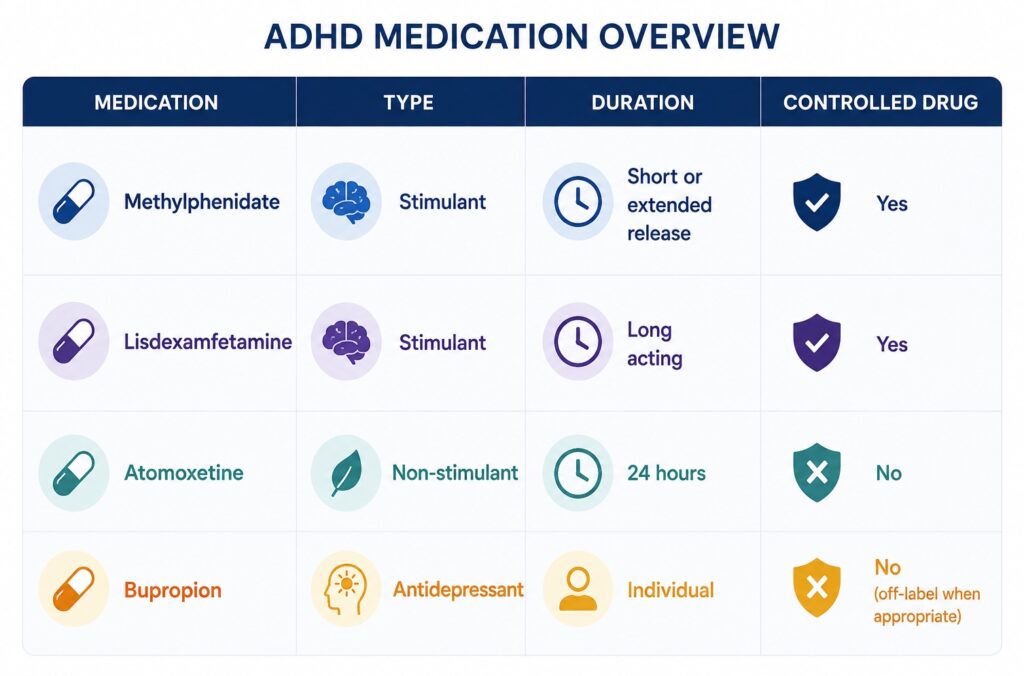
ADHD is linked to an imbalance of neurotransmitters, especially dopamine and noradrenaline, in the prefrontal cortex, a brain region responsible for focus, attention, and impulse control.
Stimulant medications increase the availability of dopamine and noradrenaline in the brain by reducing their reuptake into nerve cells. This allows these neurotransmitters to remain active for longer, improving attention, concentration, planning, and impulse control.
It may seem unusual to treat hyperactivity with stimulating medication. However, this medication has actually a calming effect on ADHD patients. Therefore, the risk of dependency in accurately diagnosed patients is negligible. Nevertheless, in order to reduce the risk of habit-forming behaviour the medication of choice are slow-release stimulants, like Concerta containing Methylphenidate or Vyvanse, containing Lisdexamfetamine.
A careful titration of the medication used for ADHD treatment and regular laboratory and ECG controls help to exclude potential side effects. If these criteria are met, the benefits of treatment far outweigh the possible risks.
Atomoxetine works differently. It selectively blocks the reuptake of noradrenaline, which helps improve attention and reduce impulsive behaviour. Guanfacine also affects noradrenaline signalling, although its exact mechanism in ADHD is not fully understood.
How Long Does ADHD Medication Take to Work?
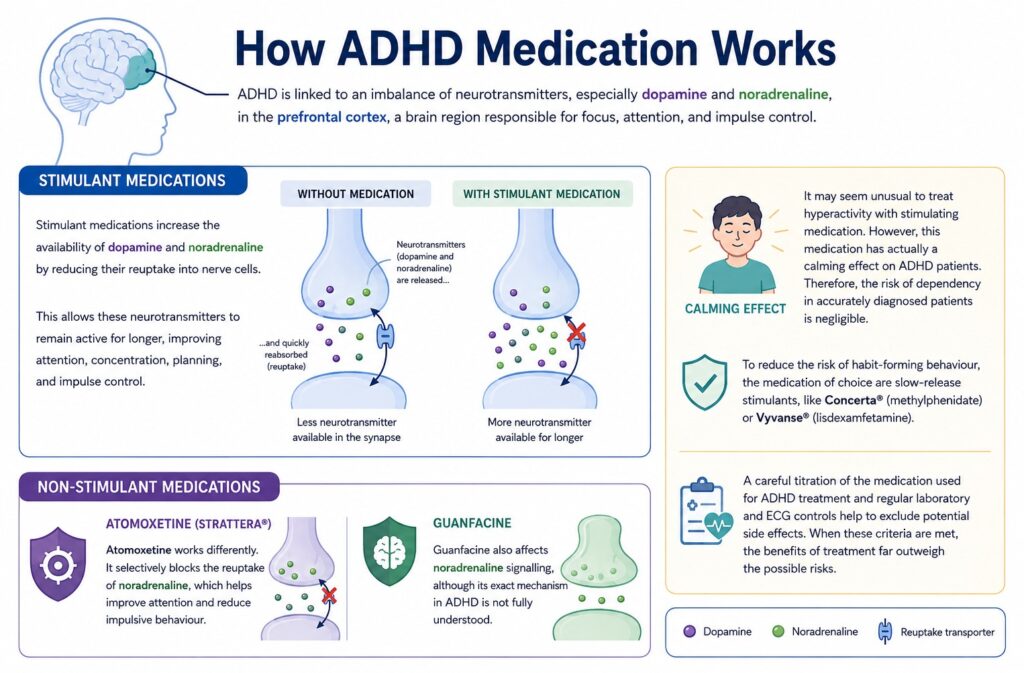
The time it takes for ADHD medication to become effective depends on the medication prescribed. The speed of response and the optimal medication vary between individuals, which is why careful dose titration and regular psychiatric follow-up are essential.
Immediate-release methylphenidate usually begins working within 30 to 60 minutes, while Concerta®, the extended-release form of methylphenidate, typically starts working within about one hour and provides symptom control throughout most of the day.
Vyvanse® (lisdexamfetamine) generally begins to take effect within one to two hours after administration and offers long-lasting symptom relief with a single daily dose.
Atomoxetine (Strattera®) works differently from stimulant medications. Its effects develop gradually, and although some patients notice improvement within the first week or two, it usually takes four to six weeks to achieve its full therapeutic benefit.
ADHD Treatment with Methylphenidate
Methylphenidate is a psychostimulant used to treat attention-deficit/hyperactivity disorder (ADHD) and narcolepsy. It was first introduced to the market in 1954 under the brand name Ritalin.
Methylphenidate is available in several formulations that differ mainly in the way the active substance is released. These pharmaceutical differences determine whether the medication takes effect immediately or is released gradually over a longer period, which influences the duration of action.
The choice of preparation depends on the patient’s individual needs. Immediate-release formulations allow flexible dosing but require more frequent intake, while extended-release formulations provide a steadier and longer effect, which can be especially useful in daily routines or school settings.
Immediate-Release Formulations
This form of methylphenidate is released quickly after ingestion and reaches its effective blood level within 30 to 60 minutes. The effect usually lasts three to four hours, which often makes multiple daily doses necessary.
In Dubai, the immediate-release version is available under the brand name Ritalin. These tablets are often taken in the morning and afternoon to maintain consistent symptom control throughout the day, though they need to be taken at regular intervals.
Extended-Release Formulations
To achieve a longer-lasting effect and reduce the number of daily doses, extended-release methylphenidate was developed. These formulations release the active substance continuously over an extended period.
This is achieved through specialized pharmaceutical technology that binds the medication in different layers or reservoirs. As a result, methylphenidate is released in several phases: an initial immediate release followed by a slow, continuous release over several hours. In Dubai, the extended-release form of methylphenidate is available under the brand name Concerta.
Atomoxetine
Atomoxetine, marketed in Dubai under the brand name Strattera, is a selective norepinephrine reuptake inhibitor. It is the first ADHD medication classified as a non-stimulant and therefore not subject to narcotics regulations. Atomoxetine is approved for adults when ADHD symptoms were present during childhood. It is often chosen when stimulants are not tolerated or not advisable. Atomoxetine is generally well tolerated and has no potential for misuse or dependence.
Clinical studies have shown that atomoxetine significantly reduces the core symptoms of ADHD: inattention, hyperactivity, and impulsivity. Improvements have also been observed in psychosocial areas such as self-esteem and family interactions.
Atomoxetine’s effectiveness is comparable to that of methylphenidate, and the response rate is similarly around 80 percent. Although many patients begin to notice an effect after about one week, it generally takes four to six weeks to reach full therapeutic benefit.
A major advantage of atomoxetine is that a single morning dose provides continuous symptom control until the next day. Atomoxetine is often considered when patients continue to experience symptoms at critical times—such as early in the morning—despite treatment with methylphenidate, or when methylphenidate is poorly tolerated.
Lisdexamfetamine
Lisdexamfetamine is used in the treatment of attention-deficit/hyperactivity disorder (ADHD). It belongs to the group of synthetic amphetamines and is regulated under narcotics legislation.
Lisdexamfetamine itself is pharmacologically inactive. After oral intake, it is rapidly absorbed in the gastrointestinal tract and converted primarily by red blood cells into dexamfetamine, the active metabolite. The plasma half-life of lisdexamfetamine is generally less than one hour. Because the half-life of dexamfetamine is around 11 hours, a single dose of lisdexamfetamine provides symptom control throughout the day. In Dubai, lisdexamfetamine is marketed under the brand name Vyvanse.
The substance increases the availability of the neurotransmitters norepinephrine and dopamine in the synaptic cleft by inhibiting their reuptake. The exact way in which this process leads to improvement in ADHD symptoms is not yet fully understood.
Centanafadine (Simtriyo): A New ADHD Medication Approved in 2026
In July 2026, the US Food and Drug Administration (FDA) approved centanafadine (Simtriyo) for the treatment of attention-deficit hyperactivity disorder (ADHD). Centanafadine represents a new pharmacological approach to ADHD and is the first approved ADHD medication that acts as a norepinephrine, dopamine and serotonin reuptake inhibitor (NDSRI).
Simtriyo is an extended-release medication taken once daily. It is approved in the United States for adults and children aged six years and older who weigh at least 20 kg. The FDA classifies centanafadine as a central nervous system stimulant, although its mechanism differs from established stimulant medications such as methylphenidate and amphetamine derivatives.
How Does Centanafadine Work?
Most established stimulant medications for ADHD primarily influence the neurotransmitters dopamine and norepinephrine. Centanafadine also affects these neurotransmitter systems but additionally inhibits the reuptake of serotonin.
It therefore acts on three monoamine transporters: the norepinephrine transporter, dopamine transporter and serotonin transporter. By inhibiting their reuptake, centanafadine increases the availability of these neurotransmitters in neural pathways involved in attention, impulse control and behavioural regulation.
This mechanism distinguishes centanafadine from commonly used ADHD medications. Methylphenidate mainly inhibits dopamine and norepinephrine reuptake, while amphetamine-based medications have additional effects on monoamine release. Centanafadine does not simply represent another formulation of an existing ADHD medication but introduces a different pharmacological mechanism.
How Effective Is Centanafadine for ADHD?
FDA approval was supported by Phase III clinical trials involving adults and pediatric patients with ADHD. These studies found that centanafadine produced statistically significant improvements in ADHD symptoms compared with placebo.
Earlier Phase III studies in adults also demonstrated improvements in core ADHD symptoms measured with established clinical rating scales. More recent studies have extended the evidence to younger patients. Research published in adolescents found significant improvement with the higher centanafadine dose compared with placebo, with separation from placebo already observed at the first assessment after treatment began.
A 2026 systematic review and meta-analysis of randomized controlled trials similarly found that centanafadine significantly reduced ADHD symptom severity compared with placebo. However, centanafadine is a newly approved medication, and considerably more clinical experience exists with established treatments such as methylphenidate and amphetamine derivatives. Further comparative and long-term studies will help clarify its place in ADHD treatment.
Is Centanafadine Better Than Other ADHD Medications?
It is currently too early to conclude that centanafadine is superior to established ADHD medications. Methylphenidate and amphetamine-based treatments have decades of clinical experience and remain important pharmacological treatments for ADHD.
The significance of centanafadine lies instead in providing an additional mechanism of action. ADHD treatment response varies considerably between individuals. A medication that works well for one patient may be ineffective or poorly tolerated by another. Having medications with different pharmacological profiles can therefore broaden the available treatment options.
The choice between centanafadine, methylphenidate, lisdexamfetamine, atomoxetine and other ADHD medications should depend on the patient’s symptoms, previous treatment response, co-existing psychiatric or medical conditions, cardiovascular risk, potential adverse effects and individual clinical circumstances.
Is Centanafadine Available for ADHD Treatment in Dubai?
FDA approval applies to the United States and does not automatically mean that a medication is approved or available in the UAE. Centanafadine is a very recently approved medication, and its regulatory and commercial availability differs between countries.
Patients in Dubai should therefore not assume that Simtriyo can currently be prescribed or dispensed locally. Availability of newly developed ADHD medications depends on UAE regulatory approval, registration and local supply.
At CHMC Dubai, ADHD medication is selected individually following a psychiatric assessment. Treatment may include established stimulant or non-stimulant medication when clinically indicated and legally available in the UAE. New treatment options such as centanafadine can be considered if and when they become appropriately approved and available locally.
Which ADHD Medication Is Best?
Many patients ask which ADHD medication is the “best”. In reality, there is no single medication that works best for everyone. The most appropriate treatment depends on several individual factors, including the type and severity of your symptoms, your age, lifestyle, occupation, and any other medical or psychiatric conditions you may have. Your previous medical history, current medications, and the likelihood of side effects also play an important role.
The goal is not simply to prescribe the strongest medication but to find the one that provides the greatest improvement in attention and daily functioning while causing the fewest side effects. Sometimes the first medication is highly effective, while in other cases a different medication or dose may be needed. Careful follow-up with the psychiatrist helps ensure that treatment is tailored to your individual needs and remains effective over time.
Can ADHD Medication Be Stopped?
Many patients wonder whether ADHD medication must be taken for life. The answer depends on the individual. Some people benefit from long-term treatment; others may reach a stage where they can successfully reduce or stop medication under psychiatric supervision.
Medication should never be discontinued abruptly without consulting your psychiatrist, as symptoms may return and affect work, studies, or relationships. If stopping treatment is appropriate, the medication is usually reduced gradually while monitoring for the return of symptoms. Regular follow-up helps determine the safest and most effective long-term treatment plan.
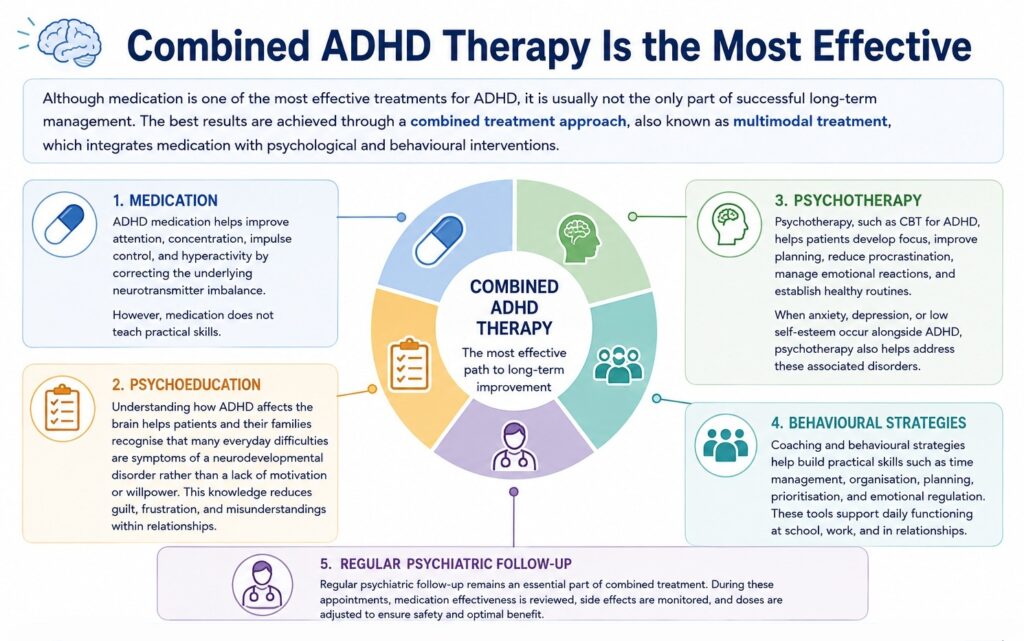
Combined ADHD Therapy Is the Most Effective
Although medication is one of the most effective treatments for ADHD, it is usually not the only part of successful long-term management. The best results are achieved through a combined treatment approach, also known as multimodal treatment, which integrates medication with psychological and behavioural interventions.
ADHD medication helps improve attention, concentration, impulse control, and hyperactivity by correcting the underlying neurotransmitter imbalance. However, medication does not teach practical skills such as time management, organisation, planning, prioritisation, or emotional regulation. Many patients have developed ineffective habits over many years and benefit from learning new strategies to overcome them.
Psychoeducation is an important part of treatment. Understanding how ADHD affects the brain helps patients and their families recognise that many everyday difficulties are symptoms of a neurodevelopmental disorder rather than a lack of motivation or willpower. This knowledge reduces guilt, frustration, and misunderstandings within relationships.
Psychotherapy, such as CBT for ADHD, helps patients develop focus. Improving interventions, reducing procrastination, managing emotional reactions, and establishing healthy routines. When anxiety, depression, or low self-esteem occur alongside ADHD, psychotherapy also helps address these associated disorders.
Regular psychiatric follow-up remains an essential part of combined treatment. During these appointments, medication effectiveness is reviewed, side effects are monitored and doses are adjusted.
By combining appropriate medication with education, behavioural strategies, and regular psychiatric care, many people with ADHD achieve substantial improvements in their symptoms, work performance, relationships, and overall quality of life.
Possible Side Effects of ADHD Medication
Stimulant medications such as methylphenidate and lisdexamfetamine may cause gastrointestinal discomfort, dizziness, high blood pressure, heart palpitations, headaches, and increased restlessness, sometimes accompanied by sleep disturbances. Because of frequent sleep disturbances, these medications should not be taken late in the day.
Comprehensive Assessment and Therapy Initiation
Successful ADHD treatment begins long before the first prescription is written. At CHMC Dubai, every patient undergoes a comprehensive psychiatric assessment to confirm the diagnosis and determine whether medication is appropriate. Because several medical and psychiatric conditions can mimic ADHD, a careful evaluation is essential before treatment is started.
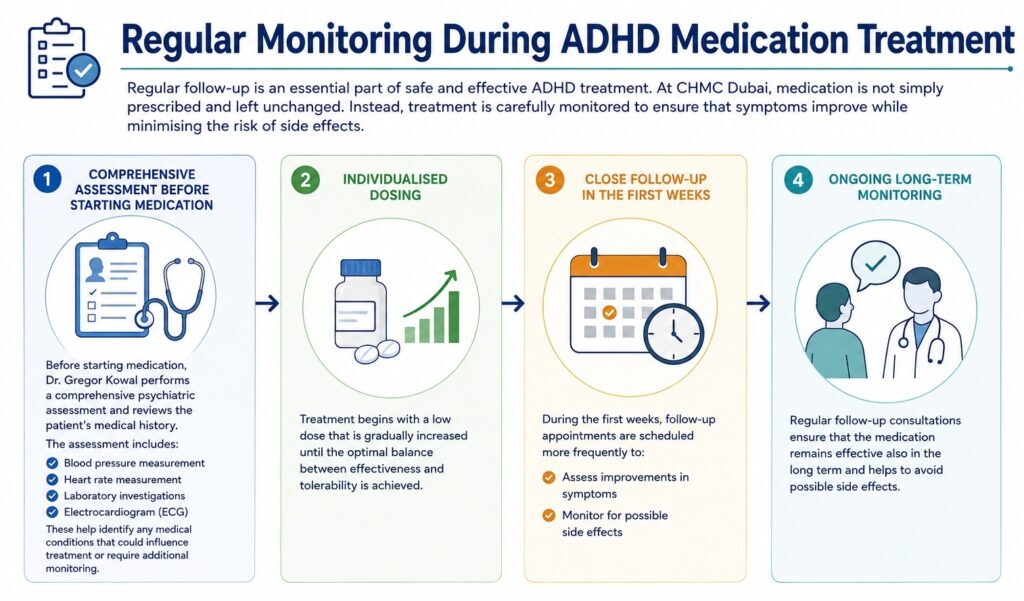
Patient safety is a central part of the assessment. Before prescribing medication, Dr. Gregor Kowal reviews each patient’s medical history, current medications, and any pre-existing physical or mental health conditions. The evaluation includes measurement of blood pressure and heart rate, laboratory investigations, and an electrocardiogram (ECG). These examinations help identify medical conditions that could influence treatment or require additional monitoring during therapy.
Treatment is always initiated with a low dose, which is gradually increased in a process known as dose titration. Follow-up appointments are particularly important during the first phase of treatment. During these visits, Dr. Kowal evaluates symptom improvement, monitors for possible side effects, and adjusts the medication if necessary. Once the optimal dose has been established and symptoms are stable, follow-up visits usually become less frequent. However, regular long-term monitoring remains essential to ensure that the medication continues to be effective.
Ongoing Medical Monitoring of ADHD Medication
Regular follow-up is an essential part of safe and effective ADHD treatment. At CHMC Dubai, medication is not simply prescribed and left unchanged. Instead, treatment is carefully monitored to ensure that symptoms improve while minimising the risk of side effects.
Treatment begins with a low dose that is gradually increased until the optimal balance between effectiveness and tolerability is achieved. During the first weeks, follow-up appointments are scheduled more frequently to assess improvements while monitoring for possible side effects.
The follow-up consultations are highly important to ensure that the medication remains effective also in the long term and to avoid possible side effects.
Take the Next Step Towards Effective ADHD Treatment
If ADHD symptoms are affecting your work, studies, relationships, or everyday life, professional assessment is the first step towards effective treatment.
At CHMC Dubai, Dr. Gregor Kowal provides comprehensive ADHD evaluations and develops individualised treatment plans that may include medication, psychotherapy, and practical behavioural strategies. Contact our clinic to schedule an appointment and learn which treatment approach is most appropriate for you.
FAQs about Medication for ADHD
Which medications are available for ADHD in Dubai?
The most commonly prescribed ADHD medications in Dubai include methylphenidate (Ritalin®, Concerta®), lisdexamfetamine (Vyvanse®), and atomoxetine (Strattera®). The most appropriate medication depends on the patient’s symptoms, medical history, and response to treatment.
What is the most effective medication for ADHD?
Stimulant medications such as methylphenidate and lisdexamfetamine are considered the first-line treatment for ADHD because they are highly effective in reducing inattention, impulsivity, and hyperactivity. However, the best medication varies from person to person and should always be selected by an experienced psychiatrist.
How does ADHD medication work?
Most ADHD medications increase the availability of dopamine and noradrenaline in the brain. These neurotransmitters play an important role in attention, concentration, planning, and impulse control. As a result, many patients experience improved focus, better organisation, and greater emotional regulation.
Is ADHD medication safe?
When prescribed after a comprehensive psychiatric assessment and monitored regularly, ADHD medication is generally safe and well tolerated. Before starting treatment, your psychiatrist may recommend blood pressure measurement, laboratory investigations, or an ECG depending on your medical history.
Does ADHD medication cause addiction?
No. Research shows that the risk of addiction is very low when stimulant medication is prescribed appropriately for patients with ADHD and taken as directed. Long-acting formulations such as Concerta® and Vyvanse® are often preferred because they have a lower potential for misuse.
What is the difference between Ritalin and Concerta?
Both medications contain methylphenidate. Ritalin is an immediate-release formulation that usually requires several doses per day, whereas Concerta is an extended-release formulation designed to provide symptom control throughout the day with a single morning dose.
What is the difference between Vyvanse and Methylphenidate?
Vyvanse contains lisdexamfetamine, while Ritalin and Concerta contain methylphenidate. Both are effective stimulant medications, but they differ in their duration of action, pharmacology, and individual response. Your psychiatrist will recommend the medication that best suits your symptoms and lifestyle.
When is Atomoxetine recommended?
Atomoxetine is a non-stimulant medication that may be recommended when stimulant medications are not well tolerated, are contraindicated, or have not provided sufficient improvement. It is also suitable for patients in whom stimulant medication is not considered appropriate.
How long does ADHD medication take to work?
Immediate-release methylphenidate usually starts working within 30 to 60 minutes. Extended-release stimulants such as Concerta® and Vyvanse® begin working within the first few hours and provide longer symptom control. Atomoxetine works more gradually and often requires four to six weeks to achieve its full effect.
Do I need to take ADHD medication every day?
This depends on the medication prescribed and your individual treatment plan. Some patients take medication every day, while others may have planned medication breaks. Your psychiatrist will advise the most appropriate schedule based on your symptoms and daily functioning.
What are the most common side effects of ADHD medication?
Possible side effects include reduced appetite, difficulty sleeping, headaches, dry mouth, increased heart rate, elevated blood pressure, or mild gastrointestinal discomfort. Most side effects improve after dose adjustment or during the first weeks of treatment.
Can adults take ADHD medication?
Yes. ADHD medication is effective for many adults with ADHD. Treatment can improve concentration, organisation, impulse control, work performance, and everyday functioning when combined with regular psychiatric follow-up.
Do I need an ECG before starting ADHD medication?
Not every patient requires an ECG. However, if there is a history of heart disease, cardiovascular symptoms, or other relevant medical conditions, your psychiatrist may recommend an ECG and additional investigations before prescribing stimulant medication.
How is the correct dose of ADHD medication determined?
Treatment usually starts with a low dose that is gradually increased until symptoms improve while side effects remain minimal. This process, known as dose titration, allows the psychiatrist to find the most effective and safest dose for each patient.
Can ADHD medication be combined with psychological therapy?
Yes. For many patients, the best results are achieved by combining medication with psychoeducation, behavioural strategies, ADHD coaching, or psychotherapy. Medication improves attention and impulse control, while psychological interventions help develop long-term coping skills and organisational strategies.
Why are stimulant medications for ADHD controlled?
Stimulant medications such as methylphenidate and lisdexamfetamine are classified as controlled medicines because they have the potential for misuse if not used under medical supervision. When prescribed appropriately for ADHD, they are safe and highly effective. In the UAE, these medications can only be prescribed by licensed physicians and require regular follow-up appointments.
Can tourists receive ADHD medication in Dubai?
Yes, in many cases tourists can receive ADHD medication after a comprehensive psychiatric assessment. However, the type of medication that can be prescribed and the quantity supplied are subject to UAE regulations. If you are visiting Dubai, it is advisable to bring your previous medical records and details of your current treatment.
Do UAE residents need an Emirates ID to receive ADHD medication?
Yes. UAE residents usually need a valid Emirates ID to receive prescriptions for controlled ADHD medications. This is required by the UAE’s electronic prescribing system and helps ensure safe prescribing and monitoring.
How often do ADHD medication prescriptions need to be renewed?
Patients taking ADHD medication require regular follow-up with their psychiatrist. The frequency of prescription renewals depends on the medication prescribed, your response to treatment, and UAE regulations governing controlled medicines. During follow-up visits, your psychiatrist reviews the medication’s effectiveness, monitors for side effects, and adjusts the dose if necessary.
Can I travel abroad with ADHD medication?
Yes, but regulations vary between countries. Some ADHD medications, particularly stimulant medications, are classified as controlled substances and may be subject to import restrictions. Before travelling, check the requirements of your destination country to avoid problems at customs.
What documents do I need when travelling with ADHD medication?
It is generally recommended to carry your medication in its original pharmacy packaging together with a copy of your prescription and a medical letter from your psychiatrist confirming your diagnosis and treatment. Some countries may require additional approvals for controlled medications, so it is advisable to check the regulations before your trip.
Read More About ADHD
- ADHD Treatment
- Symptoms of ADHD
- Diagnosis of ADHD
- Psychiatrist for ADHD
- Medication for ADHD
- ADHD vs Borderline Personality Disorder
- Causes of ADHD
- ADHD in Children
- ADHD Types
- Does ADHD Change With Age?
- Brain and ADHD
- Emotional Disregulation in ADHD
- Overdiagnosing ADHD
- Does ADHD Treatment Work?
- Living with ADHD
- Support for ADHD
- ADHD Self-Assessment Test
Medically reviewed by Dr. Gregor Kowal

DR. GREGOR KOWAL
Dr. Gregor Kowal is a German-certified consultant in Psychiatry and Psychotherapy. Since 2010, Dr. Kowal has been the Medical Director of CHMC, a psychiatric clinic located in Dubai. Dr. Kowal graduated from the prestigious University of Heidelberg. After completing his specialty training, he held leadership and teaching positions, serving as Head of Department and later as Medical Director at renowned psychiatric hospitals across Germany. In addition to his expertise in psychiatry, Dr. Kowal is trained as a psychotherapist with a foundation in psychoanalytical psychotherapy.