

In this article, we compare depression with bipolar disorder, explain why they are often confused, and show how psychiatrists distinguish between them.
Many people are surprised to learn that bipolar disorder is often first recognised only after years of treatment for depression. This happens because most patients seek psychiatric help during depressive episodes rather than during periods of elevated mood. Hypomania may feel pleasant or simply be interpreted as a time of increased productivity and confidence.
Depression, called medically major depressive disorder (MDD), and bipolar disorder are among the most common mood disorders treated by psychiatrists. Although they are distinct conditions, they often appear remarkably similar during a depressive episode.
Both cause similar symptoms, such as persistent sadness, loss of interest, fatigue, poor concentration, sleep disturbances, and even suicidal thoughts. For patients, the two illnesses may feel identical. For clinicians, however, distinguishing between them is one of the most important tasks in psychiatry.
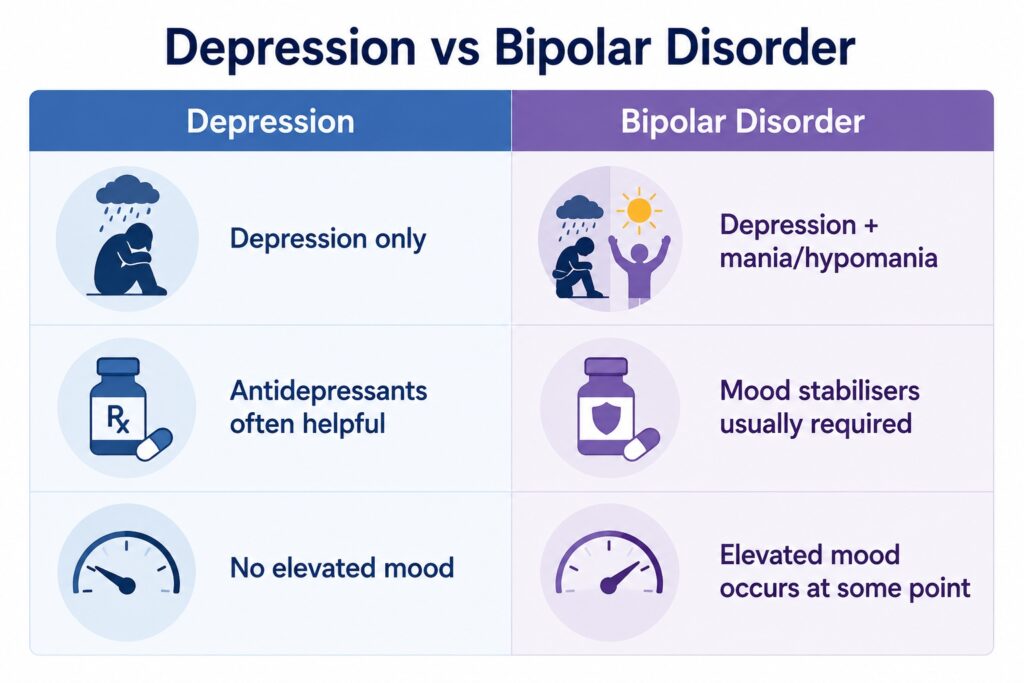
The most important difference is that people with bipolar disorder have experienced at least one episode of mania or hypomania, whereas people with major depressive disorder have not.
An accurate diagnosis is essential because the treatment strategies differ considerably. A medication that works well for depression may be ineffective or even harmful in bipolar disorder. For this reason, every patient presenting with depression should also be assessed for current or previous symptoms of mania or hypomania before treatment begins.
For psychiatric assessment contact our consultant psychiatrist Dr. Kowal
The chart below shows the major differences at a glance.
What Is Depression?
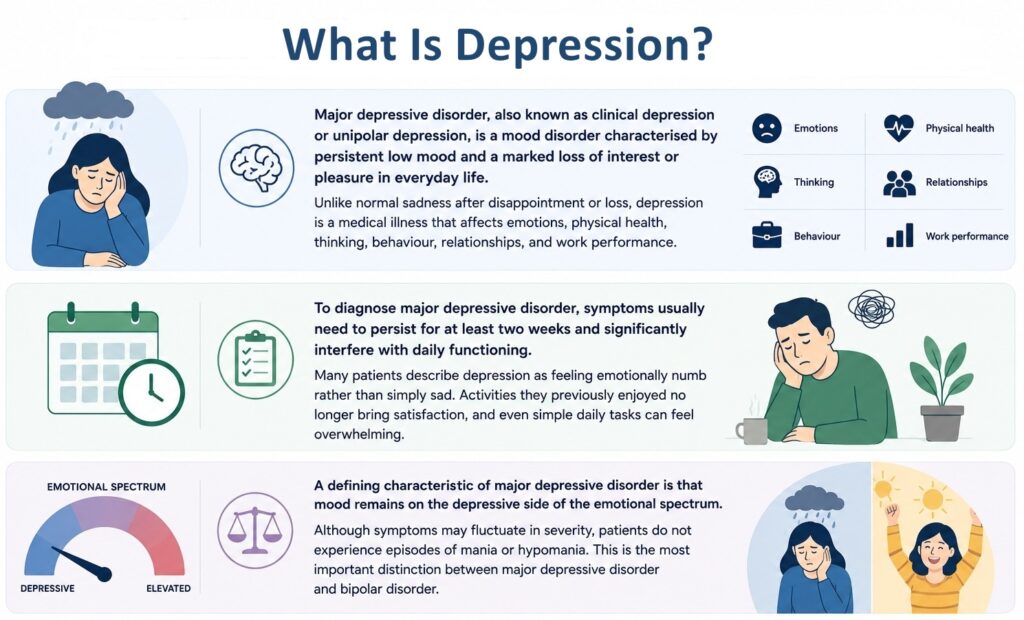
Depression, also known as major depressive disorder or unipolar depression, is a mood disorder characterised by persistent low mood and a marked loss of interest or pleasure in everyday life. Unlike normal sadness after disappointment or loss, depression is a medical illness that affects emotions, physical health, thinking, behaviour, relationships, and work performance.
To diagnose depression, symptoms usually need to persist for at least two weeks and significantly interfere with daily functioning. Many patients describe depression as feeling emotionally numb rather than simply sad. Activities they previously enjoyed no longer bring satisfaction, and even simple daily tasks can feel overwhelming.
A defining characteristic of major depressive disorder is that mood remains on the depressive side of the emotional spectrum. Although symptoms may fluctuate in severity, patients do not experience episodes of mania or hypomania. This is the most important distinction between major depressive disorder and bipolar disorder.
What Is Bipolar Depression?
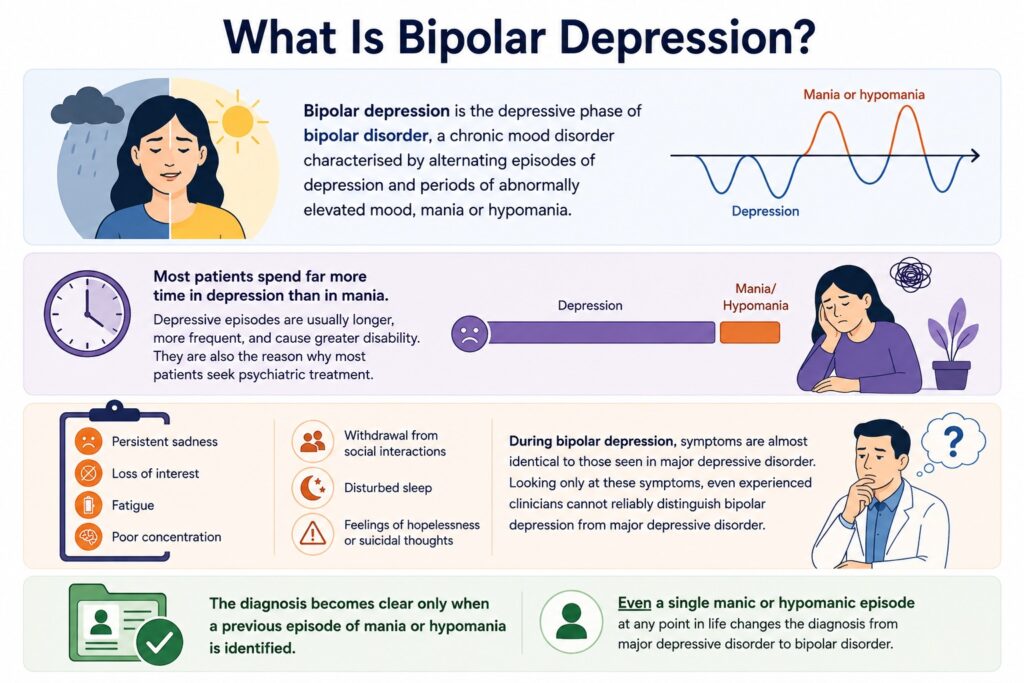
Bipolar depression is the depressive phase of bipolar disorder, a chronic mood disorder characterised by alternating episodes of depression and periods of abnormally elevated mood, mania or hypomania.
Many people assume that bipolar disorder is mainly a disorder of excessive energy or manic behaviour. In reality, most patients spend far more time experiencing depression than mania. Depressive episodes are usually longer, more frequent, and cause greater disability than elevated mood episodes. They are also the reason why most patients seek psychiatric treatment.
During bipolar depression, symptoms are almost identical to those seen in major depressive disorder. Patients often feel persistently sad, lose interest in activities, struggle with fatigue, have difficulty concentrating, withdraw from social interactions, and experience disturbed sleep. Some develop feelings of hopelessness or suicidal thoughts. Looking only at these symptoms, even experienced clinicians cannot reliably distinguish bipolar depression from major depressive disorder.
The diagnosis becomes clear only when a previous episode of mania or hypomania is identified. Even a single manic or hypomanic episode at any point in life changes the diagnosis from major depressive disorder to bipolar disorder.
Bipolar I Disorder
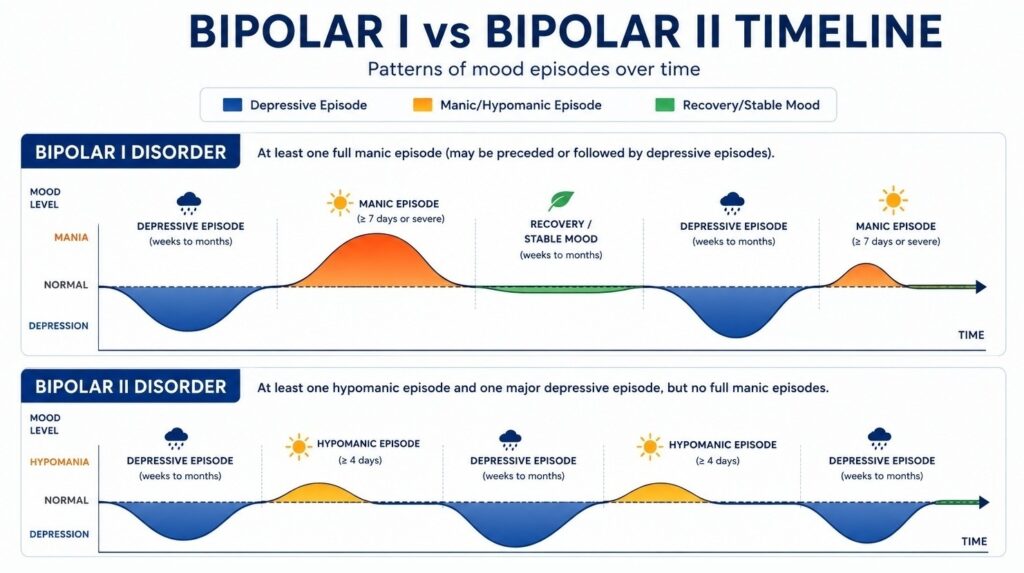
Bipolar I disorder is characterised by mood swings between two extremes: mania and depression.
During mania, mood becomes abnormally elevated, expansive, or irritable, and energy levels increase dramatically. Patients often require very little sleep while continuing to feel energetic throughout the day. Thoughts race rapidly, speech becomes unusually fast, and concentration decreases because new ideas constantly interrupt previous ones. Judgement is often impaired. Some people make impulsive financial decisions, start unrealistic business projects, and engage in risky behaviour.
Depression in bipolar I disorder resembles unipolar depression, often causing profound sadness, loss of interest, fatigue, poor concentration, disturbed sleep, and feelings of hopelessness or guilt. These depressive episodes are usually longer and more frequent than manic episodes and often account for most of the illness burden. Because the symptoms of depression in bipolar I disorder are similar to those in major depressive disorder, bipolar depression is frequently misdiagnosed unless previous manic episodes are identified.
Bipolar II Disorder
Bipolar II disorder is often much more difficult to recognise because patients do not experience full mania. Instead, they develop hypomania, a milder form of mood elevation that lasts at least four days. Unlike mania, hypomania may initially seem beneficial. Individuals often feel unusually productive, creative, sociable, confident, or energetic. Friends and family may simply notice that the person appears happier or more active than usual. Because these periods rarely cause major problems, many patients never mention them during psychiatric consultations.
The depressive episodes, however, are often severe and long-lasting. As a result, bipolar II disorder is frequently mistaken for recurrent major depressive disorder. Some patients receive antidepressant treatment for years before the underlying bipolar illness is recognised.
Why Are These Disorders So Easily Confused?
The simple answer is that depression looks almost the same in both illnesses. During a depressive episode, there are no obvious symptoms that immediately reveal whether the patient has major depressive disorder or bipolar disorder. Both conditions can produce low mood, emotional pain, reduced motivation, disturbed sleep, appetite changes, poor concentration, and suicidal thoughts.
Another important reason is that patients usually remember depressive episodes much more clearly than hypomanic episodes. Depression causes suffering and motivates people to seek help. Hypomania, on the other hand, may feel enjoyable or even improve work performance for a short period. Many patients therefore consider these episodes part of their normal personality rather than symptoms of an illness.
For this reason, diagnosing bipolar disorder requires more than evaluating current symptoms. The psychiatrist must carefully explore the patient’s entire psychiatric history, including previous periods of increased energy, reduced need for sleep, impulsive behaviour, and unusually elevated mood. In many cases, information from partners or close family members is also extremely valuable because they may recognise behavioural changes that the patient does not remember or consider significant.
Although depression (major depressive disorder) and bipolar depression share many symptoms, they differ in several important ways. These differences are not always obvious during a single consultation. Instead, they usually become clear when the psychiatrist carefully reviews the patient’s entire psychiatric history, including previous mood episodes, family history, and response to earlier treatments.
The following comparison highlights the most clinically relevant distinctions.
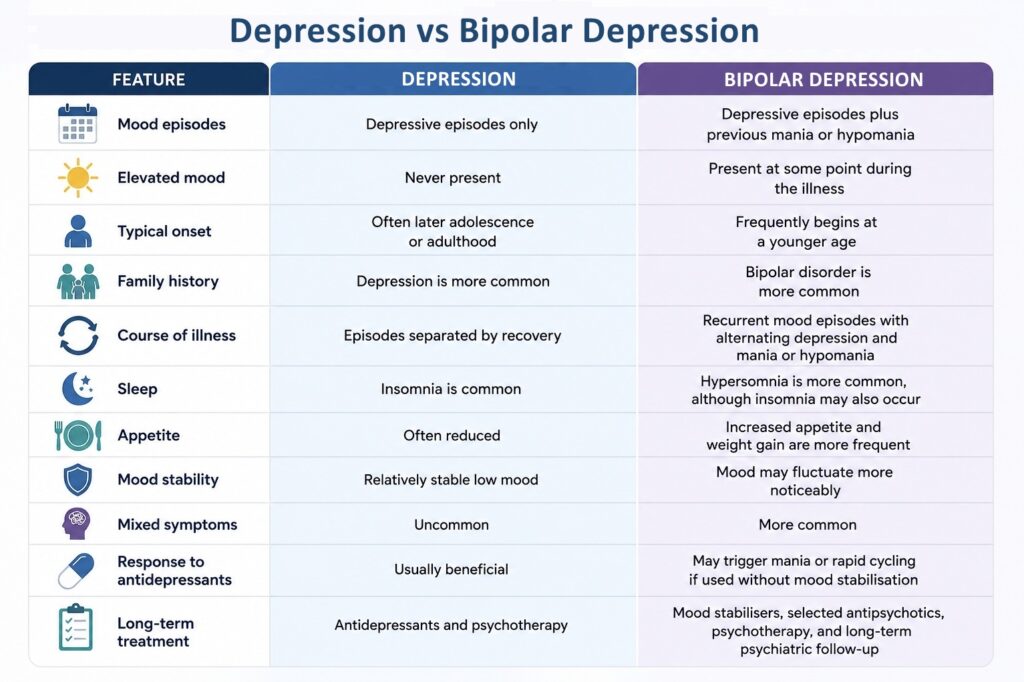
None of these features alone proves that a patient has bipolar disorder. However, when several are present together, the likelihood increases considerably. The diagnosis should always be based on a comprehensive psychiatric assessment rather than on a single symptom.
Clinical Clues That Suggest Bipolar Depression
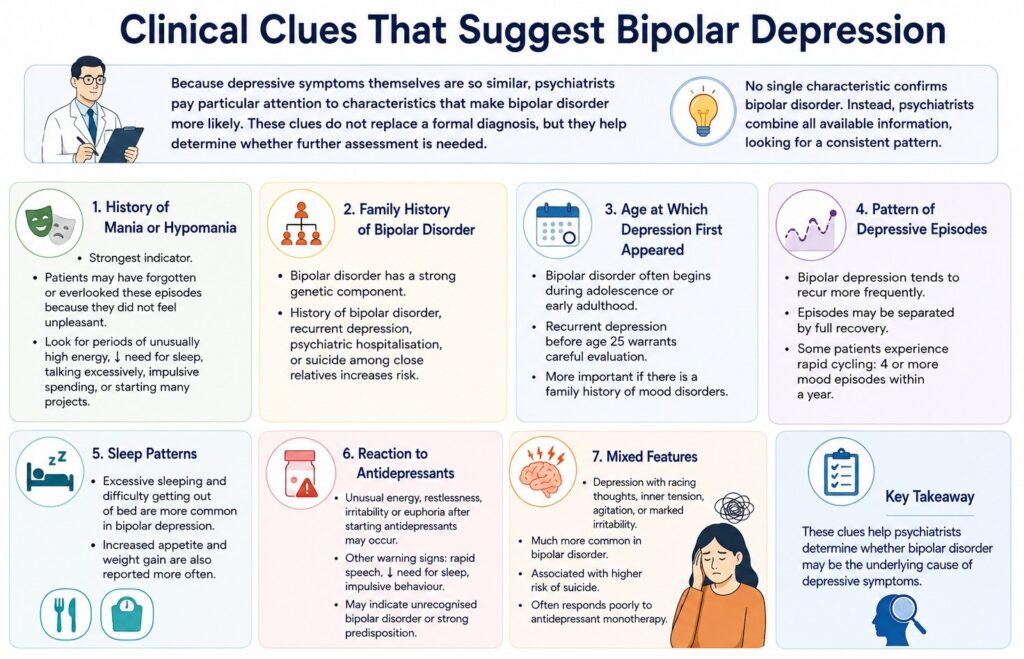
Because depressive symptoms themselves are so similar, psychiatrists pay particular attention to characteristics that make bipolar disorder more likely. These clues do not replace a formal diagnosis, but they help determine whether further assessment is needed.
Patient’s History of Mania or Hypomania
One of the strongest indicators is a history of mania or hypomania. Many patients initially forget or overlook these episodes because they did not experience them as unpleasant. When asked specific questions, they may recall periods of unusually high energy, sleeping only a few hours each night without feeling tired, talking excessively, spending money impulsively, or starting multiple ambitious projects.
No single characteristic confirms bipolar disorder. Instead, psychiatrists combine all available information, looking for a consistent pattern that explains both current symptoms and the patient’s previous emotional experiences.
Family History of Bipolar Disorder
Family history is another important consideration. Bipolar disorder has a strong genetic component. A history of bipolar disorder, recurrent depression, psychiatric hospitalisation, or suicide among close relatives increases the likelihood that depressive symptoms may belong to the bipolar spectrum rather than representing major depressive disorder alone.
Age at Which Depression First Appeared
Another important clue is the age at which depression first appeared. Bipolar disorder often begins during adolescence or early adulthood. A patient who develops recurrent depressive episodes before the age of 25 deserves careful evaluation for possible bipolar disorder, particularly if there is also a family history of mood disorders.
Pattern of Depressive Episodes
The pattern of depressive episodes may also provide valuable information. Bipolar depression tends to recur more frequently than major depressive disorder. Patients often describe repeated episodes separated by periods of complete recovery, while others develop rapid cycling with four or more mood episodes within a year.
Sleep Patterns
Psychiatrists also ask about sleep patterns. During bipolar depression, excessive sleeping and difficulty getting out of bed are often more prominent than in major depressive disorder. Increased appetite and weight gain are also reported more frequently, although these features are not present in every patient.
Reaction to Antidepressants
A particularly important warning sign is an unexpected reaction to antidepressants. Some patients who are actually experiencing bipolar depression become unusually energetic, restless, irritable, or euphoric shortly after starting antidepressant medication. Others begin talking rapidly, sleeping very little, or engaging in impulsive behaviour. Such reactions may indicate previously unrecognised bipolar disorder or strong predestination to develop BD, rather than a simple side effect of medication.
Mixed Features
Another clue is the presence of mixed features. Instead of appearing slowed down and withdrawn, some patients feel deeply depressed while simultaneously experiencing racing thoughts, inner tension, agitation, or marked irritability. Mixed symptoms are considerably more common in bipolar disorder than in major depressive disorder and require particular attention because they are associated with a higher risk of suicide and often respond poorly to antidepressant monotherapy.
Why Bipolar Disorder Is Misdiagnosed
One of the greatest challenges in psychiatry is that patients with bipolar disorder usually seek help because of depression, not because of mania.
During a depressive episode, patients experience emotional suffering, loss of functioning, and hopelessness, which naturally motivate them to consult a psychiatrist. In contrast, hypomanic episodes are often perceived as positive experiences. Individuals may feel unusually confident, productive, sociable, or creative. Because these periods seem beneficial, they are rarely mentioned unless the psychiatrist asks specific questions.
This explains why many people receive a diagnosis of major depressive disorder during their first psychiatric consultation, even though they actually have bipolar disorder. Studies have shown that bipolar disorder, particularly bipolar II disorder, is frequently underdiagnosed, and diagnosis may be delayed for many years.
Family members often recognise manic or hypomanic behaviour more readily than the patient. During elevated mood, insight is commonly reduced. Patients may genuinely believe they are simply functioning exceptionally well, while partners or relatives observe dramatic personality changes, impulsive decisions, excessive spending, or unusually reduced sleep.
For this reason, psychiatrists frequently encourage patients to involve a close family member or partner during the diagnostic assessment. Information from relatives can provide valuable details about previous mood episodes that might otherwise remain unnoticed.
Distinguishing Between Depression and Bipolar
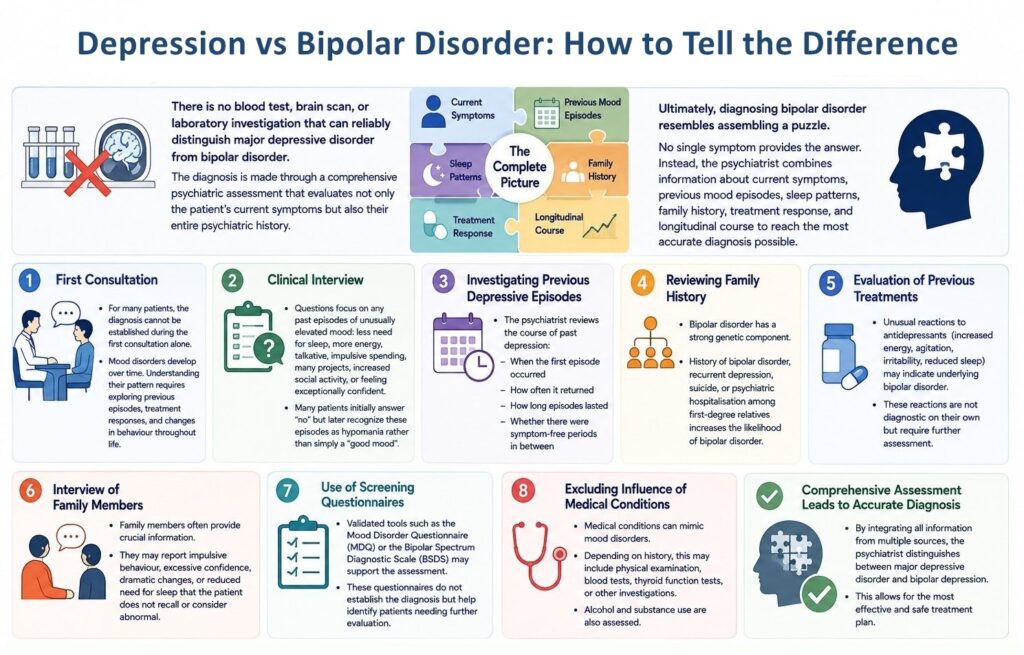
There is no blood test, brain scan, or laboratory investigation that can reliably distinguish major depressive disorder from bipolar disorder. The diagnosis is made through a comprehensive psychiatric assessment that evaluates not only the patient’s current symptoms but also their entire psychiatric history.
Ultimately, diagnosing bipolar disorder resembles assembling a puzzle. No single symptom provides the answer. Instead, the psychiatrist combines information about current symptoms, previous mood episodes, sleep patterns, family history, treatment response, and longitudinal course to reach the most accurate diagnosis possible.
First Consultation
For many patients, the diagnosis cannot be established during the first consultation alone. Mood disorders develop over time, and understanding their pattern often requires careful exploration of previous episodes, treatment responses, and changes in behaviour throughout life. An experienced psychiatrist looks beyond the current depressive symptoms and tries to understand the illness as a whole.
Clinical Interview
One of the first questions concerns previous episodes of unusually elevated mood. Patients are asked whether they have ever gone through periods when they needed far less sleep than usual while still feeling energetic. They may be asked whether they became unusually talkative, started numerous projects at the same time, spent excessive amounts of money, became more socially active than usual, or felt exceptionally confident or powerful.
Many patients initially answer “no” because they remember these periods as productive rather than abnormal. Only after discussing specific examples do they recognise that these episodes may have represented hypomania rather than simply a “good mood”. This is one of the reasons why bipolar disorder can remain undiagnosed for many years.
Receiving the Correct Diagnosis
For many patients, receiving the correct diagnosis is an important turning point. After years of repeated depressive episodes and only partly effective treatments, understanding that depression is part of bipolar disorder allows a more effective treatment plan to be developed. With appropriate medication, psychotherapy, and regular psychiatric care, many people achieve long-term mood stability and lead productive, fulfilling lives.
Investigating Previous Depressive Episodes
The psychiatrist also carefully reviews the course of previous depressive episodes. Questions focus on when the first episode occurred, how often depression has returned, how long individual episodes lasted, and whether there were symptom-free periods in between. Depression beginning during adolescence or early adulthood, particularly when episodes recur frequently, raises suspicion for bipolar disorder.
Reviewing Family History
Family history provides another important clue. Bipolar disorder has a strong genetic component. A history of bipolar disorder, recurrent depression, suicide, or psychiatric hospitalisation among first-degree relatives increases the likelihood that depressive symptoms belong to the bipolar spectrum rather than representing isolated major depressive disorder. Although family history alone cannot establish the diagnosis, it contributes valuable information to the overall assessment.
Evaluation of Previous Treatments
Another essential part of the evaluation is reviewing previous treatments. Patients who have experienced unusually increased energy, agitation, irritability, or reduced sleep shortly after starting an antidepressant may actually have underlying bipolar disorder. Such reactions are not diagnostic on their own, but they warrant further assessment before antidepressant treatment is continued.
Interview of Family Members
Whenever possible, psychiatrists also obtain information from family members. This is particularly valuable because patients often have limited insight during manic or hypomanic episodes. Relatives may describe periods of impulsive behaviour, excessive confidence, dramatic personality changes, or reduced need for sleep that the patient either forgot or never considered abnormal.
Use of Screening Questionnaires
Several validated screening questionnaires, such as the Mood Disorder Questionnaire (MDQ) or the Bipolar Spectrum Diagnostic Scale (BSDS), may support the assessment. These questionnaires do not establish the diagnosis by themselves, but they can help identify patients who require a more detailed psychiatric evaluation.
Excluding Influence of Medical Conditions
Before confirming either diagnosis, the psychiatrist also excludes medical conditions that may produce similar symptoms. Depending on the patient’s history, this may include a physical examination, blood tests, thyroid function tests, or other investigations when clinically indicated. Alcohol and substance use are also assessed because they can both mimic and worsen mood disorders.
Why the Correct Diagnosis Matters
Confusing bipolar depression with major depressive disorder can have important consequences because the treatment approaches are fundamentally different. Although both conditions involve depressive symptoms, they arise from different underlying mood disorders and therefore require different long-term management.
Medication for Depression
For patients with major depressive disorder, antidepressant medication is often an effective part of treatment when combined with psychotherapy. Many individuals experience significant improvement as mood gradually stabilises and they regain their previous level of functioning.
Medication for Bipolar Depression
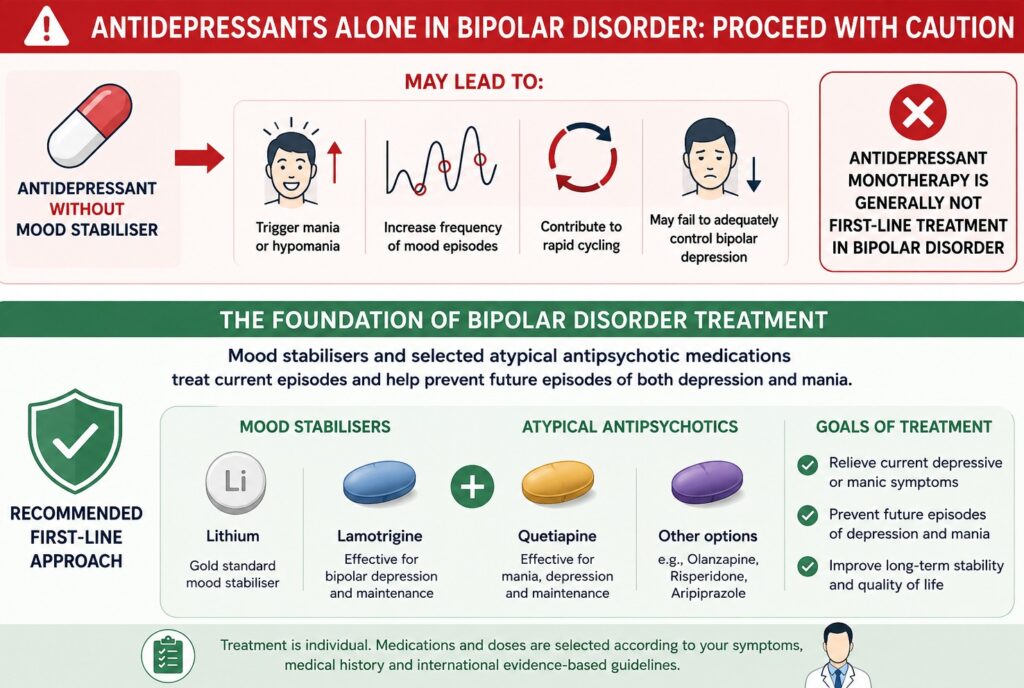
In bipolar disorder, however, antidepressants require much greater caution. When prescribed without a mood stabiliser, they may trigger mania or hypomania in susceptible individuals. In some patients they can also increase the frequency of mood episodes, contribute to rapid cycling, or fail to adequately control bipolar depression. This is why antidepressant monotherapy is generally not considered the first-line treatment for bipolar disorder.
Instead, the foundation of bipolar disorder treatment consists of mood stabilisers and selected atypical antipsychotic medications. These medications aim not only to treat the current depressive episode but also to prevent future episodes of both depression and mania. Depending on the individual patient, treatment may include medications such as lithium, lamotrigine, quetiapine, or other evidence-based therapies selected according to international treatment guidelines.
Differences in Use of Psychotherapy
Psychotherapy also plays an important role in both disorders, although its goals differ slightly. In major depressive disorder, therapy often focuses on modifying negative thought patterns, improving coping strategies, and reducing the risk of relapse. In bipolar disorder, psychotherapy additionally helps patients recognise early warning signs of mania or depression, maintain regular sleep routines, improve adherence to medication, and develop strategies to prevent future mood episodes.
Long-Term Psychiatric Monitoring
Long-term psychiatric follow-up is particularly important for bipolar disorder because it is usually a lifelong condition. Even after symptoms have resolved completely, the underlying vulnerability remains. Regular follow-up appointments allow treatment to be adjusted, side effects to be monitored, and early signs of relapse to be recognised before a full mood episode develops.
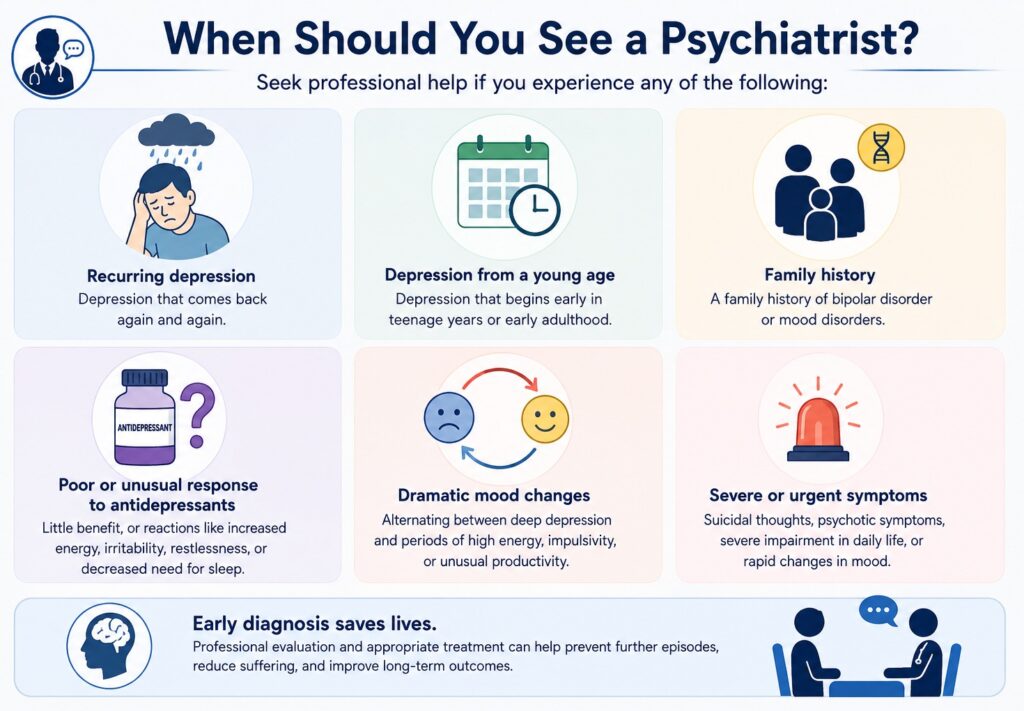
When Should You See a Psychiatrist?
Many people believe that depression is always the same illness. As a result, they may not realise that recurring depressive episodes, especially when accompanied by periods of unusually high energy or reduced need for sleep, could indicate bipolar disorder rather than major depressive disorder.
A psychiatric assessment is particularly important if depression begins at a young age, returns repeatedly despite treatment, or there is a family history of bipolar disorder. It is also advisable when antidepressants have provided little benefit or have caused unusual reactions such as excessive energy, irritability, restlessness, or decreased need for sleep.
Patients who notice dramatic changes in mood, alternating between prolonged periods of depression and episodes of feeling unusually energetic or impulsive, should also seek specialist evaluation. These mood changes are not always recognised as symptoms of bipolar disorder, particularly when elevated moods feel pleasant or productive
Anyone experiencing suicidal thoughts, psychotic symptoms, severe impairment in daily functioning, or rapid changes in mood should seek urgent psychiatric care. Early diagnosis allows treatment to begin before further episodes develop and reduces the risk of long-term complications.
Depression vs Bipolar Depression. Key Takeaways
Although depression and bipolar depression share many symptoms, they are different illnesses that require different treatment approaches. During a depressive episode, they can appear almost identical, making diagnosis challenging even for experienced clinicians. The critical distinction is that people with bipolar disorder have experienced episodes of mania or hypomania at some point during their lives, whereas those with major depressive disorder have not.
Because many patients with bipolar disorder first seek help during depression, hypomanic episodes are often overlooked. A detailed psychiatric assessment that explores previous mood changes, sleep patterns, family history, and earlier treatment responses is therefore essential before making the diagnosis.
The correct diagnosis has a direct impact on treatment. Major depressive disorder is commonly treated with antidepressants and psychotherapy, while bipolar disorder usually requires mood stabilisers, selected antipsychotic medications, long-term psychiatric follow-up, and psychological support. Identifying bipolar disorder early helps prevent inappropriate treatment, reduces the risk of relapse, and significantly improves long-term outcomes.
With modern evidence-based treatment, both major depressive disorder and bipolar disorder are highly treatable. Most patients can achieve substantial symptom improvement, return to work, maintain healthy relationships, and enjoy a good quality of life.
Concerned About Your Diagnosis?
If you have experienced recurrent depression, episodes of unusually high energy, or antidepressants have not worked as expected, a comprehensive psychiatric assessment may help clarify the diagnosis. Correctly distinguishing depression from bipolar disorder is the first step towards safe and effective treatment.
At CHMC Dubai, Dr. Gregor Kowal, German Board-Certified Consultant Psychiatrist and Psychotherapist, performs detailed psychiatric assessments that evaluate not only current symptoms but also your previous mood episodes, sleep patterns, family history, treatment response, and overall course of illness. This careful approach helps ensure an accurate diagnosis and an individualised treatment plan based on current international guidelines.
Contact CHMC Dubai to arrange a comprehensive psychiatric consultation
FAQs About Depression vs Bipolar Depression
Can bipolar depression feel exactly like monopolar depression?
Yes. During a depressive episode, bipolar disorder can produce almost the same symptoms as major depressive disorder, including persistent sadness, fatigue, loss of interest, poor concentration, sleep disturbances, and feelings of hopelessness. The difference becomes apparent only when a history of mania or hypomania is identified.
What is the main difference between depression and bipolar depression?
The defining difference is the presence of manic or hypomanic episodes. People with depression experience episodes only, whereas people with bipolar disorder alternate between depression and periods of elevated mood, increased energy, or irritability.
Why is bipolar disorder often mistaken for depression?
Most patients seek medical help during depressive episodes because these cause the greatest distress. Hypomanic episodes may feel enjoyable or productive and are therefore often forgotten or not considered symptoms of an illness. Without a detailed psychiatric history, bipolar disorder may be misdiagnosed as depression.
Can antidepressants make bipolar disorder worse?
They can. In some patients, antidepressants prescribed without a mood stabiliser may trigger mania, hypomania, or more frequent mood episodes. This is one reason why psychiatrists always assess for bipolar disorder before starting antidepressant treatment.
Is bipolar depression more severe than major depression?
Both conditions can cause severe disability. However, bipolar disorder is usually a lifelong illness with recurrent mood episodes, making long-term treatment and monitoring particularly important. The depressive phase of bipolar disorder often accounts for most of the illness burden.
Can bipolar disorder develop later in life?
Although bipolar disorder most commonly begins during adolescence or early adulthood, it can occasionally develop later. Every new episode of depression should be assessed individually, particularly if symptoms or treatment responses are unusual.
How is bipolar disorder diagnosed?
Diagnosis is based on a comprehensive psychiatric assessment. The psychiatrist reviews current symptoms, previous mood episodes, family history, sleeping patterns, earlier treatments, and, when appropriate, information from close relatives. There is currently no laboratory test that confirms bipolar disorder.
Can psychotherapy help both conditions?
Yes. Psychotherapy is an important part of treatment for both depression and bipolar disorder. It helps patients understand their illness, develop healthy coping strategies, recognise early warning signs of relapse, and improve long-term recovery.
Does everyone with bipolar disorder experience severe mania?
No. Patients with Bipolar II disorder experience hypomania, which is milder than mania and may not cause major impairment. Because hypomania often feels positive, many patients do not recognise it as a symptom until they undergo a detailed psychiatric assessment.
Can people with bipolar disorder live normal lives?
Absolutely. With an accurate diagnosis, appropriate medication, psychotherapy, and regular psychiatric follow-up, many people with bipolar disorder remain emotionally stable for years, maintain successful careers, enjoy healthy relationships, and lead active, fulfilling lives.
Can depression become bipolar disorder?
Depression does not “turn into” bipolar disorder. In many patients, the first episode of bipolar disorder is depression. The diagnosis changes only when mania or hypomania later becomes apparent.
Read More About Bipolar Disorder
- Treatment for Bipolar Disorder
- Symptoms of Bipolar Disorder
- Diagnosis of Bipolar Disorder
- Depression vs Bipolar Depression
- Self-Test for Bipolar Disorder
- Psychiatrist for Bipolar Disorder
- When is Hospital Admission Necessery for BD
- Bipolar Disorder in Pregnancy
- Medication for Bipolar Disorder
- Psychotherapy for Bipolar Disorder
- Causes of Bipolar Disorder
- Bipolar I vs Bipolar II Disorder
- What is Rapid Cycling?
- Bipolar Disorder and Sleep
- Living with Bipolar Disorder
- Relationships, Family, Everyday Life with BD
- Long Term Recovery & Quality of Life with BD
- Family Support in Bipolar Disorder
- What is Mania and Hypomania?
- Cyclothymic Disorder
- History of Bipolar Disorder
- CANMAT Guidelines for Bipolar Disorder
- Mood Stabilizers for Bipolar Disorder
- Lithium for Bipolar Disorder
Medically reviewed by
Dr. Gregor Kowal
German Board-Certified Consultant Psychiatrist and Psychotherapist
Medical Director, CHMC Dubai

DR. GREGOR KOWAL
Dr. Gregor Kowal is a German-certified consultant in Psychiatry and Psychotherapy. Since 2010, Dr. Kowal has been the Medical Director of CHMC, a psychiatric clinic located in Dubai. Dr. Kowal graduated from the prestigious University of Heidelberg. After completing his specialty training, he held leadership and teaching positions, serving as Head of Department and later as Medical Director at renowned psychiatric hospitals across Germany. In addition to his expertise in psychiatry, Dr. Kowal is trained as a psychotherapist with a foundation in psychoanalytical psychotherapy.