

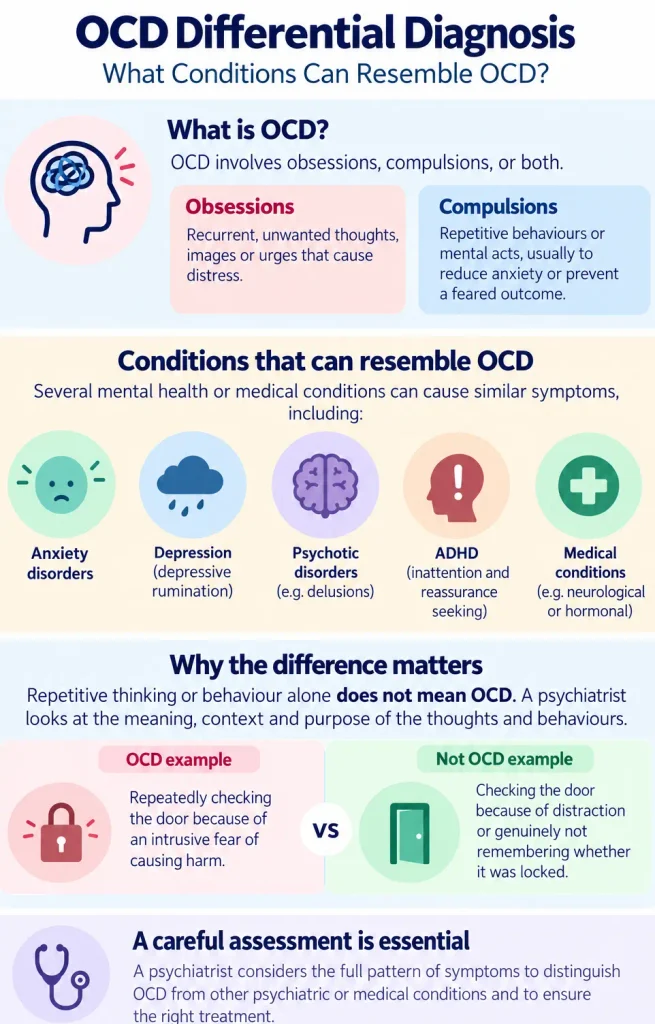
An accurate OCD differential diagnosis is important because OCD can be difficult to distinguish from other mental health conditions. For example, repeated worrying may occur in both OCD and generalised anxiety disorder.
Repetitive negative thoughts are also common in depression, while repeated checking can occur in OCD but may also be associated with anxiety or difficulties related to ADHD.
The key difference is often not the symptom itself, but why it occurs, how the person experiences it, and how they respond to it. The psychiatrist examines the nature of intrusive thoughts, compulsions, avoidance, reassurance seeking, and emotional distress, as well as the person’s psychiatric and medical history.
Before confirming OCD, our psychiatrist considers other conditions that can resemble or overlap with OCD. Such methodical assessment helps establish the correct diagnosis and provides the foundation for appropriate treatment.
For OCD Assessment Contact our Consultant Psychiatrist:
OCD Differential Diagnosis: What Conditions Can Resemble OCD?
OCD differential diagnosis is the process of distinguishing obsessive-compulsive disorder from other psychiatric or medical conditions that can cause similar symptoms. OCD is characterised by obsessions, compulsions, or both. Obsessions are recurrent, unwanted thoughts, images or urges that cause distress. Compulsions are repetitive behaviours or mental acts that a person feels driven to perform, usually to reduce anxiety or prevent a feared outcome.
Repetitive thinking alone, however, does not mean that someone has OCD. A psychiatrist needs to determine whether recurring thoughts are OCD obsessions, ordinary worries, depressive rumination, fixed beliefs or symptoms of another mental health condition. The same applies to repetitive behaviour. Repeatedly checking whether a door is locked because of an intrusive fear of causing harm is different from checking because someone is distracted and genuinely cannot remember whether they locked it.
How a Psychiatrist Makes the Differential Diagnosis of OCD
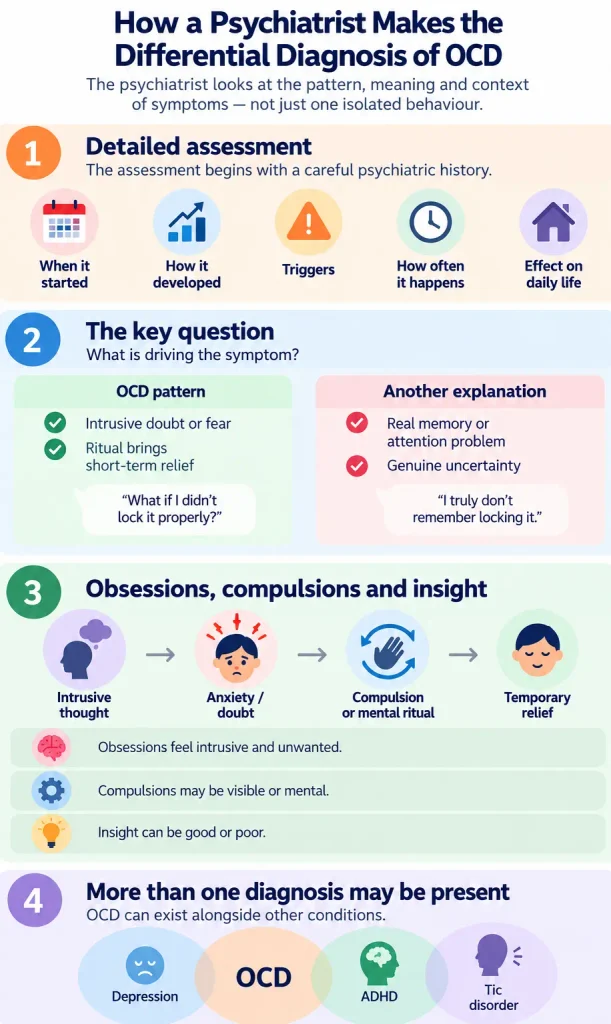
The differential diagnosis begins with a detailed psychiatric history. The psychiatrist examines when the symptoms started, how they developed, what triggers them, how frequently they occur and how they affect everyday functioning. Particular attention is given to repetitive thoughts and behaviours. The psychiatrist explores whether thoughts are intrusive and unwanted or relate to realistic everyday concerns. It is also important to establish whether they lead to checking, washing, avoidance, reassurance seeking, counting, repeating, praying or other visible or mental rituals, and whether performing these actions provides temporary relief.
The assessment extends beyond typical OCD symptoms. Mood, anxiety, attention, behaviour, sleep, substance use, medical history and other psychiatric symptoms contribute to the overall clinical picture. OCD differential diagnosis is based on the pattern, function and context of symptoms rather than on one isolated feature.
The Key Question: What Is Driving the Symptom?
One of the most useful principles in the differential diagnosis of OCD is understanding what drives a particular thought or behaviour. Consider repeated checking. A person with OCD may clearly remember locking the door but still experience persistent doubt: “What if I didn’t lock it properly?” Checking temporarily reduces the anxiety, but the doubt soon returns and creates another urge to check.
Someone with attention or memory difficulties may perform the same outward behaviour for a different reason. They may genuinely not remember whether they locked the door. The behaviour looks similar, but the psychological mechanism behind it is different.
The same principle applies to repetitive thoughts. Worrying about losing a job after a company announces redundancies is different from repeatedly experiencing an unwanted fear of accidentally harming somebody and then performing mental rituals to neutralise that fear. Understanding what drives a thought or behaviour is often more informative than simply recording its presence.
Obsessions, Compulsions and Insight
Establishing whether true obsessions and compulsions are present is central to an OCD assessment. Obsessions are generally experienced as intrusive and unwanted and often produce anxiety, guilt, disgust, doubt or a sense of threat. Compulsions are behaviours or mental acts performed in response to these experiences or according to rigid internal rules.
The relationship between the obsession and the response can provide important diagnostic information. An intrusive doubt may lead to checking; contamination fears to washing; or disturbing thoughts to reassurance seeking, avoidance, reviewing memories or silent mental rituals. These responses often reduce distress temporarily without resolving the underlying doubt.
The psychiatrist also assesses insight. Many people with OCD recognise that their fears or rituals are excessive or unreasonable, although they still feel unable to resist them. Others have poorer insight and may be strongly convinced that their feared outcome is realistic. Because insight can vary considerably, poor insight does not automatically exclude OCD.
Can More Than One Diagnosis Be Present?
Differential diagnosis does not always result in choosing one disorder instead of another. OCD frequently occurs alongside other psychiatric conditions, and symptoms from different disorders can interact.
A patient may have OCD and depression, OCD and ADHD, or OCD together with a tic disorder. Anxiety symptoms may also accompany OCD without necessarily representing a separate anxiety disorder. The psychiatrist therefore needs to determine both whether OCD is present and whether another condition is present alongside it.
Why the Correct Diagnosis Matters
An accurate diagnosis is essential because psychiatric conditions that share similar symptoms may require different treatment approaches. Repetitive thinking, checking, avoidance and anxiety can occur in OCD, depression, ADHD and other disorders, but the psychological mechanisms behind these symptoms may differ considerably.
OCD-specific treatment focuses on obsessions, compulsions and avoidance behaviours, while other conditions may require different therapeutic approaches. A comprehensive psychiatric assessment also helps identify co-existing disorders that could influence treatment and recovery.
OCD vs Anxiety Disorders
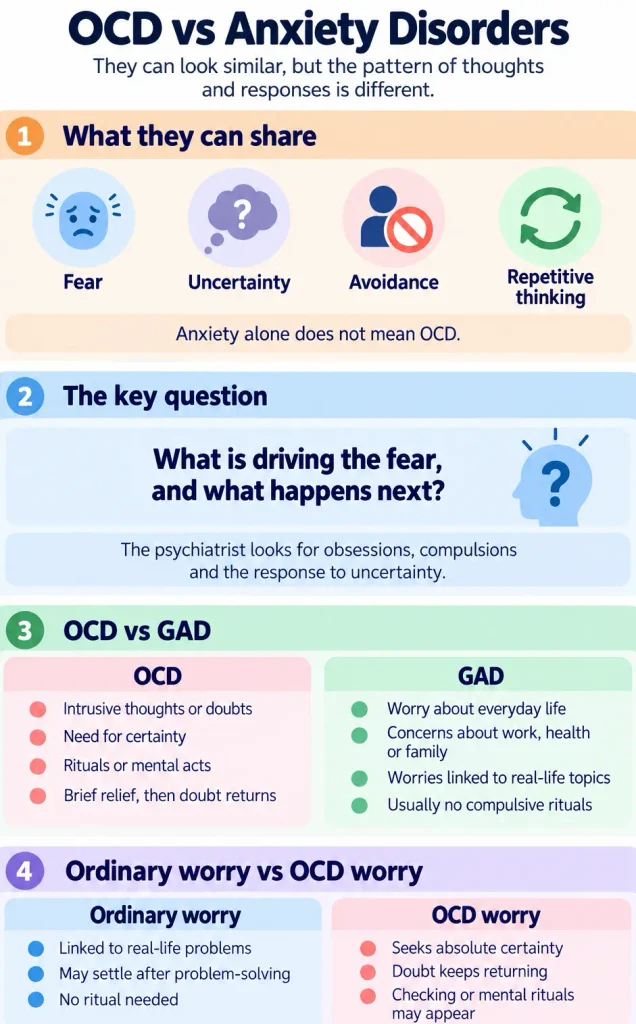
OCD and anxiety disorders can both involve fear, uncertainty, avoidance and repetitive thinking. Anxiety is also a prominent feature of OCD because obsessions frequently generate considerable distress. However, having anxiety does not by itself mean that a person has an anxiety disorder rather than OCD.
The psychiatrist therefore examines what the person is afraid of, how the thoughts develop and what happens in response to them. The presence of obsessions and compulsions can be particularly important in distinguishing OCD from other forms of anxiety.
OCD vs Generalised Anxiety Disorder (GAD)
OCD and generalised anxiety disorder (GAD) can both involve persistent anxiety, uncertainty and repetitive thinking. People with either condition may describe their symptoms as excessive worrying, making the distinction difficult without a detailed psychiatric assessment.
In GAD, worries generally concern multiple areas of everyday life, such as health, work, finances, relationships and future events. These concerns may be excessive, difficult to control and accompanied by persistent tension or attempts to obtain reassurance.
In OCD, recurring thoughts or doubts are typically experienced as intrusive and may trigger compulsive behaviours or mental rituals intended to reduce distress or prevent a feared consequence. The person may repeatedly check, wash, seek reassurance or mentally review events in an attempt to achieve certainty.
The distinction depends on the overall pattern and function of the symptoms, rather than simply whether the thoughts concern realistic situations. OCD and GAD can also occur together.
OCD Worry vs Ordinary Worry
Worry is a normal response to uncertainty and potential problems. A person facing financial difficulties, an upcoming examination or a relative’s illness may think repeatedly about the situation without having OCD.
In OCD, the concern is more likely to become persistent despite attempts to resolve it. The person may seek absolute certainty that cannot realistically be achieved and develop repetitive behaviours or mental rituals to reduce the resulting distress. The distinction therefore depends not simply on how often someone worries, but on the nature of the worry, the degree of distress, the response to uncertainty and whether obsessions and compulsions have developed around it.
OCD vs Depression
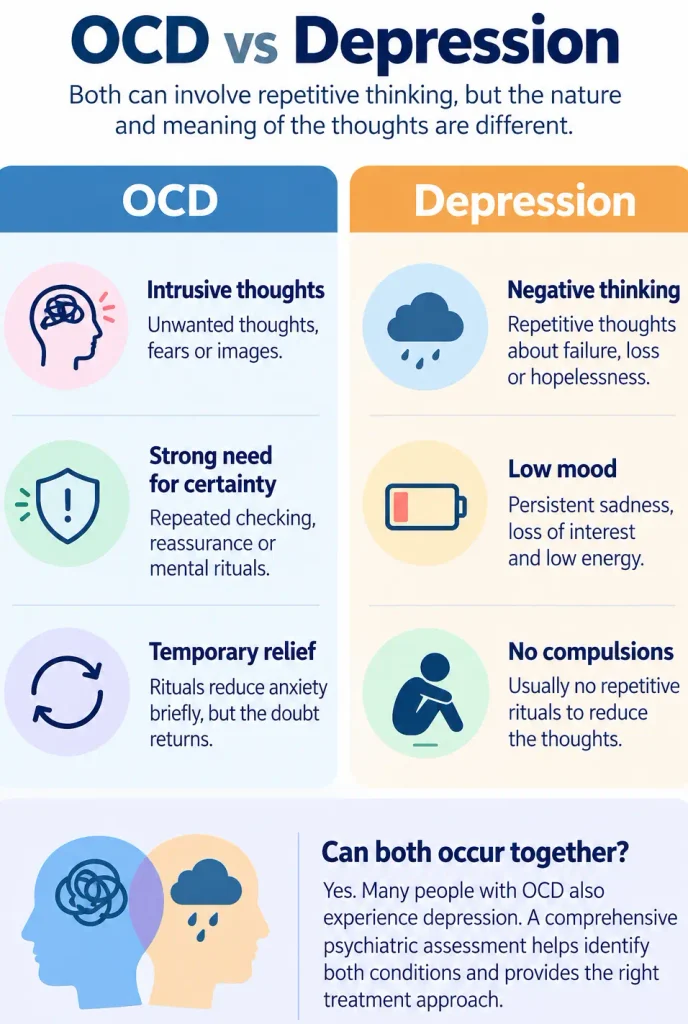
OCD and depression can both involve repetitive thinking, withdrawal and impaired everyday functioning. The nature of the repetitive thoughts, however, is often different.
OCD Obsessions vs Depressive Rumination
People with depression may repeatedly think about failures, losses, regrets, hopelessness or perceived personal shortcomings. This pattern is commonly described as depressive rumination and is usually closely related to the person’s depressed mood and negative view of themselves or their circumstances.
OCD obsessions tend to be intrusive and unwanted and may generate an urge to neutralise the thought or prevent a feared consequence. A person may repeatedly wonder whether they caused an accident, harmed someone, committed a moral offence or made an irreversible mistake. They may then review memories, seek reassurance, check or perform another ritual in an attempt to become certain.
The distinction can become difficult when symptoms are severe, which is why the psychiatrist considers the person’s mood, the content and function of the thoughts and any behaviours performed in response.
Can OCD and Depression Occur Together?
OCD and depression can occur in the same patient. Severe OCD itself may also contribute to depressive symptoms. Spending hours struggling with intrusive thoughts and rituals can interfere with work, relationships and social activities and may lead to exhaustion, withdrawal, loss of confidence and hopelessness.
The assessment therefore needs to establish whether repetitive negative thinking belongs primarily to OCD, depression or both conditions. Recognising co-existing depression can be important when determining the overall severity of the patient’s condition and planning treatment.
OCD vs ADHD
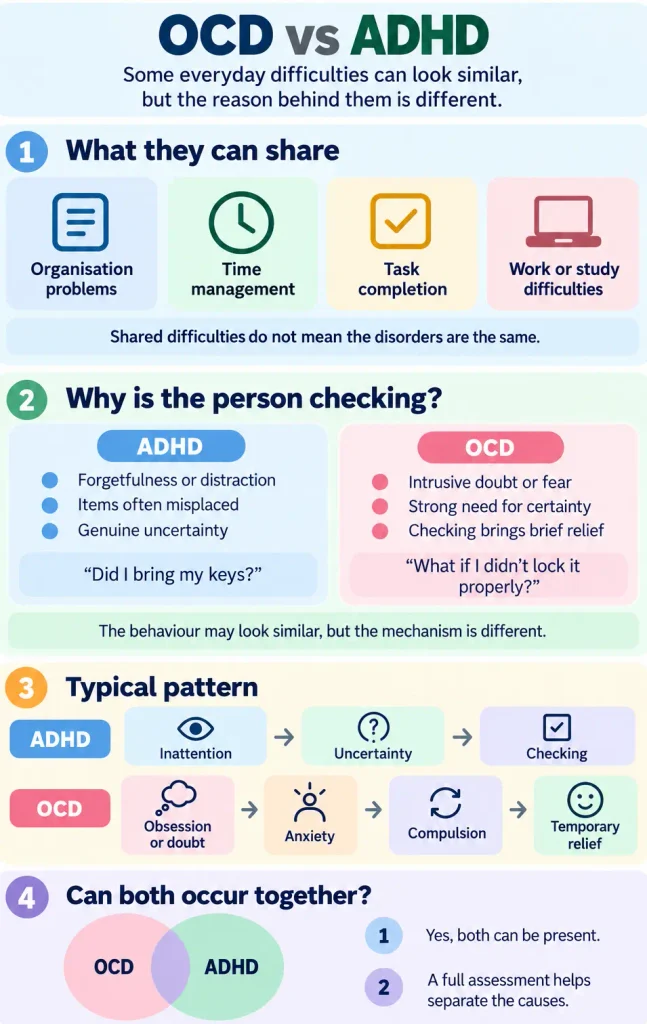
OCD and ADHD are different disorders, but some everyday difficulties can appear superficially similar. Both may affect organisation, time management, task completion and performance at work or during education.
Repeated Checking in OCD and ADHD
Repeated checking provides a useful example of how similar behaviour can have different causes. Someone with ADHD may repeatedly check for their wallet, keys, documents or phone because they frequently forget or misplace things. They may genuinely be uncertain whether they completed a task because their attention was elsewhere.
In OCD, checking is more likely to be driven by intrusive doubt or fear. The person may remember locking the door but still return several times because they cannot achieve sufficient certainty that it is really locked. The psychiatrist therefore considers whether checking arises from attention and memory difficulties or from an obsession followed by a compulsion.
Can OCD and ADHD Occur Together?
ADHD is characterised by broader difficulties involving attention, impulsivity and executive functioning, whereas OCD is characterised by obsessions and compulsions. Nevertheless, the two disorders can coexist.
When both are present, difficulties with concentration or completing tasks may have several causes. A person may become distracted because of ADHD, while at other times they may be unable to finish a task because OCD requires them to check or repeat it until it feels correct. A comprehensive assessment helps separate these mechanisms and determine whether one or both disorders are present.
OCD or Obsessive-Compulsive Personality Disorder (OCPD)?
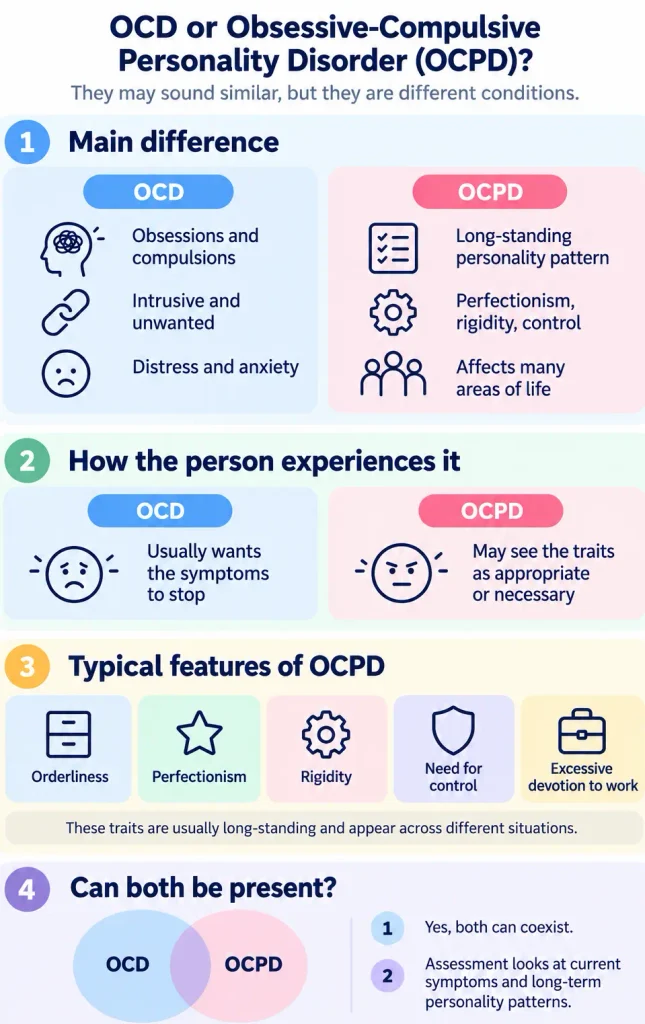
OCD and obsessive-compulsive personality disorder (OCPD) are frequently confused because of their similar names, but they are distinct conditions. OCD is characterised by obsessions and compulsions, whereas OCPD involves a broader and more longstanding pattern of personality traits.
OCD or OCPD?
OCPD is associated with orderliness, perfectionism, rigidity, a strong need for control and sometimes excessive devotion to work. These characteristics generally become apparent by early adulthood and affect different areas of the person’s life.
The person’s relationship to the symptoms can also differ. Someone with OCD may desperately want to stop checking a door repeatedly because the ritual is exhausting and disruptive. A person with pronounced obsessive-compulsive personality traits may regard their high standards, rules or particular way of doing things as appropriate or necessary.
OCD and OCPD can nevertheless coexist, so the assessment considers both current obsessive-compulsive symptoms and longstanding personality patterns.
OCD or Normal Perfectionism?
Not every preference for cleanliness, organisation, or accuracy represents a psychiatric disorder. Many people prefer an organised home, carefully check their work, or become irritated when things are untidy. This alone does not mean they have OCD. With OCD, the behaviour is usually connected with anxiety, intrusive thoughts, distress, or a feeling that something must be done in a particular way. The person may recognise that the behaviour is excessive but still feel unable to stop it.
Functional impairment is therefore important. OCD obsessions or compulsions are time-consuming or cause clinically significant distress or impairment. A perfectionist who enjoys keeping a desk perfectly organised is very different from someone who cannot leave the office because objects must repeatedly be repositioned until everything feels exactly right.
OCD vs Psychotic Disorders
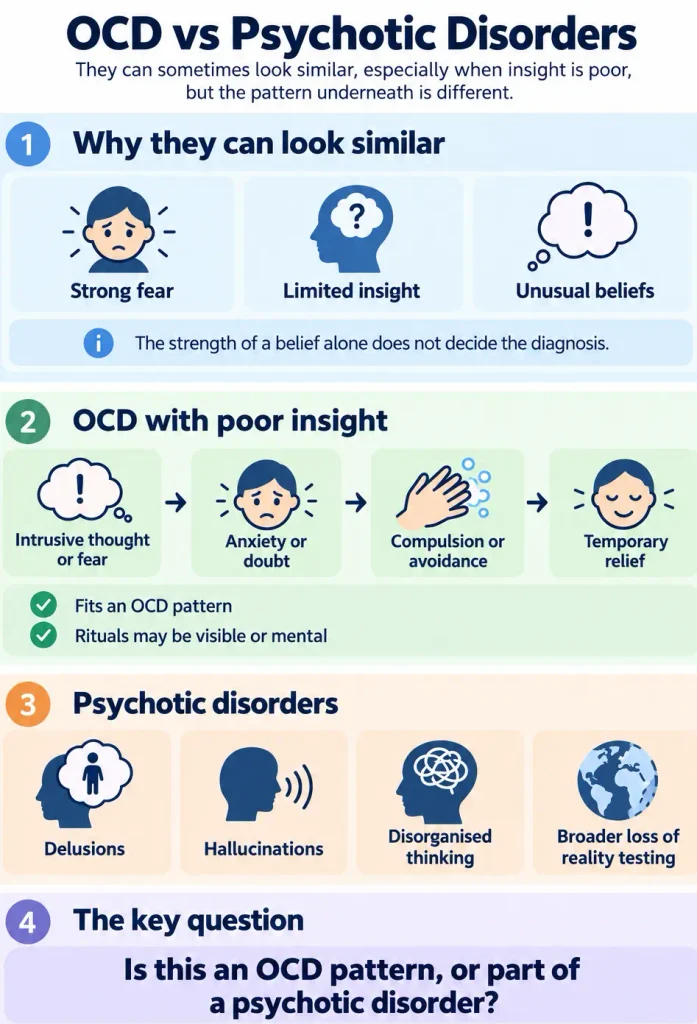
Distinguishing OCD from a psychotic disorder can be particularly important when a patient has limited insight into their symptoms. Many people with OCD recognise that their fears are exaggerated or unrealistic. They may understand intellectually that a feared event is unlikely while still experiencing overwhelming doubt and feeling compelled to perform a ritual.
Insight, however, varies. Some patients with OCD become strongly convinced that their fears are realistic. Severe contamination OCD, for example, may involve a powerful belief that an ordinary object is dangerous.
OCD With Poor Insight vs Delusional Beliefs
When insight becomes poor, OCD may superficially resemble a delusional disorder or another psychotic condition. The psychiatrist therefore considers more than the strength of one belief.
Psychotic disorders may involve delusions, hallucinations, disorganised thinking or behaviour and broader disturbances of reality testing. In OCD, an apparently fixed belief may still occur within a recognisable pattern of obsessions, anxiety, avoidance and compulsive responses.
The development of the symptoms, degree of insight, associated psychiatric features and relationship between the thought and subsequent behaviour all help distinguish severe OCD with poor insight from a primary psychotic disorder.
OCD vs Normal Intrusive Thoughts
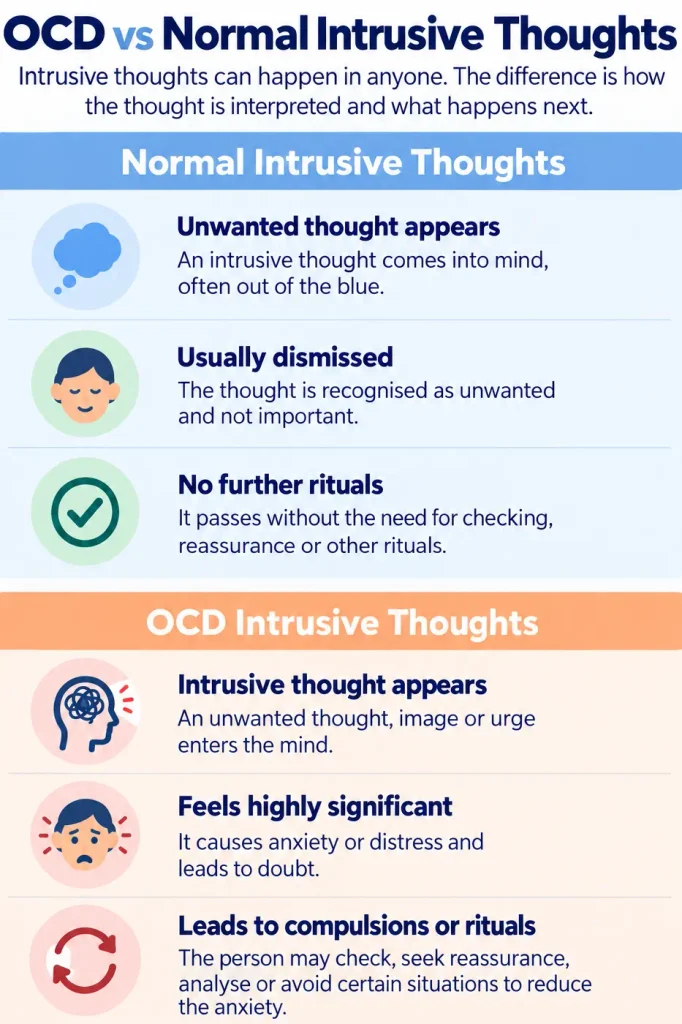
Intrusive thoughts are not unique to OCD. People without a psychiatric disorder can occasionally experience strange, aggressive, sexual, disturbing or otherwise unwanted thoughts. Having such a thought does not mean that someone has OCD and does not imply that they want to act on it.
In OCD, an intrusive thought may become highly significant to the person and difficult to dismiss. They may repeatedly ask themselves why they had the thought, what it means about them or whether having the thought means they could actually act on it.
Attempts to obtain absolute certainty can then develop into compulsions. The person may analyse the thought repeatedly, review memories, avoid particular situations, seek reassurance, pray or perform other mental rituals to neutralise it.
The psychiatrist therefore considers not only what the intrusive thought is about, but how the person interprets it and responds to it.
OCD vs Tic Disorders
OCD and tic disorders can occur together, and distinguishing repetitive behaviours may sometimes require careful assessment. Tics are sudden, repetitive movements or sounds, whereas compulsions are generally performed in response to an obsession or according to an internal rule that the person feels compelled to follow.
The distinction may become less obvious when repetitive movements in OCD are driven by a need for something to feel “just right.” The person may repeat an action until it produces a particular sensation of completeness rather than to prevent a clearly defined feared event.
Because tic disorders can coexist with OCD, particularly when obsessive-compulsive symptoms begin early in life, the psychiatrist considers whether repetitive movements or sounds represent tics, compulsions or both.
Other Conditions in the Differential Diagnosis of OCD
Several other psychiatric conditions can involve repetitive thoughts, rigid routines or repetitive behaviours. Their presence does not automatically indicate OCD. The content, purpose and context of the symptoms need to be considered as part of the overall clinical picture.
OCD and Eating Disorders
Eating disorders can involve repetitive thoughts and rigid behaviours that superficially resemble OCD. A person may repeatedly think about food, weight or eating and follow strict routines around meals.
Such thoughts should not automatically be classified as OCD obsessions simply because they are repetitive. The psychiatrist considers whether the thoughts and behaviours are primarily related to the eating disorder or whether separate obsessions and compulsions are also present.
OCD and Hoarding Disorder
Difficulty discarding possessions has historically been associated with obsessive-compulsive symptoms, but current diagnostic classifications distinguish hoarding disorder from OCD.
Hoarding disorder involves persistent difficulty discarding possessions regardless of their actual value, leading to the accumulation of belongings. During differential diagnosis, the psychiatrist examines why possessions are being kept and whether the behaviour represents hoarding disorder, occurs as part of OCD or is related to another condition.
Medical Causes of OCD-Like Symptoms
OCD differential diagnosis does not stop with psychiatric disorders. Medical and neurological conditions can sometimes produce behavioural or psychiatric symptoms that resemble OCD, particularly when symptoms appear suddenly or occur together with other unusual clinical features.
A medical history is therefore part of a comprehensive OCD assessment. The psychiatrist considers the onset and course of the symptoms, physical health, neurological symptoms and other relevant clinical information.
Medications and Substances
Current and previous medications, alcohol and substance use may also be relevant to the assessment. Changes in behaviour or mental state can sometimes be associated with medication effects, substance use or withdrawal. The psychiatrist considers whether the timing of the symptoms is related to a medication or substance and whether this provides a better explanation than a primary diagnosis of OCD.
When Are Medical or Neurological Tests Needed?
There is no blood test, EEG or brain scan that independently confirms OCD. For most patients with a typical presentation, the diagnosis is established through psychiatric assessment rather than neurological testing. Additional investigations may be appropriate when the history or examination raises concern about a possible medical or neurological explanation.
Depending on the clinical situation, laboratory investigations, an EEG or brain imaging may then be considered. Such investigations are performed to evaluate possible alternative causes rather than to prove the presence of OCD.
Why an OCD Questionnaire Is Not Enough for Differential Diagnosis
OCD questionnaires can be useful screening and assessment tools. They may help identify obsessive-compulsive symptoms and estimate their severity, but they cannot independently establish an OCD differential diagnosis.
A questionnaire may identify repeated checking without explaining whether it is driven by an OCD obsession, general anxiety, attention or memory difficulties, another psychiatric disorder or a medical problem. Similarly, it may identify intrusive thoughts without establishing whether they represent OCD obsessions, depressive rumination, excessive worry or another form of repetitive thinking.
Questionnaires provide information that needs to be interpreted within the patient’s broader clinical history. They can support a comprehensive psychiatric assessment but should not replace it.
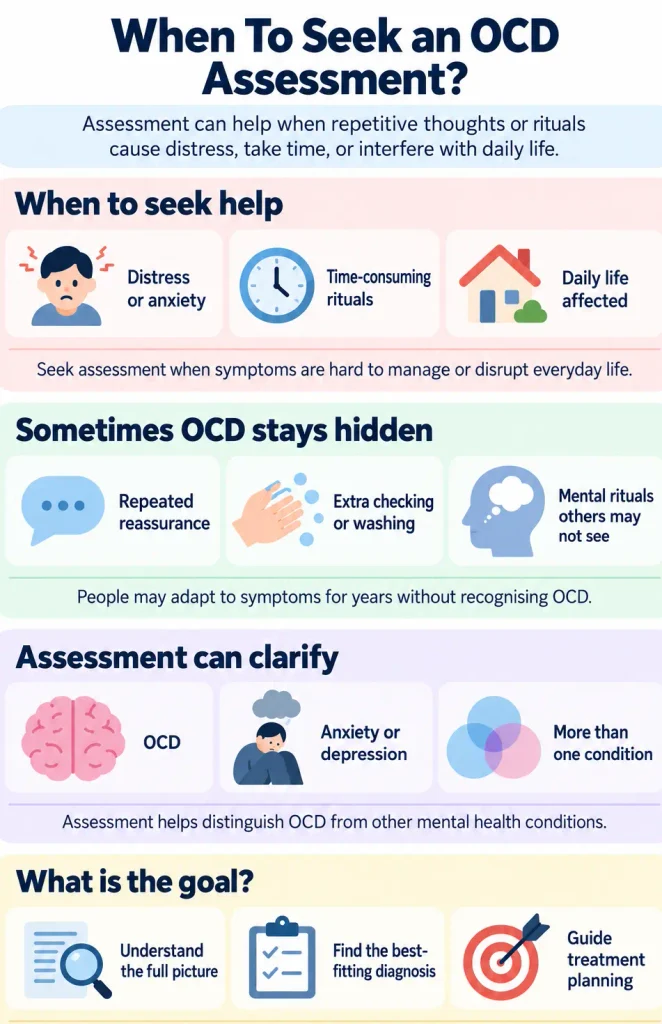
When Should You Seek an OCD Assessment?
Professional assessment may be useful when repetitive thoughts, doubts, rituals, checking, washing, avoidance or reassurance seeking cause significant distress, consume substantial amounts of time or interfere with everyday life. Assessment can be particularly helpful when it is unclear whether the symptoms represent OCD or another mental health condition.
Some patients have lived with OCD symptoms for years and gradually adapted their routines around them. They may avoid certain places, allow additional time for checking or washing, repeatedly seek reassurance from family members, or develop elaborate mental rituals that are not visible to others. Because these behaviours become part of everyday life, the underlying OCD may remain unrecognised.
Other patients may previously have been diagnosed with anxiety or depression but continue to experience intrusive thoughts, compulsions or avoidance that have not been fully explained. An assessment can clarify whether these symptoms belong to OCD, another condition or a combination of disorders.
Seeking an assessment does not mean that every repetitive thought or behaviour will be classified as OCD. The purpose is to understand the overall clinical picture and establish the diagnosis that best explains the person’s symptoms and difficulties.
Final Thoughts: Why OCD Differential Diagnosis Matters
OCD differential diagnosis requires more than recognising intrusive thoughts or repetitive behaviours. A psychiatrist must understand the nature of the symptoms, the reasons behind them and whether another psychiatric or medical condition provides a better explanation.
Because OCD can coexist with anxiety disorders, depression, ADHD and other conditions, a comprehensive assessment is important for identifying all relevant diagnoses and selecting the appropriate treatment.
OCD Differential Diagnosis at CHMC Dubai
At CHMC German Clinic for Psychiatry and Psychology in Dubai, differential diagnosis forms part of a comprehensive psychiatric assessment. The psychiatrist evaluates intrusive thoughts, compulsive behaviours, mental rituals and avoidance patterns, paying particular attention to their underlying causes and their impact on everyday life.
The assessment considers the patient’s psychiatric and medical history, previous treatment and possible co-existing conditions. The aim is to establish an accurate diagnosis and provide the foundation for individualised treatment recommendations.
If persistent intrusive thoughts, repetitive behaviours or unexplained anxiety are affecting your everyday life, you can arrange an OCD assessment with our consultant psychiatrist at CHMC Dubai.
Book an OCD Assessment at CHMC Dubai
Frequently Asked Questions About OCD Differential Diagnosis
How can you tell the difference between OCD and anxiety?
Both OCD and anxiety disorders can involve persistent fear and worry. In OCD, anxiety is often connected with intrusive thoughts, images, impulses, or doubts that lead to compulsive behaviours or mental rituals, such as checking, washing, counting, reassurance seeking, avoidance, or attempts to neutralise a thought.
In generalised anxiety disorder, worries are more commonly related to everyday concerns such as health, finances, family, relationships, or work. A comprehensive psychiatric assessment may be necessary when the distinction is unclear.
Can OCD be mistaken for depression?
Yes. Depression can cause repetitive negative thinking, known as depressive rumination, which may superficially resemble obsessive thinking.
OCD obsessions are typically intrusive and unwanted and may trigger attempts to neutralise the thought or prevent a feared consequence. Depression and OCD can also occur together, so the presence of depressive symptoms does not exclude OCD.
Can OCD be mistaken for ADHD?
Sometimes. Both conditions can cause problems with completing tasks, managing time, and functioning efficiently, while repeated checking can occur in both disorders for different reasons.
A person with ADHD may check because they genuinely cannot remember whether something was done. Someone with OCD may remember completing the task but continue checking because they cannot achieve sufficient certainty or fear that something bad could happen. OCD and ADHD can also occur together.
What Is the Difference Between OCD and OCPD?
OCD and obsessive-compulsive personality disorder are separate conditions. OCD involves obsessions and compulsions that can cause considerable anxiety and distress, whereas OCPD is characterised by a longstanding pattern of perfectionism, orderliness, rigidity, and a strong need for control.
A person with OCD may recognise a ritual as unreasonable and desperately want to stop it. Someone with pronounced obsessive-compulsive personality traits may regard their standards and particular way of doing things as appropriate or necessary.
Can OCD Look Like Psychosis?
Severe OCD can sometimes resemble psychosis, particularly when the patient has poor or absent insight. Many people with OCD recognise that their fears are exaggerated, while others become much more convinced that their obsessive concerns are realistic.
DSM-5-TR therefore distinguishes different levels of insight in OCD, including absent insight with delusional beliefs. A psychiatrist evaluates the nature of the belief, associated symptoms, level of insight, and overall course of the condition before making the differential diagnosis.
Can You Have OCD and Another Psychiatric Disorder at the Same Time?
Yes. Diagnosing OCD does not mean that another psychiatric condition cannot also be present. Depression, ADHD, tic disorders, anxiety disorders, and other conditions may coexist with OCD.
Identifying co-existing disorders is important because they may influence the severity of the symptoms and the treatment plan.
Can a Medical Condition Cause Symptoms That Resemble OCD?
In some cases, medical or neurological conditions, medications, or substances can produce symptoms that need to be distinguished from primary OCD. Medical investigations are therefore considered when the history, examination, age of onset, or other clinical findings indicate that further assessment is necessary.
These investigations are not automatically required for every patient with suspected OCD.
Do I Need an MRI, EEG, or Blood Test to Diagnose OCD?
Usually not. OCD is diagnosed clinically through a psychiatric assessment rather than through laboratory or neurological tests.
Neurological examination, EEG, brain imaging, or laboratory investigations may be appropriate in selected cases when another medical or neurological cause needs to be excluded. These tests do not directly confirm OCD.
Can an OCD Self-Test Make the Differential Diagnosis?
No. A self-test or questionnaire can help identify possible obsessive-compulsive symptoms, but it cannot reliably determine whether those symptoms are caused by OCD, another psychiatric condition, or a combination of disorders.
This limitation is particularly important when symptoms overlap with anxiety, depression, ADHD, personality disorders, or psychotic disorders. A self-test can therefore be a useful first step, but the differential diagnosis requires a comprehensive psychiatric assessment.