

The exact causes of OCD (Obsessive-Compulsive Disorder) are not fully understood. Current evidence suggests that OCD develops through an interaction of genetic, neurobiological, psychological and environmental factors rather than from one single cause.
These factors can create vulnerability to OCD, while stress, major life changes and psychological processes may influence when symptoms appear and how they develop over time.
For more information, contact our OCD expert, Dr. Kowal at CHMC
What Causes OCD?
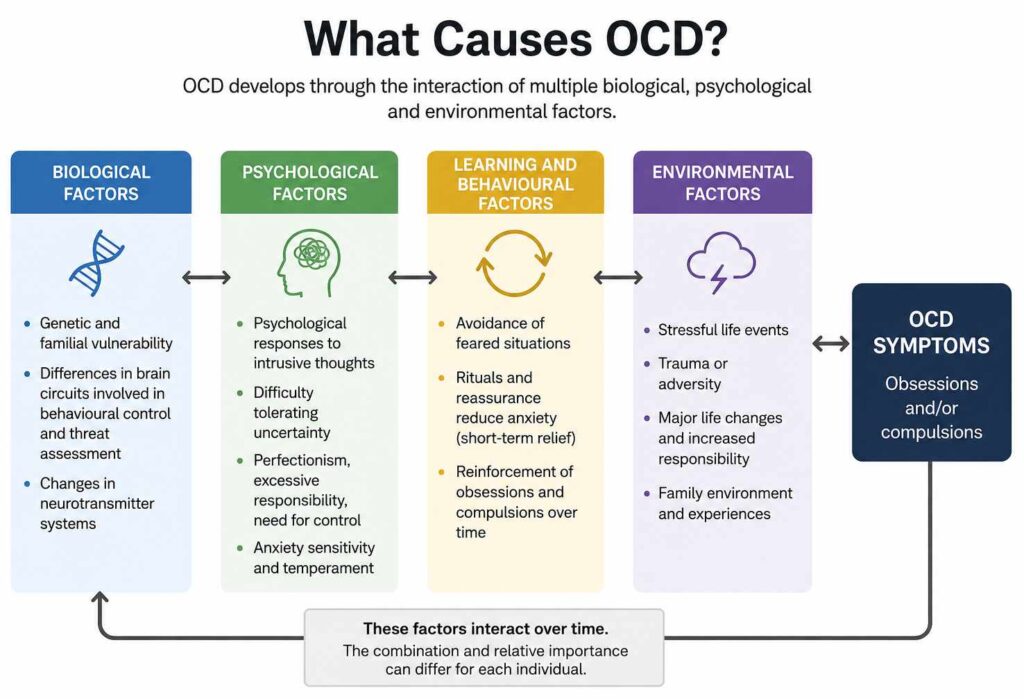
There is no single explanation for why one person develops OCD while another does not. The most widely accepted understanding is a multifactorial model, in which biological vulnerability interacts with psychological processes, learning and environmental influences. Factors associated with OCD include genetic and familial vulnerability, differences in brain circuits involved in behavioural control and threat assessment, changes in neurotransmitter systems, difficulty tolerating uncertainty, psychological responses to intrusive thoughts and stressful life experiences.
These influences should not be viewed as separate causes because they can interact throughout a person’s development. A genetic vulnerability, for example, may influence brain function and temperament, while psychological characteristics can determine how a person responds to uncertainty or unwanted thoughts. Environmental stress may then contribute to the first appearance or worsening of symptoms. The combination and relative importance of these factors can differ considerably between individuals.
Genetic Factors and OCD
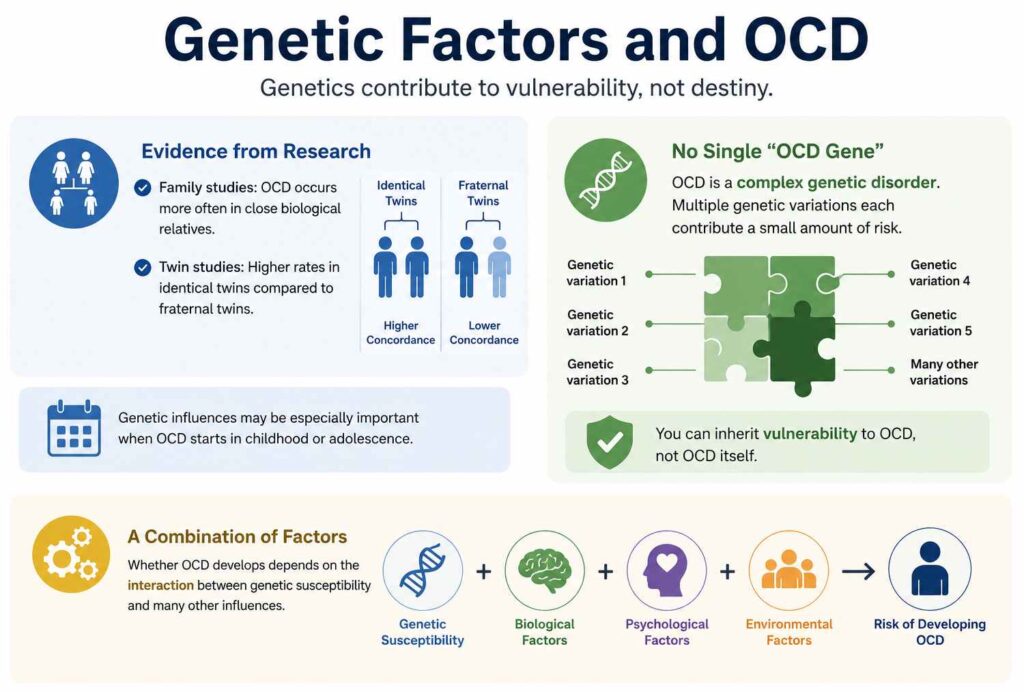
Genetic factors appear to contribute to the risk of developing OCD. Family studies show that obsessive-compulsive disorder occurs more frequently among close biological relatives of people with OCD than among the general population, while twin studies also support a significant genetic contribution. Genetic influences may be particularly relevant when OCD begins during childhood or adolescence, although many people with OCD have no close relative with the disorder.
This does not mean that there is a single “OCD gene” or that OCD itself is directly passed from parent to child. OCD is considered a complex genetic disorder, meaning that multiple genetic variations probably contribute small amounts of risk. A person may therefore inherit a vulnerability to OCD rather than the disorder itself, and whether OCD eventually develops depends on the interaction between genetic susceptibility and other biological, psychological and environmental influences.
Neurobiological Factors in OCD
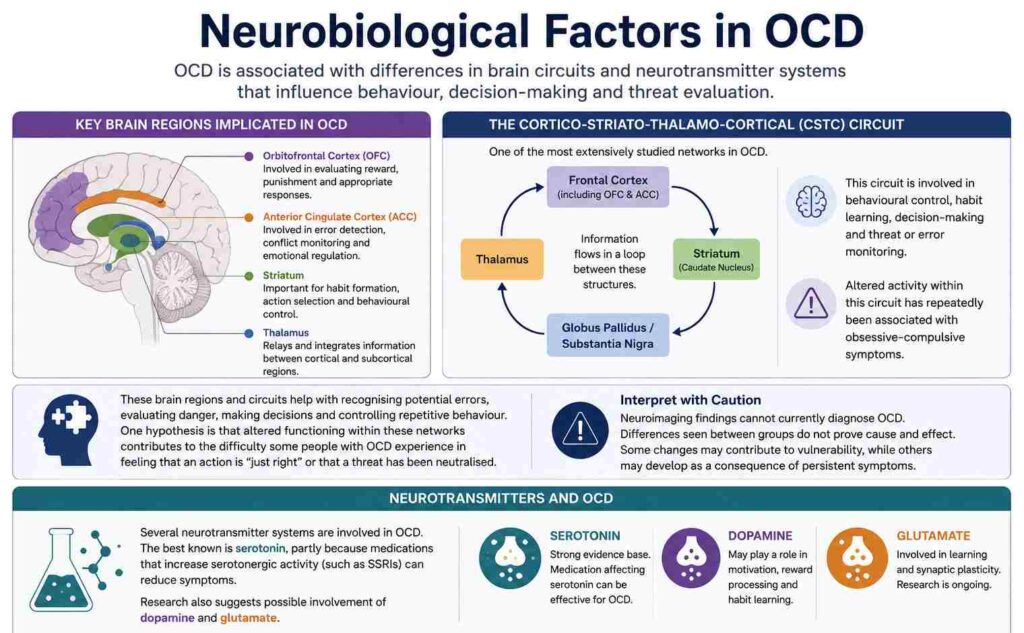
Research suggests that differences in brain function and neural networks are involved in OCD. Particular attention has been given to circuits connecting areas of the frontal cortex with deeper brain structures involved in habit formation, decision-making, behavioural control and the evaluation of potential threats or errors. One of the most extensively studied networks is the cortico-striato-thalamo-cortical circuit (CSTC circuit), in which altered activity has repeatedly been associated with obsessive-compulsive symptoms. Brain regions commonly investigated include the orbitofrontal cortex, anterior cingulate cortex, striatum and thalamus, which contribute to processes such as recognising potential errors, evaluating danger, making decisions and controlling repetitive behaviour.
One hypothesis is that altered functioning within these networks contributes to the difficulty some people with OCD experience in achieving a sense that an action has been sufficiently completed or a potential threat adequately addressed. Neuroimaging findings nevertheless need to be interpreted cautiously because brain scans cannot currently diagnose OCD, and differences found between groups of people with and without OCD do not prove that a particular brain abnormality directly causes the disorder. Some changes may contribute to vulnerability, while others may develop or change as a consequence of persistent symptoms.
Neurotransmitters and OCD
Several neurotransmitter systems have been investigated in OCD. The best known is serotonin, partly because medications that strongly influence serotonergic transmission can reduce obsessive-compulsive symptoms, while research also suggests possible involvement of dopamine and glutamate. These findings indicate that OCD cannot be adequately explained by abnormalities in a single neurotransmitter system.
The frequently used description of OCD as a simple “chemical imbalance” is therefore misleading. Neurotransmitters operate within complex neural networks, and the effectiveness of medication affecting serotonin does not prove that a serotonin deficiency causes OCD. Current research instead points towards interactions between neurotransmitters, specific brain circuits, genetics and psychological processes.
Environmental Factors and OCD
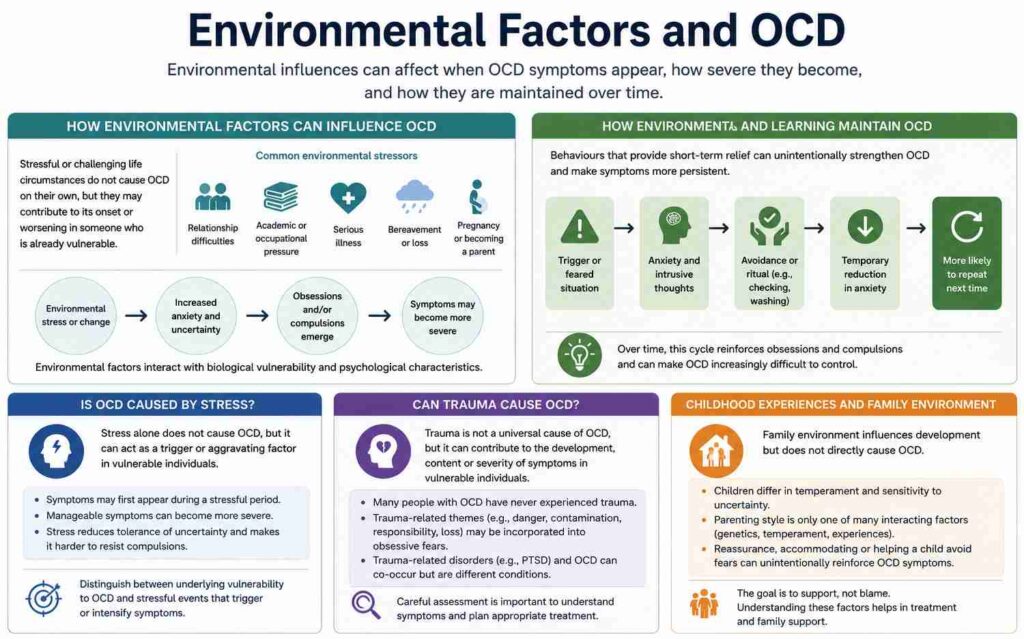
Environmental factors may influence when OCD symptoms first appear and how severe they become. Stressful experiences do not necessarily cause OCD, but they may contribute to the onset or worsening of symptoms in someone who already has a biological or psychological vulnerability. Periods involving substantial uncertainty, responsibility or change can sometimes precede the appearance of obsessive-compulsive symptoms, including relationship difficulties, academic or occupational pressure, serious illness, bereavement, pregnancy or becoming a parent.
Environmental influences can also interact with learning and behaviour. If avoiding a feared situation or performing a ritual repeatedly reduces anxiety, the person may become increasingly likely to respond in the same way when the fear returns. The environment can therefore influence both the initial expression of OCD and the processes through which symptoms become established and persistent.
Is OCD Caused by Stress?
Stress alone does not explain why someone develops OCD, as many people experience periods of considerable stress without developing obsessive-compulsive disorder. However, stress may act as a trigger or aggravating factor in people who are already vulnerable. Symptoms may first become noticeable during a particularly stressful period, or previously manageable obsessions and compulsions may become significantly more severe.
Stress can also reduce a person’s ability to tolerate uncertainty and resist compulsive behaviour. During periods of exhaustion, relationship conflict, occupational pressure or major life changes, intrusive thoughts may become more frequent and rituals more difficult to resist. It is therefore useful to distinguish between an underlying vulnerability to OCD and a stressful event that triggers or intensifies symptoms.
Can Trauma Cause OCD?
Traumatic experiences have been associated with OCD in some people, but trauma is not considered a universal cause of obsessive-compulsive disorder. Many people with OCD have never experienced significant trauma, while most people exposed to traumatic events do not develop OCD. Trauma may nevertheless contribute to the development, content or severity of obsessive-compulsive symptoms in individuals who are already vulnerable.
Experiences involving danger, contamination, loss, responsibility or uncertainty may later become incorporated into obsessive fears. Trauma-related symptoms and OCD can also occur together, making careful diagnostic assessment important. Post-traumatic stress disorder and OCD can both involve intrusive mental experiences, avoidance and repetitive behaviour, although the underlying mechanisms and treatment approaches are not identical.
Childhood Experiences and Family Environment
Childhood experiences and family environment may influence psychological development, but OCD should not be attributed simply to a particular style of parenting. Older theories sometimes suggested that strict discipline, excessive emphasis on cleanliness or controlling parenting directly caused obsessive-compulsive symptoms. Current understanding is more cautious and recognises the interaction between genetic vulnerability, temperament, psychological development and environmental experiences.
Children also differ considerably in how they respond to the same environment. A child who is naturally anxious, highly conscientious or particularly uncomfortable with uncertainty may react differently from another child exposed to similar circumstances. Once obsessive fears develop, repeated reassurance, excessive accommodation or helping a child avoid feared situations may unintentionally reinforce symptoms by reducing anxiety in the short term and making avoidance or ritualised behaviour more likely in the future.
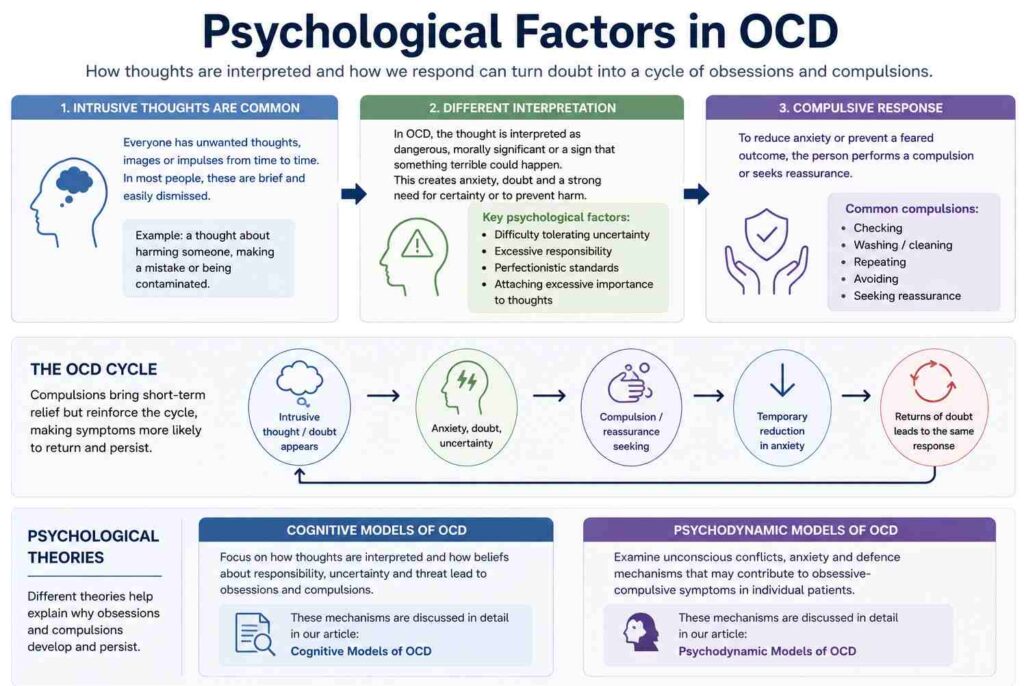
Psychological Factors in OCD
Psychological factors are important for understanding why ordinary intrusive thoughts become highly distressing in some people and why compulsive behaviours may subsequently develop. Unwanted thoughts, images and impulses occur in people without OCD as well, but they are usually dismissed without attaching particular significance to them. A person vulnerable to OCD may instead interpret an intrusive thought as dangerous, morally significant or evidence that something terrible could happen, creating a strong need to prevent harm or obtain certainty.
Difficulty tolerating uncertainty, excessive responsibility, perfectionistic standards and attaching excessive significance to thoughts have all been associated with obsessive-compulsive symptoms. Compulsive behaviour may then become reinforced because checking, washing, repeating, avoiding or seeking reassurance temporarily reduces anxiety. The short-term relief makes the behaviour more likely to be repeated, even when the person recognises that the ritual is excessive.
Several psychological theories explain these mechanisms in greater detail.
Cognitive models of OCD focus particularly on interpretations of intrusive thoughts, responsibility, uncertainty and beliefs that contribute to compulsive behaviour; these mechanisms are discussed separately in our article on Cognitive Models of OCD.
Psychodynamic models of OCD provide a different perspective by examining unconscious conflicts, anxiety and psychological defence mechanisms and are discussed in our dedicated article on Psychodynamic Models of OCD.
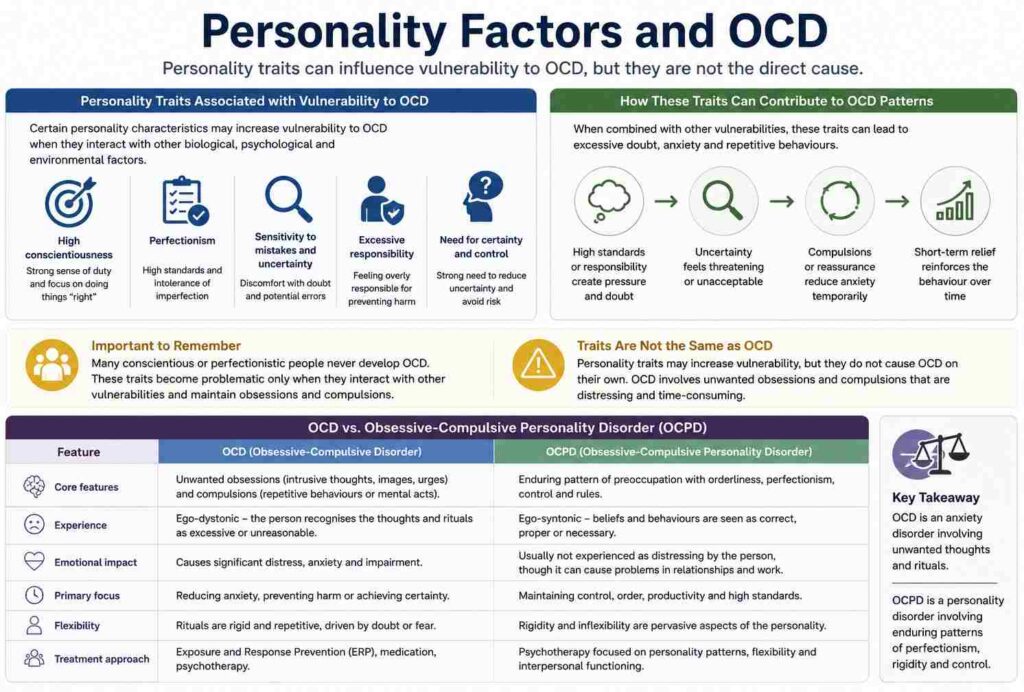
Personality Factors and OCD
Certain personality characteristics may be associated with vulnerability to OCD, but they should not be regarded as direct causes of the disorder. Some people with OCD are highly conscientious, perfectionistic or particularly sensitive to mistakes and uncertainty, while others experience an unusually strong sense of responsibility. Such characteristics may contribute to repeated checking, reassurance seeking or attempts to achieve certainty when they interact with other biological and psychological vulnerabilities.
Many conscientious or perfectionistic people, however, never develop OCD, and these characteristics alone are not sufficient to explain the disorder. It is also important to distinguish OCD from obsessive-compulsive personality disorder (OCPD) despite the similarity of their names. OCD is characterised by unwanted obsessions and compulsions that typically cause distress, whereas OCPD primarily involves longstanding personality traits such as perfectionism, rigidity, orderliness and an excessive need for control.
Why Do OCD Symptoms Persist?
The factors that initially contribute to the development of OCD are not necessarily the same factors that keep the disorder active. Once obsessions and compulsions have developed, a self-reinforcing pattern can emerge in which an intrusive thought or doubt produces anxiety and the person responds by performing a compulsion, avoiding a situation or seeking reassurance. The resulting temporary reduction in anxiety makes the same response more likely when the obsession returns.
For example, someone may initially check the cooker twice before leaving home but later begin checking electrical appliances, doors, taps and windows. They may eventually take photographs for reassurance or repeatedly return home because they cannot achieve sufficient certainty that everything is safe. Avoidance can strengthen the same process because the person has fewer opportunities to discover that anxiety can decrease without performing a ritual and that the feared outcome is unlikely to occur.
Over time, OCD may therefore become increasingly restrictive and interfere with relationships, education, work and everyday activities. Understanding these maintaining mechanisms is clinically important because effective psychological treatment aims not only to reduce anxiety but also to interrupt the behaviours that repeatedly reinforce obsessions and compulsions.
What Can Trigger OCD Symptoms?
A trigger is not necessarily the cause of OCD. A person may already have a biological or psychological vulnerability before particular circumstances activate or intensify obsessive-compulsive symptoms. Common triggers can include psychological stress, major life changes, increased responsibility, relationship difficulties, health concerns, pregnancy or parenthood, academic pressure and occupational stress.
Specific triggers also depend on the person’s particular OCD theme. Someone with contamination fears may react strongly to perceived exposure to illness, while someone with checking compulsions may experience greater anxiety when given increased responsibility. Moral, religious, sexual or aggressive intrusive thoughts can become especially distressing when they strongly contradict the person’s values, which is why identifying a trigger does not necessarily explain the underlying cause of OCD.
Is OCD Inherited?
OCD can run in families, but it is not inherited in a simple or predictable way. Having a parent, sibling or other close biological relative with OCD increases a person’s risk compared with someone without a family history, but it does not mean that they will inevitably develop obsessive-compulsive disorder. What appears to be inherited is a degree of genetic susceptibility rather than a fixed disorder.
Whether this vulnerability eventually develops into OCD depends on interactions between genetic factors, brain development, temperament, psychological characteristics, learning and environmental influences. This helps explain why two children in the same family can have very different outcomes despite sharing some genetic and environmental factors.
Is OCD Caused by a Chemical Imbalance?
OCD is sometimes described as being caused by a “chemical imbalance,” particularly involving serotonin, but this explanation is too simplistic. Serotonin is involved in the neurobiology of OCD, and medications affecting serotonin can be effective treatments, while research also points to possible involvement of dopamine, glutamate and other neurobiological mechanisms.
Neurotransmitters operate within complex networks of brain cells and neural circuits, and there is no laboratory test demonstrating a specific chemical imbalance that confirms OCD. Current evidence therefore supports a broader explanation involving genetics, brain circuits, neurotransmitter systems, psychological processes, behaviour and environmental influences rather than one isolated chemical abnormality.
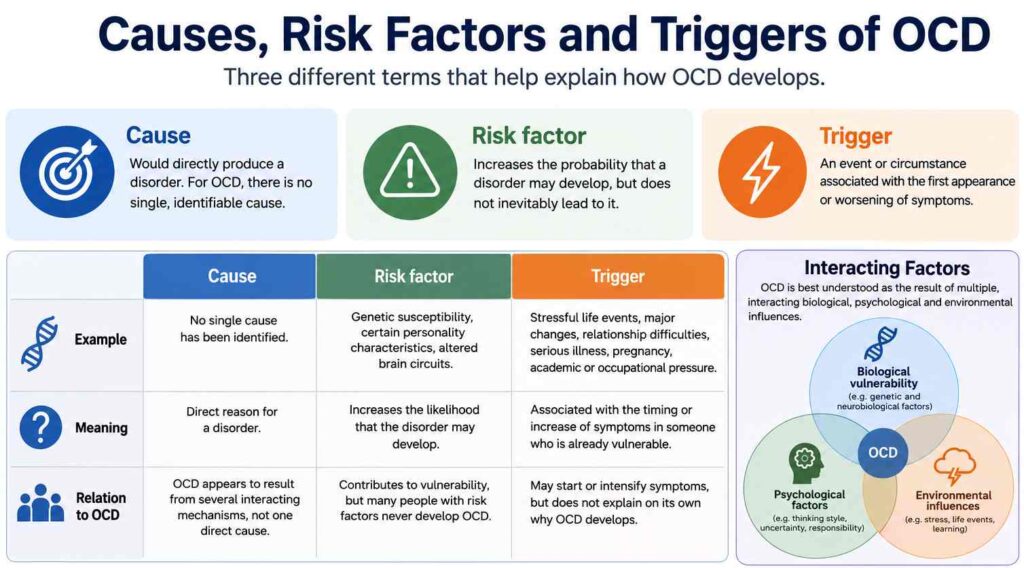
Causes, Risk Factors and Triggers of OCD
The terms cause, risk factor and trigger are sometimes used interchangeably, but they describe different concepts. A cause would directly produce a disorder, whereas a risk factor increases the probability that it may develop and a trigger is an event or circumstance associated with the appearance or worsening of symptoms. Because OCD appears to develop through several interacting mechanisms, a single direct cause usually cannot be identified.
Genetic susceptibility is therefore better understood as a risk factor rather than a predetermined cause, while stress or a major life event may trigger symptoms in someone who is already vulnerable. The distinction helps explain why the question “What caused my OCD?” often cannot be answered by identifying one particular event or experience.
Understanding the Causes of OCD
The causes of OCD are complex and differ between individuals. Current evidence suggests that obsessive-compulsive disorder develops through an interaction of genetic, neurobiological, psychological and environmental factors rather than from one identifiable cause. Genetic factors may increase susceptibility, while differences in brain circuits and neurotransmitter systems appear to contribute to the biological vulnerability underlying the disorder.
Stressful or traumatic experiences may contribute to the onset or worsening of symptoms in some people but are neither necessary nor sufficient for OCD to develop. Psychological processes can become particularly important once symptoms have appeared, as intrusive thoughts acquire excessive significance and compulsions temporarily reduce anxiety, reinforcing the obsessive-compulsive pattern. Understanding OCD therefore requires distinguishing between factors that increase vulnerability, circumstances that trigger symptoms, and psychological and behavioural mechanisms that maintain the disorder over time.
Frequently Asked Questions About the Causes of OCD
Can OCD develop suddenly?
OCD symptoms can sometimes appear relatively suddenly, although the underlying vulnerability may have existed for much longer. In other people, obsessions and compulsions develop gradually and become increasingly noticeable over months or years. A sudden increase in symptoms may occur during periods of significant stress, major life changes or increased responsibility and should be assessed in the context of the person’s overall clinical history.
Can anxiety cause OCD?
Anxiety does not directly cause OCD, although anxiety is closely connected with obsessive-compulsive symptoms. Obsessions frequently produce anxiety, while compulsions may temporarily reduce it and thereby reinforce the OCD cycle. Anxiety disorders can also occur alongside OCD, which is why persistent intrusive thoughts and repetitive behaviours should be assessed carefully rather than automatically attributed to general anxiety.
Can depression cause OCD?
Depression is not considered a direct cause of OCD, but the two disorders frequently occur together and can influence each other. Depression may reduce a person’s ability to resist compulsions and make obsessive thoughts more difficult to manage, while severe OCD can contribute to depressive symptoms through chronic distress and impairment. When both are present, treatment should consider the interaction between the conditions.
Can pregnancy or childbirth trigger OCD?
OCD can first appear or become more severe during pregnancy or after childbirth in some people. This period involves major biological, psychological and social changes as well as increased responsibility for another person’s safety. Perinatal OCD may involve intrusive fears of contamination, accidental harm or deliberately harming the baby, although unwanted intrusive thoughts do not mean that the person intends to act on them.
Does childhood OCD have different causes from adult OCD?
The same broad genetic, neurobiological, psychological and environmental factors are involved in both childhood and adult OCD, although their relative importance may differ. Genetic influences appear to be particularly relevant in some cases of early-onset OCD. Family responses and developmental factors can also affect how childhood symptoms are expressed and maintained, but parents should not be considered the cause of a child’s OCD.
Can OCD develop without a family history?
Yes. Many people diagnosed with OCD have no known family history of the disorder. Genetics contribute to vulnerability but represent only one part of a multifactorial process involving brain function, psychological characteristics, learning and environmental influences. Having no relatives with OCD therefore does not exclude the diagnosis, just as having a close relative with OCD does not mean that someone will inevitably develop it.
Why does OCD sometimes begin during stressful periods?
Stress can increase anxiety, uncertainty and the perceived need for control, making underlying obsessive-compulsive tendencies more noticeable. A stressful period may therefore act as a trigger in someone who is already vulnerable to OCD. This does not mean that stress itself caused the disorder; rather, it may have contributed to the point at which previously mild or manageable symptoms became clinically significant.
Can the cause of OCD be identified in an individual patient?
Usually, no single cause can be identified with certainty. Psychiatric assessment may reveal relevant factors such as family history, early symptoms, psychological characteristics, stressful experiences or circumstances associated with the onset of OCD. Understanding these factors can be clinically useful, but treatment generally focuses more on establishing an accurate diagnosis and identifying the mechanisms currently maintaining the symptoms than on finding one definitive cause.