

Finding the right psychiatrist for OCD in Dubai can be an important step when obsessive thoughts, compulsive behaviours or mental rituals begin to interfere with everyday life. Obsessive-Compulsive Disorder (OCD) can range from relatively mild symptoms to a severe condition that occupies many hours of the day and substantially affects work, relationships, education and social functioning.
An OCD psychiatrist can determine whether the symptoms represent obsessive-compulsive disorder, assess their severity and distinguish OCD from other psychiatric or medical conditions. This is important because intrusive thoughts, repetitive behaviours, excessive worrying, perfectionism and persistent doubts can occur in several different disorders and do not automatically indicate OCD.
At CHMC Dubai, psychiatric assessment and treatment of OCD are considered within the patient’s complete clinical picture. The psychiatrist evaluates the nature of the obsessions and compulsions, their effect on everyday functioning, previous treatment and co-existing psychiatric conditions before determining whether psychotherapy, medication or a combination of both is appropriate.
Book an OCD Assessment with Our Consultant Psychiatrist
When Is Psychiatric Assessment Important for OCD?
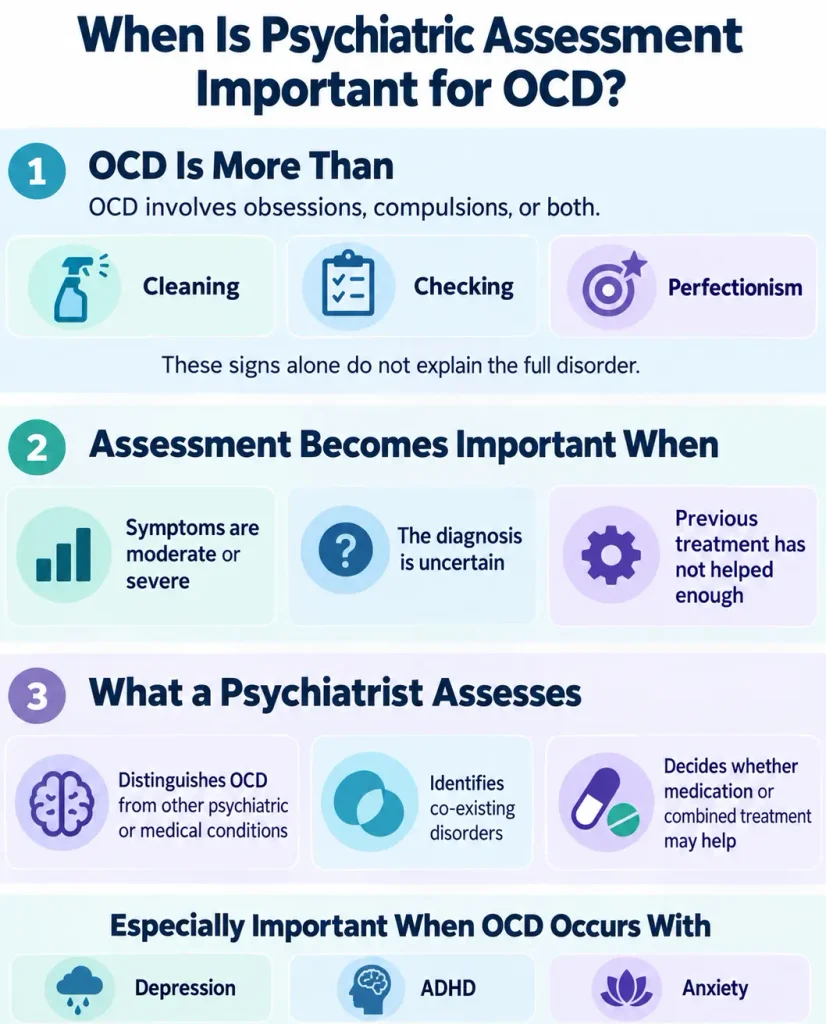
OCD is more than excessive cleanliness, repeated checking or perfectionism. The disorder is characterised by obsessions, compulsions or both. Although some patients benefit from OCD-specific psychotherapy without medication, psychiatric assessment becomes particularly important when symptoms are moderate or severe, the diagnosis is uncertain or previous treatment has not produced sufficient improvement.
A psychiatrist can distinguish OCD from other psychiatric or medical conditions, identify co-existing disorders and assess whether medication or combined treatment may be appropriate. This comprehensive approach is particularly valuable when OCD occurs together with depression, ADHD, anxiety or other conditions that may influence treatment.
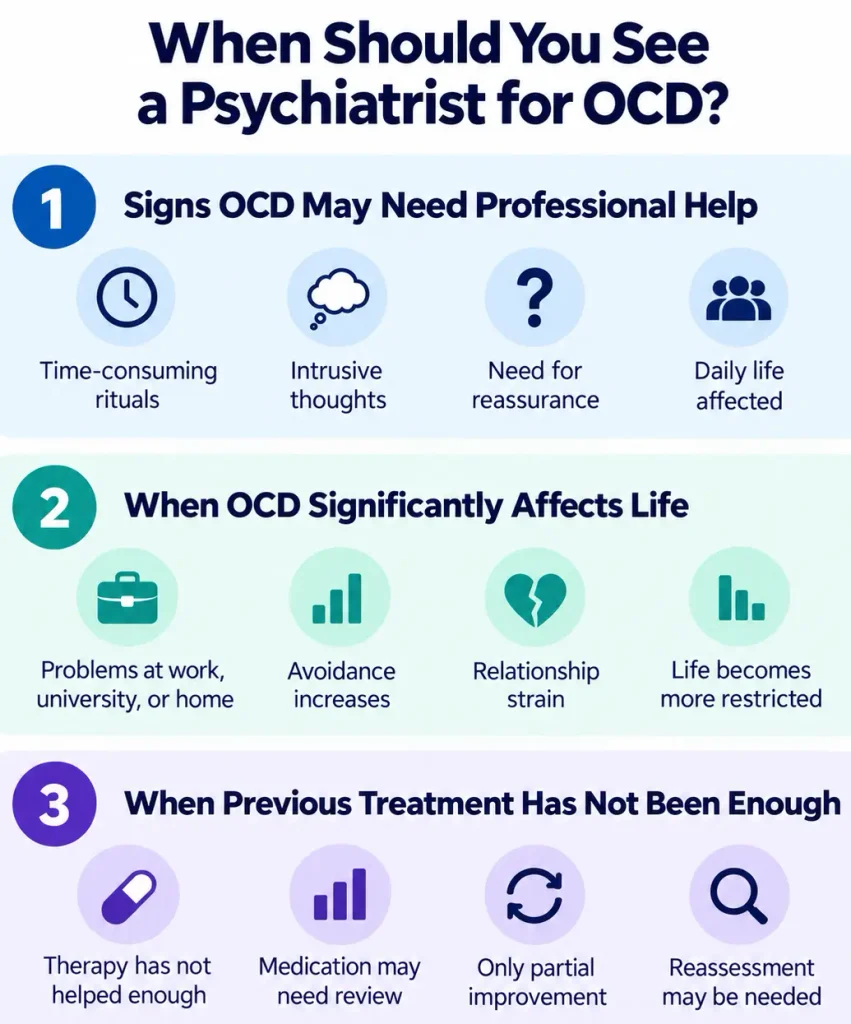
When Should You See a Psychiatrist for OCD?
Psychiatric assessment is particularly important when OCD causes significant impairment at work, university or home, leads to increasing avoidance, affects relationships or becomes progressively more restrictive. Some people spend hours checking, washing, arranging objects, repeating actions or performing mental rituals, while others have few visible compulsions but experience persistent intrusive thoughts, internal checking, reviewing memories or repeated attempts to obtain certainty.
An OCD psychiatrist in Dubai can also be helpful when psychotherapy has not been sufficiently effective, medication may be required or previous treatment has produced only a partial response. In these situations, the psychiatrist can reassess the diagnosis and determine whether the previous treatment was adequate or whether additional factors may have limited improvement.
What Does a Psychiatrist Do for OCD?
The psychiatrist’s role begins with establishing an accurate diagnosis, differentiating OCD from other mental health conditions, and understanding its severity and individual pattern. This involves examining the content and meaning of intrusive thoughts, how the patient responds to them, which compulsions or avoidance behaviours follow and how much time and mental energy the symptoms consume.
The assessment also considers previous psychiatric problems, family history, physical health, current medication, substance use and other factors that could influence the symptoms. When medication for OCD is clinically indicated, the psychiatrist can prescribe and monitor pharmacological treatment, evaluate the response over time and coordinate medication with psychotherapy.
The psychiatrist’s role therefore extends beyond diagnosis or prescribing medication. It includes determining which problems require treatment, coordinating different interventions and adjusting the overall strategy according to the patient’s clinical progress.
The First Psychiatric Consultation for OCD at CHMC Dubai
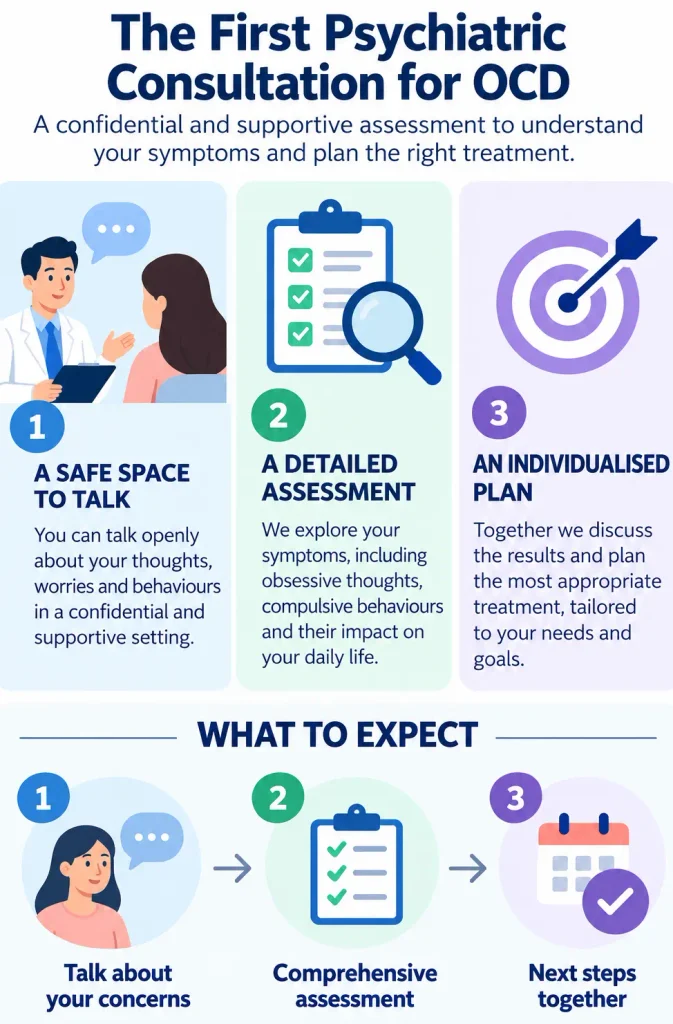
The first psychiatric consultation for suspected OCD at CHMC Dubai is designed to establish a detailed understanding of the patient’s symptoms and clinical history. Patients are encouraged to describe their intrusive thoughts, fears, doubts, compulsions, avoidance behaviours and mental rituals openly, including symptoms they may find embarrassing or difficult to discuss.
This is particularly important because OCD obsessions can involve disturbing content. Some patients experience unwanted aggressive, sexual, religious or morally unacceptable thoughts and may fear that these thoughts reveal something about their character or intentions. A psychiatrist experienced in OCD understands the distinction between unwanted obsessive thoughts and actual intentions and evaluates them within their appropriate clinical context.
The consultation also explores when symptoms began, how they have changed over time, how much time they occupy and how strongly they interfere with everyday functioning. Previous psychiatric episodes, psychotherapy, medication, treatment response, family psychiatric history and relevant medical conditions are reviewed. When clinically indicated, the assessment may be supplemented by a physical or neurological examination, laboratory investigations or additional diagnostic procedures.
Psychiatric Diagnosis of OCD
The diagnosis of OCD is primarily clinical. There is no blood test, brain scan or laboratory investigation that can independently confirm obsessive-compulsive disorder. The psychiatrist identifies the characteristic pattern of obsessions and compulsions and evaluates their persistence, severity, associated distress and impact on everyday functioning.
Many people occasionally experience intrusive thoughts or check something more than once without having OCD. The diagnosis becomes relevant when obsessions or compulsions are persistent, difficult to resist, distressing or sufficiently time-consuming to interfere with everyday life. The psychiatrist also considers the patient’s degree of insight, which can range from recognising that the fears are excessive to being strongly convinced that the feared consequences may occur.
More detailed information about diagnostic criteria and assessment is provided in our dedicated article on OCD Diagnosis.
Differential Diagnosis: Is It Really OCD?
Some symptoms resembling OCD can occur in other psychiatric conditions. Repetitive worrying may be associated with generalised anxiety disorder, negative thinking with depression, and repeated checking with attention or memory difficulties. Obsessive-compulsive personality disorder (OCPD), tic disorders and certain psychotic conditions may also require consideration.
A psychiatrist examines the underlying causes of these symptoms rather than relying on their outward appearance. Accurate differential diagnosis helps establish whether OCD is present, whether another disorder provides a better explanation or whether several conditions coexist.
For a detailed comparison, read our article on OCD Differential Diagnosis.
OCD and Co-existing Mental Health Conditions
OCD frequently occurs together with other psychiatric conditions. Depression and anxiety disorders are particularly common and can substantially increase distress and functional impairment. Some patients also have ADHD, trauma-related symptoms, eating disorders, substance-related problems or other psychiatric difficulties.
Identifying these conditions is important because they can influence both the clinical presentation and the response to treatment. Severe depression may reduce motivation and make participation in psychotherapy more difficult, while ADHD can interfere with concentration, organisation and treatment adherence. Co-existing conditions may also influence medication selection and treatment priorities.
For this reason, psychiatric assessment considers OCD within the patient’s complete clinical picture rather than treating obsessive-compulsive symptoms in isolation.
The Psychiatrist’s Role in OCD Medication
Not every patient with OCD requires medication. Some patients, particularly those with milder symptoms, may respond well to appropriate psychotherapy. Medication becomes more relevant when symptoms are moderate or severe, substantially impair everyday functioning, occur alongside other psychiatric symptoms or have not improved sufficiently with psychotherapy alone.
Certain antidepressants, particularly selective serotonin reuptake inhibitors (SSRIs), are commonly used in OCD treatment. Clomipramine and other pharmacological strategies may be considered in selected cases. OCD medication often requires a sufficiently long therapeutic trial before its effectiveness can be evaluated and should be monitored for both clinical response and adverse effects.
The psychiatrist’s role is therefore not simply to issue a prescription. Treatment involves selecting medication according to the individual clinical situation, evaluating tolerability and improvement and deciding whether treatment should be continued, adjusted, changed or augmented.
Detailed information about medications and strategies for insufficient response is provided in our dedicated OCD Medication article.
What If Previous OCD Treatment Has Not Worked?
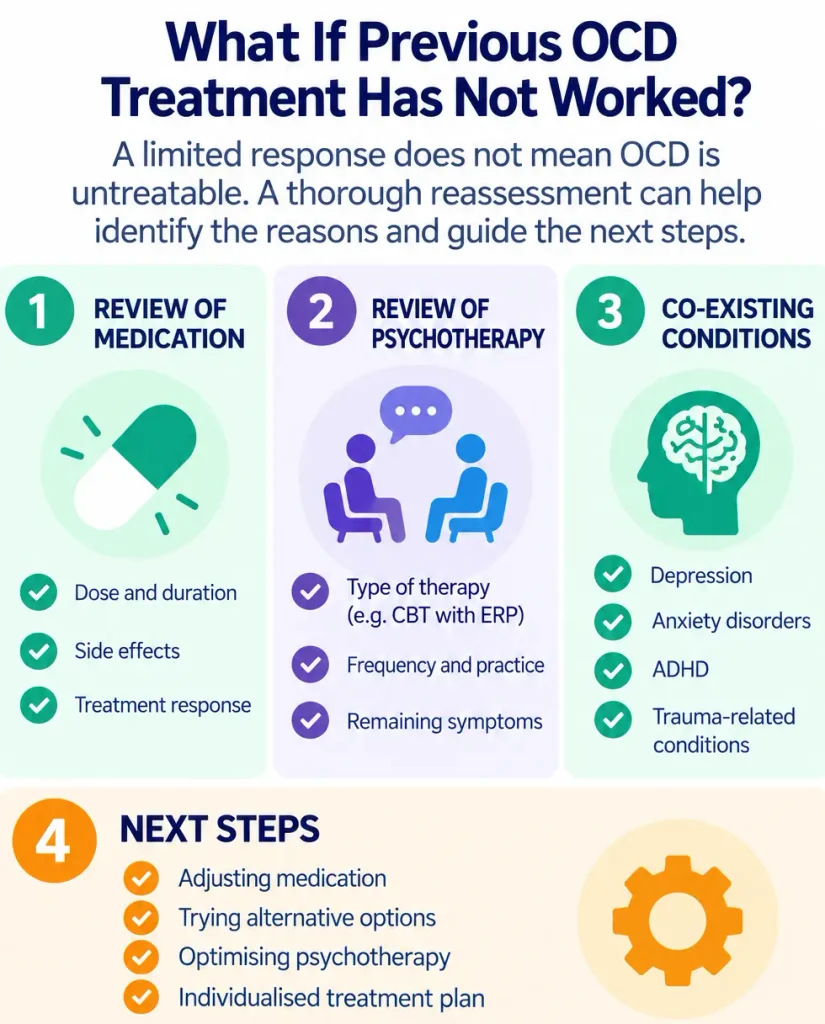
A limited response to initial OCD treatment does not necessarily mean that the disorder is treatment-resistant. Before changing the treatment strategy, the psychiatrist should review whether the diagnosis is correct and whether previous medication and psychotherapy were adequate.
For medication, this includes reviewing the drug used, dose, duration, adherence, tolerability and degree of response. Psychotherapy should also be assessed, including the therapeutic approach, frequency of sessions and persistence of avoidance, reassurance seeking or other behaviours that may continue to reinforce symptoms.
Co-existing psychiatric conditions may also contribute to an insufficient response. When an adequate first-line treatment has genuinely failed, the psychiatrist may consider adjusting or changing medication or using an augmentation strategy while coordinating pharmacological treatment with continued psychotherapy. The purpose of reassessment is to understand why treatment has been insufficient before deciding what should happen next.
Psychiatrist, Psychologist or Psychotherapist for OCD?
People seeking help for OCD are sometimes uncertain whether they should consult a psychiatrist, psychologist or psychotherapist. All three can be involved in OCD care, but their professional roles are different. The most appropriate professional depends on symptom severity and complexity, whether the diagnosis is clear, whether medication may be required and whether psychotherapy is the primary treatment need.
Psychiatrist for OCD
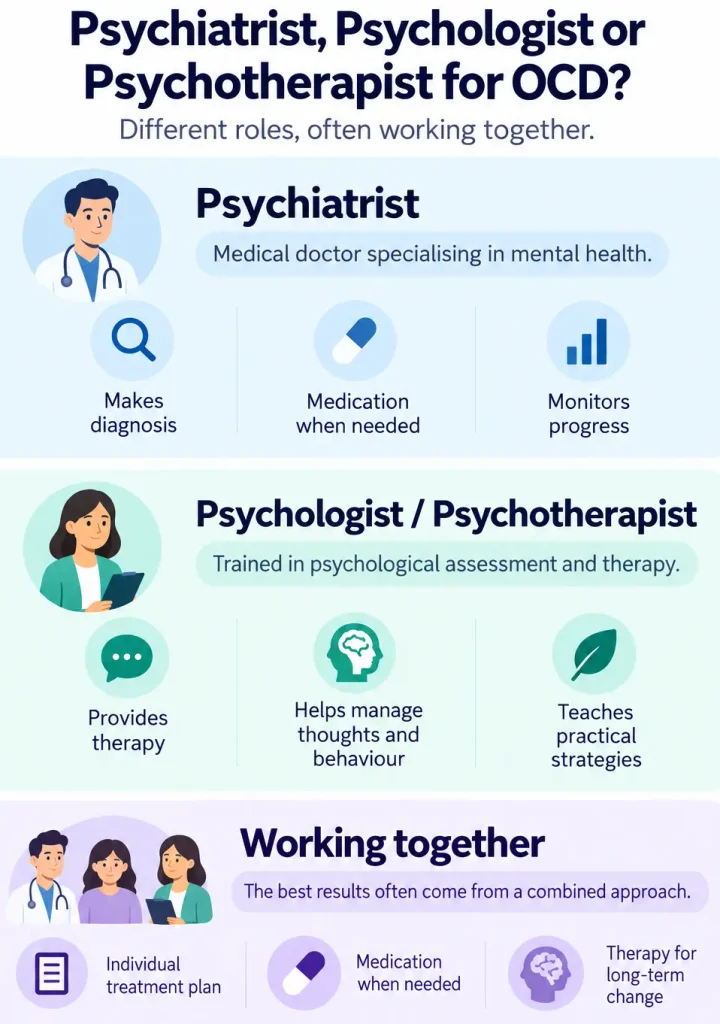
A psychiatrist is a medical doctor specialising in the diagnosis and treatment of mental health disorders. The psychiatrist can establish the psychiatric diagnosis, assess co-existing psychiatric and medical conditions, prescribe medication when indicated and monitor pharmacological treatment. Psychiatric assessment is particularly useful when OCD is moderate or severe, the diagnosis is uncertain, everyday functioning is substantially impaired or previous treatment has not produced sufficient improvement.
Seeing a psychiatrist does not mean that every patient will receive medication. Some patients can be treated primarily with psychotherapy, while others benefit from medication or combined treatment. The psychiatrist determines which approach is appropriate for the individual clinical situation.
Psychologist and Psychotherapist for OCD
A psychologist has academic training in psychology and may provide psychological assessment, but a psychology degree alone does not automatically mean that the person is trained as a psychotherapist. Psychotherapy requires additional professional training in a recognised therapeutic approach.
A psychotherapist treats psychological symptoms through structured therapeutic methods. In OCD, psychotherapy can address intrusive thoughts, anxiety, avoidance, compulsive behaviour, reassurance seeking and other mechanisms that maintain symptoms. Psychiatric and psychotherapeutic care therefore have different but complementary roles when both are clinically indicated.
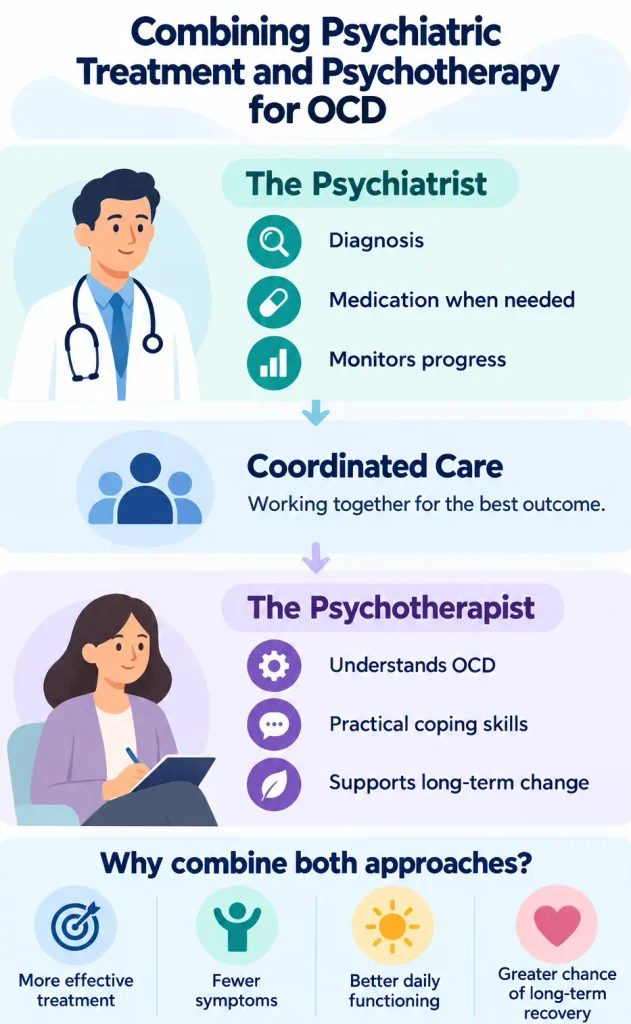
Combining Psychiatric Treatment and Psychotherapy for OCD
Psychiatric treatment and psychotherapy can complement one another in OCD care. The psychiatrist establishes the diagnosis, assesses co-existing conditions, manages medication when indicated and monitors clinical progress. The psychotherapist addresses the psychological and behavioural patterns that maintain obsessive-compulsive symptoms.
Cognitive behavioural therapy (CBT), particularly exposure and response prevention (ERP), is a first-line psychological treatment for OCD. Some patients benefit from psychotherapy alone, while others may require medication or a combination of both. When several professionals are involved, coordinated care helps maintain a consistent and individualised treatment approach.
Ongoing Psychiatric Monitoring of OCD
OCD treatment is a process rather than a single consultation. Symptoms can fluctuate over time, and improvement may occur gradually. Psychiatric follow-up allows the psychiatrist to assess whether improvement is stable, whether residual obsessions or compulsions remain, how well the patient is functioning and whether medication continues to be effective and well tolerated.
Follow-up is generally closer when medication is started or adjusted, when symptoms are severe or when significant co-existing conditions are present. Once symptoms and treatment are stable, appointments can usually become less frequent. Decisions about continuation or gradual reduction of medication should take the previous clinical course and risk of recurrence into account.
Long-term monitoring also provides an opportunity to recognise relapse early. Increased checking, avoidance, reassurance seeking or time spent performing mental rituals may indicate that symptoms are returning before OCD again becomes severely impairing.
When Is Urgent Psychiatric Assessment Necessary?
Most people with OCD can be assessed through a planned outpatient consultation, but some situations require more urgent psychiatric evaluation. Severe OCD can occasionally become so restrictive that a person is unable to work, study, leave home, maintain normal hygiene, eat adequately or perform essential daily activities.
Urgent assessment is also important when OCD occurs together with severe depression, suicidal thoughts, significant self-neglect or marked deterioration in functioning. Distressing aggressive, sexual or self-harm obsessions do not by themselves mean that a person intends to act on them, but careful clinical assessment can distinguish unwanted obsessional thoughts from genuine intent or symptoms of another psychiatric disorder when there is uncertainty.
Preparing for an OCD Psychiatric Consultation
Patients do not need to prepare extensively before seeing a psychiatrist for OCD, but it can be helpful to consider when the symptoms began, which obsessions or compulsions are most disruptive and approximately how much time they occupy each day. Information about previous psychiatric diagnoses, psychotherapy, medication and treatment response can also help the psychiatrist understand the clinical history.
Patients should not avoid mentioning intrusive thoughts because they feel ashamed or fear being misunderstood. OCD can involve unwanted thoughts concerning aggression, sexuality, religion, contamination, relationships, morality and many other themes. Although their content may be disturbing, understanding the nature of these thoughts is an important part of distinguishing OCD from other psychiatric conditions and planning appropriate treatment.
Psychiatrist for OCD in Dubai: Summary
A psychiatrist for OCD in Dubai can determine whether intrusive thoughts, compulsive behaviours or persistent doubts represent obsessive-compulsive disorder and whether other psychiatric or medical conditions contribute to the symptoms.
Psychiatric assessment is particularly important when OCD is moderate or severe, causes substantial functional impairment, occurs together with other psychiatric conditions or has not responded sufficiently to previous treatment. The psychiatrist’s role extends from diagnosis and differential diagnosis to medication management, assessment of co-existing conditions and long-term monitoring.
Psychotherapy remains an important component of OCD treatment, and psychiatric care can be coordinated with psychological treatment when a combined approach is appropriate.
At CHMC Dubai, the aim is to understand the complete clinical picture and develop an individualized treatment strategy. Even when OCD has been present for many years or previous treatment has been unsuccessful, careful psychiatric reassessment can identify factors contributing to persistent symptoms and provide a structured approach to further treatment.
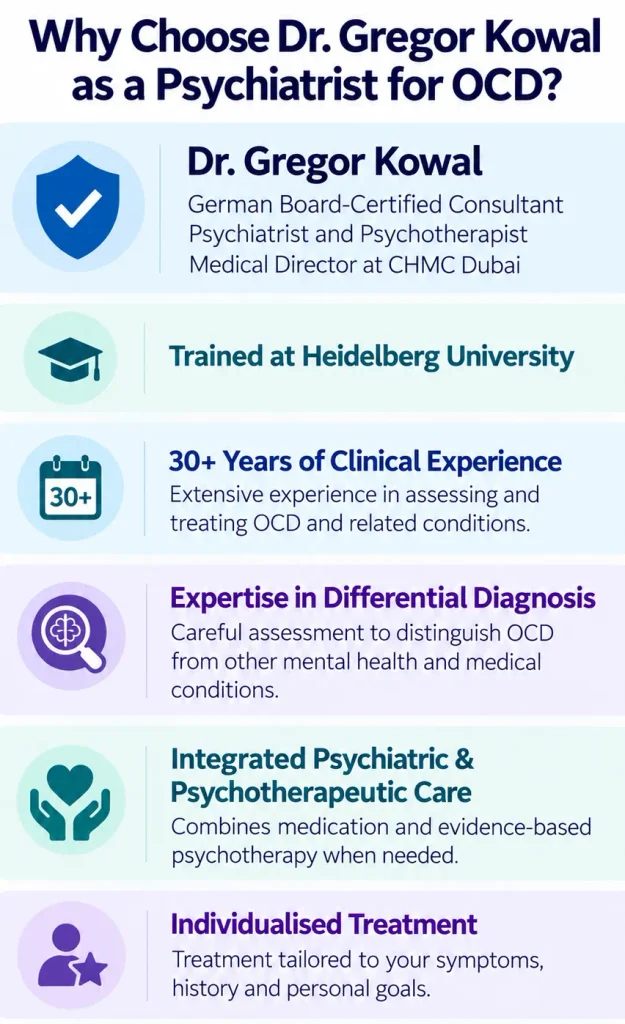
Why Choose Dr. Gregor Kowal as a Psychiatrist for OCD in Dubai?
Dr. Gregor Kowal is a German Board-Certified Consultant Psychiatrist and Psychotherapist and Medical Director of CHMC German Clinic for Psychiatry and Psychology in Dubai. He trained at Heidelberg University in Germany and has more than 30 years of clinical experience, including senior psychiatric leadership positions in Germany.
His clinical work includes the assessment and treatment of OCD and other psychiatric conditions that may coexist with or resemble obsessive-compulsive symptoms. This experience is particularly relevant when intrusive thoughts, repetitive behaviours, anxiety or avoidance have several possible explanations.
His combined training in psychiatry and psychotherapy allows treatment decisions to consider both medical and psychological factors. Depending on the individual situation, care may include psychiatric follow-up, medication, psychotherapy or coordination between psychiatric and psychological treatment.
At CHMC Dubai, assessment and treatment are planned according to symptom severity, previous treatment response, co-existing conditions and the patient’s individual circumstances.
Book an OCD Psychiatric Assessment at CHMC Dubai
FAQs About Seeing a Psychiatrist for OCD in Dubai
When Should I See a Psychiatrist for OCD?
A psychiatric consultation is particularly appropriate when obsessions or compulsions cause significant distress, consume considerable time or interfere with work, relationships and everyday life. Assessment is also important when the diagnosis is uncertain, symptoms are moderate or severe, medication may be necessary or previous treatment has not produced sufficient improvement.
OCD can also occur alongside depression, anxiety disorders, ADHD or other psychiatric conditions. These co-existing disorders may increase symptom severity, complicate diagnosis and influence treatment decisions. A comprehensive psychiatric assessment helps identify all relevant conditions and develop an individualised treatment plan.
Can a Psychiatrist Diagnose OCD During the First Appointment?
Yes. A psychiatrist can often diagnose OCD during the first comprehensive psychiatric consultation when the symptoms and clinical history are sufficiently clear. The assessment explores intrusive thoughts, compulsive behaviours, mental rituals, avoidance, symptom severity and their impact on everyday functioning.
The diagnosis is based on established clinical criteria rather than a single blood test, brain scan or questionnaire. In more complex cases, particularly when several psychiatric conditions coexist or symptoms are atypical, further assessment may be necessary before confirming the diagnosis.
What happens during the first psychiatric consultation for OCD?
The psychiatrist asks about intrusive thoughts, compulsions, mental rituals, avoidance and reassurance seeking, as well as when the symptoms began, their severity and their effect on everyday functioning. Previous psychiatric history, family history, medication, previous psychotherapy, physical health and possible co-existing disorders are also reviewed to establish the complete clinical picture.
Does seeing a psychiatrist for OCD mean I need medication?
No. Consulting a psychiatrist does not automatically mean that medication will be prescribed. The psychiatrist first evaluates the diagnosis, severity, functional impairment, previous treatment and individual circumstances. Some patients can be treated primarily with psychotherapy, while others may benefit from medication or a combination of psychiatric treatment and psychotherapy.
Can a psychiatrist prescribe medication for OCD?
Yes. A psychiatrist can prescribe and monitor medication when it is clinically indicated. The choice of medication depends on symptom severity, previous treatment response, side effects, physical health, co-existing psychiatric or medical conditions and other medications the patient may be taking. Treatment response and tolerability are then monitored during follow-up appointments.
Can a psychiatrist distinguish OCD from anxiety and other mental health conditions?
Yes. OCD can resemble anxiety disorders and may also need to be distinguished from depression, OCPD, trauma-related conditions, psychotic disorders and other psychiatric conditions. The psychiatrist evaluates the nature and meaning of intrusive thoughts, the reasons for repetitive behaviour, avoidance patterns and the relationship between anxiety and compulsions rather than relying only on the superficial appearance of symptoms.
Can OCD occur together with depression or anxiety?
Yes. OCD frequently occurs alongside depression, anxiety disorders and other psychiatric conditions. Co-existing disorders can increase distress and functional impairment and may influence both psychotherapy and medication decisions. A comprehensive psychiatric assessment therefore considers the complete clinical picture rather than evaluating obsessive-compulsive symptoms in isolation.
Can a psychiatrist help if previous OCD treatment has not worked?
Yes. The psychiatrist can reassess the diagnosis and review previous medication, dose, duration, adherence, psychotherapy and possible co-existing disorders. This helps determine whether treatment was genuinely ineffective or whether there are modifiable reasons for the limited response. Treatment can then be adjusted according to the findings rather than automatically assuming that the OCD is treatment-resistant.
Should I see a psychiatrist, psychologist or psychotherapist for OCD?
The appropriate professional depends on the clinical situation. A psychiatrist can diagnose OCD, assess psychiatric and medical factors and prescribe medication, while an appropriately trained psychologist or psychotherapist can provide psychological treatment. Many patients with moderate, severe or complex OCD benefit from coordinated psychiatric and psychotherapeutic care.
Do I need a referral to see a psychiatrist for OCD in Dubai?
Patients can generally arrange a consultation directly with a private psychiatric clinic in Dubai without first obtaining a referral from another doctor. Individual insurance policies may have their own referral or reimbursement requirements, so patients planning to use insurance should check the conditions of their particular policy.
What should I bring to my first OCD consultation?
It can be helpful to bring information about current and previous medication, relevant medical reports and details of previous psychiatric or psychological treatment. Patients may also note their main obsessions, compulsions, mental rituals and avoidance behaviours beforehand, although no special preparation is required because these symptoms will be explored systematically during the consultation.