

Psychotherapy for OCD helps patients recognise and change the psychological and behavioural patterns that maintain obsessive thoughts, compulsions, avoidance and reassurance seeking.
Rather than attempting to eliminate every unwanted thought, treatment focuses on changing how patients interpret intrusive experiences and respond to anxiety, doubt and uncertainty.
The most established psychological treatment for Obsessive Compulsive Disorder (OCD) is Cognitive Behavioural Therapy (CBT), particularly Exposure and Response Prevention (ERP). These interventions address both the beliefs that make intrusive thoughts distressing and the compulsive responses that reinforce obsessive fears.
The overall goal of OCD psychotherapy is to reduce compulsive behaviours, improve psychological flexibility and help patients regain greater independence in their personal, social and professional lives.
For Assessment and Therapy of OCD Contact Our Specialists at CHMC:
How Psychotherapy for OCD Targets the OCD Cycle
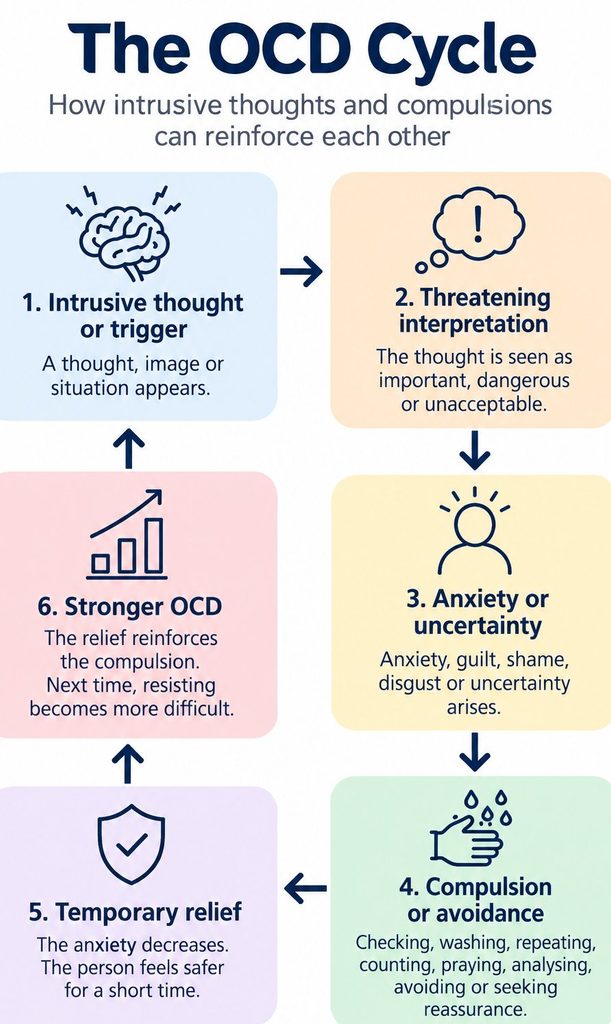
Obsessive Compulsive Disorder (OCD) is maintained partly by a recurring interaction between intrusive thoughts, threatening interpretations, emotional distress and attempts to obtain relief. Although intrusive thoughts occur in people with and without OCD, individuals with the disorder may assign excessive importance to them or interpret them as evidence of danger, irresponsibility or moral failure.
A person who experiences an unwanted aggressive thought, for example, may fear that having the thought indicates a risk of acting on it. Someone concerned about contamination may believe that repeated washing is necessary to prevent harm. Another person may feel compelled to check electrical appliances several times because even a small possibility of making a mistake seems unacceptable.
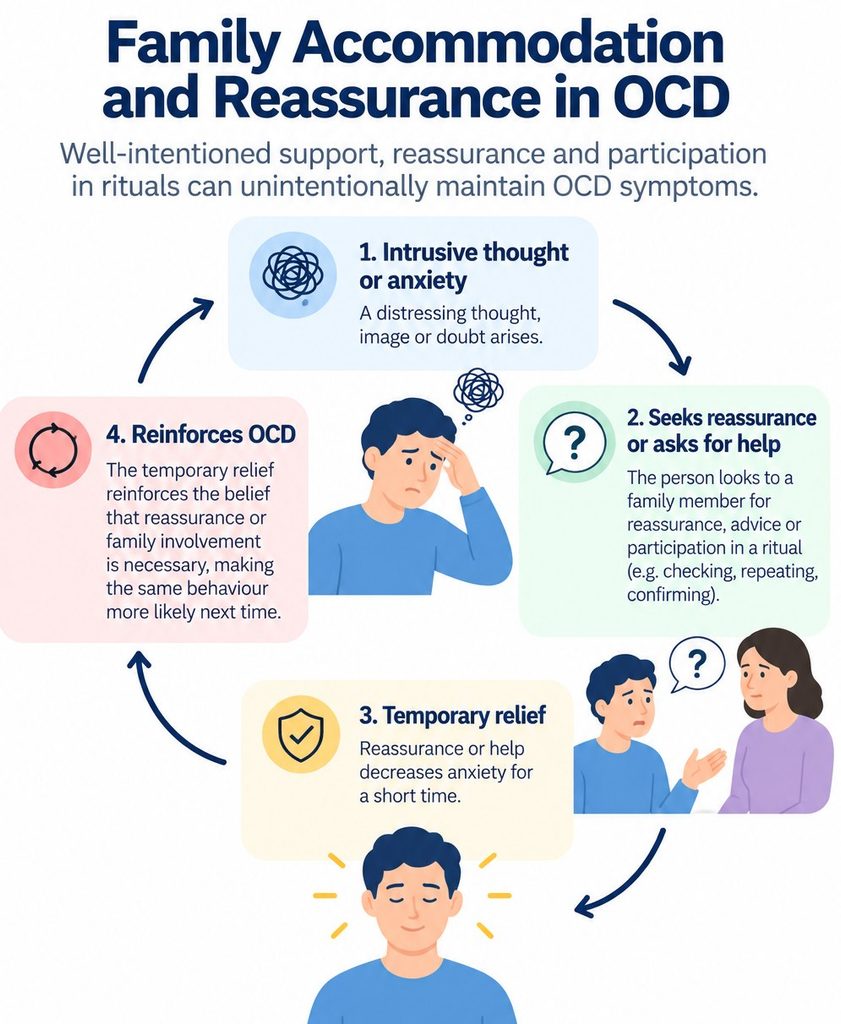
These interpretations can produce anxiety, guilt, shame, disgust or persistent uncertainty. Compulsions such as checking, washing, counting, mental reviewing and reassurance seeking may temporarily reduce the discomfort. However, this relief can reinforce the belief that the compulsive response was necessary, making the same behaviour more likely when another intrusive thought occurs.
Psychological Approaches Used in Psychotherapy for OCD
Different psychotherapeutic approaches address different aspects of obsessive-compulsive disorder. CBT with Exposure and Response Prevention (ERP) provides the strongest evidence-based foundation, while cognitive, acceptance-based and selected psychodynamic interventions can be integrated according to the patient’s individual psychological needs.
Cognitive Behavioural Therapy (CBT) for OCD
Cognitive Behavioural Therapy combines an understanding of the beliefs maintaining obsessive fears with practical interventions that change compulsive responses. The cognitive model of OCD proposes that intrusive thoughts become particularly distressing when individuals interpret them as evidence of danger, excessive personal responsibility or moral failure. These interpretations can reinforce anxiety, uncertainty and the perceived need to perform compulsions.
Common cognitive patterns include exaggerated responsibility, overestimation of danger, perfectionism, excessive importance attached to thoughts and difficulty tolerating uncertainty. One characteristic mechanism is thought-action fusion, in which a person considers having an unwanted thought morally equivalent to acting on it or believes that thinking about an event increases its likelihood. Such interpretations may lead to repeated checking, thought suppression, mental analysis or reassurance seeking.
Cognitive interventions help patients develop a more flexible understanding of these experiences. They learn that intrusive thoughts do not necessarily reflect intentions, personal character or actual danger, and that ordinary precautions do not require complete certainty. Rather than repeatedly trying to prove that nothing harmful will happen, patients gradually become more capable of tolerating doubt without responding through compulsive behaviours.
The behavioural component of CBT focuses on changing the responses that maintain OCD. This includes reducing checking, washing, avoidance, reassurance seeking and less visible mental rituals such as reviewing memories or repeatedly analysing intrusive thoughts. By combining cognitive understanding with behavioural practice, CBT helps patients change their relationship with obsessive fears and regain greater independence in everyday life.
Exposure and Response Prevention (ERP)
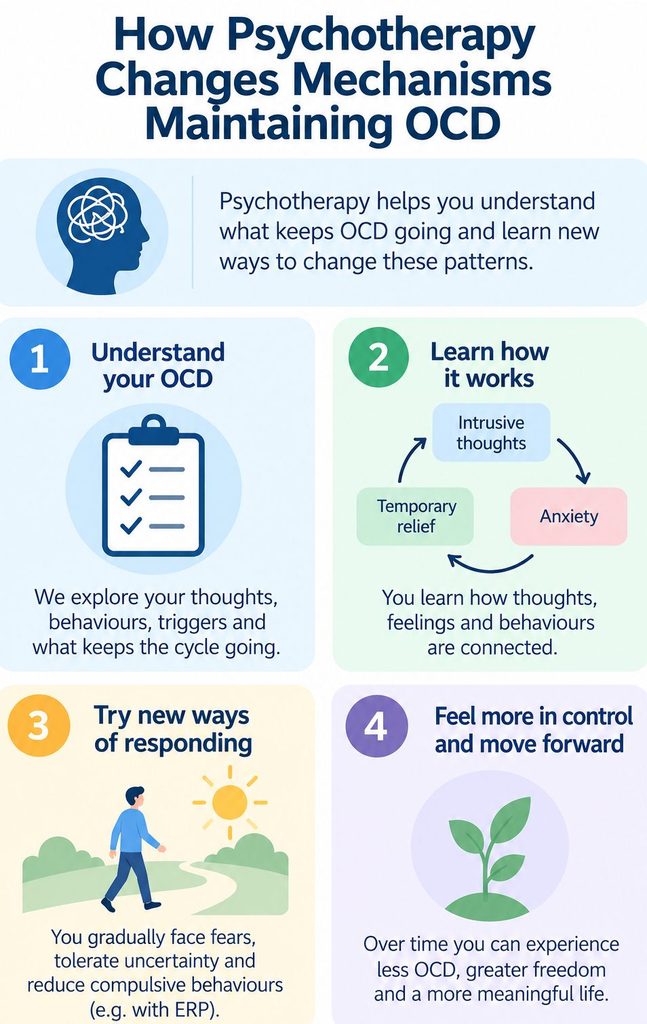
Exposure and Response Prevention (ERP) is a central component of CBT for OCD and has the strongest evidence base among psychological interventions for reducing obsessive-compulsive symptoms. ERP involves gradually approaching situations, thoughts or feelings that trigger obsessive fears while refraining from the compulsive responses normally used to obtain relief.
Treatment is individually planned according to the patient’s obsessions, compulsions and avoidance patterns. The purpose is not simply to provoke anxiety, but to help patients learn through experience that distress and uncertainty can be tolerated without performing rituals, seeking repeated reassurance or escaping feared situations.
Response prevention also addresses mental compulsions, including internal checking, repeated analysis and attempts to neutralise unwanted thoughts. Through structured practice, patients develop greater flexibility in responding to obsessive experiences and become less dependent on compulsive behaviours.
For a detailed explanation of exposure exercises, treatment planning and response prevention, read our guide to Exposure and Response Prevention (ERP) for OCD.
Acceptance-Based Approaches and Mindfulness
People with OCD may spend considerable energy trying to suppress unwanted thoughts or prevent uncomfortable feelings from occurring. These efforts can increase preoccupation with the very experiences they are attempting to control, especially when patients repeatedly monitor whether a disturbing thought has returned.
Acceptance-based interventions encourage a different relationship with intrusive experiences. Rather than attempting to evaluate, suppress or neutralise every thought, patients learn to recognise mental events without automatically interpreting them as threats or demands for action.
Acceptance and Commitment Therapy (ACT) and mindfulness-informed techniques may support psychological flexibility and help patients direct their behaviour according to personal values rather than obsessive-compulsive demands. These approaches can complement CBT and ERP, although the evidence supporting them as stand-alone OCD treatments is less established than that for ERP-based CBT.
Acceptance does not mean agreeing with an intrusive thought or abandoning reasonable precautions. It means reducing the struggle to control internal experiences when that struggle has become part of the obsessive-compulsive pattern.
Psychodynamic Psychotherapy and OCD
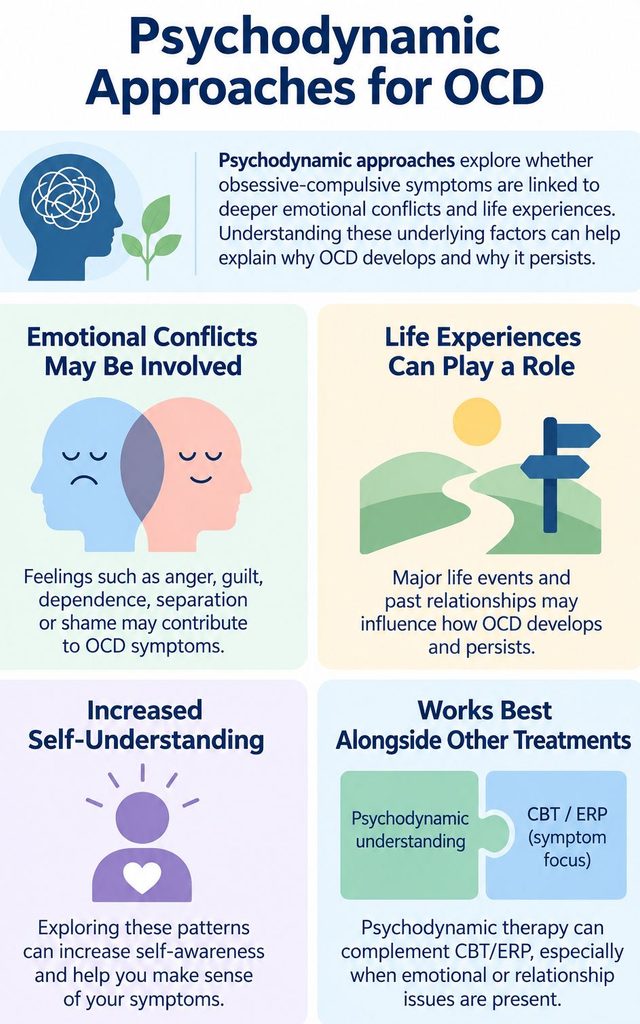
Psychodynamic psychotherapy explores emotional experiences, internal conflicts and relationship patterns that may contribute to a patient’s broader psychological difficulties. These may involve guilt, shame, aggression, dependency, self-esteem, perfectionism or conflicting feelings toward important people.
For some patients, obsessive-compulsive symptoms intensify during periods of emotional stress, relationship conflict, separation, loss or major life changes. Exploring these circumstances may help patients understand why certain psychological themes are particularly distressing and how longstanding emotional patterns influence their current functioning.
However, psychodynamic psychotherapy has not demonstrated the same established efficacy as CBT with ERP for reducing core OCD symptoms. Understanding emotional conflicts or the possible origins of symptoms does not necessarily change the compulsive behaviours that maintain the disorder.
Psychodynamic interventions may therefore be considered when significant emotional, interpersonal or personality-related difficulties coexist with OCD. They can complement evidence-based OCD-specific treatment, but should not replace CBT with ERP when reducing obsessions and compulsions is the primary therapeutic objective.
What Happens During Psychotherapy for OCD?
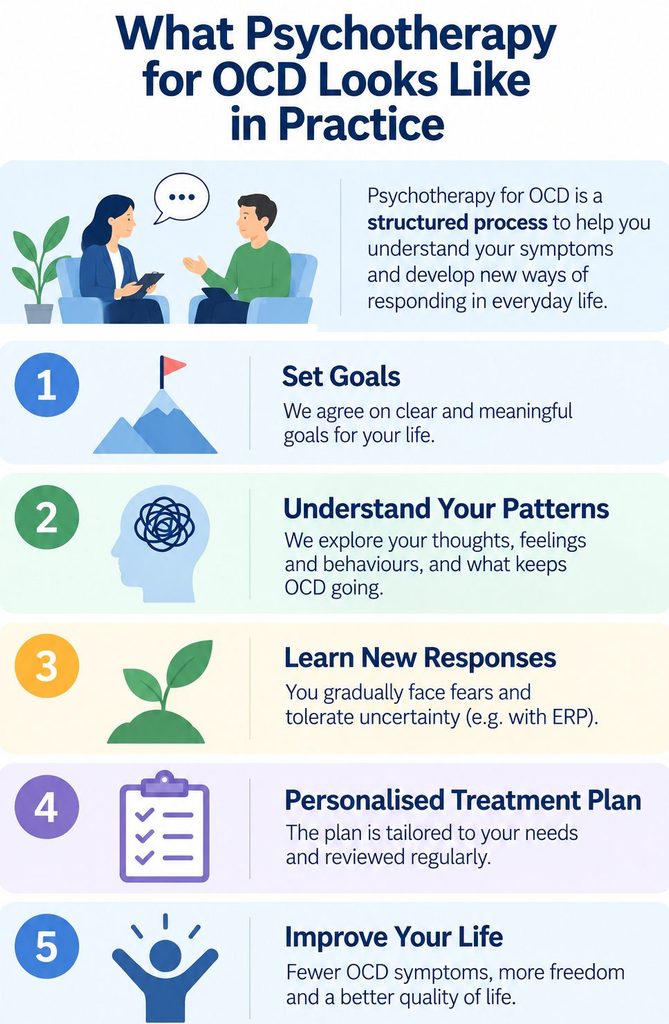
Psychotherapy for OCD follows an individual treatment plan based on the patient’s symptoms, level of impairment, psychological circumstances and treatment goals. Although the therapeutic process varies, it generally involves understanding the obsessive-compulsive patterns, selecting appropriate interventions and practising new responses in everyday life.
Assessment and Individual Treatment Planning
OCD is not always associated with visible rituals. Some patients experience predominantly mental compulsions, including reviewing memories, analysing intrusive thoughts, repeating phrases internally or repeatedly checking their intentions and feelings. Others seek reassurance from relatives, online resources or professionals to obtain temporary relief from obsessive doubt.
Psychotherapy helps patients recognise these less visible responses and distinguish reasonable precautions from compulsive attempts to eliminate uncertainty. Identifying mental rituals and reassurance seeking is particularly important when physical compulsions have decreased but obsessive preoccupation continues to interfere with everyday life.
Recognising Hidden Compulsions and Reassurance Seeking
Not all compulsions are visible. Alongside washing, checking and repeating physical actions, patients may experience mental rituals such as reviewing conversations, examining memories, repeating phrases internally or analysing whether an unwanted thought reveals something about their character.
Reassurance seeking can also become a compulsive response. Patients may repeatedly question relatives, consult online resources or seek professional reassurance in an attempt to resolve obsessive uncertainty. Although reassurance may provide temporary relief, repeated reliance on it can maintain the cycle of doubt.
Psychotherapy helps patients distinguish reasonable information seeking and appropriate precautions from repetitive behaviours intended primarily to neutralise obsessive distress. Identifying these patterns is particularly important when visible rituals have decreased but the patient continues to experience substantial internal preoccupation.
Practising Therapeutic Strategies Between Sessions
An important part of OCD psychotherapy takes place outside the consulting room. Patients gradually apply the principles learned in therapy to situations that would previously have triggered checking, avoidance, reassurance seeking or mental rituals. These exercises are selected collaboratively and adapted to the patient’s capabilities and progress. They should be sufficiently challenging to promote behavioural change while remaining realistic and therapeutically appropriate.
Repeated practice helps patients become less dependent on rituals and develop greater confidence in tolerating uncertainty. The therapist reviews the patient’s experiences, identifies continuing compulsive responses and adjusts the treatment plan where necessary.
Involving Partners and Family Members
OCD can significantly affect relationships because partners and relatives may become involved in compulsive routines. They may repeatedly answer reassurance questions, perform checks on the patient’s behalf or change household arrangements to prevent distress. Although these responses are usually motivated by concern, they can unintentionally reinforce OCD when they repeatedly substitute for the patient’s own ability to tolerate uncertainty.
When appropriate, psychotherapy may involve family psychoeducation to help relatives understand obsessive-compulsive mechanisms and provide support without participating in rituals. Changes in family behaviour should be introduced collaboratively and with sensitivity to the patient’s circumstances, rather than through sudden confrontation or withdrawal of support.
Psychotherapy When Other Mental Health Conditions Are Present
OCD may coexist with depression, anxiety disorders, ADHD and other psychiatric conditions. These difficulties can influence symptom severity, motivation, concentration and the patient’s ability to participate in structured psychological treatment. For example, significant depression may interfere with therapeutic exercises, while severe avoidance or additional anxiety symptoms may require adjustments to the pace of treatment. Interpersonal difficulties or longstanding psychological patterns may also need attention when they interfere with progress.
An individual treatment plan therefore considers the complete psychiatric and psychological picture without assuming that every difficulty is a direct consequence of OCD. Depending on the clinical situation, additional interventions or coordinated psychiatric care may be required.
What Can Patients Expect from Psychotherapy for OCD?
Psychotherapy for OCD requires active participation, regular practice and ongoing evaluation of treatment progress. Improvement is usually gradual and may involve reduced compulsions, less avoidance, improved everyday functioning and greater tolerance of uncertainty. The duration and intensity of treatment depend on symptom severity, individual circumstances and response to therapeutic interventions.
How Long Does Psychotherapy for OCD Take?
The duration of psychotherapy depends on symptom severity, the complexity of compulsions, the degree of functional impairment and the presence of additional psychological or psychiatric difficulties. Some patients improve during a relatively focused course of CBT with ERP, while others require more intensive or extended treatment.
Longstanding symptoms, extensive avoidance, multiple compulsive patterns or significant coexisting conditions may make therapy more complex. Treatment duration should therefore be determined according to individual progress rather than a fixed number of sessions. Regular reviews can help establish whether symptoms are improving and whether the therapeutic approach requires adjustment.
How Is Progress in OCD Psychotherapy Measured?
Improvement is evaluated through changes in obsessive-compulsive symptoms and everyday functioning. Standardised clinical measures, such as the Yale-Brown Obsessive Compulsive Scale (Y-BOCS), may support the assessment of symptom severity and treatment response. Practical indicators are equally relevant.
Patients may spend less time checking, become more independent in daily activities, avoid fewer situations or experience less disruption in work and relationships. Progress is not always linear. Stress or unfamiliar situations may temporarily increase obsessive urges, and previously unnoticed mental rituals may become more apparent as visible compulsions decrease. These developments can provide useful information for adjusting treatment rather than necessarily indicating failure.
What If Psychotherapy Does Not Produce Sufficient Improvement?
When OCD symptoms remain significant, the treatment plan should be reviewed to identify factors limiting progress. These may include overlooked mental compulsions, continuing reassurance seeking, insufficient response prevention, persistent avoidance or psychiatric conditions that interfere with treatment.
The adequacy of previous treatment is also important. Psychotherapy that primarily involves discussing symptoms without directly addressing compulsive responses may not provide the same benefit as structured OCD-specific CBT with ERP. Depending on the findings, treatment may be adjusted, intensified or combined with pharmacotherapy. Patients with persistent and severe OCD may require additional specialist assessment.
Maintaining Improvement and Preventing Relapse
OCD can follow a fluctuating course, and obsessive-compulsive symptoms may become more prominent during periods of stress or major life changes. Psychotherapy therefore includes recognising early signs that previous compulsive patterns are returning. These signs may involve increased checking, renewed avoidance, more frequent reassurance seeking or spending longer periods analysing intrusive thoughts.
Patients can use the strategies developed during therapy to address these changes before rituals become firmly established again. The objective is not to guarantee that intrusive thoughts will never recur. It is to strengthen the patient’s ability to recognise obsessive-compulsive patterns and respond without automatically returning to habitual rituals.
Can Psychotherapy for OCD Be Combined with Medication?
Psychotherapy and medication can be combined when clinically appropriate. For patients with mild or moderate symptoms, OCD-specific CBT with ERP may be sufficient, while more severe symptoms or inadequate response to psychotherapy alone may support considering medication as part of a comprehensive treatment plan.
Medication may reduce obsessive-compulsive symptom severity and help some patients participate more effectively in psychological treatment. However, pharmacotherapy does not replace learning how to recognise and change the behavioural responses that maintain OCD. The decision to combine treatments depends on symptom severity, previous treatment response, coexisting psychiatric conditions and patient preferences.
For a more detailed discussion of indications, medication choices and monitoring, see Medication for OCD.
When Should You Seek Psychotherapy for OCD?
Professional assessment is advisable when obsessive thoughts or compulsions cause significant distress, consume substantial time or interfere with everyday life. Psychological treatment may also be appropriate when the symptoms are largely hidden from others but involve persistent mental rituals, reassurance seeking or avoidance.
Patients do not need to wait until OCD becomes severely disabling before seeking help. Early recognition and treatment may reduce the extent to which compulsive patterns become established, while people with longstanding OCD can also benefit from appropriate psychotherapy.
Individuals who are uncertain whether their symptoms represent OCD or another psychiatric condition should first undergo a comprehensive assessment.
Further information about the diagnostic process is available in our guide to OCD Diagnosis in Dubai.
Why Choose CHMC for OCD Psychotherapy?
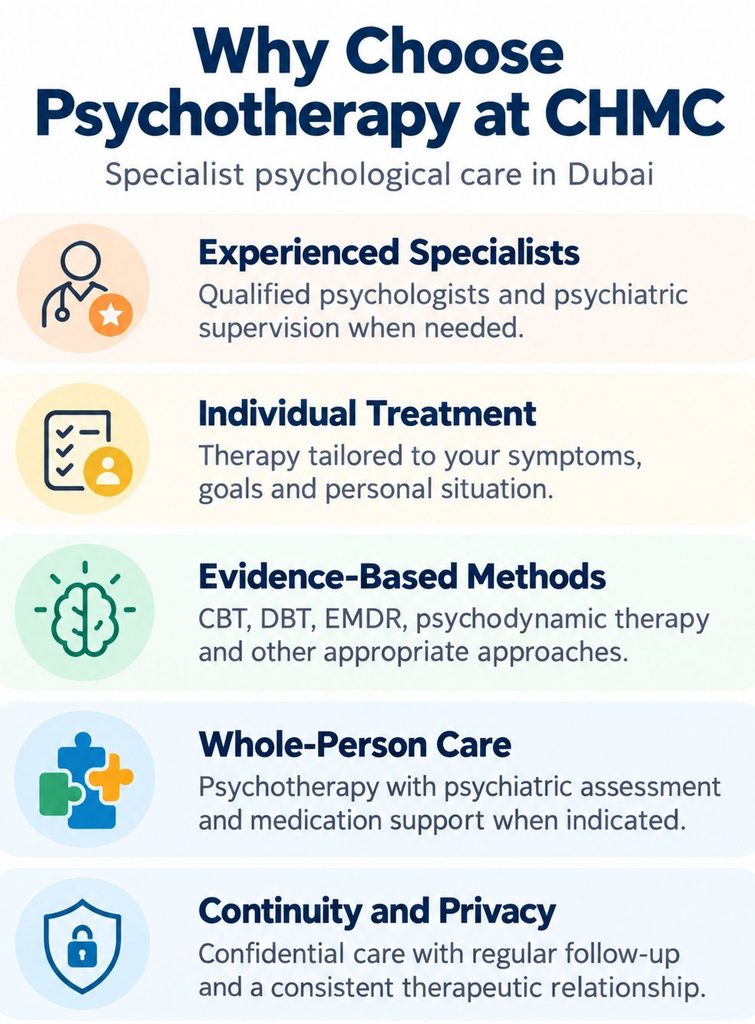
At CHMC German Clinic for Psychiatry and Psychology in Dubai, OCD psychotherapy combines specialist psychiatric expertise, evidence-based psychological interventions and individualised treatment planning. The assessment considers not only visible compulsions but also intrusive thoughts, mental rituals, avoidance, reassurance seeking and coexisting psychiatric conditions.
Dr. Gregor Kowal, German Board-Certified Consultant Psychiatrist and Psychotherapist, has more than 30 years of clinical experience in Germany and the UAE. His combined expertise in psychiatry and psychotherapy allows OCD symptoms to be assessed within the broader context of each patient’s psychological and medical needs.
Our therapeutic approach emphasises Cognitive Behavioural Therapy (CBT), particularly Exposure and Response Prevention (ERP). Additional psychological interventions may be incorporated when clinically appropriate. An important aspect of care at CHMC is the coordination of psychotherapy with psychiatric assessment and medication management when indicated.
Treatment is tailored to the patient’s symptoms, functional impairment and therapeutic progress, with continuity of care and regular clinical review. The objective is to reduce obsessive-compulsive symptoms while helping patients improve relationships, regain independence and achieve lasting improvements in everyday functioning.
For specialist assessment and psychotherapy for OCD in Dubai, contact CHMC German Clinic for Psychiatry and Psychology.
For assessment and psychotherapy for OCD in Dubai, contact our specialists:
Frequently Asked Questions About Psychotherapy for OCD
Which psychotherapy is recommended for OCD?
Cognitive Behavioural Therapy (CBT), particularly Exposure and Response Prevention (ERP), is the most established evidence-based psychological treatment for OCD. It addresses obsessive beliefs, avoidance and compulsive responses that maintain symptoms.
Can OCD improve with psychotherapy alone?
Yes. Many patients improve with OCD-specific CBT and ERP without medication. However, severe symptoms, coexisting psychiatric conditions or insufficient response to psychotherapy may make combined treatment appropriate.
Does psychotherapy help with intrusive thoughts?
Psychotherapy can reduce the distress and compulsive responses associated with intrusive thoughts. Treatment does not aim to eliminate every unwanted thought but helps patients respond without excessive analysis, avoidance, reassurance or rituals.
Can psychotherapy help OCD without visible compulsions?
Yes. OCD may involve mental reviewing, internal checking, reassurance seeking and other mental rituals rather than obvious physical behaviours. CBT with ERP can be adapted to address these less visible compulsions.
Is psychodynamic psychotherapy effective for OCD?
Psychodynamic psychotherapy may help address coexisting emotional conflicts, relationship problems or personality-related difficulties. However, it is not an established substitute for CBT with ERP when the primary objective is reducing core OCD symptoms.
Can OCD return after psychotherapy?
OCD symptoms may recur or fluctuate, particularly during stressful periods. Relapse-prevention strategies help patients identify early warning signs and continue using the skills developed during treatment.
Psychotherapy for OCD: Key Takeaway
Psychotherapy for OCD helps patients recognise and change the beliefs and behavioural responses that maintain obsessive-compulsive symptoms. CBT with Exposure and Response Prevention offers the strongest evidence-based psychological treatment, while additional approaches may address coexisting emotional or interpersonal difficulties. The aim is not to eliminate every intrusive thought, but to reduce compulsive responses, improve everyday functioning and develop greater tolerance of uncertainty.